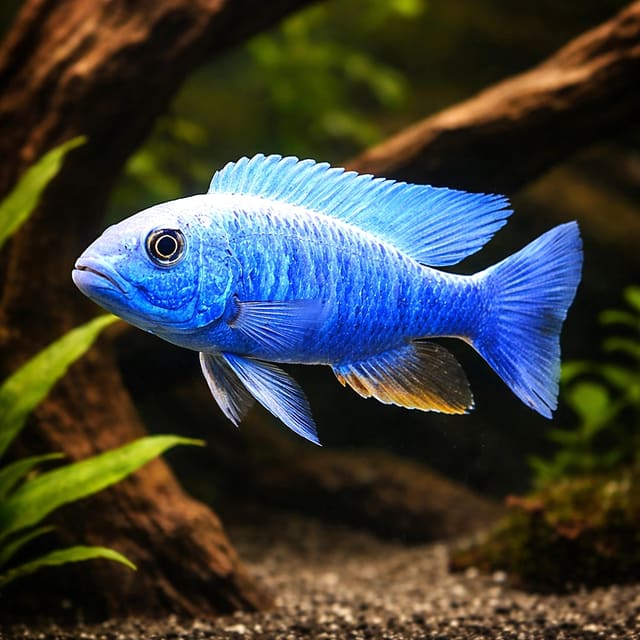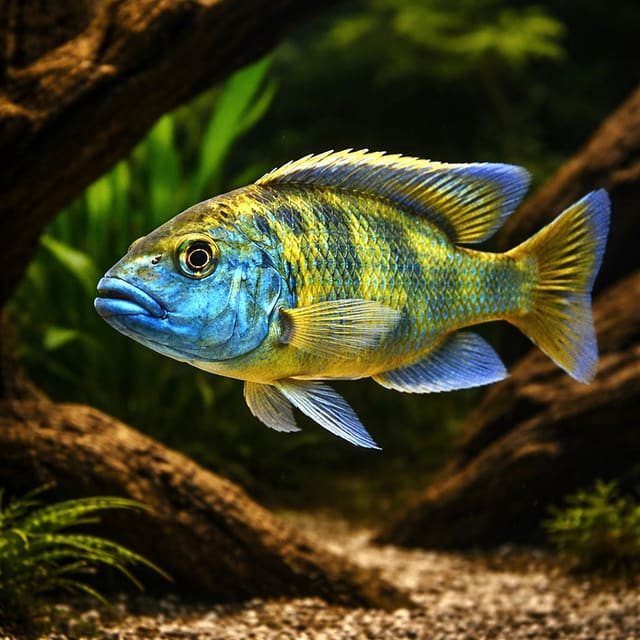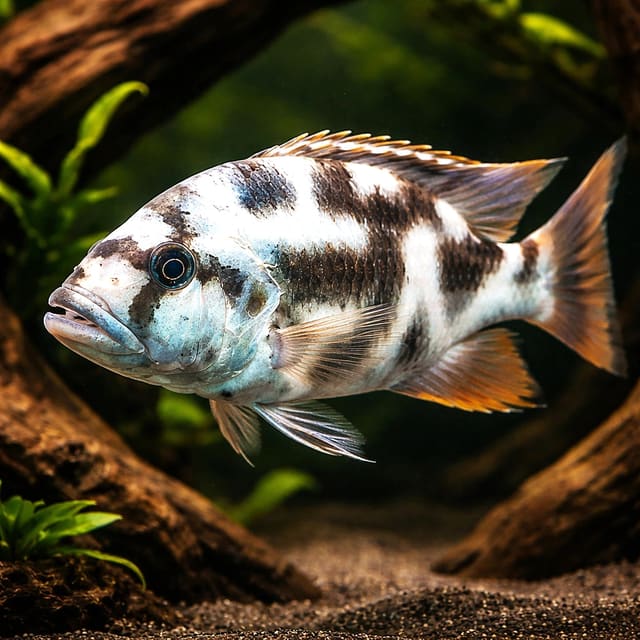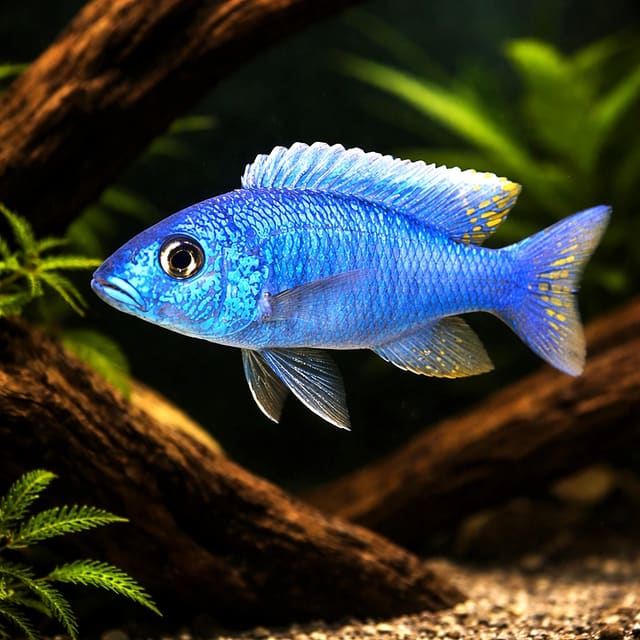
Electric Blue Hap (Sciaenochromis fryeri)
24–27°C · pH 8–8.6 · 304L
£42.99

A gold-form Malawi Eye-Biter predator cichlid for large hard-water aquariums, with specialist Dimidiochromis compressiceps care requirements.
Adult size is the maximum length this species reaches at full maturity (scientific sources). The livestock you receive will be younger and smaller — pick a size above for the actual shipping size. Product-photo provenance and any image-specific limitations are stated on the listing.
Dimidiochromis compressiceps
Save when buying multiple fish. Each quantity is one fish; sex and pair formation are not guaranteed unless the selected variant explicitly states them.
Confirm your email, then we’ll send an availability message for this exact item if it returns within 180 days.
This request is only for this product—no newsletter or other promotions. A mail-provider retry may very rarely duplicate the same availability message. Unconfirmed addresses are removed after 48 hours. See our privacy policy.
A gold-form Malawi Eye-Biter predator cichlid for large hard-water aquariums, with specialist Dimidiochromis compressiceps care requirements.
Adult size is the maximum length this species reaches at full maturity (scientific sources). The livestock you receive will be younger and smaller — pick a size above for the actual shipping size. Product-photo provenance and any image-specific limitations are stated on the listing.
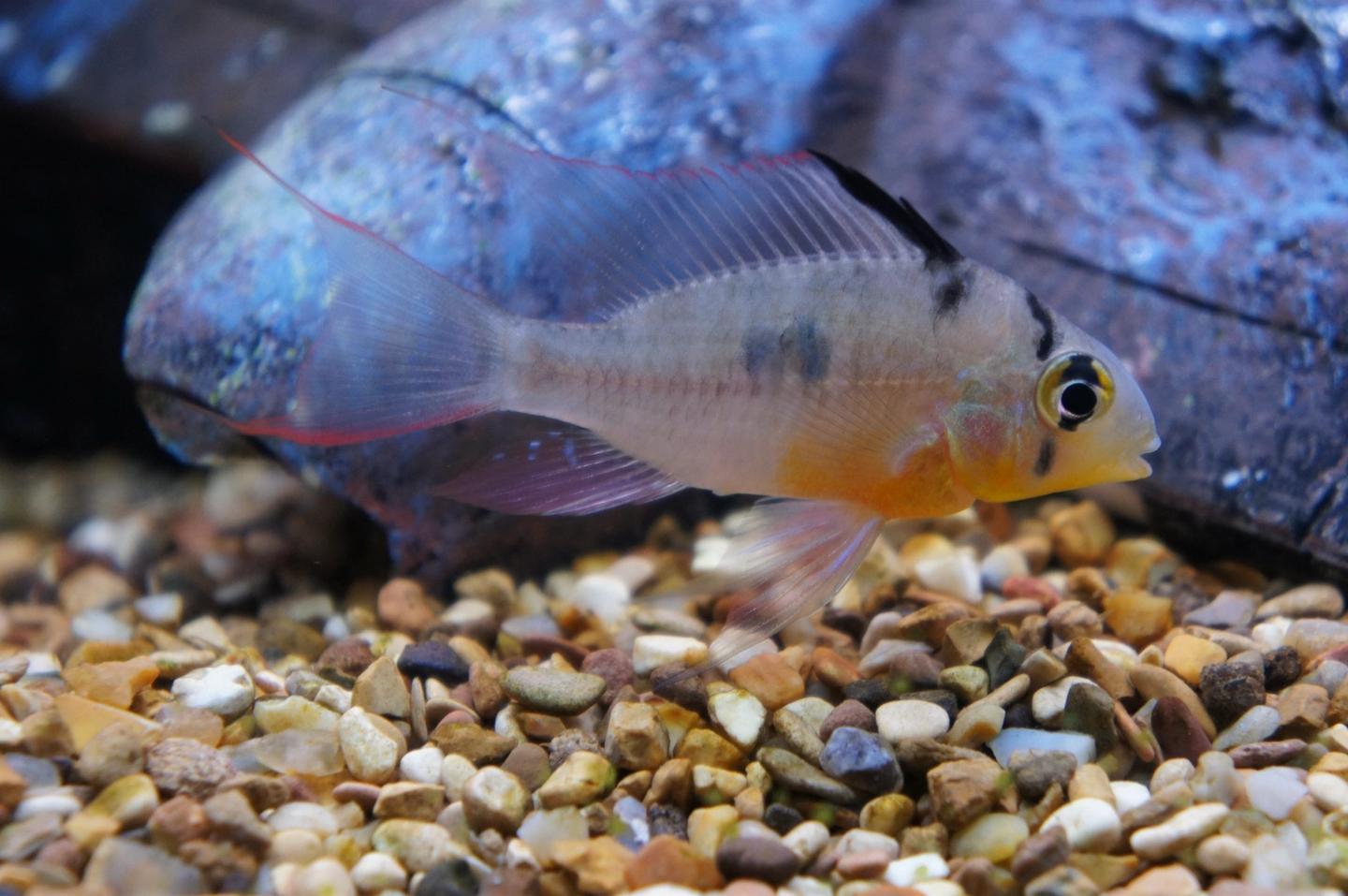
Cichlids are a family of roughly 1,800 accepted species, not one care type. Before buying, identify the exact species and source, then compare adult measurement, usable tank dimensions, social system, territory, tested water, diet and an exit plan. No family-wide minimum tank, water range or tank-mate list is safe.
Maintain these water conditions for optimal health and vibrant colors
Malawi Eye-Biter Gold (Dimidiochromis compressiceps) is a large Lake Malawi predator cichlid with a narrow, blade-like body, a powerful mouth and a confident open-water presence. The gold form keeps the same specialist care needs as the standard Malawi Eye-Biter, so it should be chosen for a spacious Rift Lake aquarium rather than a general community tank. The current product includes 4-5 cm and 6-7 cm size options, but long-term planning should be based on an adult fish around 23-25 cm.
The older trade wording Haplochromis compressiceps may still appear in supplier material because this species has been moved through older cichlid classifications. The care anchor for this listing is Dimidiochromis compressiceps, the accepted aquarium and biological name most keepers use for Malawi Eye-Biter. That matters because this fish is not a small hap, not a mbuna, and not a peaceful mixed-community cichlid. It is a specialist ambush predator that needs room, clean alkaline water, strong filtration and carefully chosen tank mates.
| Care point | Recommendation |
|---|---|
| Scientific name | Dimidiochromis compressiceps; older synonym/trade wording includes Haplochromis compressiceps |
| Common names | Malawi Eye-Biter, Gold Malawi Eye-Biter, Compressiceps Hap |
| Current listing sizes | 4-5 cm and 6-7 cm variants may be available |
| Adult size | Plan for about 23-25 cm |
| Minimum aquarium | 500 litres or more, with a long footprint preferred |
| Temperature | 24-28 C |
| pH and hardness | Hard, alkaline Lake Malawi water around pH 7.5-8.8 |
| Temperament | Predatory and territorial, especially mature males |
| Diet | Carnivore; quality cichlid pellets and varied meaty frozen foods |
| Care level | Difficult; best for experienced cichlid keepers |
Malawi Eye-Biters are immediately recognisable because the body is strongly compressed from side to side. This shape gives the fish a thin profile when viewed head-on and helps it move through vegetation and open water with sudden bursts of speed. Juveniles and females are often paler or silvery-gold with a dark horizontal line, while mature males can develop much stronger metallic colour and fin contrast. The gold form in this listing has a warmer base colour than the standard silver-blue trade form, but the same adult shape, predatory mouth and long-term care requirements should be expected.
Do not judge this fish only by its juvenile size. A 4-5 cm youngster can look manageable in a dealer tank, but the adult is a large, athletic cichlid with a wide mouth and a very different impact on stocking. The best displays come from giving it space early, feeding it cleanly and keeping it with fish that share the same hard-water requirements.
Dimidiochromis compressiceps is native to the Lake Malawi system in East Africa, including Lake Malawi, Lake Malombe and the upper Shire River. In nature it is associated with shallow vegetated margins and open hunting areas rather than tight rock piles. FishBase notes the species feeding on small fishes, especially juvenile utaka and other shoaling species. The narrow body is part of that hunting style, letting the fish hold position and strike quickly from cover.
For aquarium care, this background points to a layout with open swimming room, sand, stable hard alkaline water, strong oxygenation and some structure for visual breaks. Rockwork is useful, but the aquarium should not be packed wall-to-wall like a mbuna tank. This species needs enough clear space to turn, accelerate and avoid constant territorial pressure.
Use a mature aquarium of at least 500 litres, with a long footprint being more important than height. Larger aquariums are strongly preferred for adult males, mixed hap communities or groups with females. Fine sand or smooth coral sand works well, and rockwork should be stable enough that digging or fast movement cannot collapse it. Leave broad open lanes across the front and centre of the aquarium.
Filtration must be sized for large cichlids. Aim for excellent mechanical filtration, strong biological capacity and steady surface movement. Malawi Eye-Biters are messy carnivores compared with small community fish, and poor water quality quickly undermines colour, appetite and immune health. Regular water changes, nitrate control and stable minerals are more useful than constantly chasing a perfect number on a test kit.
Keep this fish in hard, alkaline freshwater. A target range of 24-28 C and pH 7.5-8.8 suits the Lake Malawi setup used for most haps and peacocks. The water should be well buffered so pH does not swing between water changes. If your tap water is soft, use a proven Rift Lake mineral approach and test regularly before adding fish.
Avoid soft, acidic, blackwater or heavily tannin-stained setups. Driftwood-heavy aquascapes can look attractive, but they are not the best match if they reduce pH or buffering capacity. Stability is the priority: zero ammonia and nitrite, low nitrate, consistent temperature and reliable oxygenation.
Malawi Eye-Biter Gold is a carnivore. Use high-quality predator or carnivore cichlid pellets as the base, then rotate clean frozen foods such as mysis shrimp, krill, chopped prawn, mussel and similar protein-rich foods. Feed measured portions that are eaten quickly. Overfeeding a large cichlid creates water-quality problems and can make the fish heavy rather than healthy.
Do not rely on live feeder fish. They are unnecessary for normal aquarium care and can introduce parasites, injury and poor nutrition. Also avoid fatty mammal or poultry meats. A varied, aquatic-based diet keeps the digestive system steadier and supports better colour without turning the tank into a waste factory.
This is a predatory haplochromine cichlid with a large mouth and strong feeding response. Smaller tank mates are likely to be treated as food, even if they have lived together peacefully while the Eye-Biter was young. Mature males can become territorial, especially around spawning behaviour or if the aquarium is too small. The fish is not constantly frantic when settled, but it should never be described as community-safe.
Give the fish clear sight lines and also places where other cichlids can break visual contact. A cramped tank with too many similar males can lead to chasing, fin damage and stress. In a suitable aquarium, the species can become a striking centrepiece predator that patrols open water and shows intelligent feeding behaviour.
Choose tank mates by adult size, temperament and water chemistry. Good candidates are robust Lake Malawi haps and peacocks of similar size, larger non-delicate Malawi cichlids and suitable Synodontis catfish that cannot be swallowed. Every fish in the aquarium should be comfortable in hard alkaline water and should be fast or sturdy enough to cope with a large predator cichlid.
Avoid small tetras, livebearer fry, dwarf cichlids, shrimp, delicate long-finned fish, timid community fish and very small mbuna. Also be careful with similar-looking males, as colour and body shape can influence aggression. Add new fish with observation, rearrange territories if needed and be ready to separate individuals that are being bullied.
Dimidiochromis compressiceps is a maternal mouthbrooder. A dominant male courts a receptive female, and the female carries the eggs and developing fry in her mouth until they are ready to be released. Breeding is most realistic in a large species-focused or carefully managed hap setup, often with one male and multiple females so attention is not fixed on a single fish.
Females holding eggs should not be harassed or forced to compete heavily for food. Provide space, clean water and calm tank structure. If fry are to be raised, they need predator-safe separation and suitably sized foods once released.
Malawi Eye-Biter Gold is for aquarists who want a dramatic Lake Malawi predator and can provide the aquarium to match. It is not the right choice for a small tank, a peaceful community aquarium, a mixed soft-water setup or a tank full of small fish. It rewards patient keepers with unusual body shape, strong feeding behaviour and a commanding display presence.
Before ordering, check your aquarium volume, current tank mates and water chemistry. If those three pieces are right, this can be a superb specialist cichlid. If they are not, choose a smaller or calmer Malawi species first and return to Dimidiochromis compressiceps when the setup is ready.
We pack live fish for specialist UK live-fish courier transport according to current livestock procedures and weather conditions. Availability and dispatch timing can vary because animal welfare comes first. When your fish arrives, keep the lights low, float the sealed bag to equalise temperature, then acclimate gradually with small additions of tank water before release.
Give the fish a quiet first day and do not feed heavily straight away. A settled Malawi Eye-Biter should become alert, hold its body cleanly in the water and begin feeding once it has adjusted to the aquarium. Watch existing tank mates closely during the first week, especially if there are size differences or established territories.
No reviews for this item yet. Bought one? Honest reviews only, good or bad.
What customers say about ordering from us
I have a small group of long finned mountain minnows. So was delighted to be able to order ten of this variety to increase the genetics in my tank . The ones I recieved are healthy but it’s to early to give a verdict on wether they are of a long finned type since they are small currently.
Gordon Walker · 23 Sept 2026
100% success travel and "installation". Pleased with quality of purchase. The Siamese fighter a bit "shy" so have not yet seen him at his best yet but looking good. Happy customer. GG
George E Garratt · 21 Sept 2026
Reviews of our shop, collected by Judge.me, an independent third-party review collector. Newest first.