−12%
Yellow Belly Hap (Haplochromis sp. yellow belly)
23–27°C · pH 8–8.6
£9.67£10.99

Ivory-Topped Hap is a Lake Malawi Ivory mloto type best planned as Copadichromis mloto: an active hard-water hap for spacious peacock/hap aquariums with open swimming space.
Adult size is the maximum length this species reaches at full maturity (scientific sources). The livestock you receive will be younger and smaller — pick a size above for the actual shipping size. Product-photo provenance and any image-specific limitations are stated on the listing.
Copadichromis mloto
Save when buying multiple fish. Each quantity is one fish; sex and pair formation are not guaranteed unless the selected variant explicitly states them.
Confirm your email, then we’ll send an availability message for this exact item if it returns within 180 days.
This request is only for this product—no newsletter or other promotions. A mail-provider retry may very rarely duplicate the same availability message. Unconfirmed addresses are removed after 48 hours. See our privacy policy.
Ivory-Topped Hap is a Lake Malawi Ivory mloto type best planned as Copadichromis mloto: an active hard-water hap for spacious peacock/hap aquariums with open swimming space.
Adult size is the maximum length this species reaches at full maturity (scientific sources). The livestock you receive will be younger and smaller — pick a size above for the actual shipping size. Product-photo provenance and any image-specific limitations are stated on the listing.
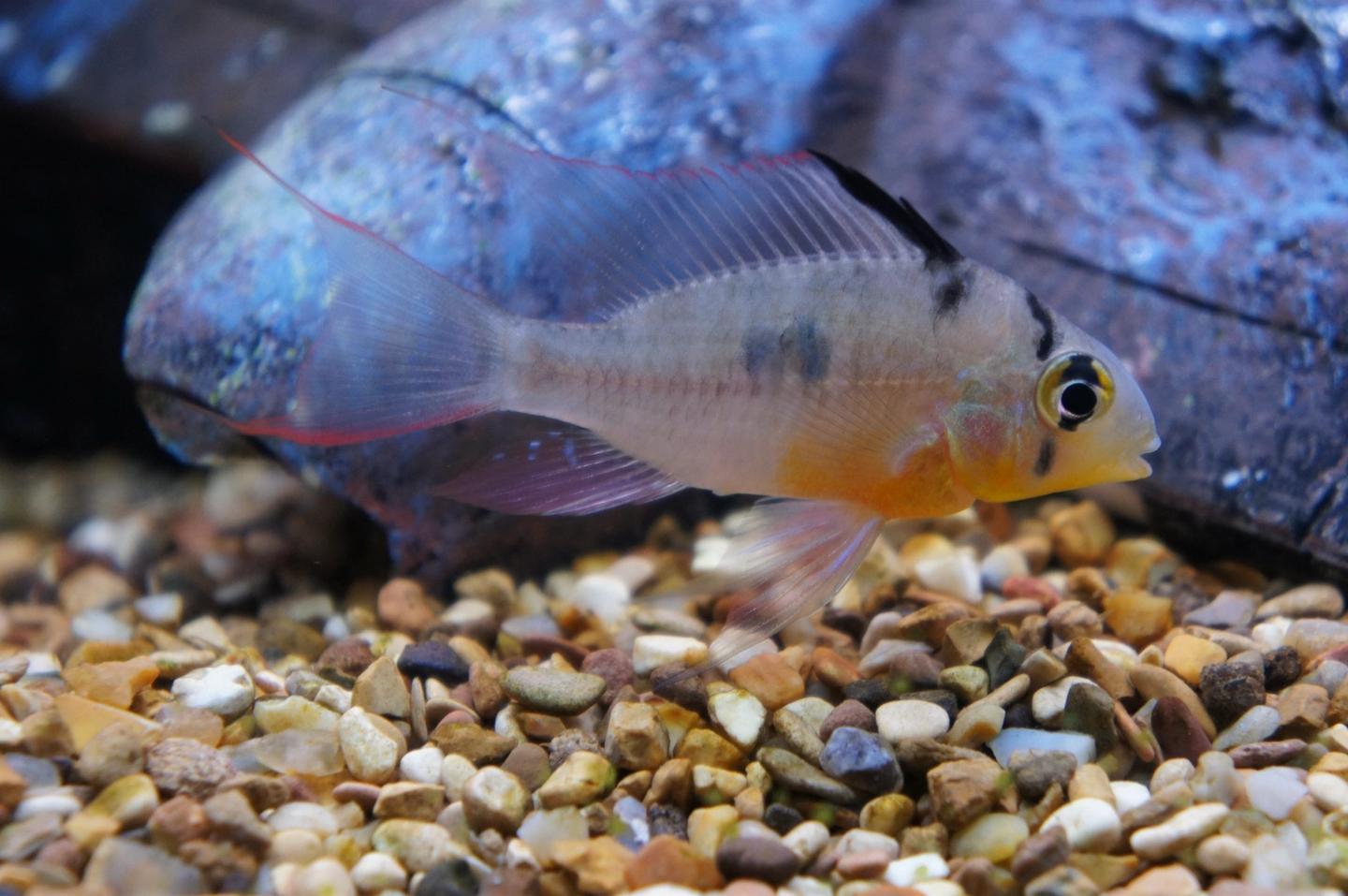
Cichlids are a family of roughly 1,800 accepted species, not one care type. Before buying, identify the exact species and source, then compare adult measurement, usable tank dimensions, social system, territory, tested water, diet and an exit plan. No family-wide minimum tank, water range or tank-mate list is safe.
Maintain these water conditions for optimal health and vibrant colors
Ivory-Topped Hap is best planned as an Ivory mloto type, with Copadichromis mloto used as the care anchor and the supplier wording Haplochromis mloto retained as the trade/source bridge.
For the aquarium, think of this fish as a Lake Malawi utaka-style hap: active, elegant, hard-water, and much better suited to a spacious open-swimming cichlid display than to a small mixed community tank.
| Scientific care anchor | Copadichromis mloto |
|---|---|
| Supplier/trade wording | Haplochromis mloto, Ivory-Topped Hap, Ivory mloto |
| Natural range | Lake Malawi, Africa |
| Habitat style | Open water and sand/rock transition areas with room to school and display |
| Adult size | Plan for about 13.5-14 cm; current variants are juvenile sale sizes |
| Suggested aquarium | 300 litres or larger for a carefully planned group; larger systems are better for five or more |
| Temperature | 23-28C; supplier comfort range 24-26C |
| pH | 7.5-8.5 |
| Hardness | Hard, alkaline water; supplier range 10-30 dGH |
| Diet | Plankton-feeding/carnivorous Malawi hap diet: quality cichlid foods plus small frozen foods |
| Temperament | Generally peaceful for a Malawi hap, with male display and breeding-territory behaviour |
The name on this listing needs a little care. our stock records list the fish as Haplochromis mloto, while modern care references for the Ivory mloto point to Copadichromis mloto. To avoid confusing customers and search engines, this page now treats Ivory-Topped Hap as a Lake Malawi Copadichromis mloto type and keeps the older supplier name only as a trade-name reference.
That change is not cosmetic. It affects adult size, aquarium volume, tank-mate choice and feeding style. A fish sold at 4-5 cm or 6-7 cm is a young specimen; it should not be planned as a 4.5 cm adult fish.
Copadichromis mloto is associated with Lake Malawi, where it is described as a freshwater, benthopelagic cichlid that forms schools. Aquarium references describe mloto-type fish as open-water or transition-zone haps rather than rock-cramming mbuna. In practice, they look best when the tank gives them long swimming lanes, some open sand, and rock structures placed around the sides or back.
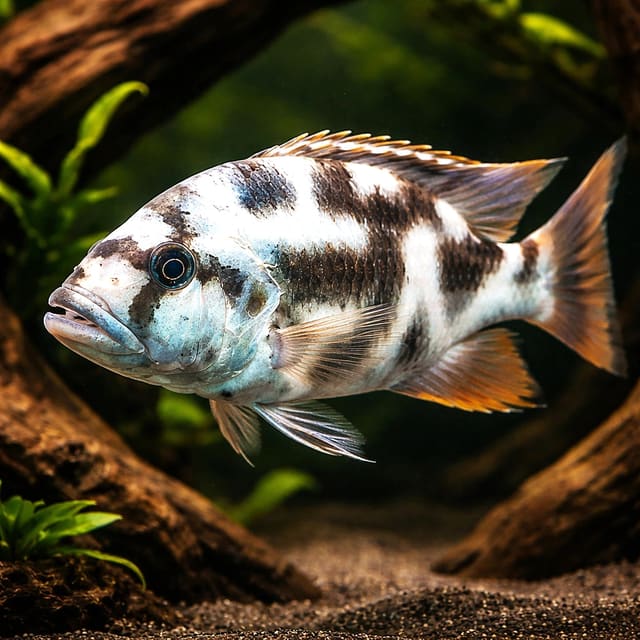
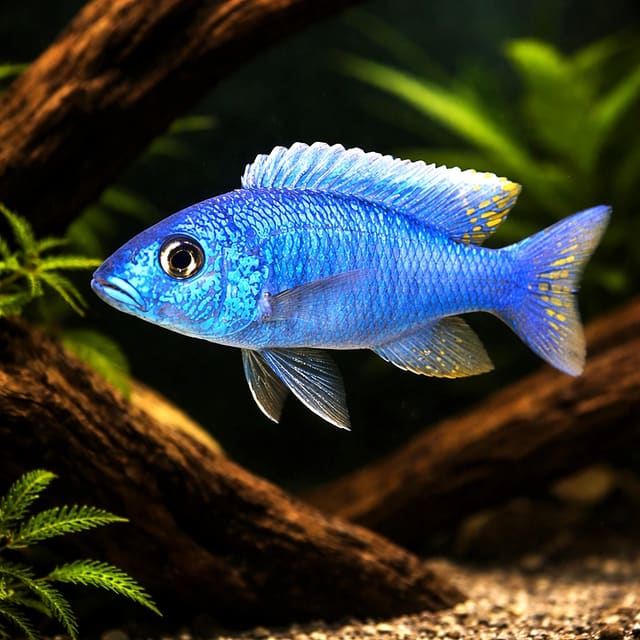
The Ivory-Topped Hap is especially attractive because mature males can develop a darker body with a pale ivory blaze across the head and upper body. Females and juveniles are usually softer in colour. Good water quality, calm social structure and a varied diet help the fish settle and show stronger colour over time.
Use a long aquarium with open swimming space as the first design rule. For a small group or mixed peaceful-hap display, 300 litres is a sensible planning floor, and a 150 cm frontage is a better long-term target where possible. Fishipedia gives a much larger group recommendation for this species type, so avoid treating the old 100 litre guidance as a proper adult home.
Build the layout with fine sand, stable rockwork and clear zones. Keep the centre and front open so the fish can cruise and display. Place rocks in broken structures rather than one solid wall; this creates visual breaks without stealing all the swimming room. A dark background and clean white-balanced lighting will make the ivory head and blue-toned male colour easier to see.
Keep the water hard, alkaline and stable. A practical target is 24-26C, pH 7.8-8.4 and strong mineral content, while the broader supported range is around 23-28C and pH 7.5-8.5. Supplier data for this SKU gives 24-26C, pH 7.5-8.5 and 10-30 dGH.
Stable parameters matter more than chasing tiny adjustments. If your tap water is naturally soft, plan the mineral strategy before the fish arrives. Suitable Malawi salts, aragonite or crushed coral can help maintain buffering, but they should be used consistently and tested regularly. Strong filtration and weekly water changes are important because Malawi cichlids are active feeders and produce a fair amount of waste.
Ivory mloto types are best treated as small plankton-feeding haps. Use quality Malawi cichlid pellets or granules as the base, then rotate frozen or live foods such as mysis, brine shrimp, daphnia and cyclops. Practical Fishkeeping describes Copadichromis mloto as a plankton-feeding shoaling cichlid and notes that captive fish accept flakes, bloodworm, mysis and brineshrimp.
Feed modest portions that are cleared quickly. Two small meals are safer than one heavy feed. Overfeeding can raise nitrate, dull colour and encourage pushy feeding behaviour. If you keep the fish with other haps or peacocks, watch the first few feeds to make sure timid juveniles are not being outcompeted.
This is generally a peaceful to mildly territorial Malawi hap, especially compared with many mbuna. Males can still become assertive when colouring up or courting, so space and group structure matter. A single male with several females is often easier than multiple similar males in a smaller aquarium. In very large tanks, more than one male can work if the layout and stocking reduce direct rivalry.
A lone specimen may look settled for a while, but the species is naturally social. For best behaviour, plan a group and give them enough room to maintain a hierarchy without constant chasing. This is also how you get the most natural schooling and display behaviour.
Good companions include calmer Lake Malawi haps, suitable Aulonocara peacocks and robust Synodontis catfish that enjoy similar hard, alkaline conditions. Choose tank mates by adult size and temperament, not just by colour. Peaceful haps and peacocks usually suit the style of this fish better than very aggressive rock-dwelling mbuna.
Avoid tiny community fish, soft-water species, shrimp, delicate long-finned fish and any cichlid that is either too aggressive or too similar-looking for the space available. Mixing multiple Copadichromis or very similar mloto-type forms can also create hybridisation or identification issues, so keep lines clear if breeding matters to you.
Like many Lake Malawi haplochromines, Ivory mloto types are maternal mouthbrooders. Males display and hold temporary territories, while females carry eggs and fry in the mouth after spawning. A calm group, stable hard water and a spacious layout give the best chance of natural breeding behaviour.
If you want to raise fry, prepare a separate rearing plan before spawning starts. A brooding female needs quiet, stable conditions and should not be chased around the main aquarium. Newly released fry can usually start on fine fry foods and newly hatched brine shrimp once free-swimming.
The available 4-5 cm and 6-7 cm options are sale sizes, not final adult size. Smaller juveniles are useful when building a group gradually and watching them mature. Larger juveniles give more immediate presence and may settle into a display faster, but they still need the same adult planning.
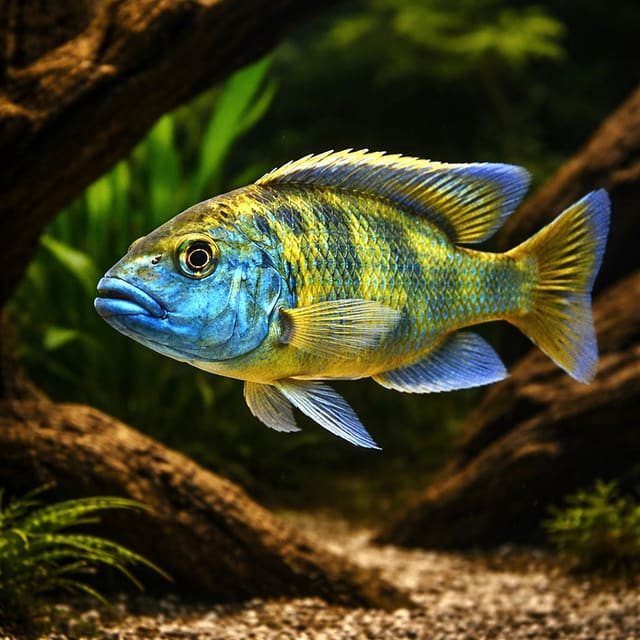
Because colour can depend on age, sex and hierarchy, the exact source image should be used as a species reference rather than a promise that every young fish will arrive in full mature-male dress. Expect colour to develop with age, food quality, lighting and social confidence.
This is a strong choice for aquarists building a Lake Malawi hap or peacock-style aquarium with open swimming space and hard alkaline water. It is not a beginner nano-tank fish and it is not suitable for a soft-water community. Kept properly, it brings elegant movement, a clean ivory-headed male display and a more refined temperament than many aggressive cichlids.
Care guidance was checked against supplier data for SKU 0525 and public references including FishBase for Copadichromis mloto, Fishipedia's Ivory mloto sheet, Practical Fishkeeping's Copadichromis mloto care notes and Malawi locality-reference material. The original reference image has been preserved and added alongside the existing aquarium scene images.
No reviews for this item yet. Bought one? Honest reviews only, good or bad.
What customers say about ordering from us
I have a small group of long finned mountain minnows. So was delighted to be able to order ten of this variety to increase the genetics in my tank . The ones I recieved are healthy but it’s to early to give a verdict on wether they are of a long finned type since they are small currently.
Gordon Walker · 23 Sept 2026
100% success travel and "installation". Pleased with quality of purchase. The Siamese fighter a bit "shy" so have not yet seen him at his best yet but looking good. Happy customer. GG
George E Garratt · 21 Sept 2026
Reviews of our shop, collected by Judge.me, an independent third-party review collector. Newest first.