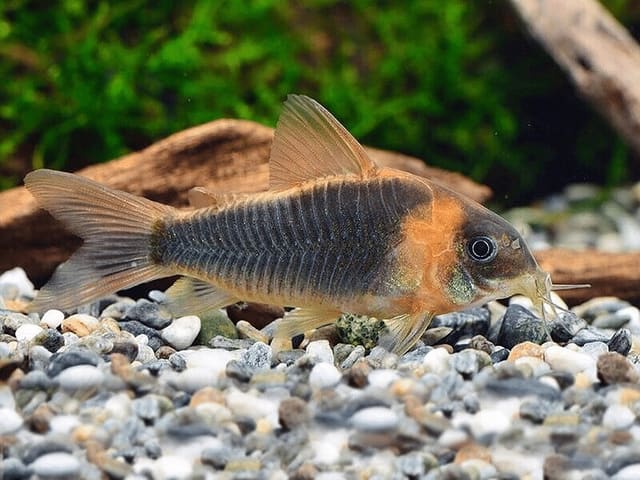
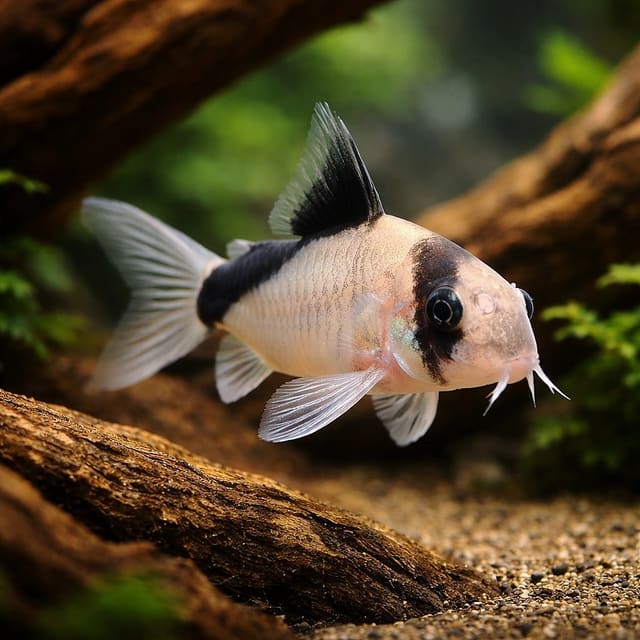
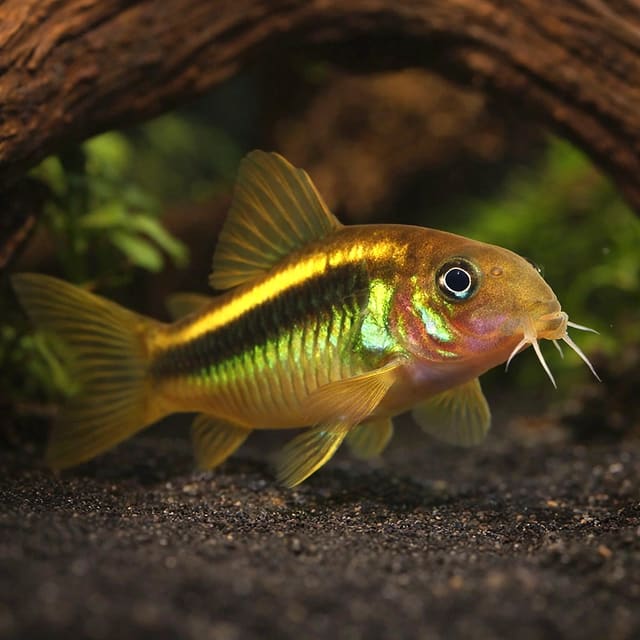
Moderate
Black Venezuela Corydoras (Corydoras sp. Black Venezuela)
22–26°C · pH 6–7.8 · 75L
From £6.79Some sizes on sale

Rare Seuss' Cory / Corydoras seussi, a peaceful long-snouted armoured catfish for mature sand-substrate aquariums. Best kept in groups with calm community fish.
Adult size is the maximum length this species reaches at full maturity (scientific sources). The livestock you receive will be younger and smaller. Product-photo provenance and any image-specific limitations are stated on the listing.
Corydoras seussi
Shoaling fish: kept in a group they feel safer, stay calmer and show their best colour.
Confirm your email, then we’ll send an availability message for this exact item if it returns within 180 days.
This request is only for this product—no newsletter or other promotions. A mail-provider retry may very rarely duplicate the same availability message. Unconfirmed addresses are removed after 48 hours. See our privacy policy.
Rare Seuss' Cory / Corydoras seussi, a peaceful long-snouted armoured catfish for mature sand-substrate aquariums. Best kept in groups with calm community fish.
Adult size is the maximum length this species reaches at full maturity (scientific sources). The livestock you receive will be younger and smaller. Product-photo provenance and any image-specific limitations are stated on the listing.
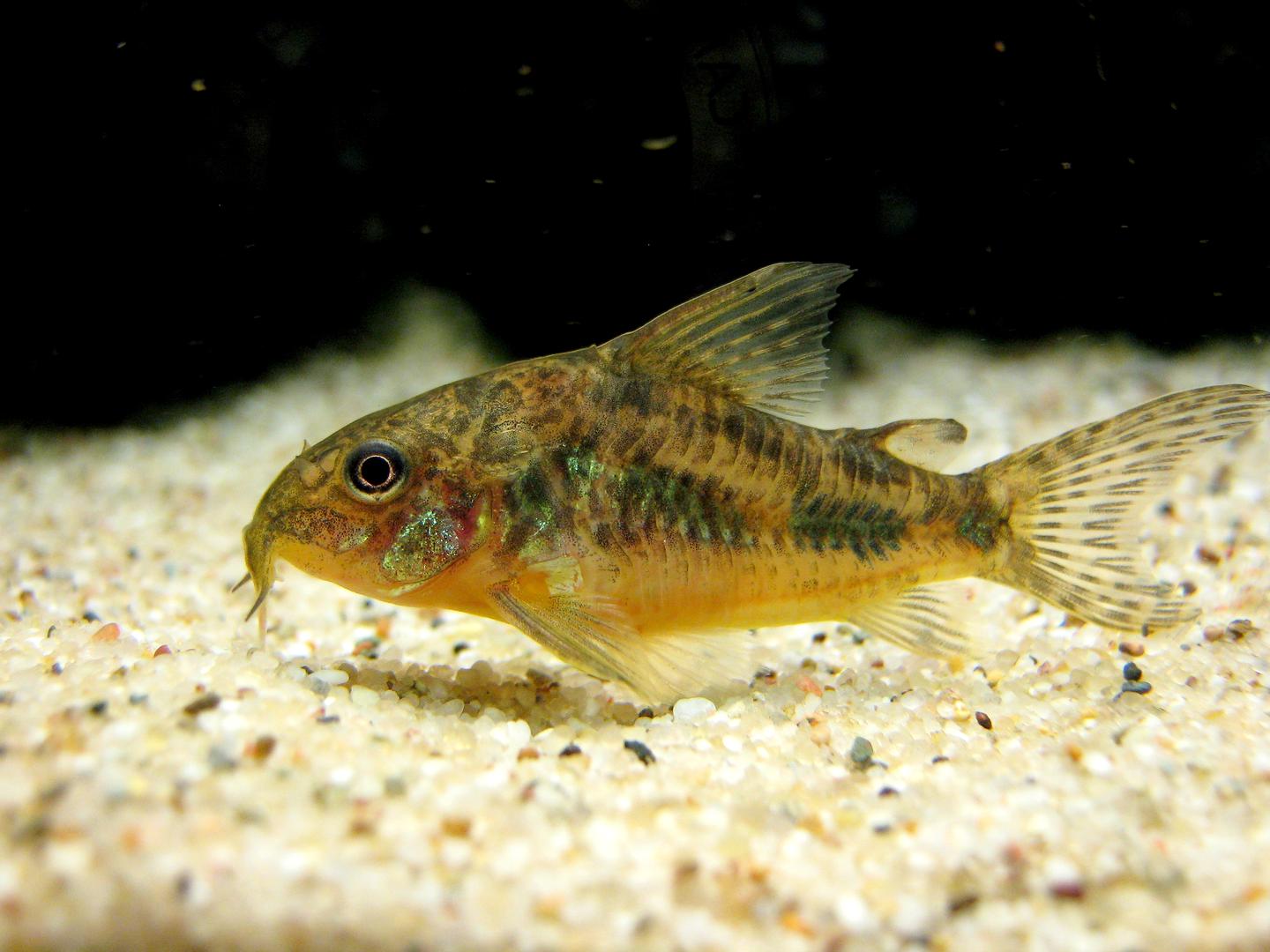
Identify the exact cory catfish before choosing care. Our starting policy for many common medium species is six compatible conspecifics, a mature 60 x 30 cm aquarium of about 60 litres, smooth fine sand and measured species-appropriate water.
Maintain these water conditions for optimal health and vibrant colors
Corydoras seussi, widely known as Seuss' Cory, is a distinctive long-snouted Corydoras-type catfish for mature peaceful aquariums. Modern references often place it as Brochis seussi, while Corydoras seussi remains the familiar aquarium-trade name that most keepers search for. This is not a tiny dwarf cory. It is a rare, larger, active armoured catfish supplied here at around 3.5-4 cm, with adult planning closer to 6-8 cm depending on source and sex.
The appeal is the shape and behaviour: a sleek longer snout, warm orange pectoral and dorsal spine colour, busy sand-foraging movement and a calm shoaling temperament. Keep it as a group, give it soft sand, and it becomes a confident bottom-level fish that moves through the aquarium all day rather than hiding like many catfish.
| Scientific / trade name | Corydoras seussi; also treated as Brochis seussi |
|---|---|
| Common name | Seuss' Cory, C027 Seuss Cory |
| Supplied size | Approx. 3.5-4 cm |
| Adult planning size | Plan for 6-8 cm adults |
| Best group size | 5-6 or more, with more floor space for larger groups |
| Care level | Moderate; best in mature, well-maintained aquariums |
FishBase places Seuss' Cory in South America, especially the Mamore River basin, while specialist aquarium sources also discuss Brazilian and Bolivian locality context. These are freshwater, demersal armoured catfish from warm tropical waters where they forage over soft bottom areas, leaf litter and quieter margins rather than open rockwork. Aquarium Glaser notes that the species is associated with the same broader group as C. gossei and related orange-spined corys, and may occur in very large mixed shoals in nature.
That habitat matters in the aquarium. A clean sand bed is not decoration for this fish; it is part of its feeding equipment. The barbels and snout are constantly used to sift the surface for small foods, so rough gravel or trapped debris can lead to barbel erosion and infection.
Corydoras seussi has the classic armoured-catfish build, but with a noticeably longer snout than many common corys. It resembles Hoplisoma gossei / the old Corydoras gossei in broad pattern, but Seuss' Cory is longer-snouted and more elegant through the head. The orange tone in the pectoral and dorsal spines is attractive, but those spines are functional defence, so handle the fish gently and avoid nets or rough catching methods where possible.
The body is protected by overlapping bony plates, with a lighter underside and a patterned upper body that helps it blend with sand, leaf litter and shaded bottom areas. In a planted or driftwood aquarium it looks natural rather than flashy, which is part of its charm.
Use a mature aquarium with a generous open sand area, shaded edges and calm tank mates. A group of Seuss' Cory needs enough floor space to move and feed together, so avoid treating this as a single-fish bottom cleaner. An 80 litre aquarium is the floor for a small young group, but a longer 100-120 litre or larger tank is a better long-term plan as the group grows.
Choose fine, smooth sand, rounded wood and stones, and live plants or floating cover to soften the light. Keep the substrate clean with regular maintenance, but do not over-sterilise the tank: these fish do best in stable aquariums with established biology, oxygenated water and no hidden pockets of waste. Leave access to the surface because Corydoras and Brochis-type catfish can gulp atmospheric air as a normal supplementary breathing behaviour.
| Temperature | 22-26°C as a safe general range; 24-26°C suits most community setups |
|---|---|
| pH | 6.0-7.2 preferred; avoid sudden swings |
| Hardness | Soft to moderately hard; keep stable and clean |
| Substrate | Fine smooth sand only; avoid sharp gravel |
| Maintenance | Frequent partial water changes, clean substrate surface and zero ammonia/nitrite |
Seuss' Cory is an omnivorous bottom forager, not a waste-disposal fish. Feed sinking catfish pellets, small granules and wafers as the staple, then add frozen foods such as bloodworm, white mosquito larvae, daphnia and enriched brine shrimp. Make sure food reaches the substrate after faster midwater fish have eaten, especially when the group is newly added.
A varied diet keeps body condition strong and encourages natural foraging. If the fish are constantly thin, the usual reason is not that they are fussy; it is that the food is being intercepted before they can feed properly.
This is a peaceful shoaling catfish. Keep at least five or six, and more where space allows. A group settles faster, feeds more boldly and shows the coordinated movement that makes Corydoras-type catfish so watchable. In mixed community tanks, calm dither fish such as smaller tetras, pencilfish or rasboras can help bring them into view.
Expect active bottom sifting, short resting pauses, group movement across the sand and occasional quick visits to the surface for air. Those surface dashes are normal unless they become constant, which can indicate low oxygen or water-quality stress.
| Good companions | Small peaceful tetras, pencilfish, rasboras, calm dwarf cichlids, peaceful livebearers in suitable water |
|---|---|
| Use caution with | Large plecos or other bottom fish that crowd the sand area |
| Avoid | Predatory cichlids, fin nippers, aggressive bottom dwellers and very boisterous feeders |
| Best aquarium style | Mature planted or driftwood softwater community with open sand patches |
Home aquarium breeding is not commonly documented for Seuss' Cory, so it should not be sold as an easy breeding project. If it does spawn, expect the usual Corydoras-style pattern: well-conditioned adults, cleaner cooler water changes, increased oxygenation and the familiar T-position where eggs are fertilised and then placed on glass, plants or decor. Mature females are usually fuller-bodied when viewed from above.
If breeding is a goal, focus first on long-term condition: a proper group, sand substrate, stable softwater conditions, frequent water changes and high-quality frozen/live foods. Do not chase spawning by shocking the fish with extreme parameter changes.
When Seuss' Cory arrives, dim the aquarium lights and acclimate slowly. Match temperature first, then gradually mix small amounts of aquarium water into the transport water before release. Once added, let the group settle without chasing them around the tank. Offer a small sinking food after the lights have softened, but do not overfeed on day one.
The first week is mostly about stability. Watch the barbels, breathing, body shape and group behaviour. Healthy fish should begin sifting sand, resting together and moving as a loose group once they feel secure. If one fish remains thin while others feed well, use a feeding dish or target-feed after midwater fish have eaten.
The long snout is one of the best practical clues when comparing Seuss' Cory with similar orange-spined relatives. Aquarium Glaser describes it as the longer-snouted counterpart to C. gossei, and Maidenhead notes the similarity while explaining that Seuss' Cory has a longer snout. Because the trade name has changed around the genus, labels may say Corydoras seussi, Seuss' Cory, C027 or Brochis seussi. For aquarium shopping and search, all of those usually point to the same rare armoured catfish.
Corydoras seussi suits aquarists who want a rarer, larger Corydoras-type catfish with real presence on the aquarium floor. It is a strong choice for a mature peaceful community, especially where the keeper already understands sand-substrate care and group keeping. It is less suitable for sharp-gravel tanks, rough mixed cichlid communities, immature aquariums or tiny setups where a group cannot move naturally.
Long-term success with Corydoras seussi is usually visible in small details: rounded but not bloated bellies, intact barbels, steady breathing, confident group movement and a willingness to feed when sinking food reaches the sand. A fish that hides constantly, loses barbel length or looks pinched behind the head is often telling you that the substrate, diet or water quality needs attention.
Because this species can be rarer and more expensive than common corys, it is worth building the tank around its needs before purchase. Keep the filter mature, use a heater guard if needed, avoid strong under-substrate currents, and leave a calm open feeding area at the front of the aquarium so you can check every fish during meals. This makes the listing more than a name on a stock list: it gives you a practical plan for keeping a rare Seuss' Cory group in good condition after arrival.
Our Corydoras seussi are selected as live tropical fish, packed carefully for UK livestock transport and listed with practical care information rather than just a supplier name. The exact supplier source image is kept with the listing so you can compare the fish style alongside the planted aquarium reference images.
The key welfare points are simple: keep them in a group, provide soft sand, feed them directly with sinking foods, and maintain clean stable water. Follow those basics and Seuss' Cory becomes one of the most rewarding rare Corydoras-style catfish to watch, especially in a calm community where it has room to forage naturally.
Care guidance was cross-checked against FishBase for distribution, water range and size context; Maidenhead Aquatics for practical Seuss' Cory aquarium care; Aquarium Glaser for trade/taxonomy and thermophilic-care notes; and our stock records for the exact supplied size and source image.
No reviews for this item yet. Bought one? Honest reviews only, good or bad.
What customers say about ordering from us
I have a small group of long finned mountain minnows. So was delighted to be able to order ten of this variety to increase the genetics in my tank . The ones I recieved are healthy but it’s to early to give a verdict on wether they are of a long finned type since they are small currently.
Gordon Walker · 23 Sept 2026
100% success travel and "installation". Pleased with quality of purchase. The Siamese fighter a bit "shy" so have not yet seen him at his best yet but looking good. Happy customer. GG
George E Garratt · 21 Sept 2026
Reviews of our shop, collected by Judge.me, an independent third-party review collector. Newest first.