Easy
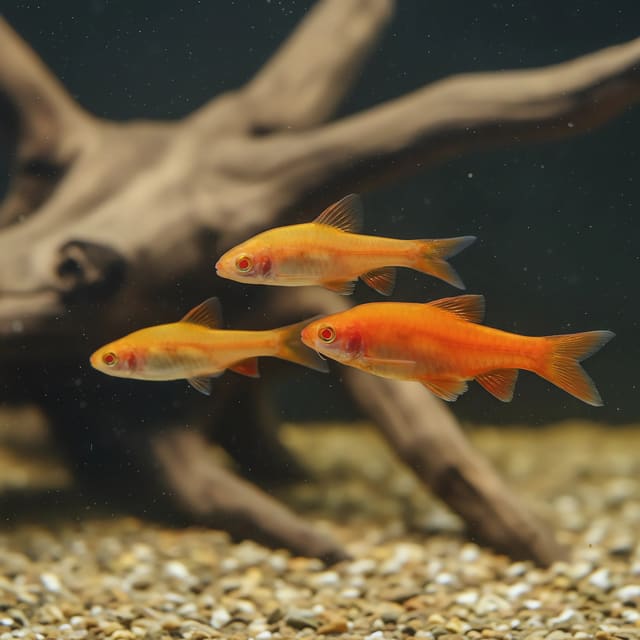
Albino Cherry Barb (Rohanella titteya)
20–27°C · pH 6–8 · 54L
£2.99
Pethia conchonius — Neon Super Colour is an active Asian shoaling barb for a long, mature aquarium. One purchase supplies one live fish at about 3–3.5 cm, without a sex guarantee. Plan for a group of 8–10, a tank of at least 90 litres with a 100 × 30 cm base, routine water around 18–22 °C, pH 6.0–8.0 and 5–19 dGH, and companions that can share its pace without vulnerable flowing fins.
Adult size is the maximum length this species reaches at full maturity (scientific sources). The livestock you receive will be younger and smaller. Product-photo provenance and any image-specific limitations are stated on the listing.
Pethia conchonius
Shoaling fish: kept in a group they feel safer, stay calmer and show their best colour.
Pethia conchonius — Neon Super Colour is an active Asian shoaling barb for a long, mature aquarium. One purchase supplies one live fish at about 3–3.5 cm, without a sex guarantee. Plan for a group of 8–10, a tank of at least 90 litres with a 100 × 30 cm base, routine water around 18–22 °C, pH 6.0–8.0 and 5–19 dGH, and companions that can share its pace without vulnerable flowing fins.
Adult size is the maximum length this species reaches at full maturity (scientific sources). The livestock you receive will be younger and smaller. Product-photo provenance and any image-specific limitations are stated on the listing.
Maintain these water conditions for optimal health and vibrant colors
Pethia conchonius — Neon Super Colour is a bright domestic form of the active Asian barb once widely sold under the synonym Barbus conchonius. It is a schooling cyprinid rather than a solitary centrepiece. One purchase supplies one live fish at about 3–3.5 cm. That small dispatch grade makes a group look easy to house at first, but adults need a long swimming footprint and can reach a recorded 14 cm total length.
The strongest purchase decision is made at group level. Specialist species guidance recommends 8–10 fish, while FishBase records five or more as an aquarium minimum. Choosing eight to ten from the start gives this naturally social species a better chance to distribute attention, show normal group movement and avoid the insecurity associated with undersized shoals. It also means the aquarium must be planned for several adult, fast-moving fish rather than one juvenile.
| Suits | Reconsider if |
|---|---|
| A mature aquarium with at least a 100 × 30 cm base and about 90 litres | The tank was sized around one 3–3.5 cm fish |
| A planned group of 8–10 with open swimming length | You intend to keep one fish or a token pair |
| A lively community of similarly capable fish | Companions are slow, timid or have vulnerable flowing fins |
| A keeper able to manage cooler subtropical water | The aquarium is held permanently at high tropical temperatures for other species |
Sex is guaranteed only when the selected option explicitly states male or female. This Barbus conchonius neon super color listing has no sex-guaranteed option.
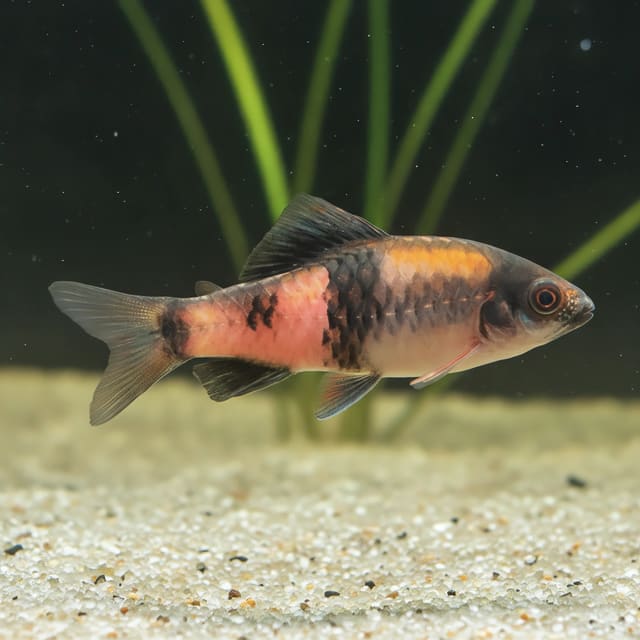
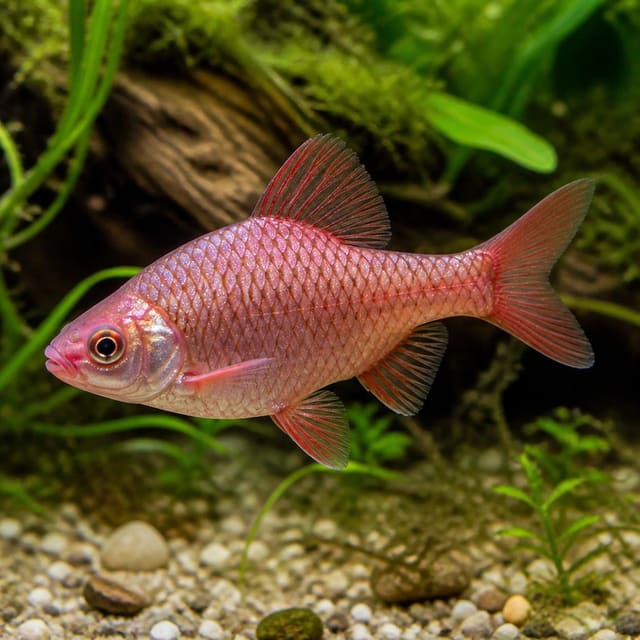
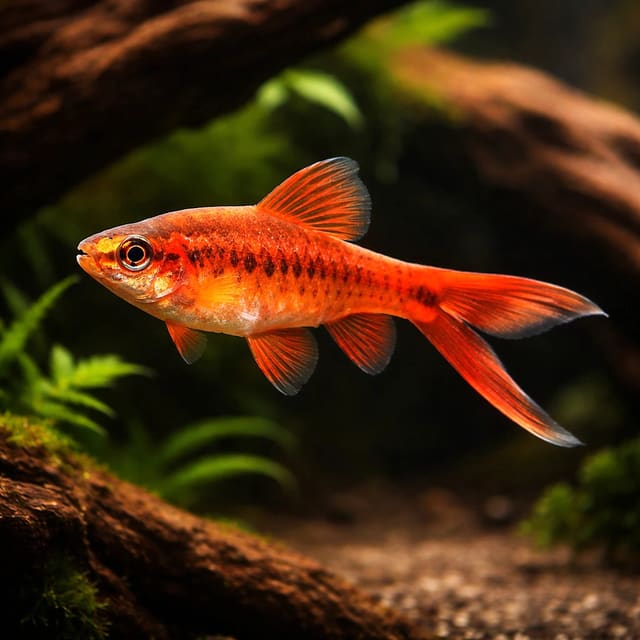
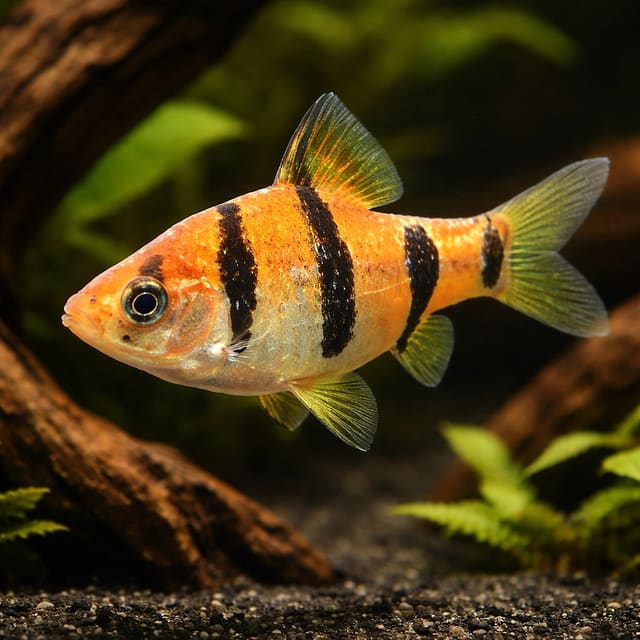
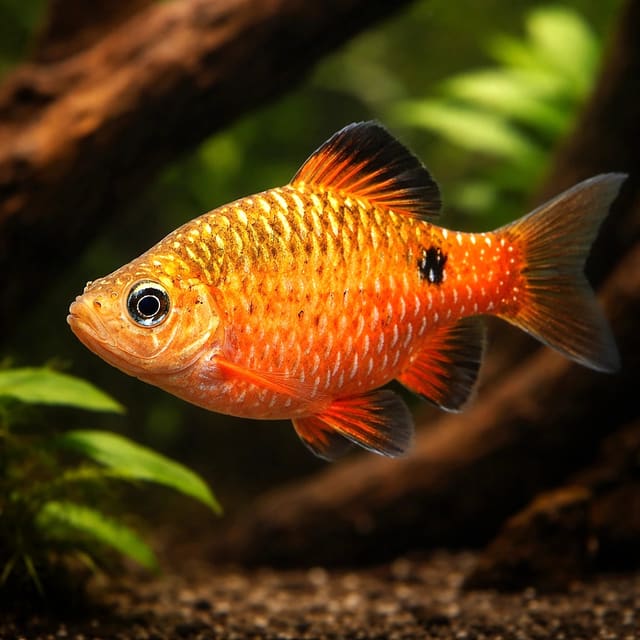
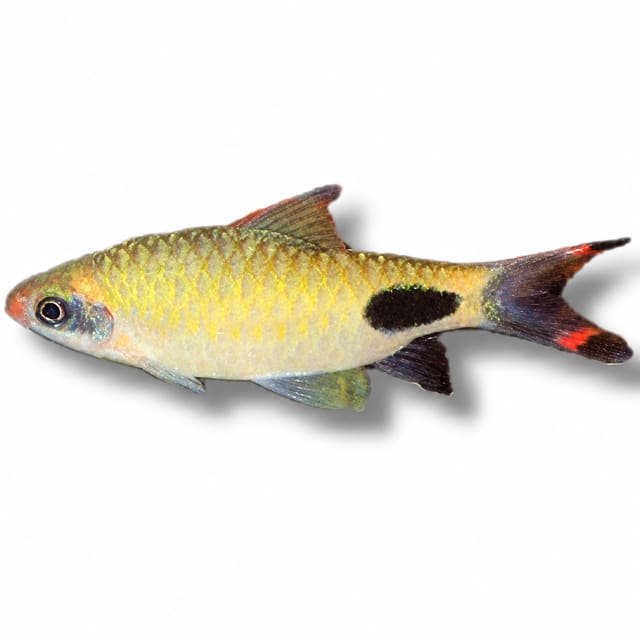
Gallery images have been digitally enhanced to improve image quality. Natural colour, pattern, size and maturity can vary between live animals.
Use a mature filtered aquarium of at least about 90 litres with a base around 100 × 30 cm or larger, leaving a generous open lane for sustained swimming. A group of 8–10 is the useful planning point. Routine water around 18–22 °C, pH 6.0–8.0 and 5–19 dGH stays inside both the FishBase environmental record and the broader species-focused aquarium guidance; stability matters more than pursuing an edge value.
Feed a quality flake or small granule that includes plant matter, supplemented with suitable small frozen or live foods. Keep the group with robust, peaceful species that share the water and activity level. The specialist profile describes compatibility with other small cyprinids, tetras, livebearers, rainbowfishes, anabantoids, catfishes and loaches, but each exact companion still needs matching for adult size, temperature, feeding speed and fin vulnerability.
If this welfare plan fits, the barb collection is a useful place to compare forms and group offers. Treat another barb listing as a product alternative, not as proof that two species are automatic tank mates.
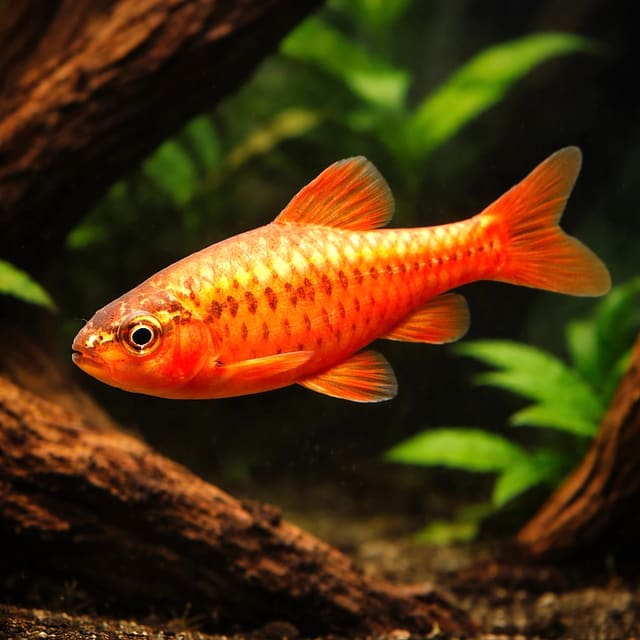
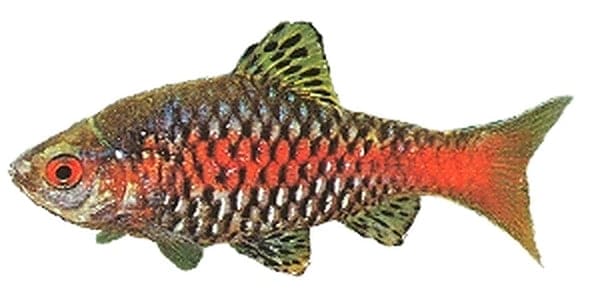
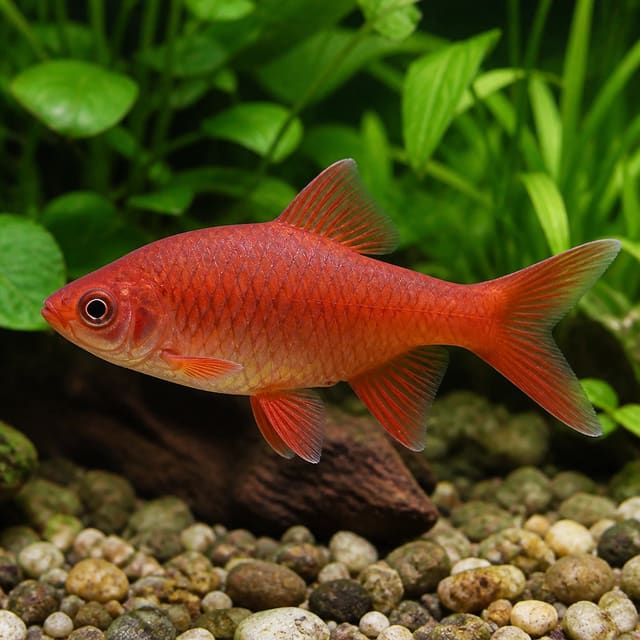
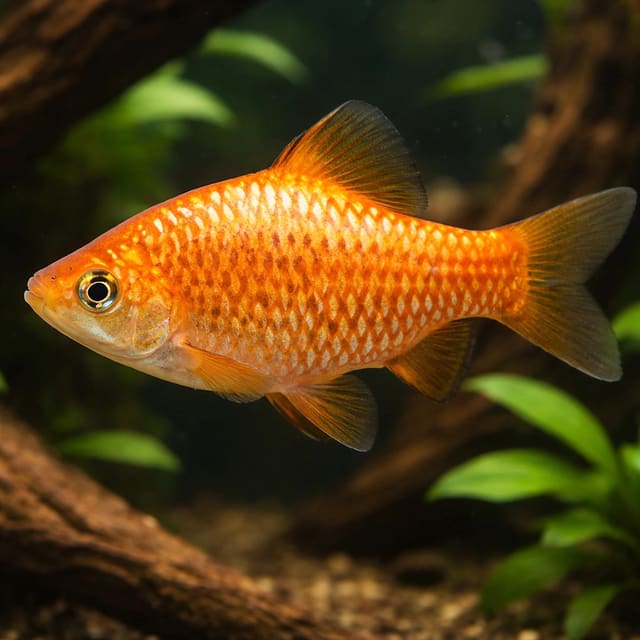
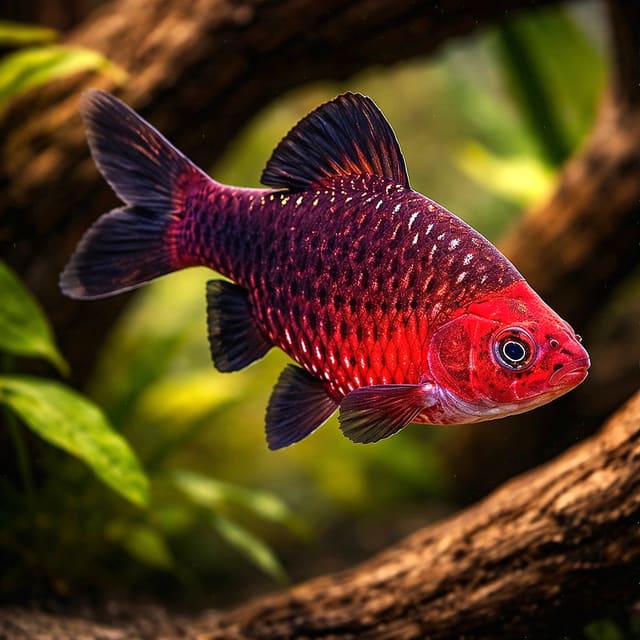
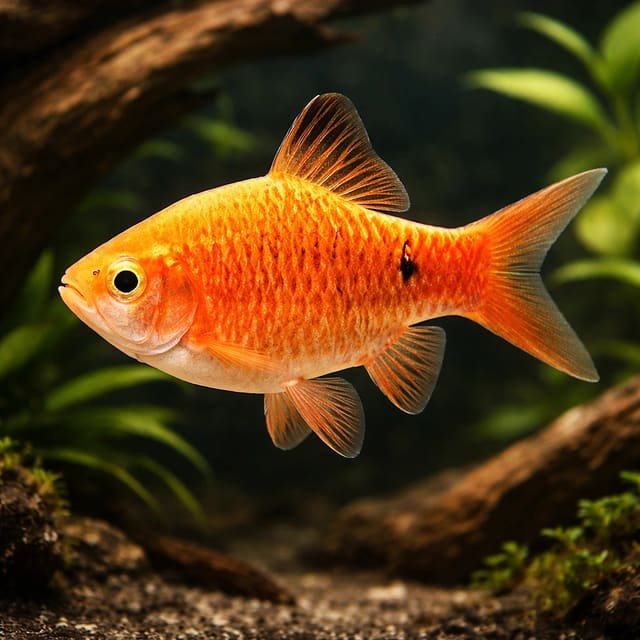
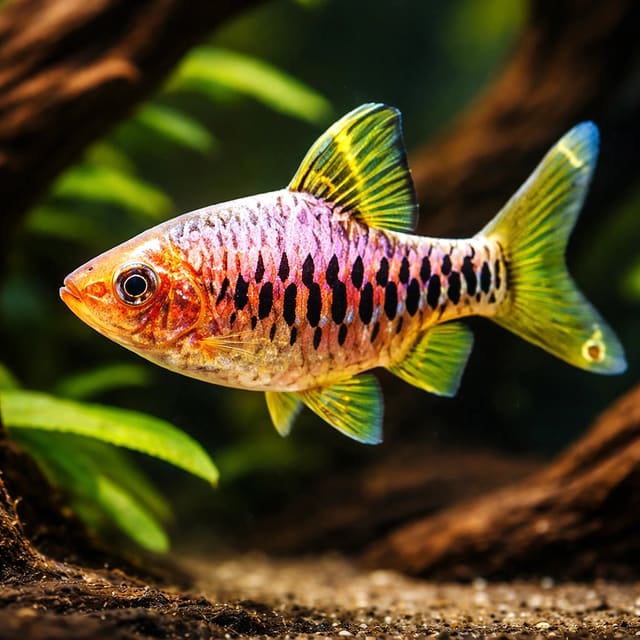
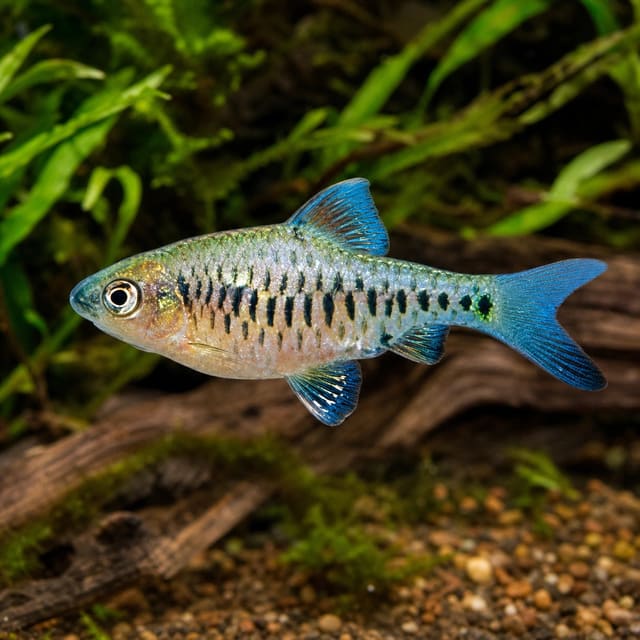
The gallery shows the vivid blue-orange effect associated with this trade form, but colour varies with lighting, maturity, sex and condition. Buy for the group and aquarium fit first. The strongest colour is a welcome result of sound care, not a substitute for it.
The 3–3.5 cm fish supplied is a juvenile-sized trade grade. FishBase records a maximum of 14 cm total length, while specialist guidance gives around 10 cm standard length. Those measurements are not directly interchangeable: total length includes the tail, and individual domestic fish vary. A conservative aquarium plan allows for the 14 cm record and for a full group to turn, pass and feed without crowding.
The species profile requires base dimensions of at least 100 × 30 cm or equivalent and places that around 90 litres. Use both dimensions and volume when choosing the aquarium. A tall cube may hold the same litres but provide less useful swimming length. Longer and wider is especially valuable for eight to ten adults and for a mixed community sharing the middle water.
Keep the front or centre open for group movement and place plants, wood or smooth rock towards the sides and rear. The fish can show well against a darker substrate and planting, while floating cover and branches can soften bright light. Preserve clear routes rather than making a maze of narrow gaps. A secure lid closes the routes an active startled fish might take out of the aquarium.
A school is a meaningful change in bioload. Mature the aquarium before livestock arrives, and use tests rather than elapsed time to judge the biological filter. Confirm zero detectable ammonia and nitrite and a nitrate trend that your maintenance schedule can control. The first tropical aquarium guide covers the preparation sequence for a new setup.
Filtration should support water quality, oxygen exchange and the activity of the shoal. The species tolerates and may appreciate some water movement, yet the entire tank need not be a high-speed channel. Aim the return to move the surface, leave calmer spaces around plants and check that every fish can rest without continually fighting current.
The RSPCA aquarium guidance explains that fish waste becomes toxic ammonia, which a working biological filter converts through nitrite towards nitrate. Clear water alone gives no indication of whether that process is working. Test after adding fish, after a feeding increase, after filter disruption and whenever breathing or behaviour changes.
Pethia conchonius is subtropical. FishBase records 18–22 °C, pH 6.0–8.0 and 5–19 dGH in its environmental summary; the species-focused aquarium profile gives a broader 16–24 °C, pH 6.0–8.0 and 5–20 dGH. A routine target of 18–22 °C, pH 6.0–8.0 and 5–19 dGH uses the overlap without presenting the most extreme aquarium values as the everyday goal.
| Measure | Routine target |
|---|---|
| Temperature | 18–22 °C |
| pH | 6.0–8.0 |
| General hardness | 5–19 dGH |
| Ammonia | Zero detectable |
| Nitrite | Zero detectable |
Measure the actual source water and the aquarium. GH, KH and pH describe different parts of water chemistry, so a single pH reading cannot tell you how stable a change will be. The water chemistry guide explains the tests, and the water parameter matcher can help compare measured water with this stated range.
Do not raise the temperature simply because the fish is sold among tropical stock. Permanent warmth near the top of another species’ range can shorten the margin for a subtropical community, while an abrupt cool-down is also stressful. Match the fish’s holding water where possible and make elective temperature, pH or hardness changes gradually. An ammonia or nitrite emergency needs prompt water-quality action rather than slow acclimation to toxins.
OATA’s general barb sheet strongly recommends a partial water change of about 25% at least once every week, together with regular testing. Use that as a starting routine, then adjust for stocking, feeding, plant growth, nitrate and filter performance. Treat replacement tap water with conditioner and bring it near the aquarium temperature before it enters.
Siphon accessible waste without removing every refuge. Check the intake and outflow for blockage. When filter media needs cleaning, do not run it under the tap. Rinse it lightly in water removed from the aquarium, because chlorine or chloramine can harm the beneficial bacterial population. Restore flow without stripping away the biology the group relies on.
Keep a log of temperature, ammonia, nitrite, nitrate, pH when relevant, maintenance and unusual behaviour. A group can look busy even when one fish is declining, so count individuals at feeding and note body profile. If nitrate begins rising faster, examine portion size, trapped waste and filter flow before simply making a larger unmeasured change.
Wild diet records include worms, crustaceans, insects and plant matter. In the aquarium, use a good-quality flake or small granule as the staple, including some plant or algal content. Add suitable small frozen or live foods such as daphnia, Artemia or bloodworm for variety. The goal is complete nutrition and steady condition, not the maximum possible colour at the expense of water quality.
Spread food across the group so quieter fish are not excluded. Use portions consumed within a few minutes and remove obvious leftovers. A varied diet can be delivered across the week; it does not require several rich foods at every meal. Watch the whole shoal for fish that hang back, spit food repeatedly or lose body condition.
Vegetable matter belongs in the diet, but that does not mean dropping large pieces of kitchen food into the tank without control. A prepared complete food with suitable plant content is predictable, while supplementary vegetable foods should be clean, appropriate and removed before they foul the water. Avoid assuming one ingredient will fix dull colour or unusual swimming.
Prepare the aquarium and group plan before the parcel arrives. Be present on the confirmed day. Before opening the parcel, start one continuous unboxing video showing the parcel sealed, the opening and the fish still in the sealed bag. This preserves the evidence needed if a Live Arrival Guarantee claim is necessary. Contact Tropical Fish Co on the same day with the order number if anything is wrong.
The delivery and Live Arrival Guarantee page holds the current packing, attendance and claim details.
A settled fish should show controlled active swimming, regular breathing, clear eyes, open fins, intact scales and reliable feeding. A new fish may be subdued after travel, but persistent surface hanging, bottom sitting, erratic movement, clamped fins, white spots, growths, wounds or loss of appetite needs attention. These signs prompt investigation; they do not diagnose one disease.
Begin with ammonia, nitrite, nitrate and temperature, then compare pH where relevant. Record when the change began and whether one fish or the whole group is affected. A separate aquarium helps only when it is mature, filtered, temperature-appropriate and large enough. Otherwise, the move can introduce a second water-quality problem.
Seek advice from an experienced aquatic retailer or fish vet before selecting treatment. Use only a lawful product labelled for the species and system, following its directions or veterinary instruction. Continue to watch social access during recovery, since a weakened fish can be displaced at feeding even when the original problem was environmental.
This species is an egg-scattering free spawner and does not provide parental care. Adults may eat eggs, so purposeful breeding needs a separate mature plan rather than relying on a busy display aquarium. Spawning condition and competition can intensify colour and activity. Those changes are interesting behaviour, but they are unreliable guides to the sex of a juvenile sold without a sex choice.
Adult males are often slimmer and more colourful, while females can be larger-bodied, particularly around spawning. These are population-level tendencies and are unreliable for sexing one 3–3.5 cm fish. Gallery colour cannot guarantee the appearance or sex of the individual fish supplied.
The accepted scientific name used here follows the FishBase species record for Pethia conchonius. The older combination Barbus conchonius remains familiar in aquarium trading, so seeing it on historical labels does not by itself indicate a different fish. Neon Super Colour identifies the domestic trade form and belongs outside the scientific name.
Adult figures also need their measurement labels. FishBase records 14 cm total length, which includes the tail. The species-focused aquarium profile gives about 100 mm standard length alongside the 100 × 30 cm base and 8–10 group guidance used in this plan. These figures describe different conventions rather than two promises about the exact final size of one animal.
For the keeper, the practical response is simple: allow for the larger recorded total length, provide the full shoal and choose the aquarium by usable swimming base as well as litres. Treat the 3–3.5 cm supplied size as the starting grade only. Good planning leaves room for individual variation without turning a source difference into a precise growth forecast.
A group of eight to ten can still contain one excluded animal. At each feeding, scan from one end of the aquarium to the other and check that every fish approaches food. Afterwards, look for one individual holding behind the filter, breathing faster or carrying new fin damage. Early observation is easier than identifying the missing participant after body condition falls.
OATA’s barb care sheet warns that barbs kept singly or in too small groups will often become stressed, and that larger groups can reduce fin-directed behaviour. For this species, the specialist 8–10 recommendation is the stronger planning target. More fish still require more swimming room and biological capacity, so group size and aquarium size must rise together.
The group arrives at around 3–3.5 cm, but the aquarium should already have the adult footprint. As body size increases, remove obstacles that pinch the main route, trim dense growth blocking the middle water and retain cover at the margins. Reassess companions that were much larger than the juveniles but may later compete for the same space or food.
Watch the temperature across seasons. A cool routine can drift upward during summer, and warmer water carries less oxygen. Increase surface movement when needed, check actual temperature rather than relying on a heater setting and avoid sudden cooling methods that create rapid swings. If several fish breathe rapidly, test water and oxygenation promptly.
Pethia conchonius is widely regarded as hardy and can suit a newcomer, but easy care still assumes a mature filter, the full shoal, appropriate temperature and regular testing. Hardiness describes tolerance, not immunity to ammonia, isolation or incompatible tank mates. The group’s activity can make problems less obvious, so a short daily count and weekly recorded tests remain useful.
A sensible first-week sequence is simple: check breathing and balance on arrival, confirm feeding within the next days, retest ammonia and nitrite after the bioload change, and compare fin condition at the end of the week. Continue the same observations in routine care. Stable results and a group moving, feeding and resting without one fish being excluded are stronger signs of success than colour alone.
The 18–22 °C routine range is useful because it gives this subtropical fish a clear place in the community plan. It does not mean leaving the aquarium to follow every change in room temperature. Use a dependable thermometer, check the coolest part of the night as well as the warmest part of the day, and look for seasonal drift before it becomes a sudden correction. A heater may still be helpful in a cool home because its job can be to prevent an abrupt fall rather than to make the aquarium conventionally tropical.
During warm weather, begin with measurement and oxygenation. Warm water carries less dissolved oxygen, while an active group has a meaningful demand. Keep the filter outlet moving the surface, clear blocked intakes and add safe aeration if conditions require it. Shade the aquarium from direct sun and reduce avoidable heat from lighting or nearby equipment. Do not add ice or make an abrupt large cold-water change: a rapid swing can be more stressful than a modest temporary rise.
Watch the fish rather than relying on the number alone. A whole shoal breathing rapidly, crowding the strongest flow or hanging near the surface needs prompt checks of temperature, oxygenation, ammonia and nitrite. One fish behaving differently may point towards injury, exclusion or individual illness, but water tests still come first because they can reveal a problem affecting the entire aquarium.
Before introduction, test water and observe the residents’ normal territories. Add the group only when the filter has spare capacity and the aquarium can hold the adult combined stock. Keep lighting calm and monitor for several hours. Count the new fish repeatedly, because one animal can disappear behind decor while the rest move as a convincing shoal.
Have a mature alternative ready if the match fails. A small uncycled container is unsuitable for an active group, and isolating one barb long-term creates its own social problem. The safest contingency preserves suitable water, filter capacity, temperature and companionship while giving affected fish relief.
This species is generally peaceful, but it is energetic and social. A calm community label is not enough: the companion must tolerate constant group movement, compete fairly for food and share the cooler water. Slow, timid or long-finned fish can be unsettled or have fins investigated, particularly if the barb group is too small.
Species-focused guidance names other small cyprinids, tetras, livebearers, rainbowfishes, anabantoids, catfishes and loaches as categories that can be considered. That list is conditional. Each species within those groups differs in adult size, temperature, temperament, fin shape and social need. A warm-water gourami, a tiny tetra or a very slow catfish can still be a poor match.
| Question | Reason |
|---|---|
| Do temperatures overlap around 18–22 °C? | A behavioural match cannot compensate for conflicting long-term temperature needs. |
| Can the companion handle an active shoal? | Timid fish may hide or miss food even without direct attack. |
| Are its fins vulnerable? | Long, slow-moving fins deserve caution around active barbs. |
| Will adult sizes remain compatible? | Small fish or fry that fit in a mouth can be at risk despite peaceful intent. |
| Can every species keep its proper group? | Combining single examples of social fish creates several welfare problems, not one community. |
Avoid building the tank around a promise that one named species is always safe. Monitor the actual fish, particularly at feeding and after lights change. Chasing that ends quickly is different from one fish being prevented from using the aquarium. Damaged fins, continual hiding, rapid breathing or missed meals require intervention.
A proper shoal directs more social attention within the species and makes the fish less nervous. OATA states that barbs kept singly or in too small groups will often become stressed and notes that larger groups can reduce fin-nipping behaviour. For P. conchonius, 8–10 is the practical species-level goal. Group size helps, but it cannot make an unsuitable long-finned or timid companion appropriate.
Provide several feeding areas and enough open space for the barb group to move without sweeping every other fish aside. Plants and wood at the margins give quieter companions somewhere to pause, while open routes prevent collisions. If one species monopolises food, adjust food placement and format rather than simply increasing the total amount.
FishBase records a maximum of 14 cm total length, while specialist guidance gives around 10 cm standard length. Plan conservatively for the larger record and remember that a group of adults needs much more swimming space than one fish.
Use at least about 90 litres with a base around 100 × 30 cm or larger for a proper group. Horizontal swimming length matters, so a tall narrow tank with the same volume is a weaker choice.
Plan for a group of 8–10. FishBase records five or more as a minimum, but the specialist species profile recommends at least 8–10 for lower nervousness, natural display and better distribution of social attention.
It can suit a prepared beginner because the species is hardy and readily fed. Success still requires a mature filter, a full group, enough swimming length, cooler subtropical water and regular testing.
Use a quality small flake or granule, including some plant or algal content, as the staple. Add suitable small frozen or live foods such as daphnia, Artemia or bloodworm for variety, feeding portions the whole group can finish.
Use roughly 18–22 °C for routine care, with pH 6.0–8.0 and hardness around 5–19 dGH. These values sit within both the FishBase environmental record and the wider species-focused aquarium range.
The species is generally peaceful, but active barbs can trouble slow, timid or long-finned fish, especially when kept in an undersized group. A shoal of 8–10 helps direct social behaviour within the group but does not make every companion suitable.
Other small cyprinids, tetras, livebearers, rainbowfishes, suitable anabantoids, catfishes and loaches can be considered when adult size, temperature, pace and group needs overlap. Assess the exact species and avoid universal guarantees.
Tropical Fish Co hand-packs live fish in oxygenated bags inside an insulated box and uses a licensed live-animal courier. Be present on the confirmed day. Before opening the parcel, start one continuous unboxing video showing the sealed parcel, the opening and the fish still in the sealed bag; contact the team the same day with your order number if anything is wrong.
These public resources support the accepted name, adult planning, species-focused husbandry and general welfare guidance used above.
No reviews for this item yet. Bought one? Honest reviews only, good or bad.
What customers say about ordering from us
Easy website plenty of info on fish your buying great to pick a time slot
TRACEY DURRANT · 7 Oct 2026
Got some lovely fish thank you
Kevin Mackie · 7 Oct 2026
Reviews of our shop, collected by Judge.me, an independent third-party review collector. Newest first.