Moderate
Round-Tailed Paradise Fish (Macropodus ocellatus)
10–22°C · pH 6–7.5 · 72L
£11.99

Compact African bushfish with bold vertical banding, shy labyrinth-fish behaviour, two size options, original reference photo and Live Arrival Guarantee.
Adult size is the maximum length this species reaches at full maturity (scientific sources). The livestock you receive will be younger and smaller — pick a size above for the actual shipping size. Product-photo provenance and any image-specific limitations are stated on the listing.
Microctenopoma fasciolatum
Save when buying multiple fish. Each quantity is one fish; sex and pair formation are not guaranteed unless the selected variant explicitly states them.
Confirm your email, then we’ll send an availability message for this exact item if it returns within 180 days.
This request is only for this product—no newsletter or other promotions. A mail-provider retry may very rarely duplicate the same availability message. Unconfirmed addresses are removed after 48 hours. See our privacy policy.
Compact African bushfish with bold vertical banding, shy labyrinth-fish behaviour, two size options, original reference photo and Live Arrival Guarantee.
Adult size is the maximum length this species reaches at full maturity (scientific sources). The livestock you receive will be younger and smaller — pick a size above for the actual shipping size. Product-photo provenance and any image-specific limitations are stated on the listing.
Maintain these water conditions for optimal health and vibrant colors
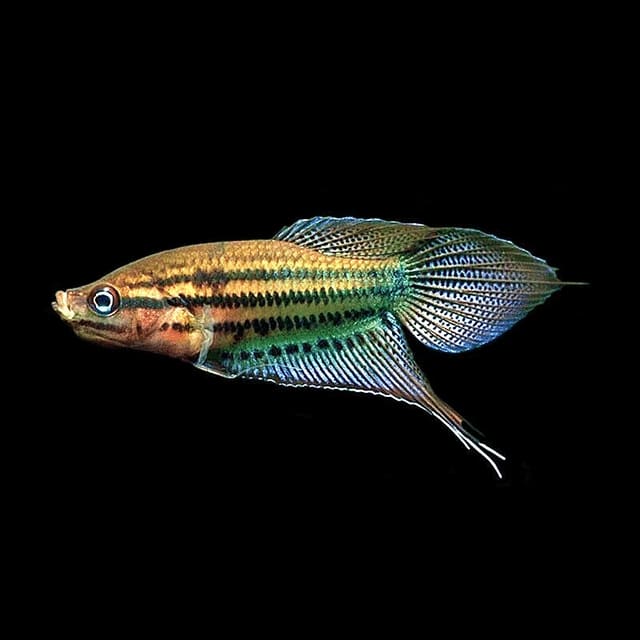
The Banded Ctenopoma (Microctenopoma fasciolatum) is a compact African bushfish with bold vertical banding, a cautious hunting style and the surface-breathing biology that makes labyrinth fish so interesting to keep. It has also appeared in supplier and older hobby lists as Ctenopoma fasciolatum, so we keep that synonym as a helpful bridge, but the main listing now uses the current Microctenopoma name.
This listing covers two sizes on the same Shopify product: 3.5-4.5 cm and 5-6 cm. Choose this fish if you want an unusual, medium-small African labyrinth fish with more character than a standard community species and a more secretive feel than most gouramis.
Banded Ctenopoma is not a loud, constantly visible centrepiece fish. Its appeal is subtler: it moves carefully, studies its surroundings and uses plants, roots and shaded corners in a very deliberate way. The dark vertical bars become more striking as the fish settles, and the body has a neat bushfish profile rather than the rounder look of many common gouramis.
It is a good fit for keepers who enjoy natural behaviour as much as colour. In the right aquarium it will patrol quietly, hover under cover, come forward for food and show that classic labyrinth-fish habit of using the surface. It should not be bought as a tiny peaceful community filler. It is a small predator with a personality, and the tank should be planned around that.
Reliable references place this species in the lower and middle Congo basin, including the Republic of Congo, Democratic Republic of Congo and parts of Cameroon. Aquarium reports describe clear, vegetated water with surface and overhanging cover. That habitat points to a setup with calm areas, planted cover, roots or wood, subdued lighting and access to the surface.
Use a mature aquarium with stable water and gentle to moderate flow. Tall plants, floating plants, shaded corners and broken sight lines help the fish feel secure. A tight lid is important because labyrinth fish can jump, and the warm air above the water should not be chilled by drafts. Keep open feeding space, but do not leave the tank bare or brightly exposed.
A practical target is 22-28°C, pH 6.5-7.5 and soft to medium-hard water. FishBase gives a pH range around 6.5-7.5 and hardness tolerance into moderately hard water, while supplier data supports a slightly wider hobby range. The safest approach is not to chase numbers aggressively; keep the aquarium stable, warm, clean and well oxygenated.
Because this is a shy fish, poor water quality and constant disturbance can make it hide or feed badly. Test new tanks, avoid ammonia or nitrite, and make water changes gradual. Add this fish to a settled aquarium rather than a brand-new setup.
Banded Ctenopoma is carnivore-leaning and does best with a varied meaty diet. Offer frozen or live foods such as bloodworm, daphnia, brine shrimp, mosquito larvae, small worms and similar invertebrate foods. Some individuals will also take quality small pellets or granules, but dry food should not be the only plan at first.
Feed small portions and watch that the fish actually eats. In a busy community aquarium it may be outcompeted by fast surface feeders. A quieter tank, or a feeding routine that allows the bushfish time to respond, will keep it in better condition.
Choose peaceful, similarly sized tank mates that are too large to be swallowed and not so boisterous that they dominate every feeding. Calm tetras of suitable size, peaceful barbs, small catfish, Corydoras, suitable loaches and other gentle African community fish can work when water needs match. Bottom dwellers are often easier companions than fast surface feeders.
Avoid tiny fish, fry, dwarf shrimp and very small rasboras, because they may be seen as food. Also avoid aggressive cichlids, fin nippers and overly pushy fish. If keeping more than one male, provide more space and heavy cover because males can spar or defend territories.
Microctenopoma species are separated from many larger bushfish partly because males build and guard bubble nests. Breeding is most likely in a quiet, plant-heavy aquarium with soft to neutral water, surface cover and excellent food. Males can become rough with one another, so breeding attempts need observation and backup space.
This fish suits a keeper who wants something a little unusual and is happy to build a calm aquarium around cover, feeding and observation. It is not the best choice for a very small tank, a shrimp display, a bare bright community or a tank full of fast feeders. It is a much better choice for a patient aquarist who likes African labyrinth fish and subtle behaviour.
Your Banded Ctenopoma is packed for live-animal transport and sent with tracked courier delivery. First-time customers can use WELCOME10 at checkout where eligible, and our Live Arrival Guarantee applies when the delivery and acclimation instructions are followed. Please make sure someone is available to receive the parcel, then acclimate slowly and keep the lights low while the fish settles.
It is usually shy rather than openly aggressive, but it is still a small predator and males can be territorial. Give it cover, space and carefully chosen tank mates.
Very small fish, fry and dwarf shrimp are risky because they may be eaten. Choose peaceful tank mates that are too large to fit in its mouth.
Yes. It is an African labyrinth fish and should always have access to the surface and warm air above the water.
The fish has been listed historically as Ctenopoma fasciolatum, but current aquarium and scientific references commonly use Microctenopoma fasciolatum.
No reviews for this item yet. Bought one? Honest reviews only, good or bad.
What customers say about ordering from us
I have a small group of long finned mountain minnows. So was delighted to be able to order ten of this variety to increase the genetics in my tank . The ones I recieved are healthy but it’s to early to give a verdict on wether they are of a long finned type since they are small currently.
Gordon Walker · 23 Sept 2026
100% success travel and "installation". Pleased with quality of purchase. The Siamese fighter a bit "shy" so have not yet seen him at his best yet but looking good. Happy customer. GG
George E Garratt · 21 Sept 2026
Reviews of our shop, collected by Judge.me, an independent third-party review collector. Newest first.