


Moderate
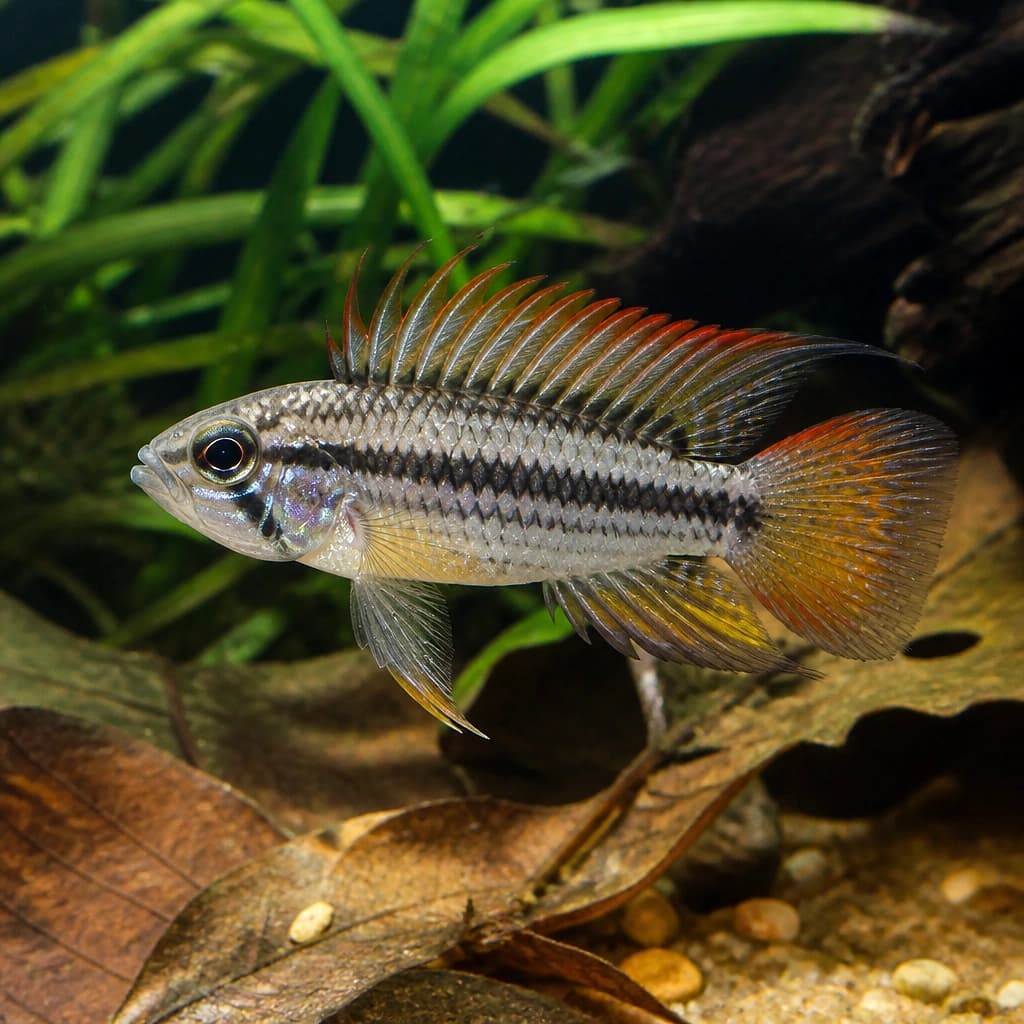
Cruzi Dwarf Cichlid (Apistogramma cruzi)
24–28°C · pH 4.5–6.5 · 60L
£39.99

Buy Apistogramma Panduro, a striking South American dwarf cichlid with bold colour and personality. Ideal for experienced aquarists. UK delivery available.
Adult size is the maximum length this species reaches at full maturity (scientific sources). The livestock you receive will be younger and smaller — pick a size variant above for the actual shipping size. Photos are AI-enhanced, so the animal may show subtle colour or marking differences.
Apistogramma pandourini
Pandurini Dwarf Cichlid bond and breed in male/female pairs — buying a pair gives them the social structure they need.
Buy Apistogramma Panduro, a striking South American dwarf cichlid with bold colour and personality. Ideal for experienced aquarists. UK delivery available.
Adult size is the maximum length this species reaches at full maturity (scientific sources). The livestock you receive will be younger and smaller — pick a size variant above for the actual shipping size. Photos are AI-enhanced, so the animal may show subtle colour or marking differences.

Cichlids are one of the most diverse fish families in the hobby. From tiny apistogrammas to massive oscars, this guide covers the basics of keeping them well.
Maintain these water conditions for optimal health and vibrant colors
Apistogramma Panduro is one of the most rewarding dwarf cichlids for sale UK aquarists can choose when they want colour, personality, and a manageable footprint in the same fish. Known to hobbyists as the blue panda apisto or Apisto Pandurini, Apistogramma panduro comes from the Amazon basin in Peru and belongs to the celebrated group of South American dwarf cichlids that thrive in soft, acidic water. At around 6 cm, this peaceful bottom-dweller is small enough for a dwarf cichlid nano tank setup, yet bold enough to become the centrepiece of a carefully planned aquascape. With a typical lifespan of up to 5 years, it suits keepers who want a fish with real character but without the size or aggression of larger cichlids. Care is moderate, so it is a strong choice for anyone researching best dwarf cichlids for beginners, peaceful dwarf cichlids for community tank setups, or a striking tropical dwarf fish UK display. See our detailed photos showing the male’s intense blue sheen, the female’s rich yellow breeding dress, and the contrast that makes this species stand out among colourful dwarf cichlids and rare dwarf cichlids UK listings. If you are comparing Apistogramma Panduro for sale UK options, this species offers a superb balance of beauty, manageable size, and natural behaviour for a planted aquarium.
Apistogramma panduro sits within the A. nijsseni species group, which is prized in the hobby for compact size, strong parental care, and striking colour contrast. It is closely related to species such as Apistogramma Elizabethae - Elizabeth'S Dwarf Cichlid, Apistogramma Agassizii - Agassiz'S Dwarf Cichlid, and Apistogramma Hongsloi «Red Stroke» - Red, making it a favourite for keepers building a list of dwarf cichlids or comparing the best dwarf cichlids comparison for a South American setup. In the aquarium hobby, this species is valued for its manageable size, breeding interest, and the way it brings out natural behaviour in a well-structured dwarf cichlid planted tank setup.
Apistogramma panduro originates in Peru in the Amazon river basin, where it lives in slow-moving blackwater and leaf-littered margins with soft substrate, shaded cover, and low mineral content. In the wild, these fish spend much of their time close to the bottom, weaving through roots, fallen leaves, and small caves while searching for tiny invertebrates, worms, and other microfoods. That is why a successful Apistogramma Panduro habitat in captivity should focus on dim lighting, botanical cover, and gentle filtration rather than bright open water. The species is naturally adapted to soft water fish conditions, which is why dwarf cichlid water hardness, pH stability, and low flow matter so much. Many aquarists looking for South American cichlids for sale or freshwater cichlids UK want fish that show natural behaviour, and this species is a great example of why habitat matters.
In nature, the water is often warm, slightly acidic, and stained by tannins from decomposing leaves and wood. That environment helps explain the species’ preference for Apistogramma Panduro ideal water conditions, including a pH around 5.5-6.8, low hardness, and stable warmth. It also explains why Apistogramma Panduro aquarium ideas often include driftwood, leaf litter, and shaded planting rather than minimalist decor. If you are planning an Apistogramma Panduro for planted tank layout, think of the wild habitat first: broken sight lines, fine sand, and plenty of hiding places. A good Apistogramma Panduro care guide always starts with recreating this environment, because stress drops, colour improves, and breeding behaviour becomes much more reliable.
Mimicking the species’ natural blackwater habitat with leaf litter, alder cones, and low-intensity lighting often improves colour, reduces shyness, and encourages spawning. This is especially useful if you want to keep Apistogramma Panduro with tetras in a calm community aquarium.
The Apistogramma Panduro minimum tank size is 60 litres, and that is best treated as the starting point for a pair rather than a crowded community. For a male with two or three females, or for a species-only breeding group, a 75-90 litre aquarium gives more room for territories and reduces stress. The species is ideal for a Apistogramma Panduro for small aquarium project, but it still needs enough floor space to establish caves and line-of-sight breaks. If you are researching Apistogramma Panduro tank size, remember that bioload rises quickly once you add tank mates, so a larger footprint is always safer than a tall, narrow tank.
For Apistogramma Panduro water parameters, aim for 24-28°C, pH 5.0-7.0, and 1-10 dGH. The sweet spot for most fishkeepers is around 25-26°C with soft, slightly acidic water. These are classic dwarf cichlid temperature requirements, and they support digestion, immune function, and spawning activity. If your tap water is hard, use RO water blended with a remineraliser to reach the right Apistogramma Panduro pH level and mineral balance. Sudden swings are more dangerous than being a fraction outside the ideal range, so stability matters more than chasing a perfect number every day.
Choose gentle filtration with biological capacity and low current. A sponge filter, small internal filter with a spray bar, or a canister filter throttled back works well for Apistogramma Panduro aquarium requirements. Strong flow can push this fish into hiding, especially in a dwarf cichlid nano tank setup. For planted aquariums, a filter that keeps water clear without blasting the substrate is ideal. If you are comparing equipment for a dwarf cichlid planted tank setup, prioritise oxygenation, quiet operation, and easy maintenance over raw flow rate.
Fine sand is the best dwarf cichlid substrate preference for this species because it allows natural sifting and makes cave entrances easier to defend. A dark sand or fine gravel base also helps the blue and gold tones stand out. Many keepers add a thin layer of leaf litter over the sand to echo the Amazon floor and support microfauna. This is one of the easiest ways to improve a Apistogramma Panduro aquarium ideas build without complicating maintenance.
For a natural aquascape, use driftwood, caves, coconut shells, and dense planting. Good choices include Java fern, Anubias, Cryptocoryne, and floating plants to soften light. If you are building an Apistogramma Panduro for planted tank layout, combine foreground cover with open sand patches so the fish can display and forage. Add botanicals such as Indian almond leaves or alder cones to tint the water and support the Apistogramma Panduro habitat. Related species like Apistogramma Cf. Viejita Gold - Dwarf and Apistogramma Agassizii - Agassiz'S Dwarf Cichlid also shine in this style of setup.
Use low to moderate lighting for 7-8 hours per day. Bright light can make this fish retreat, while softer light helps show the rich blue in the fins and the dark facial mask. Floating plants are useful if you want to create shaded pockets without losing plant growth. For aquarists searching Apistogramma Panduro aquarium requirements, lighting is often overlooked, but it has a major effect on behaviour and colour.
Always cycle the tank for 4-6 weeks before adding fish, and if you are using peat or botanicals, add them gradually so the water chemistry changes slowly. That approach is especially helpful when ordering live Apistogramma Panduro for sale UK stock for a newly prepared aquarium.
For equipment, consider a reliable aquarium heater for tropical dwarf fish, a quiet low-flow filter for Apistogramma tanks, and a natural-looking fine sand substrate for cichlids. If you are planning a lush layout, browse our aquatic plants collection for dwarf cichlids to build a stable, fish-friendly environment.
Apistogramma panduro is an omnivore with a strong preference for small meaty foods. In the wild, it picks at tiny crustaceans, insect larvae, worms, and other microfauna, so the best Apistogramma Panduro diet in captivity should be varied and protein-rich. A good Apistogramma Panduro feeding guide includes high-quality micro pellets, frozen brine shrimp, daphnia, bloodworm, and occasional live foods. This species usually accepts prepared foods well once settled, which is one reason it is often recommended among peaceful dwarf cichlids for community tank options and sometimes listed with the easiest Apistogramma species for hobbyists who can meet its water needs.
Staple foods should be small enough for the fish to eat without wasting. Use micro pellets or fine granules as the base, then rotate in frozen foods to keep nutrition broad. For colour, condition, and spawning, live or thawed foods such as brine shrimp and mosquito larvae can make a visible difference. Keep portions small because this species has a modest stomach and a high sensitivity to poor water quality. Overfeeding is one of the most common mistakes in Apistogramma Panduro health management.
| Time | Food | Amount |
|---|---|---|
| Morning | Micro pellets or fine granules | Small pinch, eaten within 1 minute |
| Evening | Frozen brine shrimp or daphnia | Small portion, remove leftovers |
For conditioning, add live foods two to three times per week, especially if you are preparing for Apistogramma Panduro breeding. This helps females build energy and encourages the male to display stronger colour. Good supplementary foods include chopped blackworm, cyclops, and quality frozen mixes designed for dwarf cichlids. If you are shopping for food, pair this fish with micro pellets for dwarf cichlids and frozen brine shrimp food packs for a simple, reliable routine.
Overfeeding causes ammonia spikes, bloating, and water quality issues fast in small aquariums. Remove uneaten food after a few minutes, and avoid feeding large chunks, oily foods, or anything treated with copper-based medications if invertebrates are present.
Foods to avoid include oversized pellets, hard floating sticks, and rich mammal-based foods. A balanced Apistogramma Panduro diet should be varied but not messy. If you are comparing Apistogramma Panduro price UK with other species, remember that good nutrition is part of the long-term cost of keeping healthy fish.
Adult males are the showstoppers. They usually reach about 6 cm and develop deep blue tones in the fins, a darker body, and a bold facial mask that gives the species its “panda” nickname. Females are smaller, rounder, and often show a brighter yellow or gold colouration, especially when guarding eggs or fry. This strong sexual dimorphism is one reason the species is so popular among keepers of colourful dwarf cichlids and collectors of most colourful dwarf cichlids. In the right light, the fish can look almost velvet-black with electric blue highlights, which is why many aquarists choose it for a planted display.
There are no major captive colour morphs like you might see in some other fish, but individual fish can vary in the intensity of the blue, the depth of the black mask, and the amount of orange or yellow in the fins. Good diet, soft water, and a dark substrate all improve contrast. Our photos show the intense chocolate-brown and blue contrast achieved through leaf litter, shaded planting, and stable water chemistry. If you are comparing Apistogramma Panduro colour variants with other dwarf cichlids, this species stands out for elegance rather than neon brightness.
For hobbyists looking at Apistogramma Panduro aquarium ideas, the fish’s body shape makes it ideal for low, wide aquascapes. The dorsal fin is extended in males, while the caudal fin often shows neat edging and subtle patterning. In a well-kept tank, the colours become more vivid during courtship, feeding, and territorial displays.
Apistogramma panduro is generally peaceful, but males can become territorial around caves and spawning sites. That means Apistogramma Panduro tank mates should be small, calm, and not overly boisterous. The best companions are fish that occupy the upper water column or stay busy in the midwater without nipping fins. This makes the species a strong candidate for Apistogramma Panduro with tetras setups, especially with ember tetras, cardinal tetras, or pencilfish. It also fits well into many South American cichlids UK community tanks when stocking is planned carefully.
Ideal tank mates include small tetras, Corydoras, pencilfish, otocinclus, and peaceful hatchetfish in suitably covered aquariums. If you want to keep a pair, give them caves and enough floor space so they can establish boundaries without stressing other fish. Avoid large cichlids, fin-nippers, and hyperactive species that will outcompete them for food. This is especially important if you are building a buy dwarf cichlid UK community tank rather than a species-only display.
| Species | Compatible? | Notes |
|---|---|---|
| Mikrogeophagus Ramirezi «Blue Brilliant» - Papiliochromis | ⚠️ Caution | Similar water needs, but both can be sensitive; best in a larger, very stable aquarium. |
| Apistogramma Hongsloi «Red Stroke» - Red | ⚠️ Caution | Can work in spacious setups, but territorial overlap may cause stress. |
| Congo tetra | ❌ Avoid | Too large and active for this calm dwarf cichlid. |
Good companion species include Apistogramma Elizabethae - Elizabeth'S Dwarf Cichlid, Apistogramma Cf. Viejita Gold - Dwarf, and Guianacara Dacrya - Bandit Cichlid - if the tank is large enough and stocking is conservative. For non-cichlid companions, Andinoacara Pulcher «Neon Blue» - Nannacara is not a typical tank mate for small systems, but it can help shoppers compare size and temperament when planning a broader South American setup.
Invertebrates are tricky. Adult shrimp may be ignored in heavily planted tanks, but shrimplets are likely to be eaten. Snails are usually safe. If you are searching for dwarf cichlids UK that work in a community aquarium, this species is one of the better options when paired with small, peaceful fish and plenty of cover.
Quarantine new fish for 2-4 weeks in a separate tank before adding them to your main aquarium. This reduces the risk of introducing parasites, bacterial infections, and stress-related disease into an established freshwater cichlids UK display.
For a balanced community, consider small tetra species for Apistogramma tanks, Corydoras catfish for planted aquariums, and pencilfish for South American tanks. If you want to compare more options, our dwarf cichlids for sale in UK collection is a useful place to browse.
Apistogramma Panduro breeding is moderate in difficulty, but it becomes much easier when the pair is conditioned well and given the right environment. The best approach is to buy juveniles and let them pair naturally, because this often leads to stronger compatibility and better spawning success. A 60-litre tank can work for a pair, but 75 litres or more is better if you want to raise fry. Use soft, acidic water, plenty of caves, fine sand, and subdued lighting. This setup mirrors the species’ natural breeding site and supports strong Apistogramma Panduro spawning behaviour.
Once a pair bonds, the female usually chooses a cave and becomes highly protective. She will lay eggs on the roof or wall of the cave, and the male may guard the territory around it. In good conditions, eggs hatch in a few days, and the female continues to care for the larvae. Fry can be started on infusoria, then microworms and newly hatched brine shrimp once they are free-swimming. Java moss is especially useful because it supports tiny food organisms and gives fry extra cover.
Condition breeding fish with live and frozen foods for at least two weeks before attempting a spawn. This is where a strong Apistogramma Panduro feeding guide pays off. Keep water changes small and frequent, and avoid disturbing the cave once eggs are laid. If you are serious about breeding, keep the tank very clean because live foods can quickly affect water quality.
Use a breeding tank with a single cave, leaf litter, and very gentle filtration, then feed small amounts of live food while keeping the water slightly cooler at night by 1-2°C. That subtle temperature shift can help trigger spawning in mature pairs.
Common challenges include the male harassing a weak female, eggs fungus over in poor water, and fry losses from overfeeding. The solution is usually better water quality, more cover, and less disturbance. For keepers researching Apistogramma Panduro behaviour, breeding is where the species becomes most interesting: courtship colours intensify, the female’s yellow deepens, and the pair’s territorial displays become much more visible.
Comparing dwarf cichlids is useful because many species look similar at first glance but differ in temperament, water sensitivity, and breeding style. If you are deciding between Apistogramma Panduro vs German blue ram or Apistogramma Panduro vs Apistogramma cacatuoides, the right choice depends on your tank size, water chemistry, and whether you want a more delicate blackwater fish or a hardier, more adaptable species.
| Feature | Apistogramma panduro | German blue ram |
|---|---|---|
| Max Size | 6 cm | 7 cm |
| Care Level | Moderate | Moderate to advanced |
| Temperature | 24-28°C | 26-30°C |
| Price | £10.65 | Varies by strain |
| Best For | Planted blackwater aquariums | Warm, stable community tanks |
| Feature | Apistogramma panduro | Apistogramma cacatuoides |
|---|---|---|
| Temperament | Peaceful, territorial when breeding | More assertive |
| Water Preference | Soft, acidic | More adaptable |
| Best For | Naturalistic aquascapes | Beginner-friendly display tanks |
If you want a more forgiving fish, Apistogramma Agassizii - Agassiz'S Dwarf Cichlid is often a good comparison point. If you want a slightly different look, Apistogramma Hongsloi «Red Stroke» - Red offers stronger red tones, while Mikrogeophagus Ramirezi «Blue Brilliant» - Papiliochromis gives a different style of South American cichlid display. For shoppers comparing the best dwarf cichlids comparison, Panduro is the better choice when you want subtle elegance, strong parental care, and a species that rewards careful setup.
It is also worth comparing with Apistogramma Panduro vs kribensis. Kribensis are hardy and adaptable, but they are West African cichlids with different water and decor needs. Panduro is the better pick if you want a true Amazon biotope feel and a more delicate, leaf-litter-driven aquascape.
Healthy fish are active, alert, and show clear colour with intact fins and a rounded but not swollen belly. A healthy Apistogramma Panduro health profile includes steady breathing, interest in food, and regular use of caves and cover. If the fish is clamped, hiding constantly, or losing colour, check water quality first. Most problems in this species are linked to stress, poor diet, or unstable parameters rather than random disease.
Common issues include ich, fin rot, internal parasites, and bacterial infections after transport or poor acclimation. Because this fish prefers soft, stable water, sudden changes in pH or hardness can weaken the immune system. If you are buying live dwarf cichlid delivery UK stock, acclimate slowly and keep the lights low for the first day. A short period of reduced feeding after arrival is normal, but the fish should resume eating within a day or two once settled.
NEVER use copper-based medications with invertebrates - lethal to shrimp! If shrimp are in the tank, treat fish in quarantine instead of dosing the display aquarium.
Prevention is straightforward: stable water, varied diet, low stress, and sensible stocking. Regular small water changes are better than infrequent large ones. If you are searching for Apistogramma Panduro delivery UK or order Apistogramma Panduro online UK, make sure your tank is ready before the fish arrives so acclimation is smooth and stress is minimal.
Apistogramma Panduro behaviour is one of the main reasons aquarists love this species. It is inquisitive, bottom-oriented, and full of subtle display behaviour once settled. The fish will explore caves, sift sand, inspect leaves, and hover near its chosen territory. Males become more confident as they mature, while females often show stronger colour and bolder guarding behaviour during breeding periods. This makes the species especially rewarding for keepers who enjoy watching natural interactions rather than just bright colours.
It is not a schooling fish, but it does best when kept as a pair or a small harem in a suitable tank. In a calm community, it may spend long periods foraging and then retreat to cover if disturbed. That is normal. To encourage natural behaviour, provide broken sight lines, low flow, and a predictable feeding routine. In a well-planted tank, the fish often becomes more visible and less stressed, which is why it is frequently chosen for Apistogramma Panduro for planted tank displays.
When you are looking for buy Apistogramma Panduro UK stock, the difference is in how the fish are selected, conditioned, and packed before they reach your door. Our Panduro are chosen for strong body shape, clear colour, and healthy feeding response, which matters if you want fish that settle quickly into a home aquarium. We focus on careful husbandry so the fish arrive ready for a new environment rather than stressed from poor handling. That is especially important for anyone ordering Apistogramma for sale UK stock for a planted community or breeding project.
Each fish is quarantined before dispatch, packed in insulated materials, and shipped with tracked delivery. In colder months, heat packs are used where needed to protect tropical fish in transit. We also provide practical aftercare support, including acclimation advice for UK water conditions and a species care sheet that covers Apistogramma Panduro aquarium requirements, feeding, and tank mates. If you are comparing buy dwarf cichlid UK options or browsing South American cichlids for sale UK, this species is a strong choice because it combines beauty, manageable size, and interesting behaviour.
Order your Apistogramma Panduro for sale UK fish today with confidence if you want a compact, colourful cichlid that rewards careful setup and brings real personality to a tropical aquarium.
Complete your aquarium with compatible species and practical essentials that make care easier. If you want a similar look, browse Apistogramma Elizabethae - Elizabeth'S Dwarf Cichlid, Apistogramma Agassizii - Agassiz'S Dwarf Cichlid, or Apistogramma Hongsloi «Red Stroke» - Red. For a different South American style, Mikrogeophagus Ramirezi «Blue Brilliant» - Papiliochromis and Ramirez Dwarf Cichlid Papiliochromis Ramirezi Asia are useful comparisons. You can also improve the setup with micro pellets for dwarf cichlids and a low-flow filter for Apistogramma tanks for a cleaner, calmer aquarium.
24–28°C · pH 4.5–6.5 · 60L

24–28°C · pH 5.5–7 · 60L
24–28°C · pH 5.5–7 · 60L

24–28°C · pH 5.5–7 · 60L

24–28°C · pH 5.5–7 · 60L

24–28°C · pH 5.5–7 · 60L

18–26°C · pH 6.5–8 · 30L

23–27°C · pH 7.4–8.4 · 500L

20–27°C · pH 6–7 · 54L

23–27°C · pH 7.4–8.4 · 150L

24–28°C · pH 6.5–7.8 · 300L

20–24°C · pH 7–8 · 45L

24–28°C · pH 6.5–7.5 · 2000L

24–28°C · pH 7.5–8.5 · 200L

24–28°C · pH 5.5–7 · 60L

18–25°C · pH 6–8 · 100L

24–28°C · pH 7–8 · 120L

18–28°C · pH 6.5–8 · 20L

24–27°C · pH 7.5–8.8 · 150L

22–26°C · pH 6–7.5 · 60L

24–28°C · pH 7.5–8.5 · 40L

24–28°C · pH 7.5–8.5 · 500L