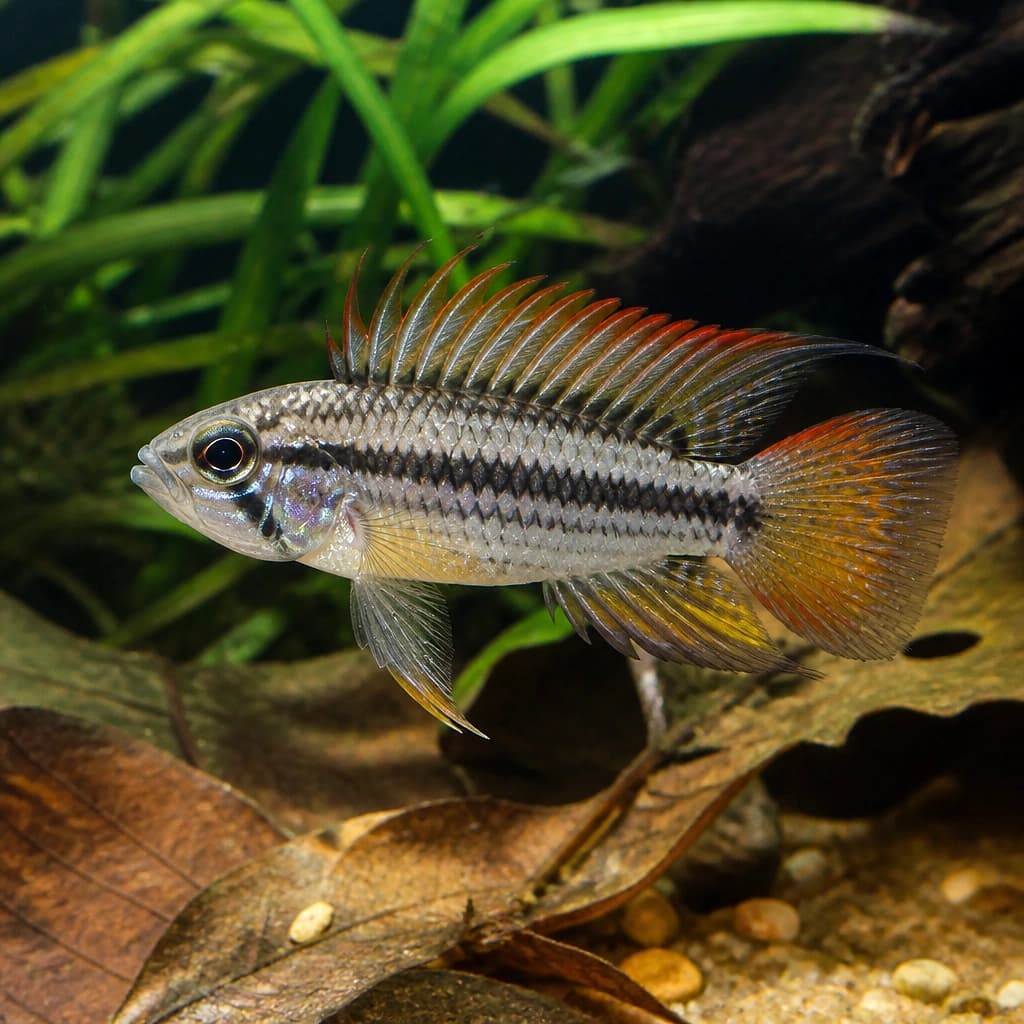
Apistogramma macmasteri
Apistogramma Macmasteri - Moderate Care Dwarf Cichlid UK
Buy Apistogramma Macmasteri, a stunning South American dwarf cichlid with bold colour and personality. Ideal for planted tanks. UK delivery available.
Care at a Glance
Premium Quality
Healthy, vibrant fish from trusted suppliers
Expert Care
Detailed care guides and support
Live Arrival Guarantee
Your fish arrives healthy or we'll replace it
Acclimated
Properly quarantined and ready for your tank
Quick Care Guide
Water Parameters
Maintain these water conditions for optimal health and vibrant colors
Why Choose This Fish?
Buy Apistogramma Macmasteri, a stunning South American dwarf cichlid with bold colour and personality. Ideal for planted tanks. UK delivery available.
If you are looking for dwarf cichlids for sale UK aquarists can keep in a beautifully structured South American setup, Apistogramma macmasteri is one of the standout choices. Often sold as the Red Tailed Dwarf Cichlid, this species combines the bold personality cichlid fans love with a size that suits a carefully planned community aquarium. Native to Colombia’s Meta River drainage, these South American cichlids UK hobbyists admire usually reach around 7 cm, live up to 5 years, and show a peaceful but territorial nature that makes them ideal for keepers ready for moderate care. For many fishkeepers searching Apistogramma for sale UK, this species sits in the sweet spot between colour, character, and manageable size.
What makes them especially appealing is how well they fit a dwarf cichlid planted tank setup when the layout includes caves, wood, leaf litter, and calm open areas. They are among the most colourful dwarf cichlids in the hobby, with males showing rich reds, blues, golds, and dark edging on the fins. See our detailed photos showing the red tail, extended finnage, and body patterning that make this species so popular with people wanting freshwater cichlids UK aquariums with real personality. Whether you want to buy Apistogramma Macmasteri UK, compare South American cichlids for sale UK, or simply find one of the best-looking tropical dwarf fish UK keepers can own, this fish offers beauty, breeding interest, and fascinating behaviour in one compact package.
🔹 Quick Facts
- Scientific Name: Apistogramma macmasteri
- Care Level: Moderate
- Min Tank Size: 60 litres (13 gallons)
- Temperature: 24-28°C (75-82°F)
- pH Range: 5.5-7.0
- Lifespan: Up to 5 years
- Temperament: Peaceful, territorial when breeding
- Diet: Omnivore
Classification
- Order: Cichliformes
- Family: Cichlidae
- Genus: Apistogramma
Apistogramma macmasteri belongs to the large American cichlid family and is one of the best known dwarf cichlids in the aquarium hobby. It was described from fish associated with Colombia’s Orinoco basin and has become a favourite among keepers who want a manageable cichlid with strong colour and interesting pair behaviour. In the hobby, it is often compared with species such as Apistogramma Agassizii, Apistogramma Hongsloi “Red Stroke”, and Apistogramma Cf. Viejita Gold.
Where Do Apistogramma Macmasteri Come From? Natural Habitat Explained
The natural Apistogramma Macmasteri habitat is found in Colombia, especially within the Guaytiquía and Metica river systems of the Meta drainage, part of the wider Orinoco basin. In the wild, these fish live in shallow margins, quieter side channels, and areas rich in sunken roots, twigs, and leaf debris. The bottom is usually sandy, which directly shapes their behaviour in aquariums. If you want an authentic setup, think more forest stream than bright open display tank.
Wild conditions help explain many Apistogramma Macmasteri aquarium requirements. Water is often soft, slightly acidic, and stained by tannins from decaying organic matter. This is why dwarf cichlid water hardness matters so much for long-term success, especially if you hope to see natural courtship or successful spawning. Their native environment also has many visual barriers, which reduce stress and allow subordinate fish to avoid dominant individuals.
Unlike some hobby fish that come from heavily planted habitats, wild Apistogramma macmasteri often inhabit areas where rooted plants are sparse. That does not mean they cannot thrive in an aquarium with greenery; in fact, Apistogramma Macmasteri for planted tank setups can work very well when the planting is balanced with caves and open sand. The key is to copy the function of the habitat: shelter, shade, soft substrate, and broken lines of sight.
In nature they hunt tiny invertebrates, insect larvae, crustaceans, and organic morsels sifted from the substrate. That natural feeding style explains why they respond so well to small frozen foods and why a varied Apistogramma Macmasteri diet is important in captivity. They are not currently known as a major conservation concern in the hobby, but like many South American cichlids UK keepers enjoy, they depend on stable water quality and habitat structure to show their best colours and behaviour.
💡 Expert Tip
Mimicking the natural habitat with fine sand, driftwood, leaf litter, and shaded caves often improves colour, reduces aggression, and encourages natural foraging. Many keepers notice better confidence and stronger pair bonds when the tank feels more like a root-filled stream edge than a bare display aquarium.
How to Set Up the Perfect Tank for Apistogramma Macmasteri
A well-planned setup is the difference between merely keeping this species and truly seeing what makes it special. Any good Apistogramma Macmasteri care guide starts with floor space, cover, and water stability. While the Apistogramma Macmasteri minimum tank size is 60 litres for a pair, a larger footprint is better if you plan to keep one male with 2-3 females or combine them with dither fish. When people ask about Apistogramma Macmasteri tank size, the practical answer is this: 60 litres is the minimum, but 80-100 litres gives much more stable territory structure and easier maintenance.
Tank Size Requirements
For a single pair, aim for at least 60 litres with plenty of bottom area. For a harem group, choose 90 litres or more. Although some people search for Apistogramma Macmasteri for small aquarium options, this fish is not ideal for cramped cubes with limited floor space. A dwarf cichlid nano tank setup can work only for highly experienced keepers using careful stocking and heavy structure, but for most hobbyists a standard rectangular aquarium is the safer choice.
Water Parameters
Stable water matters more than chasing extremes. The best Apistogramma Macmasteri water parameters are 24-28°C, pH 5.5-7.0, and hardness 2-12 dGH. The ideal range for breeding is usually toward the softer, more acidic end. If you are checking Apistogramma Macmasteri pH level targets, 6.0-6.8 is a very workable everyday range for captive-bred fish. The recommended Apistogramma Macmasteri water temperature is 25-27°C for routine care, while the wider dwarf cichlid temperature requirements still allow 24-28°C depending on tankmates and breeding goals.
Filtration
Use gentle but effective filtration. Sponge filters, small external filters, or well-baffled internal filters all work. The goal is clean water without blasting the fish around the tank. Moderate flow is enough; these are not riverine cichlids that want constant strong current. Add biological media and keep up with weekly water changes of 25-35%.
Substrate
The best dwarf cichlid substrate preference is fine sand. This allows natural sifting, protects delicate mouths, and looks far more natural than coarse gravel. A pale or natural sand also helps display their colours better than bright artificial substrates. Add a few dried leaves if you want a more authentic South American feel.
Plants and Decor
There are many good Apistogramma Macmasteri aquarium ideas, but the most effective layouts all include caves, wood, and broken sight lines. Coconut shells, ceramic caves, rock shelters, and branchy driftwood are excellent. In a dwarf cichlid planted tank setup, use hardy plants around the edges and background while keeping open sand at the front. Anubias, Java fern, Cryptocoryne, and floating plants all work well. If you enjoy browsing related fish for a themed display, species such as Apistogramma Elizabethae and Apistogramma Agassizii show how varied dwarf cichlid aquascapes can be.
Lighting
Moderate lighting is best. Bright light can make them shy unless you provide floating cover. Aim for 6-8 hours daily in a blackwater-style tank or 7-9 hours in a planted setup. Floating plants help diffuse light and make them feel secure.
Quick Setup Checklist
- Choose at least the Apistogramma Macmasteri minimum tank size of 60 litres
- Use fine sand to match natural dwarf cichlid substrate preference
- Keep Apistogramma Macmasteri ideal water conditions stable at 24-28°C and pH 5.5-7.0
- Add caves, driftwood, and visual barriers
- Use gentle filtration and regular water changes
- Plan tankmates before stocking a community
💡 Pro Tip
Always cycle the tank for 4-6 weeks before adding Apistogramma. In newly cycled tanks, add leaf litter and a mature sponge filter if possible. This species tolerates fewer mistakes than hardier community fish, so biological stability is worth the wait.
What Do Apistogramma Macmasteri Eat? Complete Feeding Guide
The correct Apistogramma Macmasteri feeding guide should reflect how they feed in the wild: small, protein-rich items taken from the lower levels of the tank. These fish are omnivores, but they lean heavily toward meaty foods. A balanced Apistogramma Macmasteri diet includes quality micro pellets, frozen cyclops, daphnia, brine shrimp, and bloodworm in moderation. This is especially important for keepers buying live Apistogramma Macmasteri for sale UK and wanting them to settle quickly after transport.
Staple Foods
Use a sinking or slow-sinking micro pellet as the staple. Choose a food with good protein content and small granule size. Not every fish adapts instantly, so mixing pellets with frozen food for the first week often helps. If you are comparing dwarf cichlids UK feeding needs, Macmasteri are generally straightforward once settled.
Supplemental Foods
Offer frozen foods 3-4 times per week. Daphnia and brine shrimp support digestion and activity, while cyclops and finely chopped bloodworm help maintain condition. Variety is especially important if you hope to see stronger colour in these most colourful dwarf cichlids. A dull diet often leads to dull fish.
Treats and Conditioning Foods
For breeding pairs, extra live or frozen foods are useful. This is one reason Apistogramma Macmasteri breeding success often improves after two weeks of conditioning. Females become fuller, males display more, and spawning caves are inspected more often. If you are searching best dwarf cichlids for beginners, note that this species is beginner-friendly only when feeding is consistent and water quality remains high.
| Time | Food | Amount |
|---|---|---|
| Morning | Micro pellet or granule | What they eat in 60-90 seconds |
| Evening | Frozen brine shrimp, daphnia, or cyclops | Small pinch, fully consumed |
Feeding Frequency and Portion Control
Feed adults once or twice daily. Juveniles can be fed 2-3 smaller meals. Keep portions tight; their appetite can be misleading. A fish that begs is not always a fish that needs more food. This matters for Apistogramma Macmasteri health, because excess food quickly drives ammonia and nitrate upward in a warm cichlid tank.
Foods to Avoid
Avoid oversized pellets, fatty foods used too often, and any diet based only on bloodworm. Do not leave uneaten food in caves where it can rot. During medication periods, monitor feeding closely, as stressed fish may refuse dry foods. If you also keep species such as Mikrogeophagus Ramirezi “Blue Brilliant” or Ramirez Dwarf Cichlid Papiliochromis ramirezi, similar small frozen foods work well across the tank.
⚠️ Feeding Warning
Overfeeding causes ammonia spikes, poor water quality, and bacterial problems. With dwarf cichlids, a small amount of uneaten food hidden under wood can create more trouble than many keepers realise.
Apistogramma Macmasteri Appearance: Colors, Patterns & Varieties
Apistogramma macmasteri is prized for strong finnage and rich warm colours. Adult males usually reach the full 7 cm, while females stay smaller and stockier. The body is elongated but deeper than some other Apistogramma, giving them a sturdy look for a dwarf species. Males often show red in the caudal and dorsal fins, blue iridescence on the cheeks and flanks, and dark patterning along the body.
Among colourful dwarf cichlids, this species stands out because the colours intensify with maturity, diet, and confidence. Good water quality, subdued lighting, and dark wood all help them display better. Females are less flashy most of the time, but during breeding they turn a striking yellow with bold black markings. That contrast is one of the easiest ways to spot sexual dimorphism.
Many aquarists ask about Apistogramma Macmasteri colour variants. In the trade you may see fish sold under names linked to red, gold, or intensified finnage strains. Some line-bred forms are brighter than wild-type fish, and historically there has been discussion around overlap with forms related to viejita-type fish in the hobby. For buyers wanting rare dwarf cichlids UK collections with standout display value, Macmasteri remains one of the most eye-catching choices without becoming overly delicate.
Our photos show the intense red tail and extended dorsal points that make this fish so appealing in a well-kept display. On dark sand with root wood, the body sheen and fin edging become much more obvious than in bright, bare tanks.
What Fish Can Live With Apistogramma Macmasteri? Compatibility Guide
The typical Apistogramma Macmasteri behaviour is peaceful toward midwater fish but territorial around the bottom, especially when breeding. This makes them one of the better peaceful dwarf cichlids for community tank setups, provided the aquarium is arranged properly. They do best with calm species that will not harass them and will not compete aggressively for caves. If you are planning Apistogramma Macmasteri tank mates, focus on small schooling fish and gentle bottom companions.
Ideal Tank Mates
Small tetras are among the best companions, which is why searches for Apistogramma Macmasteri with tetras are so common. Ember tetras, pencilfish, and other peaceful upper-level fish work well as dithers and help shy Apistogramma feel secure. Corydoras can work in larger tanks, though breeding pairs may chase them away from cave areas. Otocinclus are often suitable in mature planted aquariums.
Within a specialist cichlid setup, you may also compare them with other species rather than mixing them. For example, hobbyists browsing buy dwarf cichlids online UK often look at alternatives such as Apistogramma Hongsloi “Red Stroke”, Apistogramma Cf. Viejita Gold, Apistogramma Elizabethae, or Andinoacara Pulcher “Neon Blue” - Nannacara for a different balance of colour and temperament.
Species to Avoid
Avoid large cichlids, fin-nipping barbs, and boisterous bottom dwellers. These fish can stress Macmasteri, suppress feeding, and interrupt breeding. Also avoid mixing multiple male Apistogramma in small tanks unless you have substantial experience and enough space. If you are comparing african dwarf cichlids with South American species, remember that their water chemistry and social patterns can differ enough to make mixed setups impractical.
Community Stocking Examples
In a 60-litre tank, keep a single pair or one male with one female and a small shoal of tiny upper-level fish only if the layout is dense. In an 80-100 litre setup, one male with 2 females plus 10-15 small tetras is more realistic. For a display focused on south american dwarf cichlids for sale uk style stocking, pair them with leaf litter, wood, and calm schooling fish rather than trying to maximise numbers.
Compatibility with Invertebrates
Adult shrimp are not guaranteed safe. Small shrimp may be hunted, especially fry. Snails are usually fine. If shrimp are a priority, provide dense moss and expect some losses. Their hunting instinct is part of normal behaviour, not a fault.
| Species | Compatible? | Notes |
|---|---|---|
| Apistogramma Agassizii | ⚠️ Caution | Best kept separately unless the tank is very large and expertly structured |
| Small tetras | ✅ Yes | Excellent dither fish and ideal upper-level companions |
| Large cichlids | ❌ Avoid | Too aggressive and likely to outcompete or intimidate them |
Many shoppers comparing dwarf cichlids for sale in UK ask whether this species is community-safe. The answer is yes, with planning. They are among the more manageable freshwater cichlids UK aquarists can keep in a peaceful South American display, but they are still cichlids and need territories. A customer favourite layout is one male Macmasteri with a shoal of pencilfish and a few Corydoras in a 90-litre blackwater-style tank.
💡 Compatibility Tip
Always quarantine new arrivals for 2-4 weeks before adding them to an Apistogramma tank. This protects established fish from parasites and gives new fish time to regain strength before facing territorial boundaries.
How to Breed Apistogramma Macmasteri: Complete Breeding Guide
Apistogramma Macmasteri breeding is one of the big reasons this species remains so popular. It is not the hardest Apistogramma to spawn, but it does reward attention to detail. Many hobbyists consider it among the easiest Apistogramma species for keepers moving beyond basic community fish, though not quite a true beginner breeder. If you provide soft water, secure caves, and excellent conditioning foods, breeding often follows naturally.
Breeding Setup
Use a separate 45-60 litre breeding tank or a calm species tank with minimal disturbance. Fine sand, several caves, leaf litter, and driftwood are ideal. Keep the temperature around 26-27°C and use softer water if possible. A small sponge filter is perfect because it keeps flow gentle and protects fry.
Spawning Behaviour
The female usually chooses a cave roof or the underside of a sheltered surface to place eggs. Typical Apistogramma Macmasteri spawning behaviour includes the female turning bright yellow, intensifying black markings, and becoming more defensive around the chosen site. The male patrols the wider territory while the female handles close egg care. This division of labour is classic for many Apistogramma species.
Egg Care and Hatching
Eggs generally hatch in around 2-4 days depending on temperature, with fry becoming free-swimming a few days later. During this period, keep disturbance low and avoid moving decor. The female may relocate wrigglers between pits or sheltered spots. This is normal parental behaviour, not a sign of trouble.
Fry Care and Growth
Once free-swimming, offer infusoria, vinegar eels, or newly hatched brine shrimp. Feed small amounts several times daily and keep the tank spotless. Fry growth is steady rather than extremely fast. Stable water and tiny frequent meals matter more than heavy feeding.
Common Breeding Challenges
The most common problems are infertile spawns, fungus on eggs, or parents eating the first few batches. Often this improves with experience, better conditioning, and fewer disturbances. If you are searching best dwarf cichlids comparison articles because you want a species that combines beauty with realistic breeding chances, Macmasteri is a strong option.
Advanced Breeding Tip
For better hatch rates, use very clean soft water, keep conductivity low, and provide multiple cave choices with narrow entrances. Experienced breeders often find that females are calmer and more reliable when they can choose between at least three different spawning sites.
Apistogramma Macmasteri vs Similar Species: Which Should You Choose?
Choosing between different dwarf cichlids can be tricky because many look attractive in photos but behave differently in the home aquarium. Buyers searching Apistogramma for sale UK often compare this fish with rams, cacatuoides, and even kribensis. The right choice depends on your water, tank size, and whether you want a breeding project or a colourful centrepiece fish.
| Feature | Apistogramma macmasteri | German Blue Ram |
|---|---|---|
| Max Size | 7 cm | 6-7 cm |
| Care Level | Moderate | Moderate to advanced |
| Temperature | 24-28°C | 27-30°C |
| Price | £10.65 | Varies |
| Best For | Structured South American community tanks | Warmer show tanks with very stable water |
In the popular Apistogramma Macmasteri vs German blue ram debate, Macmasteri usually wins for keepers who prefer slightly cooler water and stronger cave-based behaviour. Rams often need warmer, more stable conditions and can be less forgiving of mistakes.
| Feature | Apistogramma macmasteri | Apistogramma cacatuoides |
|---|---|---|
| Temperament | Peaceful, territorial when breeding | Similar, often slightly bolder |
| Water Flexibility | Good for captive-bred fish | Very adaptable |
| Best For | Rich colour and classic Apisto behaviour | First-time Apistogramma keepers |
| Colour Focus | Red tail, blue sheen, yellow breeding female | Orange and black dorsal extensions |
| Price | £10.65 | Varies |
In the Apistogramma Macmasteri vs Apistogramma cacatuoides comparison, cacatuoides is often placed among the best dwarf cichlids for beginners, while Macmasteri appeals to keepers wanting a slightly deeper-bodied fish with rich red finnage. If you are also considering Apistogramma Macmasteri vs kribensis, remember kribensis are from Africa, not South America, and usually suit different aquascapes and water goals.
For hobbyists browsing a list of dwarf cichlids, Macmasteri is an excellent middle-ground choice: more dramatic than some starter species, but generally less demanding than the most delicate blackwater Apistogramma. If you want a similar option, compare with Apistogramma Cf. Viejita Gold or Apistogramma Hongsloi “Red Stroke”. If you were originally searching for a cockatoo cichlid for sale uk or even a black ram cichlid for sale uk, Macmasteri deserves a place on your shortlist.
Common Health Problems in Apistogramma Macmasteri & How to Prevent Them
Good Apistogramma Macmasteri health starts with prevention. Healthy fish show clear eyes, full finnage, strong colour, alert but not frantic movement, and a steady interest in food. They should hold territory confidently and not clamp fins or gasp at the surface. Because they come from softer, cleaner waters, they can react badly to neglected maintenance even when hardier community fish seem unaffected.
Common Diseases and Symptoms
Like many South American cichlids for sale UK hobbyists keep, Macmasteri can be vulnerable to white spot, bacterial fin damage, internal parasites, and stress-related wasting if newly imported or poorly acclimated. Watch for stringy waste, hollow bellies, shimmying, excess hiding, and faded colour. Warm water with high organic waste is a common trigger for trouble.
Treatment Options
For external issues, begin with improved water quality and isolation if needed. Many mild cases improve after large, regular water changes and removal of stressors. Use medications carefully and follow manufacturer guidance. Because dwarf cichlids can be sensitive, avoid mixing treatments unless you know exactly what you are targeting.
Prevention Tips
Keep nitrates low, feed a varied diet, and avoid sudden swings in temperature or pH. Maintain the recommended Apistogramma Macmasteri ideal water conditions rather than making frequent corrections. If your tap water is hard, gradual blending with softer water may help. Stable conditions are safer than constantly chasing perfect numbers.
Quarantine Procedures
A separate quarantine tank for 2-4 weeks is strongly recommended. Bare bottom, sponge filter, heater, and a few inert shelters are enough. Observe feeding, waste, respiration, and any signs of external parasites before introducing fish to the display tank.
⚠️ Health Warning
Never use medications casually in a display tank with sensitive species or invertebrates. Copper-based treatments can be lethal to shrimp and may create additional stress if used without a clear diagnosis.
Quarantine Protocol
- Keep new fish in a separate tank for 2-4 weeks
- Monitor appetite, breathing, colour, and waste daily
- Use a sponge filter and stable 25-26°C water
- Do not share nets or siphons between tanks without disinfection
Understanding Apistogramma Macmasteri Behavior in the Aquarium
The most interesting part of keeping this species is often the behaviour. Apistogramma Macmasteri behaviour combines curiosity, subtle hierarchy, and sudden bursts of territorial display. They spend much of their time near the bottom, weaving through wood, inspecting caves, and picking at the substrate. In a sparse tank they may seem shy, but in a structured aquarium they become much more visible.
They are not schooling fish. A male will establish a territory and females will hold smaller areas within or near it. During breeding, the female becomes the more intense defender of the immediate spawn site. This is why floor plan matters so much more than total water volume alone. If you want to encourage natural behaviour, provide multiple caves, visual barriers, and calm dither fish in the upper levels.
One of the reasons these are popular dwarf cichlid for sale options is the amount of personality they show relative to their size. Keepers often report that settled fish learn feeding times quickly and display to their owners through the glass, especially males in peak condition.
Why Buy from Tropical Fish Co?
When customers search Apistogramma Macmasteri for sale UK, they are usually not just looking for any fish with the right name. They want healthy stock, clear care information, and sensible preparation for transport. For this species, that matters because colour, feeding response, and stress tolerance can vary a lot depending on how fish were held before sale. We focus on presenting fish that are feeding properly and ready for a well-prepared home aquarium.
Each shipment is checked for body condition, finnage, and behaviour before listing. These fish are then observed in stable, warm water with structured cover so they settle and show normal feeding patterns. Because Macmasteri can be shy on arrival, we pay close attention to how they respond to prepared foods before dispatch. That is especially important for customers wanting to order Apistogramma Macmasteri online UK and receive fish that transition smoothly into a home tank.
For Apistogramma Macmasteri delivery UK, fish are packed in insulated boxes with professional fish bags, secure oxygenated packing, and seasonal heat packs when needed. Tracked delivery helps limit transit time, and unpacking guidance is provided so buyers can acclimate carefully. If you are looking to buy dwarf cichlid UK stock with confidence, this attention to handling is a major part of the difference. Customers comparing Apistogramma Macmasteri price UK should weigh not only the ticket price but also feeding condition, packing quality, and aftercare value.
Whether you want a single pair, are researching live dwarf cichlid delivery UK, or are building a collection of rare dwarf cichlids UK, this species is a rewarding choice when bought for the right setup. Order your fish with confidence if your tank is mature, soft to moderately soft, and properly structured for dwarf cichlids.
Why Choose Tropical Fish Co for Apistogramma Macmasteri
- Selected for strong colour, alert behaviour, and reliable feeding response before sale
- Packed specifically for sensitive dwarf cichlids with insulated materials and seasonal heat protection
- Supported by practical care guidance on acclimation, tank setup, and compatibility
You Might Also Like
If you are building a South American setup, consider adding related species and alternatives from our dwarf cichlids collection. For a more delicate blackwater look, Apistogramma Elizabethae is a beautiful specialist choice. If you want another colourful option with a different pattern, try Apistogramma Hongsloi “Red Stroke”. For a classic comparison fish, browse Mikrogeophagus Ramirezi “Blue Brilliant”. If you prefer a stronger-bodied cichlid with a different style, look at Guianacara Dacrya - Bandit Cichlid. And if you are still comparing options among dwarf cichlids for sale UK, Apistogramma Agassizii is another excellent species to research.
You Might Also Like


Striped Kribensis Dehane - Tropical Fish for Sale UK

Apisto Agassizii (Apistogramma agassizii) - UK

Apistogramma Elizabethae - Rare Dwarf Cichlid | UK

Apistogramma Fire Red Agassiz Dwarf Cichlid - UK

Turkana Jewel Cichlid (Hemichromis exsul) - UK

Blue Red Head Ramirezi Dwarf Cichlid - UK

Apistogramma Panduro - Moderate Care | UK
Popular Right Now

Yellow Vampire Crab (Geosesarma sp.) - UK

Aulonocara sp. 'Firefish' - Tropical Fish for Sale UK

Yellow Lepturus Cichlid - UK

Endler Gold Guppy Breeding (Poecilia wingei) - UK

X Neon Green Rasbora - UK

Rasbora Heteromorpha (Trigonostigma heteromorpha) - UK