


Moderate
Pandurini Dwarf Cichlid (Apistogramma pandourini)
24–28°C · pH 5–7 · 60L
£15.99

Buy Apistogramma Cf. Viejita II, a stunning moderate-care dwarf cichlid for South American aquariums. Order today for UK delivery.
Adult size is the maximum length this species reaches at full maturity (scientific sources). The livestock you receive will be younger and smaller — pick a size variant above for the actual shipping size. Photos are AI-enhanced, so the animal may show subtle colour or marking differences.
Apistogramma sp. viejeta II
Veijia Dwarf Cichlid II bond and breed in male/female pairs — buying a pair gives them the social structure they need.
Buy Apistogramma Cf. Viejita II, a stunning moderate-care dwarf cichlid for South American aquariums. Order today for UK delivery.
Adult size is the maximum length this species reaches at full maturity (scientific sources). The livestock you receive will be younger and smaller — pick a size variant above for the actual shipping size. Photos are AI-enhanced, so the animal may show subtle colour or marking differences.

Cichlids are one of the most diverse fish families in the hobby. From tiny apistogrammas to massive oscars, this guide covers the basics of keeping them well.
Maintain these water conditions for optimal health and vibrant colors
If you are looking for dwarf cichlids for sale UK aquarists can enjoy in a display that feels lively, intelligent, and genuinely South American, this pair of Apistogramma cf. viejita deserves a close look. Often searched as Apistogramma for sale UK, this attractive pair combines bright colour, fascinating parental care, and a manageable adult size of around 7 cm, making it a standout choice among South American cichlids for sale UK. These fish come from the Amazon Basin region and are best known for their peaceful but characterful nature, especially when kept in a well-structured dwarf cichlid planted tank setup with caves, leaf litter, and soft, warm water. With a lifespan of up to 5 years, moderate care level, and strong appeal for aquarists who want colourful dwarf cichlids without needing a huge aquarium, they fit beautifully into many thoughtfully planned tropical setups.
This pair is especially popular with keepers searching for tropical dwarf fish UK hobbyists can keep in a 60-litre-plus aquarium, or anyone wanting a species with interesting courtship and brood care. See our detailed photos showing body shape, finnage, and colour contrast in this male and female pair, including the warm yellow tones and stronger patterning that make this fish such a rewarding choice. For aquarists ready to buy Apistogramma Cf. Viejita II UK, this is a species that adds both beauty and behaviour to the aquarium.
Apistogramma cf. viejita sits within one of the most admired groups of South American dwarf cichlids in the aquarium hobby. The “cf.” indicates it resembles the named species but may represent a closely related form or trade variant. In fishkeeping, it is valued for compact size, cave spawning, and the strong difference between male and female colour and behaviour. It belongs to the same broader hobby group as Apistogramma Elizabethae - Elizabeth'S Dwarf Cichlid, Apistogramma Agassizii - Agassiz'S Dwarf Cichlid, and Apistogramma Hongsloi «Red Stroke» - Red, all of which are popular with keepers of specialist dwarf cichlid aquariums.
The natural background of this fish is a major clue to successful care. Apistogramma Cf. Viejita II habitat is associated with quiet South American waters in the Amazon Basin, where fish live among submerged roots, leaf litter, branches, and dense margins of aquatic or overhanging vegetation. These are not fish from fast, open rivers. They are adapted to sheltered zones with dimmer light, soft substrates, and lots of visual barriers.
In the wild, this type of dwarf cichlid spends much of its time close to the bottom, picking through detritus, tiny invertebrates, and edible biofilm. That is why a natural-style aquarium works so well. If you want to recreate Apistogramma Cf. Viejita II ideal water conditions, think warm, soft, slightly acidic water with tannins from botanicals and a layout that breaks line of sight. This is also why many aquarists choose Apistogramma Cf. Viejita II for planted tank displays with wood, almond leaves, and shaded corners.
In nature, seasonal changes often trigger breeding. Rising temperatures, softer water, and abundant live food can stimulate courtship. That makes a lot of sense when you watch their behaviour in captivity. The female seeks out a cave or sheltered crevice, while the male patrols a wider territory. Understanding this habitat helps explain Apistogramma Cf. Viejita II behaviour, their preference for cover, and their sensitivity to poor water quality.
For hobbyists comparing South American cichlids UK options, this species offers a more intimate, naturalistic experience than larger cichlids. It is one of the reasons these fish are often chosen by aquarists building a blackwater or leaf-litter biotope. A tank that mirrors their natural world tends to improve feeding response, confidence, colour, and long-term Apistogramma Cf. Viejita II health.
Mimicking the natural habitat with leaf litter, small caves, driftwood, and subdued lighting often brings out stronger colour, calmer social behaviour, and more reliable feeding. Many keepers notice that shy fish become bolder once the tank has several broken sight lines and shaded retreats.
A successful Apistogramma Cf. Viejita II care guide starts with space, structure, and stable water. Although these are small fish, they are still cichlids, and that means territory matters. The Apistogramma Cf. Viejita II minimum tank size is 60 litres for a pair, which matches the recommended Apistogramma Cf. Viejita II tank size in the care data. For a single male with two females, or for a more complex community, 80-100 litres is a better target. This gives the female room to retreat and reduces breeding stress.
For aquarists asking whether Apistogramma Cf. Viejita II for small aquarium setups is realistic, the answer is yes, but only if the aquarium is intelligently laid out. A 60-litre tank can work for a bonded pair with plenty of caves and a low-stress community. A dwarf cichlid nano tank setup is possible only at the larger end of what hobbyists call nano, and it must prioritise floor space over height. These fish use the bottom zone, so a long footprint matters more than a tall tank.
The best Apistogramma Cf. Viejita II water parameters are a temperature of 24-28°C, pH 5.5-7.0, and softness between 1-10 dGH. In practical terms, Apistogramma Cf. Viejita II water temperature around 25-26°C suits everyday maintenance, while 27-28°C can be useful when conditioning a pair for spawning. Their Apistogramma Cf. Viejita II pH level should ideally sit on the acidic to neutral side. Like many Apistogramma, they appreciate low mineral content, so pay attention to dwarf cichlid water hardness rather than focusing on pH alone.
Use gentle but efficient filtration. A mature sponge filter or a well-baffled internal or external filter works well, provided current is not blasting across the bottom. These are not riverine fish, and excessive flow can make them hide more and feed less confidently. Stable biological filtration matters because dwarf cichlids react poorly to ammonia and nitrite.
Fine sand is the best dwarf cichlid substrate preference for this species. It allows natural sifting behaviour, protects delicate mouths and gill covers, and looks far more authentic than coarse gravel. A pale sand bed with scattered leaf litter also helps create excellent Apistogramma Cf. Viejita II aquarium ideas for a natural display.
A proper dwarf cichlid planted tank setup uses plants to soften territories and provide cover. Good choices include Java fern, Anubias on wood, floating plants, and rooted species around the rear and sides. Add coconut caves, small ceramic caves, driftwood arches, and dried leaves. If you enjoy comparing species for a planted display, Apistogramma Cf. Viejita Gold - Dwarf and Apistogramma Agassizii - Agassiz'S Dwarf Cichlid are also excellent options for similar layouts.
For heating, choose a reliable adjustable aquarium heater that can hold the tank within the dwarf cichlid temperature requirements range without large swings. For filtration support and water clarity, a mature sponge filter or compact external filter is ideal. If you are planning a full South American setup, explore our wider dwarf cichlids collection for stocking inspiration.
Moderate to subdued lighting is best. Very bright lighting can make them nervous unless broken up by floating plants or wood shadows. Aim for 6-8 hours daily in a planted tank, increasing only if plant growth demands it. Their colours often look richer against dark wood, leaf litter, and a slightly dimmed foreground.
Always cycle the aquarium for 4-6 weeks before adding dwarf cichlids. A cycled tank with stable temperature and low nitrate is one of the biggest differences between fish that merely survive and fish that colour up, breed, and behave naturally.
The Apistogramma Cf. Viejita II diet is best described as omnivorous with a strong preference for meaty foods. In nature they pick at insect larvae, tiny crustaceans, microfauna, and organic debris. In the aquarium, the best results come from a varied menu rather than one dry food used every day. This matters for colour, breeding condition, and long-term Apistogramma Cf. Viejita II lifespan.
A good staple is a quality micro pellet designed for small cichlids, fed once or twice daily in portions they finish quickly. This provides reliable nutrition and helps maintain body condition. For keepers browsing Apistogramma for sale UK listings, feeding is often what separates average specimens from truly impressive adults.
Frozen bloodworm, brine shrimp, daphnia, cyclops, and finely chopped live foods are excellent supplements. These foods encourage stronger feeding response and are especially useful if newly introduced fish are shy. If you keep live Apistogramma Cf. Viejita II for sale UK stock at home after delivery, offering frozen or live foods in the first few days often helps them settle faster.
When conditioning a pair for Apistogramma Cf. Viejita II breeding, increase variety and include protein-rich foods 3-4 times per week. Brine shrimp and bloodworm are especially useful before spawning. This is one of the easiest ways to support strong female condition and natural Apistogramma Cf. Viejita II spawning behaviour.
An effective Apistogramma Cf. Viejita II feeding guide is simple: feed small portions 1-2 times daily. In a community aquarium, watch closely to make sure faster midwater fish do not intercept everything before the pair gets a chance to eat. During breeding, the female may stay close to her cave, so target feeding with a pipette can help.
| Time | Food | Amount |
|---|---|---|
| Morning | Micro pellets or soft granules | Very small pinch, eaten in 1 minute |
| Evening | Frozen brine shrimp or bloodworm | Small portion, no leftovers |
Foods to avoid include oversized pellets, fatty mammal meats, and excessive dried foods that swell or foul the water. Because these fish are sensitive to water quality, heavy feeding can quickly undermine Apistogramma Cf. Viejita II health. If you are choosing between best dwarf cichlids for beginners, remember that Apistogramma are not difficult to feed, but they do reward consistency and variety.
Overfeeding causes ammonia spikes, cloudy water, and stressed fish. Dwarf cichlids often beg confidently once settled, but that does not mean they need large meals. Feed lightly and remove leftovers promptly.
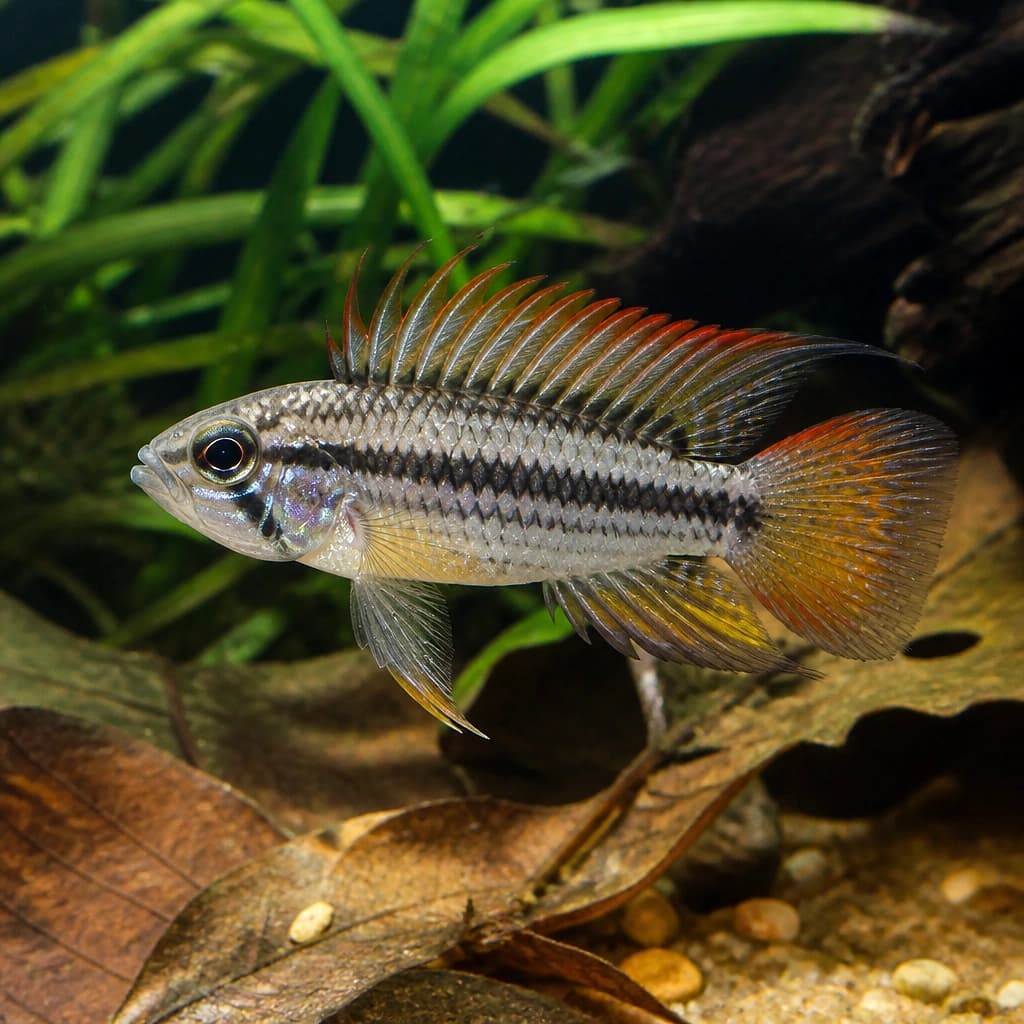
This fish is popular because it combines classic Apistogramma body shape with warm, eye-catching colour. Adult males are the showpiece, reaching around 7 cm with extended dorsal rays, more pointed finnage, and stronger facial patterning. Females are smaller and rounder, but during breeding they often become even more visually striking, showing intense yellow body colour with darker markings.
Among most colourful dwarf cichlids, this form stands out for its blend of yellow, orange, blue iridescence, and dark lateral patterning. Depending on mood, hierarchy, and water conditions, the body can appear more golden, bronze, or softly reddish. These shifting tones are part of the appeal and explain why many aquarists search for Apistogramma Cf. Viejita II colour variants when comparing stock.
Sexing is usually straightforward in mature fish. Males are larger, more elongated, and more ornate in the dorsal and caudal fins. Females are smaller and fuller-bodied, with stronger yellow brood colours when guarding eggs or fry. Good diet, subdued lighting, dark décor, and low stress all help intensify colour. Our photos show the contrast between the male’s extended finnage and the female’s compact, brood-ready shape, helping you assess quality before you order Apistogramma Cf. Viejita II online UK.
If you enjoy comparing forms, Apistogramma Hongsloi «Red Stroke» - Red offers stronger red patterning, while Apistogramma Cf. Viejita Gold - Dwarf leans toward brighter gold tones. This pair remains one of the most balanced options for aquarists wanting elegant, natural-looking colourful dwarf cichlids.
One of the most common questions from buyers looking at dwarf cichlids UK stock is whether Apistogramma can live in a community aquarium. In many cases, yes. This species is among the more peaceful dwarf cichlids for community tank setups, provided the tank is warm, soft, and carefully stocked. The key is to avoid boisterous, fin-nipping, or much larger fish that will dominate feeding or stress the pair.
Small tetras, pencilfish, Corydoras, and Otocinclus are classic choices. Many keepers specifically ask about Apistogramma Cf. Viejita II with tetras, and this is often an excellent match. Midwater tetras add movement without competing for the bottom territory, while pencilfish tend to be calm and surface-oriented. Corydoras can work, though in breeding tanks they may be chased if they wander too close to a cave.
Good related species to explore include Apistogramma Elizabethae - Elizabeth'S Dwarf Cichlid for specialist soft-water displays and Apistogramma Agassizii - Agassiz'S Dwarf Cichlid if you want another classic South American dwarf cichlid. If you are building a broader cichlid collection, Andinoacara Pulcher «Neon Blue» - Nannacara and Guianacara Dacrya - Bandit Cichlid - are worth comparing, though they suit larger aquariums.
Avoid large cichlids, aggressive fish, and other male Apistogramma in smaller tanks. This is especially important for buyers comparing freshwater cichlids UK species without considering territory size. Fast, pushy fish can prevent the pair from settling, while similarly shaped bottom cichlids can trigger constant displays and stress.
In a 60-litre aquarium, a pair with a small group of pencilfish can work well. In 80-100 litres, a pair with 8-12 small tetras and a few Otocinclus is often a very attractive South American setup. During breeding, however, even normally peaceful fish may be pushed away from the female’s cave.
Snails are usually fine. Very small shrimp may be treated as food, especially juveniles. Larger Amano shrimp can sometimes coexist, but there is always some risk with a bottom-oriented micropredator.
| Species | Compatible? | Notes |
|---|---|---|
| Small tetras | ✅ Yes | Excellent midwater companions in a planted South American tank |
| Pencilfish | ✅ Yes | Calm top-dwellers that suit Apistogramma temperament |
| Corydoras | ⚠️ Caution | Usually fine, but may be chased near breeding caves |
| Large cichlids | ❌ Avoid | Too aggressive and stressful for a small dwarf cichlid pair |
Buyers often search Apistogramma Cf. Viejita II tank mates, best dwarf cichlids comparison, or even a broader list of dwarf cichlids before deciding. Compared with many options sold as south american dwarf cichlids for sale uk, this species is a good middle ground: peaceful enough for a calm community, but interesting enough for a species-focused setup. If you want to buy dwarf cichlids online UK, compatibility planning is one of the smartest steps you can take before purchase.
Always quarantine new arrivals for 2-4 weeks before adding them to an established dwarf cichlid aquarium. This reduces the risk of parasites and gives you time to observe feeding, respiration, and social behaviour before fish enter a territorial setup.
Apistogramma Cf. Viejita II breeding is one of the main reasons aquarists fall in love with this species. It is not the easiest cichlid to breed, but it is very achievable for prepared hobbyists. The breeding difficulty is moderate because success depends on soft water, suitable caves, careful conditioning, and keeping stress low.
Use a pair or one male with one or two females in a tank of at least 60 litres, though more space is useful. Keep the water soft and slightly acidic, with temperature toward the upper end of the normal range. Provide several cave choices: coconut shells, half pots, or narrow wood hollows all work well. Fine sand and leaf litter make the female feel secure.
Apistogramma Cf. Viejita II spawning behaviour usually starts with increased colour intensity, flaring, and cave inspection. The female becomes brighter yellow and may shimmy or display near the chosen cave. Once eggs are laid on the cave roof or wall, the female takes over close guarding duties while the male patrols the outer territory. This division of labour is one of the most fascinating parts of keeping a pair.
Eggs usually hatch in around 2-4 days depending on temperature, with fry becoming free-swimming a few days later. The female may move wrigglers between pits or sheltered spots. Keep disturbance to a minimum during this period. Stable water quality is more important than frequent large water changes.
Once free-swimming, fry can be fed infusoria, vinegar eels, or freshly hatched baby brine shrimp. Feed small amounts several times daily and siphon waste carefully. Growth is steady rather than fast, and the female’s brood care can be excellent if the tank remains calm.
The most common problems are infertile spawns, eggs fungusing in hard water, inexperienced parents eating eggs, and community fish disturbing the female. If this happens, review Apistogramma Cf. Viejita II aquarium requirements and especially water softness. For many breeders, the biggest breakthrough comes when they move from neutral, moderately hard water to truly soft conditions.
If repeated spawns fail, try slightly lowering conductivity and using more leaf litter or botanicals to create a darker, more secure cave-spawning environment. Many Apistogramma pairs become more confident when the female can guard a cave with only one narrow entrance and limited outside disturbance.
Comparison matters because many aquarists searching dwarf cichlid for sale, dwarf cichlids for sale in UK, or rare dwarf cichlids UK are choosing between species that look similar online but behave differently in the aquarium. This pair is best for keepers who want classic Apistogramma behaviour, strong parental care, and a natural South American look.
| Feature | Apistogramma Cf. Viejita II | German Blue Ram |
|---|---|---|
| Max Size | 7 cm | 6-7 cm |
| Care Level | Moderate | Moderate |
| Temperature | 24-28°C | 27-30°C |
| Price | £32.90 | Varies |
| Best For | Natural planted caves and soft-water territories | Warmer, open displays with frequent feeding |
The question of Apistogramma Cf. Viejita II vs German blue ram often comes down to style. Rams are more exposed, more delicate with temperature swings, and often need warmer water. Apistogramma tend to be more habitat-driven, using caves and cover in a way many aquarists find more natural and rewarding.
| Feature | Apistogramma Cf. Viejita II | Apistogramma cacatuoides |
|---|---|---|
| Temperament | Peaceful, territorial when breeding | Often a bit tougher and more adaptable |
| Water Preference | Softer, more acidic preferred | Often tolerates a wider range |
| Look | Warm yellow, blue sheen, elegant patterning | Spikier finnage, bold orange-red in many strains |
| Best For | Soft-water South American displays | Keepers wanting a hardier Apistogramma entry point |
In the debate over Apistogramma Cf. Viejita II vs Apistogramma cacatuoides, the latter is often listed among the easiest Apistogramma species. However, this pair offers subtler beauty and a more refined natural look. Compared with Apistogramma Cf. Viejita II vs kribensis, the difference is even stronger: kribensis are African, often tougher, and generally less suitable for a true soft-water Amazon setup. If you are comparing african dwarf cichlids with South American forms, think first about your water chemistry and aquascape goals.
For hobbyists browsing alternatives such as cockatoo cichlid for sale uk, black ram cichlid for sale uk, or even unrelated larger fish like starry night cichlid for sale uk, this species remains one of the best choices for a peaceful, planted, medium-soft water community. It is especially appealing if you want one of the most colourful dwarf cichlids without moving into a much larger tank.
Healthy fish are alert, interested in food, and show steady respiration with no clamped fins. Good colour, smooth body lines, and confident but not frantic movement are all positive signs. Because this species is adapted to clean, soft water, many health issues trace back to stress, unstable parameters, or poor acclimation rather than to the species being inherently weak.
Watch for white spot, bacterial fin damage, hollow belly from internal parasites, and stress darkening combined with hiding. Newly imported or recently moved fish may also show reduced appetite for a few days. If a fish isolates itself, breathes rapidly, or stops feeding, test water immediately.
Start with water quality. Small, regular water changes, stable heat, and reduced stress often solve mild issues faster than random medication. Use a separate hospital tank if treatment is needed. Because Apistogramma can be sensitive, avoid overdosing medications and always confirm the actual water volume before treatment.
The best prevention plan is simple: keep Apistogramma Cf. Viejita II water parameters stable, feed a varied diet, avoid overcrowding, and quarantine all new fish. Good husbandry has a direct effect on Apistogramma Cf. Viejita II health and long-term colour. This is particularly important for buyers arranging Apistogramma Cf. Viejita II delivery UK shipments, because newly arrived fish benefit from a quiet, dimly lit settling-in period.
Run a separate bare-bottom quarantine tank with sponge filtration, heater, and a few hiding places for 2-4 weeks. Observe appetite, waste, respiration, and any external marks. This is one of the best habits for anyone keeping multiple freshwater cichlids UK species.
Never use medications casually in a display aquarium without checking compatibility with all livestock. If shrimp or snails are present, some treatments can be harmful. Always diagnose water quality first before assuming disease.
Apistogramma Cf. Viejita II behaviour is one of the biggest reasons people fall for this species. They are not constant open-water swimmers. Instead, they patrol, inspect, sift, display, and interact with their environment in a much more deliberate way. This makes them ideal for aquarists who enjoy watching fish use caves, wood, and plants rather than simply darting around the glass.
They are peaceful by cichlid standards, but still territorial, especially near the bottom and especially during breeding. A settled pair will often divide space naturally, with the female focusing on a cave area and the male patrolling a wider zone. During courtship, body posture, fin extension, and colour shifts become much more obvious.
To encourage natural behaviour, provide cover, maintain a calm stocking plan, and avoid harsh lighting. A well-designed Apistogramma Cf. Viejita II for planted tank layout often produces more visible, confident fish than a bare setup. If you want peaceful dwarf cichlids for community tank life with genuine personality, this species is an excellent choice.
When people search Apistogramma Cf. Viejita II for sale UK, Apistogramma Cf for sale UK, or buy dwarf cichlid UK, they are usually looking for more than a fish with a name label. They want a healthy, correctly sexed pair that has settled onto prepared foods and is ready for life in a home aquarium. That matters even more with Apistogramma, because poor early handling can lead to stress, dull colour, and weak feeding response.
Our focus with this pair is condition and compatibility. These fish are selected for clear male and female pairing, good body shape, and active behaviour. Before dispatch, they are observed for feeding response and general condition, and they are packed for live dwarf cichlid delivery UK with insulated materials suited to the season. In colder weather, heat support is used where needed, and fish are packed professionally to reduce transit stress.
For buyers ready to order Apistogramma Cf. Viejita II online UK, tracked delivery and careful packing are essential because dwarf cichlids respond best when they arrive warm, dark, and secure. After arrival, slow acclimation and dim lighting help them settle. If you are comparing the Apistogramma Cf. Viejita II price UK market, remember that a healthy, feeding pair is worth far more than a cheaper but poorly conditioned import.
Whether you want to buy dwarf cichlids online UK for a planted community or a species-focused breeding tank, this pair offers real character, manageable size, and strong visual appeal. If you have been searching for south american dwarf cichlids for sale uk that are beautiful without being oversized or overly aggressive, this is a smart choice.
If you enjoy this pair, consider a few related options to complete your South American setup. Apistogramma Elizabethae - Elizabeth'S Dwarf Cichlid is a superb choice for specialist soft-water aquariums. Apistogramma Agassizii - Agassiz'S Dwarf Cichlid offers another classic Apistogramma profile with elegant finnage. Mikrogeophagus Ramirezi «Blue Brilliant» - Papiliochromis suits aquarists comparing Apistogramma with rams. For a brighter variation, Apistogramma Cf. Viejita Gold - Dwarf is well worth a look. If you are exploring a broader cichlid collection, Guianacara Dacrya - Bandit Cichlid - and Andinoacara Pulcher «Neon Blue» - Nannacara provide interesting contrast in larger aquariums.
24–28°C · pH 5–7 · 60L
24–28°C · pH 5.5–7 · 60L

24–28°C · pH 4.5–6.5 · 60L

24–28°C · pH 6–7.5 · 60L

24–28°C · pH 5.5–7 · 60L

24–28°C · pH 5.5–7 · 60L

18–26°C · pH 6.5–8 · 30L

23–27°C · pH 7.4–8.4 · 500L

20–27°C · pH 6–7 · 54L

23–27°C · pH 7.4–8.4 · 150L

24–28°C · pH 6.5–7.8 · 300L

20–24°C · pH 7–8 · 45L

24–28°C · pH 6.5–7.5 · 2000L

24–28°C · pH 7.5–8.5 · 200L

24–28°C · pH 5.5–7 · 60L

18–25°C · pH 6–8 · 100L

24–28°C · pH 7–8 · 120L

18–28°C · pH 6.5–8 · 20L

24–27°C · pH 7.5–8.8 · 150L

22–26°C · pH 6–7.5 · 60L

24–28°C · pH 7.5–8.5 · 40L

24–28°C · pH 7.5–8.5 · 500L