

Intermediate
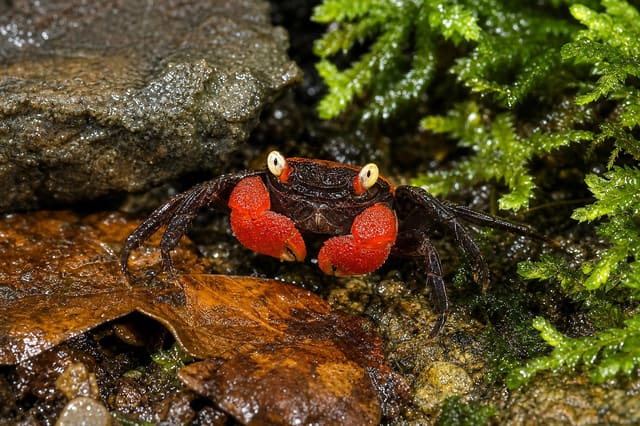
Red Devil Vampire Crab (Geosesarma hagen)
22–26°C · pH 7–8 · 45L
£9.99

A small semi-terrestrial Geosesarma crab for warm planted paludariums with land, shallow water, leaf litter and plenty of cover.
Geosesarma sp. red tomato
A small semi-terrestrial Geosesarma crab for warm planted paludariums with land, shallow water, leaf litter and plenty of cover.
Maintain these water conditions for optimal health and vibrant colors
The vampire crab is one of the most eye-catching freshwater-edge invertebrates in the hobby, combining jewel-like colour with surprisingly complex behaviour. Sold here as Geosesarma sp., these small crabs are famous for glowing eyes, vivid claws, and a lifestyle that is neither fully aquatic nor fully terrestrial. If you have been searching for a vampire crab, a freshwater crab, or unusual freshwater invertebrates, this species stands out for all the right reasons. Adult vampire crab size is usually around 2-3cm across the body, reaching roughly 5cm including leg span, and the typical vampire crab lifespan is up to 3 years with correct care. It is an omnivorous crab for aquarium keepers who want a true vampire crab for paludarium rather than a standard fish-tank animal.
This assorted colour form includes striking individuals often compared with the red apple vampire crab and the yellow-clawed lines that benefit from the same yellow vampire crab care approach. Each crab needs a proper vampire crab land and water tank, so they are ideal for keepers ready to build a naturalistic setup with moss, leaf litter, wood, caves, and shallow water zones. For aquarists wanting a colourful display animal with real personality, this is one of the most rewarding species to keep.
Geosesarma crabs are small land-associated crabs from Southeast Asia that became popular in the aquarium hobby because of their intense colours and direct-developing young. The trade name “vampire crab” is used for several closely related forms, including species and locality variants similar to Geosesarma dennerle, Geosesarma tiomanicum, and Geosesarma malayanum. In practical care terms, most assorted colour forms share very similar enclosure needs.
The natural vampire crab habitat is humid forest edge, stream bank, seep zone, and leaf-litter terrain in tropical Southeast Asia. The best-known forms are linked to Indonesia, including Java, and related Geosesarma species occur more widely across the region, so the vampire crab Southeast Asia habitat is centred on shallow freshwater margins rather than deep open water. The vampire crab natural environment includes wet soil, roots, moss, stones, rotting leaves, and small pools where they can drink, moult, and forage.
In the wild, the vampire crab ecosystem is rich in decaying plant matter, insect larvae, fallen fruit, biofilm, tiny worms, and carrion, which explains the species' flexible feeding response in captivity. The typical vampire crab biotope is warm, shaded, and stable, with high humidity and many crevices.
The vampire crab in the wild spends much of its time hidden under wood or among roots, emerging to feed at dusk and during the night. Those famous glowing eyes are the source of the vampire crab name origin— a dramatic look rather than any dangerous behaviour. The exact vampire crab native range is still discussed in the hobby because assorted imports may include closely related forms, but the care approach stays consistent: warm temperatures, shallow clean water, and plenty of land area.
These are display and breeding invertebrates, not food animals, and conservation data is incomplete for many trade forms, so responsible captive keeping and careful sourcing matter. A well-designed enclosure that reflects the species' habitat leads to stronger colour, more confident feeding, and more natural social behaviour.
Mimicking the natural habitat improves health and brings out natural behaviours. Keep the land section complex, humid, and full of cover. Crabs that feel secure show themselves more often than crabs kept in bare enclosures.
A proper vampire crab tank setup is the single biggest factor in long-term success. These crabs are often sold as aquarium pets, but they are not suited to a standard fully aquatic tank. The most important rule for any vampire crab aquarium setup is simple: build a paludarium with mostly land and a smaller shallow water area. A correct vampire crab paludarium setup offers easy access between land and water, secure climbing surfaces, and many hides.
The accepted vampire crab tank size minimum 10 gallons works well for a starter colony, which matches the care-data minimum of 40 litres. In other words, the vampire crab minimum tank size is about 10 gallons, but bigger is better if you want a group. A heavily structured vampire crab 10 gallon setup can house a pair or trio; for 4-6 crabs, aim for 45-60 litres or more. When customers ask about vampire crab tank size or how many vampire crabs can live together, the answer depends on floor space and the number of hides, not just water volume.
The best vampire crab suitable tank setup uses a secure lid because these crabs climb silicone seams, wood, tubing, and background panels. Good vampire crab enclosure requirements include ventilation, but not so much that humidity drops sharply. As a rule, a vampire crab enclosure setup should provide around 70-80% land and 20-30% shallow water.
Stable water matters even though the species spends much of its time on land. The ideal vampire crab temperature range is warm and steady, with a proven vampire crab temperature range 22-28C. To answer what temperature do vampire crabs need directly: 22-28°C, with 24-26°C being a very safe everyday target. Keep the vampire crab temperature and overall vampire crab water temperature stable rather than chasing the warmest possible value.
These values match common geosesarma sp care requirements. Soft acidic blackwater is not ideal for most traded vampire crabs; neutral to slightly alkaline water with moderate hardness supports moulting better than unstable ultra-soft water.
Because the water section is shallow, use gentle filtration. A small sponge filter or compact internal filter with reduced flow is ideal. Strong current can stress moulting crabs and wash food into dead spots. If you need equipment, a compact sponge or nano internal filter works well alongside a reliable aquarium heater for stable temperatures.
A good vampire crab habitat setup includes a moisture-retentive land substrate such as coco fibre, a fine soil blend, leaf litter, and patches of sand. Add bark, cork, dragon stone, and wood to create levels. The water side can use smooth gravel or fine sand. Deep muddy substrate is not required, but damp digging areas help during moulting.
Many keepers ask what plants do vampire crabs like. Choose hardy species that tolerate humidity and occasional climbing: Java moss, Anubias, Bucephalandra, Cryptocoryne near the waterline, and terrestrial mosses on wood. A vampire crab in planted tank or planted paludarium looks excellent and gives extra cover. Add caves, coconut hides, bark tubes, and piles of leaves for plenty of vampire crab hiding spots. For planting supplies, browse our live aquarium plants collection and pair them with a natural aquarium substrate.
Vampire crab light requirements are moderate. They do not need intense reef-style lighting. A planted-paludarium LED on an 8-10 hour schedule is enough for mosses and low-light plants. Too much light with too little cover makes crabs hide more, so the best vampire crab setup balances visibility for you with security for the animals.
Always cycle the water section for 4-6 weeks before adding crabs. Even in a paludarium, poor biological filtration leads to failed moults, inactivity, and sudden losses.
The ideal vampire crab diet is varied, protein-rich, and balanced with plant matter. These are opportunistic scavengers with a true vampire crab omnivorous diet. If you are asking vampire crab what do they eat, what can vampire crabs eat, or what do vampire crabs eat in captivity, think in terms of a mixed menu: quality sinking pellets, insect-based foods, small frozen foods, leaf-litter biofilm, and occasional vegetables. The best answer to what to feed vampire crabs is variety — offer tiny portions they can finish overnight.
Use quality sinking invertebrate pellets, crab cuisine, shrimp sticks, and algae wafers as the staple. Crabs also do well with crushed snail pellets and high-protein community wafers. For feeding options, pair your colony with sinking invertebrate foods and occasional frozen bloodworm or daphnia as enrichment.
Supplement 2-3 times weekly with frozen bloodworm, mosquito larvae, brine shrimp, chopped earthworm, or tiny pieces of mussel. In practical terms, they prefer meaty foods but still need plant and detritus input.
Blanched courgette, spinach, pumpkin, Indian almond leaf, and small fruit pieces can be offered sparingly. During breeding conditioning, extra protein improves egg production. Keepers often ask do vampire crabs eat shrimp or do vampire crabs eat snails— yes, they may catch weak shrimp or pick at small snails, especially if underfed. They are scavengers first, hunters second.
If you wonder what time vampire crabs eat, the answer is usually evening. Feed once daily or every other day depending on colony size and leftover food; they are most active at dusk and after lights dim. If you are asking why is my vampire crab not eating, common causes include recent moulting, stress after shipping, too much light, low cover, or temperatures outside the ideal range.
| Time | Food | Amount |
|---|---|---|
| Evening | Sinking crab pellet or shrimp stick | 1 small piece per 2-3 crabs |
| 2-3 nights weekly | Frozen bloodworm / insect food | Very small pinch |
| 1-2 nights weekly | Leaf litter / vegetable supplement | Small piece, remove uneaten |
Overfeeding causes ammonia spikes, mould growth, and fouled shallow water. Remove uneaten meaty food within 12-24 hours, especially in warm paludariums.
The appeal of this species starts with its colour. A healthy vampire crab size is small enough for compact displays but large enough to show detail, usually around 2-3cm body width and up to 5cm overall span. That makes it a superb colourful freshwater crab for aquarium keepers who want something unusual without needing a huge enclosure. This listing covers assorted colour vampire crab forms, so individuals may vary in shell tone, claw colour, and eye brightness.
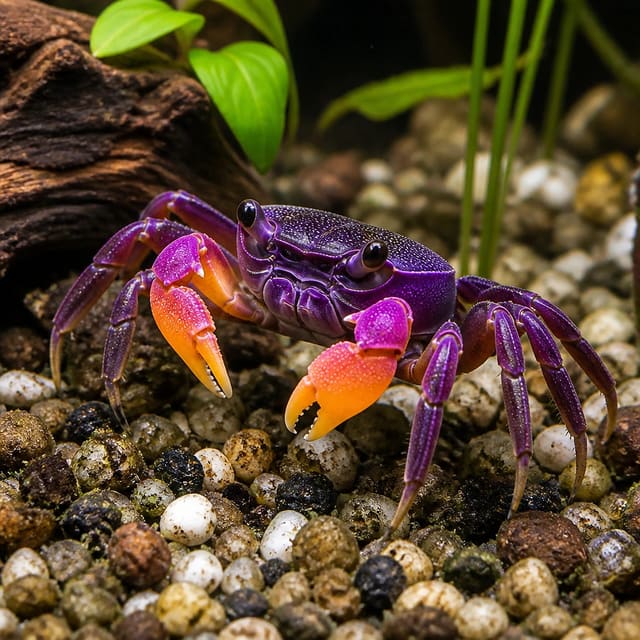
Some specimens resemble the classic purple-and-yellow look associated with Geosesarma dennerle, while others lean toward orange, red, or darker tones similar to the red apple vampire crab. Customers searching for vampire crab 2-3cm are usually looking for this juvenile-to-subadult size bracket, which adapts well to new setups. If you compare vampire crab vs red devil crab, both are attractive, but vampire crabs often show a more compact body and a stronger land-based lifestyle.
Males are usually slightly larger and have a narrow pointed abdominal flap, while females have a broader rounded flap — the easiest answer to how to tell if vampire crab is male or female. Good diet, stable humidity, dark substrate, and low-stress housing all improve colour intensity. Our photos show the rich contrast achieved when crabs are kept warm, well-fed, and provided with shaded cover rather than bright bare tanks.
Vampire crab tank mates are one of the most misunderstood parts of care. When people ask can vampire crabs live with fish, the honest answer is: sometimes, but only with careful planning, and a species-only paludarium is usually best. These crabs are not ideal for a standard vampire crab peaceful community tank because they need land access, high cover, and shallow water. They are also opportunistic, so vampire crab compatibility depends on size, feeding, and enclosure design.
If you are researching what can vampire crabs live with, start with the idea that they are best kept with their own kind. Are vampire crabs social? Yes, to a point. Can vampire crabs live together? Yes, provided there is enough space, multiple hides, and a sensible sex ratio. As for how many vampire crabs should be kept together, a small group of 3-6 works well in a structured enclosure. Avoid overcrowding, because are vampire crabs aggressive is also a fair question — they can be territorial, especially during moulting and feeding.
For most keepers, the safest answer is a species-only setup or a paludarium with very limited aquatic companions. In larger systems, tiny fast fish in the water section may work, but there is always risk. If you want to compare colour forms, see the Red Devil Vampire Crab, Purple Vampire Crab, and Black Vampire Crab. These are excellent alternatives for keepers choosing between different Geosesarma types.
Some hobbyists try a vampire crab in community tank with shrimp or micro fish. This can work in very large, planted paludariums, but it is not guaranteed. Questions like can vampire crabs live with shrimp and will vampire crabs eat cherry shrimp should be answered cautiously: adult shrimp may survive in dense cover, but shrimplets are at risk. Likewise, a vampire crab with small fish can work only if the fish stay in the water section and are too quick to catch.
Avoid slow bottom fish, long-finned fish, large predatory fish, and any species that may attack moulting crabs. Can vampire crabs live with betta fish? Not recommended — bettas use the upper water column and need a different style of setup, while crabs may grab fins or be attacked in return. Can vampire crabs live with frogs? No. Can vampire crabs live with hermit crabs? No, their environmental needs are too different. They are not a plug-in community animal in the way peaceful shrimp or snails are.
| Species | Compatible? | Notes |
|---|---|---|
| Purple Vampire Crab | ✅ Yes | Similar care needs; mix only in spacious, well-structured setups. |
| Red Devil Vampire Crab | ⚠️ Caution | Possible with space and cover, but monitor territorial disputes. |
| Betta splendens | ❌ Avoid | Different setup needs and high risk of stress or fin damage. |
For UK keepers browsing community tank invertebrates UK, vampire crabs are better seen as a niche display species than a plug-in community animal. They are fascinating, but they need a purpose-built enclosure. That is why most experienced keepers reserve a vampire crab for community aquarium use only for very controlled mixed paludariums.
Always quarantine new arrivals for 2-4 weeks and rearrange decor before adding them to an established group. Breaking sight lines reduces territorial chasing.
Vampire crab breeding is one of the most rewarding parts of keeping this genus. Unlike many crabs, Geosesarma species have direct development, which means there is no free-swimming larval stage. That makes vampire crab breeding in captivity far more achievable than marine crab breeding. For hobbyists interested in keeping and breeding vampire crabs, stable warmth, privacy, and good nutrition are the main triggers.
The answer to how to tell if vampire crab is male or female is the abdominal flap. Males have a narrow pointed flap, while females have a broad rounded one for carrying eggs. Mature males may also appear slightly larger and more assertive.
A dedicated breeding enclosure should be densely furnished with bark, moss, leaf litter, and multiple humid retreats. Keep temperatures around 24-26°C and feed a rich, varied diet to support mating and egg development. If you are wondering how do vampire crabs breed, the male mounts the female and fertilised eggs are then carried under the female's abdomen.
Females commonly carry around 20-80 eggs for roughly a month. Customers often ask how often do vampire crabs lay eggs or how often do vampire crabs breed. In ideal conditions, established adults may breed several times per year, though frequency varies with age, diet, and stress. The key point for Geosesarma is that eggs hatch into miniature crabs rather than planktonic larvae.
Baby vampire crabs are tiny versions of the adults and disperse quickly after hatching. To answer how small are baby vampire crabs: usually just a few millimetres across, so dense moss, leaf litter, and micro-food sources are essential. Offer powdered invertebrate food, crushed pellets, biofilm-rich leaves, and very small frozen foods. Searches for vampire crab babies often underestimate how much cover the young need.
The biggest breeding problems are cannibalism after moulting, dry conditions, poor calcium availability, and over-clean enclosures with no microfauna. For regular success, avoid disturbing berried females and separate very aggressive adults if needed. Female-heavy groups often work better than too many males; while some keepers look specifically for female vampire crabs, mixed groups are usually the best route for natural colony growth.
Leave a section of the enclosure “messy” with decomposing leaves, moss, and bark. Newly hatched crabs survive better in mature microhabitats than in spotless display tanks because they can graze continuously between meals.
Choosing between colour forms and similar crabs matters because not every “freshwater crab” is kept the same way. Many buyers compare the halloween crab vs vampire crab, or search for species names like geosesarma tiomanicum, geosesarma malayanum, and geosesarma dennerle. The big difference is that vampire crabs are small, colourful, and ideal for compact tropical paludariums, while larger land crabs need more space and often have stronger digging or destructive habits.
| Feature | Vampire Crab | Red Devil Vampire Crab |
|---|---|---|
| Max Size | About 5cm overall span | About 5-6cm overall span |
| Care Level | Moderate | Moderate |
| Temperature | 22-28°C | 22-28°C |
| Best For | Mixed colour paludarium displays | Keepers wanting stronger red tones |
| Feature | Vampire Crab | Halloween Crab |
|---|---|---|
| Lifestyle | Small tropical paludarium crab | Larger terrestrial crab with bigger land needs |
| Temperament | Semi-aggressive | More robust and potentially more destructive |
| Setup | Compact land-water tank | Larger terrestrial enclosure with water dish |
| Best For | Detailed planted displays | Keepers wanting a larger pet crab |
| Beginner Suitability | Good with research | Less ideal for small setups |
If you want the best vampire crab for beginners, this assorted colour Geosesarma is a strong choice because it stays small, breeds readily under correct conditions, and fits a 40-litre-plus display. If you prefer a darker morph, compare the Black Vampire Crab. If you want a brighter purple look, consider the Purple Vampire Crab. If bold red is your goal, the Red Devil Vampire Crab is the obvious comparison.
One final note: geosesarma sp in brackish tank is a common search, but this is not a brackish species. Keep it in freshwater with land access, not marine or brackish conditions.
Good vampire crab health and disease prevention starts with habitat design. Most losses in this genus come from failed moults, dehydration, poor water quality, or stress rather than classic fish diseases. If you are asking are vampire crabs easy to take care of, the answer is yes for prepared keepers; if you ask are vampire crabs hard to take care of, the answer is also yes if they are treated like fully aquatic crabs. Correct setup is everything.
A healthy crab is alert, climbs confidently, reacts to food, and shows clear eye colour and intact limbs. It should alternate between hiding and exploring. During premoult, activity may drop — that does not always mean illness.
Failed moults are often linked to low minerals, unstable humidity, or repeated disturbance. Missing limbs can regrow over future moults if the crab remains healthy. Lethargy may indicate low temperature, stress, or poor water. New keepers often ask how to tell if vampire crab is dead; a dead crab has no response to touch, often smells unpleasant, and does not hold itself in a natural tucked position. A moulting crab, by contrast, may stay hidden and inactive for days. Focus on clean freshwater, high humidity, and a safe moulting environment.
Quarantine all new crabs, remove uneaten food promptly, and keep the water section clean with regular small changes. Avoid strong medications unless you are certain of the diagnosis. Most fish medications are not designed for crabs.
NEVER use copper-based medications with invertebrates. Copper is highly toxic to crabs, shrimp, and many snails, even at doses considered safe for fish.
Vampire crab behaviour is one of the main reasons people fall in love with this species. They are curious, alert, and often most active at dusk. In a well-designed enclosure, you will see climbing, leaf turning, cave guarding, surface grazing, and short social displays. This is not a constantly visible animal in a bright bare tank, but in a mature planted setup they become much bolder.
Are vampire crabs social? They can be kept in groups, but they are not communal in the way shrimp are. They establish micro-territories around hides and feeding spots, which is why vampire crab cohabitation works best in structured enclosures with broken sight lines. A single cave in an open tank almost guarantees conflict.
The species is best viewed as a small semi-terrestrial predator-scavenger. That explains why a vampire crab for nano aquarium is only suitable if the tank is actually a nano paludarium with enough land — they are not ideal for a bare nano fish tank. Encourage natural activity with leaf litter, live-food treats, dim evening lighting, and secure cover.
When comparing Red Tomato Vampire Crab (Geosesarma sp.), 2-3 cm with similar livestock, focus on clear identification, settled feeding, accurate care guidance, careful packing and a realistic match for your aquarium. Those details matter far more than a low headline price, especially with specialist species.
Each crab is checked for activity, limb condition, and general vigour before dispatch. We do not describe these as fully aquatic, because that leads to poor outcomes. Instead, we provide care guidance built around real vampire crab requirements— enclosure structure, feeding routine, and acclimation. That matters whether you want a single display pair or plan on keeping and breeding vampire crabs.
When comparing Red Tomato Vampire Crab (Geosesarma sp.), 2-3 cm with similar livestock, focus on clear identification, settled feeding, accurate care guidance, careful packing and a realistic match for your aquarium. Those details matter far more than a low headline price, especially with specialist species.
Whether you want a classic mixed colony, a disco vampire crab available style look, or a standout freshwater crab for a planted paludarium, this species offers colour, character, and breeding potential in one compact package. Order your vampire crab today with confidence and build a setup that shows off their natural behaviour from day one.
If you are building a full vampire crab setup, compare colour forms like the Red Devil Vampire Crab, Purple Vampire Crab, and Black Vampire Crab to create the look you want. For planting and cover, browse our live aquarium plants collection and choose moss-friendly species for banks and wood. A stable environment is easier with a dependable aquarium heater and a natural aquarium substrate. To round out the feeding plan, keep a supply of sinking invertebrate foods and occasional frozen foods for conditioning and enrichment.
22–26°C · pH 7–8 · 45L

22–28°C · pH 7.5–8 · 40L

22–28°C · pH 7.5–8 · 40L

22–28°C · pH 7.5–8 · 40L
22–28°C · pH 7.5–8 · 40L
18–26°C · pH 6.5–8 · 30L
23–27°C · pH 7.4–8.4 · 1000L
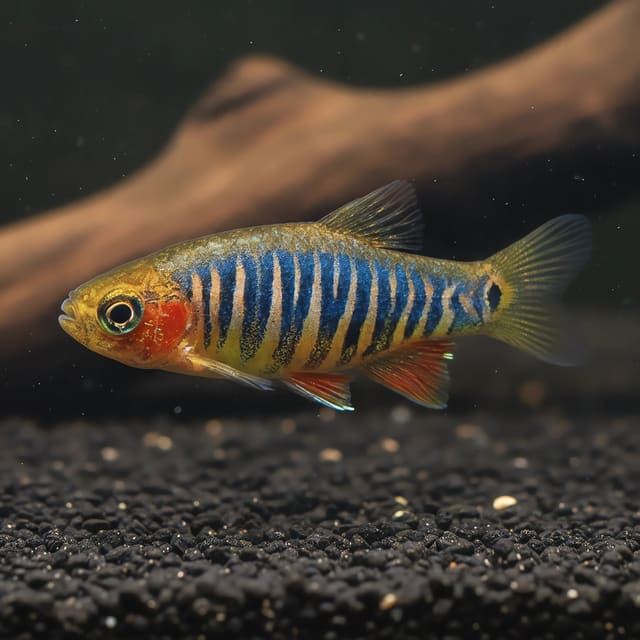
20–24°C · pH 7–8 · 45L
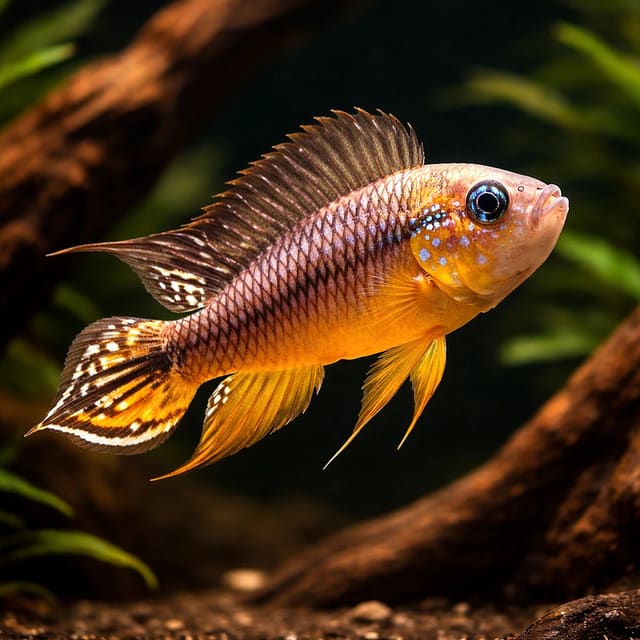
24–28°C · pH 5.5–7 · 60L
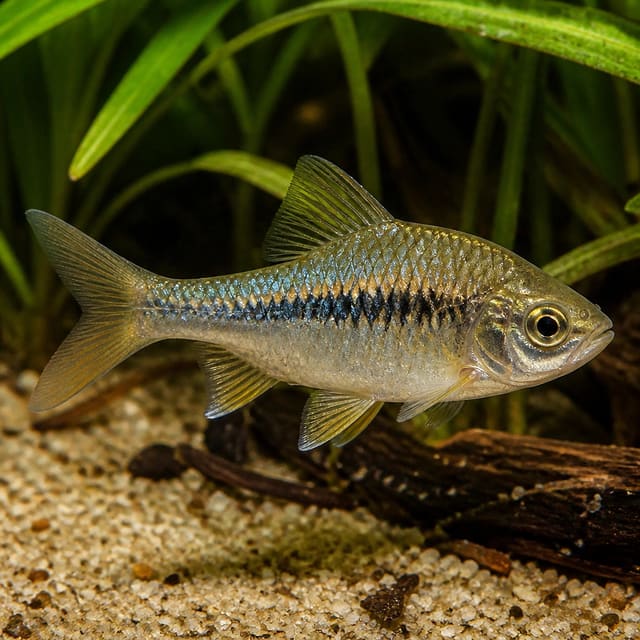
18–25°C · pH 6–8 · 100L
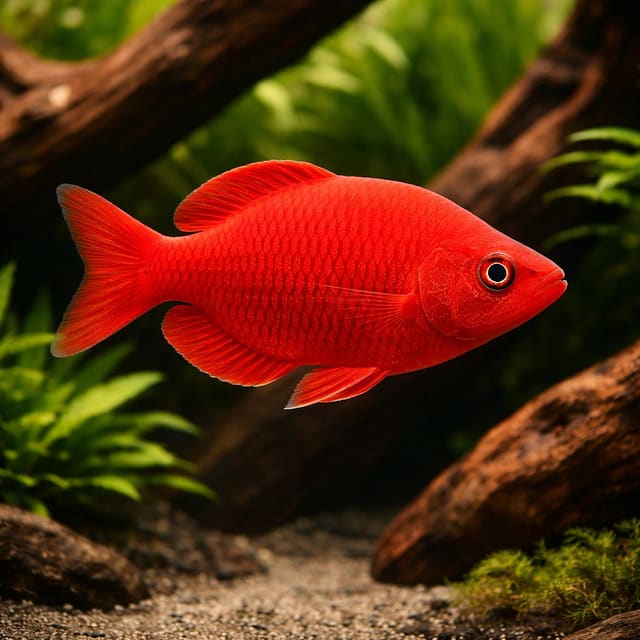
24–28°C · pH 7–8 · 120L
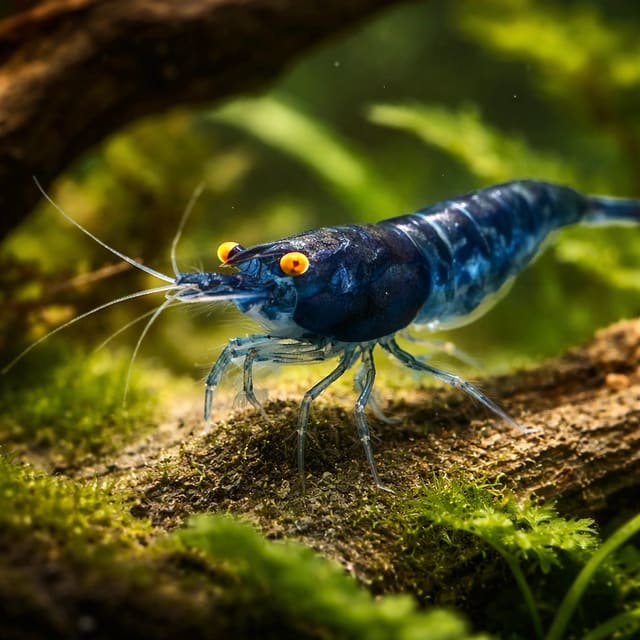
18–28°C · pH 6.5–8 · 20L
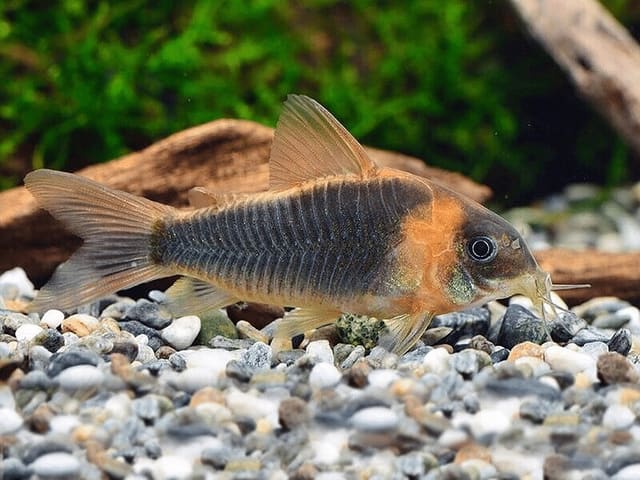
22–26°C · pH 6–7.5 · 60L
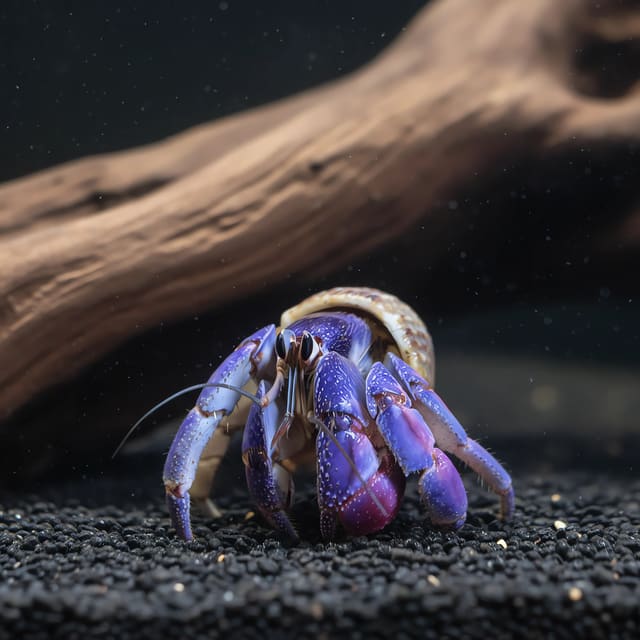
24–28°C
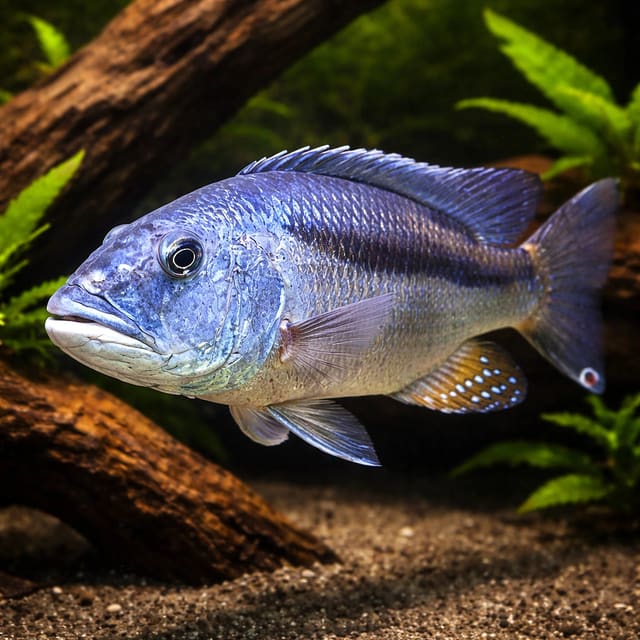
24–28°C · pH 7.5–8.5 · 500L
22–28°C · pH 7–8.5 · 10L
24–27°C · pH 7.5–9 · 250L
24–28°C · pH 8–9 · 300L
20–25°C · pH 6–7.5 · 80L
24–28°C · pH 5.5–7 · 60L
26–30°C · pH 5.5–7 · 60L