Expert
Monocirrhus polyacantus
24–28°C · pH 5–7 · 113L
£41.99

Ocellated Snakehead (Channa pleurophthalma) for experienced keepers with a secure large aquarium. Predatory, visual and advanced-care; plan 600L+ adult housing.
Adult size is the maximum length this species reaches at full maturity (scientific sources). The livestock you receive will be younger and smaller — pick a size above for the actual shipping size. Product-photo provenance and any image-specific limitations are stated on the listing.
Channa pleurophthalma
Confirm your email, then we’ll send an availability message for this exact item if it returns within 180 days.
This request is only for this product—no newsletter or other promotions. A mail-provider retry may very rarely duplicate the same availability message. Unconfirmed addresses are removed after 48 hours. See our privacy policy.
Ocellated Snakehead (Channa pleurophthalma) for experienced keepers with a secure large aquarium. Predatory, visual and advanced-care; plan 600L+ adult housing.
Adult size is the maximum length this species reaches at full maturity (scientific sources). The livestock you receive will be younger and smaller — pick a size above for the actual shipping size. Product-photo provenance and any image-specific limitations are stated on the listing.
Maintain these water conditions for optimal health and vibrant colors
Ocellated Snakehead (Channa pleurophthalma) is a large, predatory freshwater fish for experienced keepers who can provide a secure, spacious species aquarium. It is one of the more visually striking snakeheads: adults develop green-blue body colour with orange-ringed dark ocelli along the flanks, opercle and caudal area, while younger fish show broken dark striping before the full eye-spot pattern develops. This listing covers the 5-7 cm size option, with larger size variants on the same Shopify product when available.
This is not a community fish and it should not be bought as a general tropical centrepiece. It is best planned as a specialist oddball predator for a mature keeper who understands escape-proof covers, large water volume, heavy filtration, meaty feeding and the risk posed to any smaller tank mate. Kept correctly, Channa pleurophthalma becomes a bold, intelligent show fish with a very distinctive swimming style and strong keeper response.
| Common name | Ocellated Snakehead, Ocellated Channa |
|---|---|
| Scientific name | Channa pleurophthalma |
| Family | Channidae |
| Adult size planning | About 40-45 cm; plan the aquarium around adult size, not the juvenile purchase size |
| Origin context | Indonesia, especially Sumatra and Borneo; associated with rivers, lakes, swamps and flooded forest habitats |
| Care level | Difficult / advanced |
| Temperament | Predatory, territorial, best kept as a specimen or carefully managed pair in very large aquaria |
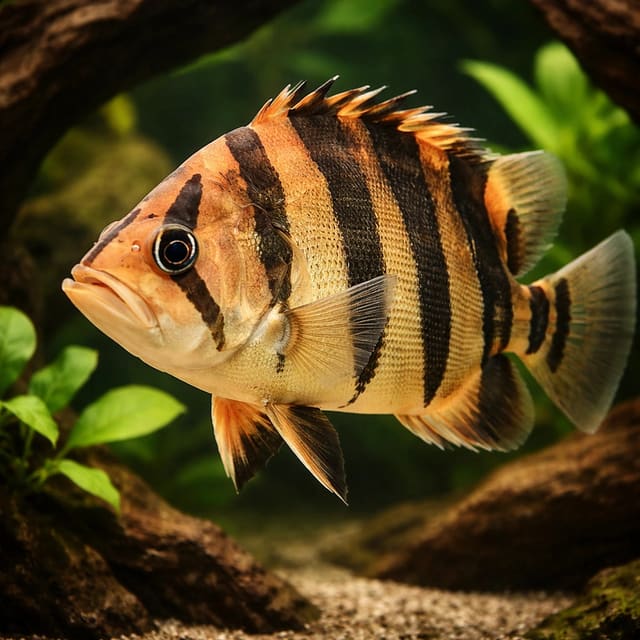
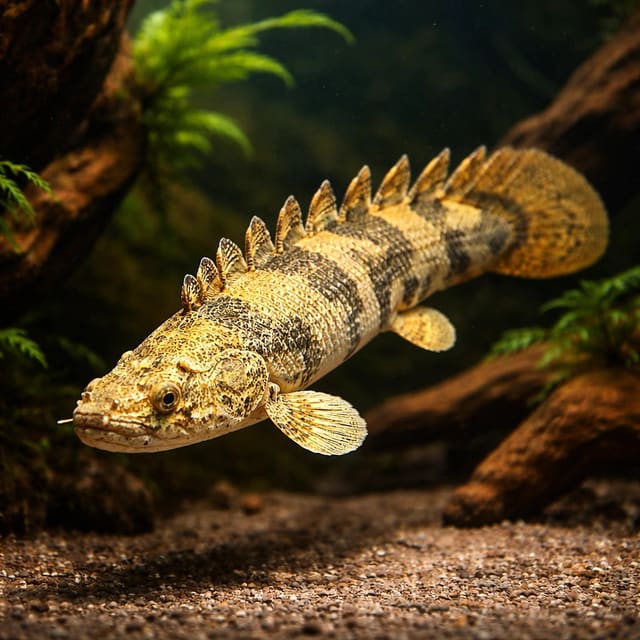
The main attraction is the row of dark eye-spots edged with yellow to orange, set against an iridescent green, blue or olive body. The broad head, large mouth and long dorsal and anal fins give the fish a powerful, prehistoric outline. In a dim, tannin-tinted aquarium with driftwood and shaded cover, the flank ocelli become the focal point of the display rather than the fish needing bright light or artificial colour enhancement.
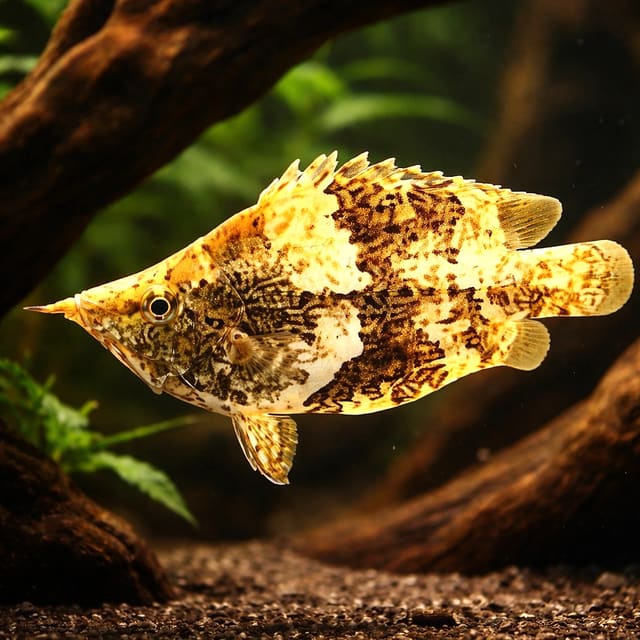
The verified source image for this SKU shows the real imported fish type clearly: an elongated snakehead body, orange-ringed eye, patterned flank and broad predatory head. The existing aquarium-view images remain useful for visual context, but the real source image belongs first because customers and search engines should see the actual product reference before stylised scene images.
| Temperature | 24-28 C for stable tropical keeping; avoid sudden drops |
|---|---|
| pH | 6.0-7.5, with stability more important than chasing an exact number |
| Hardness | Soft to moderately hard water suits most captive systems |
| Minimum aquarium | 600 litres for long-term planning; larger is better for adults or pairs |
| Cover | Mandatory tight, weighted lid with no open gaps around pipes or cables |
| Filtration | Large external filtration or sump-level capacity with strong waste handling |
Snakeheads are air-breathing fish and must always be able to reach the surface. Do not seal the water surface with floating covers or fill the tank so high that the fish can strike the lid. Leave a safe air gap, keep the cover secure, and check every opening after maintenance. This is one of the most important husbandry points for Channa pleurophthalma.
Build the aquarium around security and territory. Use a long tank with open swimming space at the front and strong visual cover at the back: large driftwood, rounded boulders, root tangles, tough plants attached to hardscape and shaded resting zones. Floating plants can help reduce stress, but they must not block air access. Substrate can be sand or smooth gravel; avoid sharp rockwork that can damage the fish during sudden lunges.
Water quality needs to be excellent because this species is a heavy carnivore. A mature filter, regular testing and disciplined water changes matter more than decorative complexity. Keep nitrate controlled, remove uneaten food quickly, and avoid overstocking the aquarium with other large fish just because the snakehead is still small.
| Staple foods | Quality carnivore pellets once trained, plus frozen prawns, mussel, cockle, earthworms and insect larvae |
|---|---|
| Juvenile routine | Small meals most days while growing, adjusted to body condition and water quality |
| Adult routine | Several substantial feeds per week, not constant overfeeding |
| Avoid | Mammal or bird meat, feeder fish as a routine diet, and food left to decay in the tank |
Train the fish onto prepared and frozen foods early. Feeder fish are not needed for normal care and can introduce parasites, thiaminase issues and poor nutrition. A varied meaty diet gives better long-term body condition, cleaner water and easier maintenance.
Channa pleurophthalma is predatory and should be treated as a species-tank fish. Anything small enough to fit in the mouth is unsafe, and even larger fish can be injured if the snakehead becomes territorial or strikes at movement. Some keepers maintain large snakeheads with equally robust tank mates in huge aquaria, but that is a risk-managed specialist setup rather than a normal recommendation.
| Best option | Single specimen in a dedicated aquarium |
|---|---|
| Possible advanced option | Compatible pair in a very large, structured tank after careful observation |
| Poor choices | Small community fish, slim catfish, loaches, livebearers, tetras, shrimp and decorative snails |
| Warning sign | Repeated chasing, cornering, bite marks, surface panic or one fish guarding the whole tank |
This Shopify product carries multiple size variants for the same species. Pick the size that suits the aquarium you have ready today, not the aquarium you hope to upgrade later.
| Variant SKU | Listed size | Planning note |
|---|---|---|
| K840 | 5-7 cm | Best for keepers who want to grow the fish on and train feeding from young |
| KB85 | 7-10 cm | Still juvenile, but already needs secure cover and serious filtration |
| KC04 | 12-14 cm | More established predator; avoid any small tank mates from day one |
| K966 | 18-20 cm | Advanced keeper size; prepare adult-style housing before arrival |
This fish suits an aquarist who already has experience with large predators, secure lids and species tanks. It is a strong choice if you want a rare oddball fish with genuine display presence and you can commit to the adult tank, feeding and maintenance. It is not suitable for a new aquarium, a small living-room community, or a tank where the lid is loose or decorative rather than functional.
Before ordering, check the broader snakehead and oddball fish category if you are comparing size, temperament and care demands. For this species specifically, independent care references from FishBase, Seriously Fish and Aquarium Glaser support the large adult size, secure-cover requirement, Indonesian/Sunda Islands context and specialist aquarium planning used here.
Prepare the aquarium before the fish is dispatched. The lid should already be weighted or clipped, the filter should be mature, and any tank mates should have been removed if they are at risk. Keep the lights low for the first day, offer cover immediately, and resist the urge to feed heavily on arrival. A small first meal after the fish is settled is safer than adding a large amount of rich food while the biological filter is adjusting.
During the first week, watch breathing, balance, skin condition and appetite rather than expecting the fish to parade at the front of the tank. Many snakeheads rest under cover after transport and become bolder once they associate the room with feeding. Surface air-gulping is normal, but frantic jumping, repeated striking at the lid or rubbing can point to stress, poor water quality or unsuitable tank mates.
| Mistake | Why it matters | Better approach |
|---|---|---|
| Buying for the juvenile size | A small specimen still grows into a powerful 40 cm plus predator | Plan adult housing before ordering |
| Leaving cable gaps in the lid | Snakeheads can push through surprisingly small openings | Cover and weight every gap around pipes, heaters and wires |
| Using feeder fish as the main diet | Higher disease risk and poor nutrition balance | Train onto quality pellets and varied frozen meaty foods |
| Treating it as a community fish | Tank mates may be eaten or injured even when the snakehead is well fed | Use a species tank unless you have a very large specialist setup |
These points are not there to make the fish sound impossible. They are there because Channa pleurophthalma is genuinely rewarding when its needs are met and genuinely difficult when it is squeezed into an ordinary mixed aquarium.
We pack live fish for insulated, licensed live-animal courier transport and schedule dispatch to avoid weekend delays. This species is covered by our Live Arrival Guarantee when the delivery rules are followed, and first-time customers can use WELCOME10 where the current promotion is active. The guarantee language is kept factual here because the real reason to buy this fish is the correct species, the verified source image, the preserved size variants and honest advanced-care guidance.
If you are unsure whether your tank is ready for an Ocellated Snakehead, ask before ordering. A short conversation about tank size, cover, filtration and existing stock is much better than trying to solve a predator compatibility problem after arrival.
No reviews for this item yet. Bought one? Honest reviews only, good or bad.
What customers say about ordering from us
I have a small group of long finned mountain minnows. So was delighted to be able to order ten of this variety to increase the genetics in my tank . The ones I recieved are healthy but it’s to early to give a verdict on wether they are of a long finned type since they are small currently.
Gordon Walker · 23 Sept 2026
100% success travel and "installation". Pleased with quality of purchase. The Siamese fighter a bit "shy" so have not yet seen him at his best yet but looking good. Happy customer. GG
George E Garratt · 21 Sept 2026
Reviews of our shop, collected by Judge.me, an independent third-party review collector. Newest first.