Moderate
Amano Shrimp (Caridina multidentata)
£3.49
The Aspelurum River Prawn (Macrobrachium aspelurum) is a freshwater prawn in the family Palaemonidae that reaches 6 cm. It suits aquarists with some invertebrate experience; plan one per 60-litre aquarium and keep 22–27°C and pH 6.5–7.8. OATA’s broad freshwater-shrimp group guidance gives 4–18 dGH. Sold individually in 1–1.5 cm and 2–4 cm dispatch sizes.
Adult size is the maximum length this species reaches at full maturity (scientific sources). The livestock you receive will be younger and smaller — pick a size above for the actual shipping size. Product-photo provenance and any image-specific limitations are stated on the listing.
Macrobrachium aspelurum
Lives in groups: kept together they stay settled, active and show their best colour.
The Aspelurum River Prawn (Macrobrachium aspelurum) is a freshwater prawn in the family Palaemonidae that reaches 6 cm. It suits aquarists with some invertebrate experience; plan one per 60-litre aquarium and keep 22–27°C and pH 6.5–7.8. OATA’s broad freshwater-shrimp group guidance gives 4–18 dGH. Sold individually in 1–1.5 cm and 2–4 cm dispatch sizes.
Adult size is the maximum length this species reaches at full maturity (scientific sources). The livestock you receive will be younger and smaller — pick a size above for the actual shipping size. Product-photo provenance and any image-specific limitations are stated on the listing.
Maintain these water conditions for optimal health and vibrant colors
The Aspelurum River Prawn (Macrobrachium aspelurum) is a freshwater prawn in the family Palaemonidae. It reaches 6 cm and is a bottom-oriented forager that explores the substrate, scavenges for food and interacts with aquarium structure. It suits an aquarist who can maintain stable water, use invertebrate-safe products and assess every proposed companion carefully.
We class its care as intermediate. The main challenge is not a complicated daily routine: it is combining reliable water quality with a temperament that may become opportunistic and territorial. A secure, structured aquarium also matters because this prawn can climb and needs sheltered places, particularly around moulting.
Keep it at 22–27°C and pH 6.5–7.8. OATA’s freshwater shrimp and snail guidance gives 17–27°C, pH 6.5–8.0 and 4–18 dGH as broad group guidance. Ammonia and nitrite must remain at zero, and nitrate should not exceed 20 mg per litre above the normal tap-water level.
| Suits | Not suited to |
|---|---|
| Aquarists with some invertebrate experience | An unfiltered or immature aquarium |
| A secure aquarium of at least 60 litres | Fish able to fit the prawn in their mouth |
| A one-prawn plan with ample shelter | Predatory fish or territorial crustaceans |
| Stable, regularly tested freshwater | Aquariums where copper exposure cannot be avoided |
Plan around the adult animal, not only the prawn seen at dispatch. Its smaller arrival size does not reduce the need for the full aquarium, a mature biological filter, cover or careful compatibility screening.
One purchase supplies one live prawn in the size selected. The live size selector is labelled 1-1,5 cm and 2 - 4 cm. These labels describe the approximate dispatch size of the animal, so use them to choose the starting size you prefer while preparing the same adult aquarium for either choice.
The size you select is the size supplied, not the adult size. A prawn dispatched at the smaller grade still needs a secure 60-litre-or-larger home planned around its 6 cm adult size. Do not use dispatch length to reduce filtration, shelter or compatibility precautions.
Sex is guaranteed only when the selected option explicitly states male or female. This Aspelurum River Prawn listing has no sex-guaranteed option.
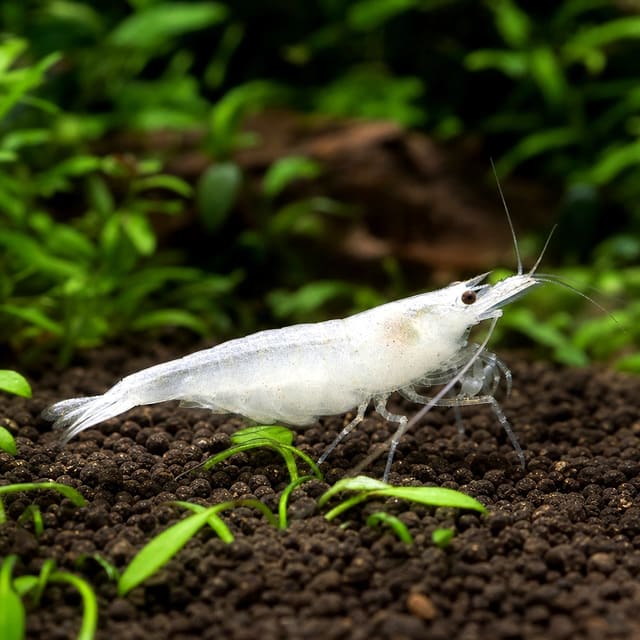
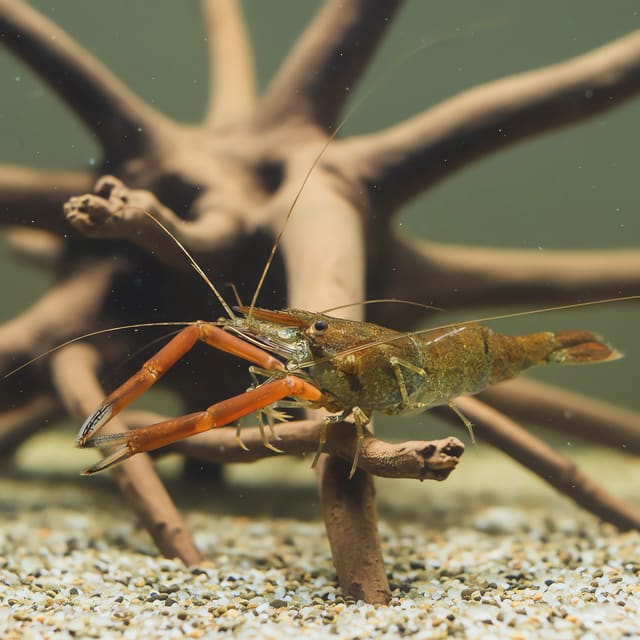
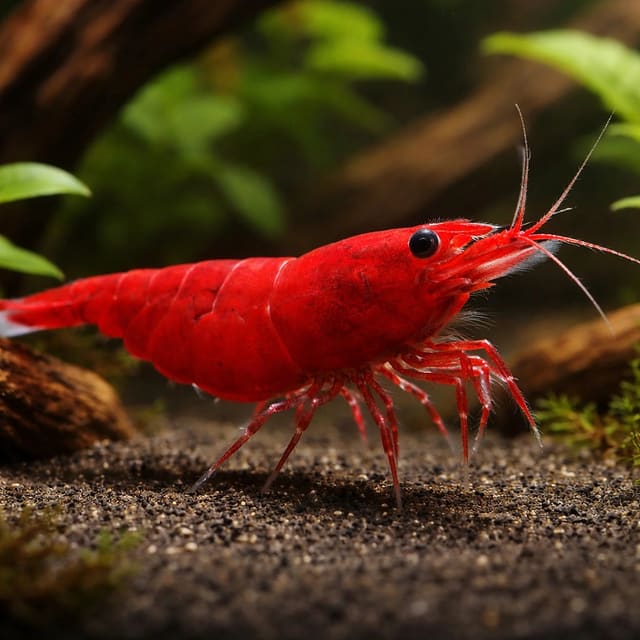
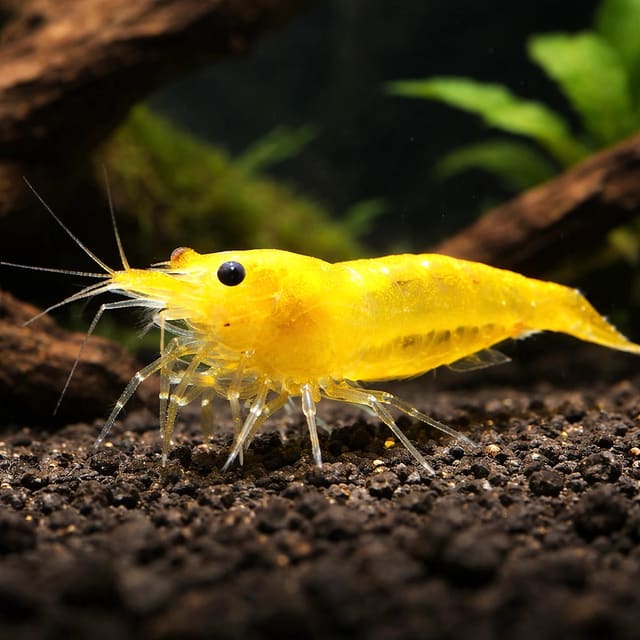
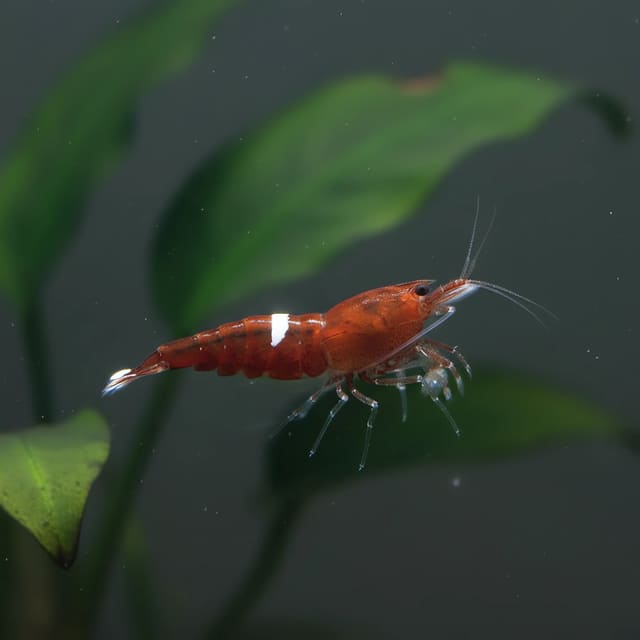
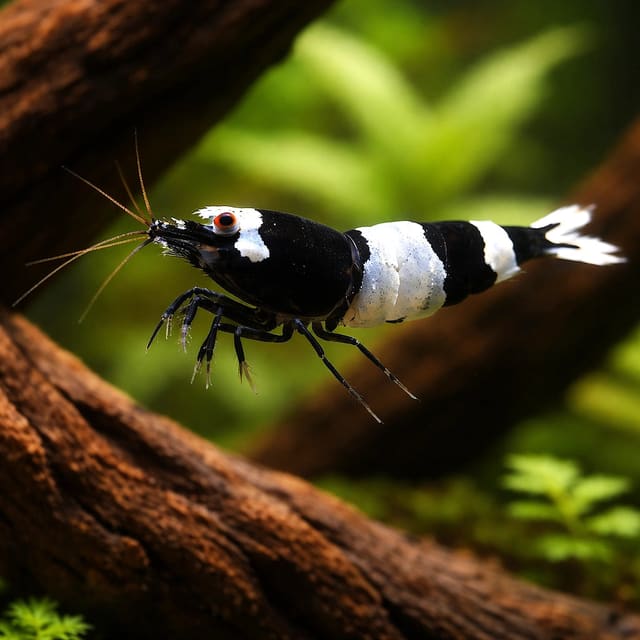
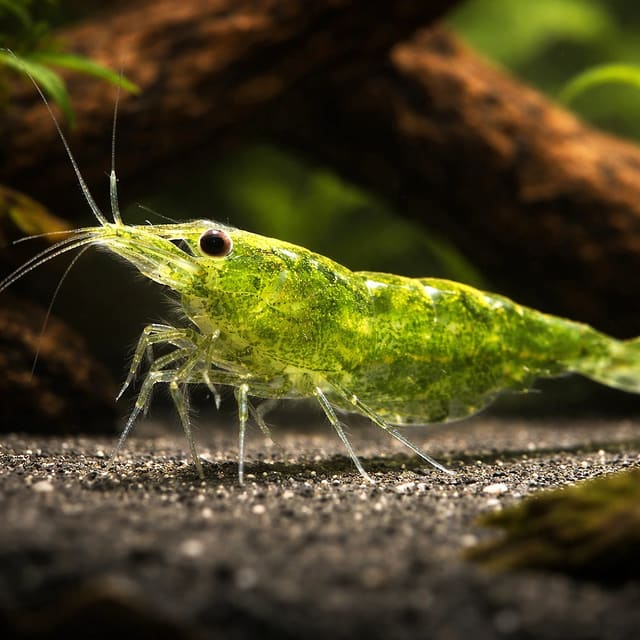
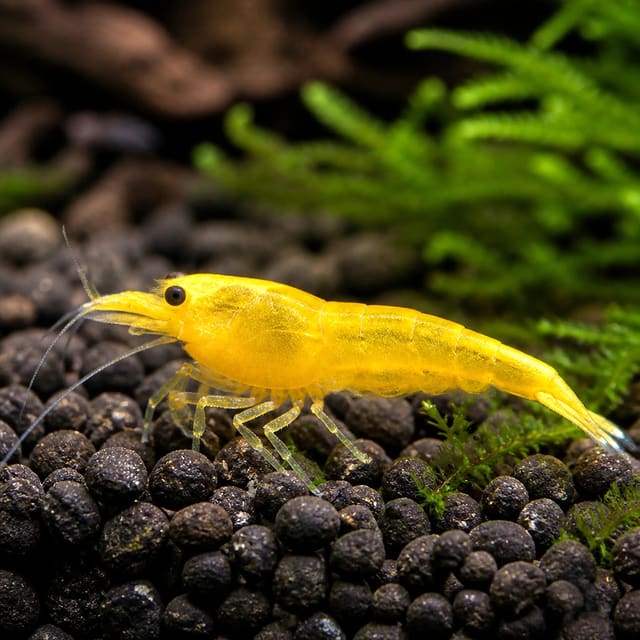
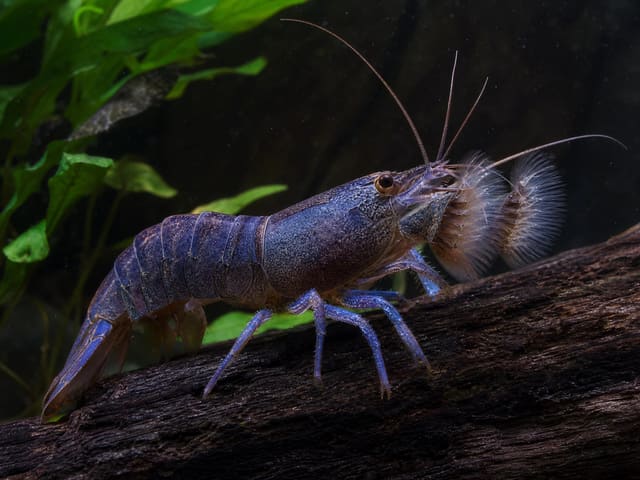
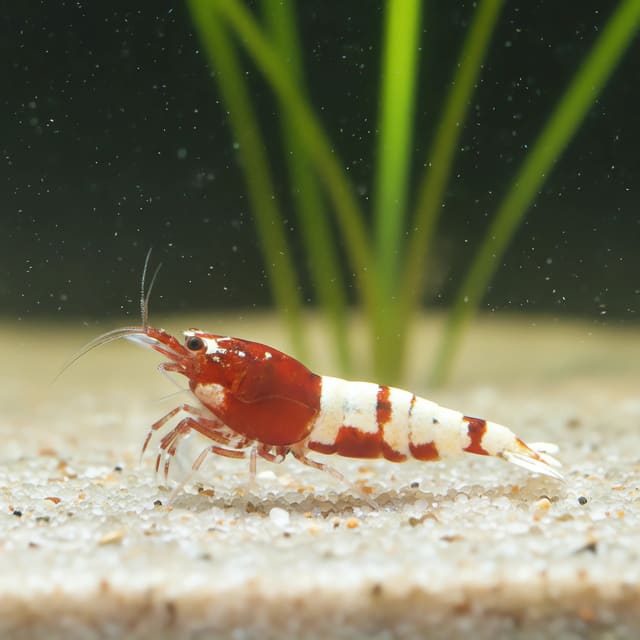
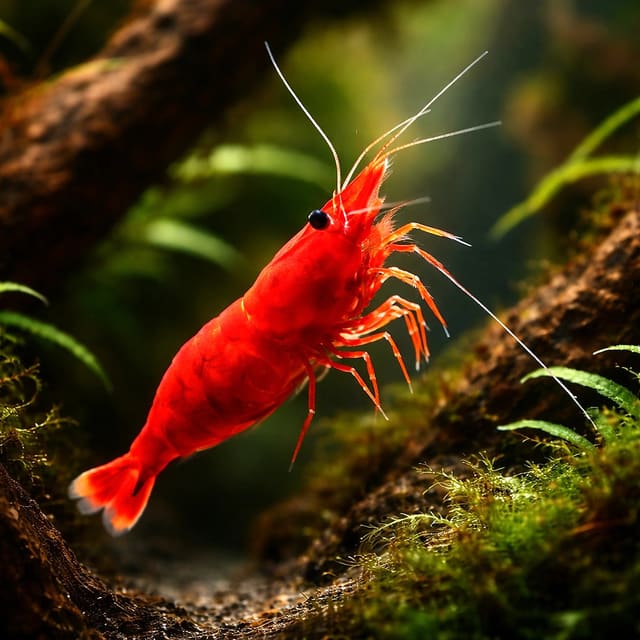
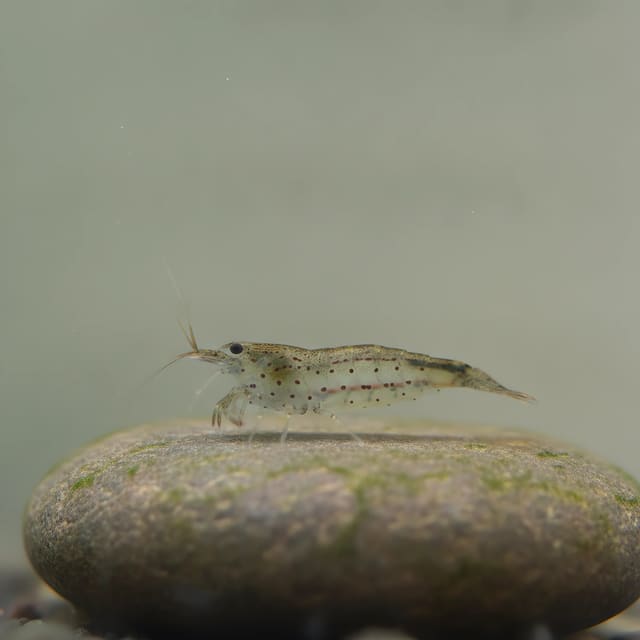
The gallery images are representative of this type of animal rather than photographs of the exact animal supplied, so colours can look slightly different from the live animal. Use the gallery to understand the animal’s general form, then base the aquarium plan on its care needs rather than the colour or apparent sex of the pictured prawn.
If you are comparing this animal with other freshwater invertebrates, browse the shrimp and crustacean collection. Compare adult size, temperament, water needs and companion risks before choosing between different animals.
Plan for an adult length of 6 cm and use an aquarium of at least 60 litres. The safest social plan is one Aspelurum River Prawn per aquarium. If you intend to keep more than one, increase the available space, provide several separate shelters and be ready to change the arrangement if territorial behaviour develops.
A 60-litre aquarium is a planning floor, not a reason to fill every part of the tank with livestock. Water volume must support the prawn, its waste production and any carefully screened companions. OATA advises a larger aquarium when shrimp are kept with fish, and notes that larger aquariums stay more stable.
| Planning question | Decision |
|---|---|
| The selected prawn is 1-1,5 cm | Prepare for the same 6 cm adult and 60-litre minimum |
| The selected prawn is 2 - 4 cm | Keep the same adult space, cover and filtration plan |
| You want to add fish | Increase space and screen each species for predation and nipping risk |
| You want several prawns | Add distinct shelters and monitor every interaction |
Floor area and usable structure matter as well as nominal volume. Leave routes across the substrate, place cover in more than one area and avoid making a single cave the only secure retreat. This arrangement gives the prawn choices when feeding, exploring or sheltering.
Choose the aquarium before choosing the dispatch size. A smaller animal may be less conspicuous initially, but the filter, lid, water targets and long-term companion rules remain unchanged.
Use a mature freshwater aquarium of at least 60 litres with a secure lid, an established filter and several sheltered areas. This prawn can climb, so inspect gaps around cables, pipework and filter fittings rather than relying on the main lid panel alone.
Cover the base with aquarium sand or fine gravel. Add wood, rocks, ceramic caves, sturdy plants or suitable aquarium ornaments to break up open space and create several routes across the bottom. OATA recommends gravel or sand, plants where practical and ornaments that provide cover for freshwater shrimp.
Structure should reduce encounters rather than create a single defended centre. Two or three separated shelters are more useful than one elaborate cave if another prawn or fish can control the entrance. Keep each shelter large enough for the adult animal and avoid narrow holes that will become unsuitable as it grows.
Prepare and mature the aquarium before livestock arrives. Our shrimp-keeping guide explains how to organise the setup and establish the filter. Once the layout is complete, test the water and confirm that temperature, pH and nitrogen-waste readings are stable before introducing the prawn.
Maintain 22–27°C and pH 6.5–7.8. OATA’s broad freshwater-shrimp group guidance gives general hardness of 4–18 dGH and carbonate hardness of 3–15 dKH. Keep ammonia and nitrite at zero, and do not let nitrate rise more than 20 mg per litre above the level in the normal tap water.
Test the aquarium rather than judging water by appearance. Clear water can still contain toxic ammonia or nitrite, while a stable temperature does not show whether pH or hardness suits the animal. The water-chemistry guide explains what the principal readings mean and why each one matters.
For example, an aquarium at 24°C and pH 7.2 sits within both target ranges, but it is not ready if ammonia reads 0.25 mg per litre. Zero ammonia and zero nitrite are pass-or-fail conditions, not optional improvements.
Use the water matcher to compare measured values with these targets. Record results on the same day each week so a gradual trend is visible before it becomes a welfare problem.
Run a mature, well-maintained filter at all times. The RSPCA’s aquarium guidance explains that a biological filter supports beneficial bacteria which convert toxic ammonia into nitrite and then into the safer nitrate. OATA likewise treats filtration as essential for freshwater shrimp.
Choose flow that keeps the water oxygenated without blasting the prawn continuously across exposed parts of the aquarium. The intended pattern is gentle to moderate circulation with calmer sheltered areas. Watch where debris gathers: a stagnant pocket that traps waste needs attention, while a retreat should remain usable rather than becoming the strongest-flowing point in the tank.
Increase livestock numbers slowly. Every additional animal and every increase in feeding creates more waste, while the bacterial population needs time to respond. Adding too much too quickly can lead to new tank syndrome, with ammonia or nitrite rising beyond what the biological filter can process.
If filter flow falls suddenly, check the intake and media before assuming the aquarium needs a stronger unit. Restore normal operation, test ammonia and nitrite, and continue testing until both remain at zero. Filtration decisions should be based on waste processing and stable readings, not water clarity alone.
Feed this omnivorous scavenger a varied selection of sinking foods. Suitable choices include quality sinking pellets, invertebrate pellets, algae wafers and crushed crustacean foods, with small portions of blanched courgette, spinach or peas. Frozen bloodworm, daphnia or finely chopped shellfish can be offered occasionally as protein-rich variety.
Use OATA’s freshwater-shrimp routine for timing: feed only two or three times a week, allow at least 30 minutes for pellets or wafers to be eaten and avoid overfeeding. The prawn may also graze and forage around the aquarium, but visible grazing does not replace a measured feeding routine.
Uneaten food breaks down and adds nitrogenous waste, so feeding more does not automatically improve growth. A small measured portion that is located and consumed is better than a large amount scattered into caves where it cannot be removed.
Include calcium-bearing foods within the varied diet to support exoskeleton development during growth and after moulting. Variety matters more than repeatedly adding a single rich food. Rotate the staple products and vegetable portions while keeping the weekly frequency consistent.
Change 25% of the aquarium water at least once every week. Use a siphon to remove solid waste from accessible gravel or sand while leaving secure shelters intact.
Treat replacement tap water with conditioner before it enters the aquarium so harmful chlorine or chloramine is neutralised. Bring the new water close to the aquarium conditions and add it steadily. The aim is to remove waste without causing an abrupt change in temperature or chemistry.
Use the first month to establish a baseline. A single reading shows today’s condition; four weekly records show whether nitrate is creeping upwards, pH is drifting or feeding is producing persistent waste. If a value changes, correct the cause rather than compensating with increasingly large, irregular interventions.
Record temperature, pH, ammonia and nitrite immediately before introduction, then note the same readings after the prawn has settled. During the following days, observe it at a consistent time and write down where it shelters, whether it moves normally and whether its appearance changes. These notes create a useful comparison without disturbing the aquarium to provoke a response.
Before the first scheduled feed, confirm that ammonia and nitrite remain at zero and that the filter is flowing normally. Offer a measured portion, allow at least 30 minutes for feeding and remove substantial leftovers. Record whether the portion was eaten so the next feed can be reduced or kept similar without adding food by guesswork.
At the end of the first week, complete the full set of water tests before changing 25% of the water. Compare the results with the introduction-day readings. A rising nitrate result calls for a review of waste and feeding, while detectable ammonia or nitrite requires immediate attention to the aquarium load and filter. Check the lid, shelters and ornaments during the same session so water quality and physical security are assessed together.
Do not add more livestock during this observation period merely because the readings look acceptable on one day. A sequence of stable results is more useful than one isolated test, and it gives the biological filter time to respond to the new waste load.
Do not postpone maintenance because the water appears clear. The target is chemical stability and reliable waste processing. Regular smaller actions also make it easier to identify what changed if the prawn behaves differently after feeding, cleaning or adding another animal.
Check every medication, fertiliser and water treatment for invertebrate safety before it enters the aquarium. Freshwater shrimp will die if exposed even to low levels of copper. Never assume that a product suitable for fish is automatically suitable for a prawn.
Keep product labels and dosing tools separate so the aquarium is not exposed accidentally. If another inhabitant needs treatment, confirm that the active ingredients and dose are safe for crustaceans before treating the shared aquarium. Do not improvise a disease treatment or add several products together.
Loss of an appendage, abnormal swelling or a marked change in body condition also warrants prompt attention. Record what changed, including recent products, livestock additions, water readings and maintenance. That sequence helps distinguish a water-quality problem from aggression or physical damage.
If the cause remains unclear or the animal continues to decline, contact us with the water-test results, photographs and a list of recent changes. Do not wait for several warning signs to appear before acting.
Prepare the mature aquarium and confirm its readings before the parcel arrives. Tropical Fish Co hand-bags live animals in pure oxygen, uses an insulated poly box and adds a heat pack when the weather calls for it. The parcel is carried by a licensed live-animal courier.
The float period addresses temperature adjustment; it does not make unsuitable aquarium water safe. The aquarium must already be within 22–27°C and pH 6.5–7.8, with zero ammonia and zero nitrite.
Film every delivery from the sealed parcel onward. For a Live Arrival Guarantee claim, the continuous video must show the sealed parcel, the opening and the animal still inside the sealed bag. Contact us on the day of arrival with the order number and video if a claim is needed.
Read the delivery and Live Arrival Guarantee policy before the delivery date so the receipt, filming and claim requirements are clear. After release, observe the prawn without adding food or more livestock merely to provoke activity. Use water tests and visible condition to guide any response.
Avoid any fish able to fit the prawn in its mouth and any species known to be predatory. OATA warns that freshwater shrimp may be eaten by common aquarium fish, so a peaceful label alone is not enough to establish compatibility.
This prawn may also be the source of risk. As it matures, it can become assertive or territorial and may nip slow-moving fish, long-finned fish, tiny fish, fry or smaller shrimp. Avoid snails you want to keep intact, aggressive cichlids, large predatory fish and territorial crustaceans.
| Proposed companion | Decision |
|---|---|
| Fish that can swallow the prawn | Avoid |
| Predatory fish | Avoid |
| Tiny fish, fry or small ornamental shrimp | Avoid because the prawn may prey on or injure them |
| Slow or long-finned fish | Avoid because nipping is a concern |
| Aggressive cichlids or territorial crustaceans | Avoid |
| Robust, fast peaceful midwater or upper-level fish | Consider only after individual screening in a spacious, structured aquarium |
Compatibility outcomes can vary between individual animals, so no named community combination should be treated as automatic. The aquarium must let each inhabitant feed and retreat without crossing a single defended shelter. Observe interactions at feeding time and around caves, not only when the tank appears quiet.
A species-focused setup is the lowest-risk approach. If you prefer a community, assess the adult prawn and adult fish, provide more than the 60-litre floor where needed and have a separate safe arrangement ready before testing the combination.
Keep one Aspelurum River Prawn per aquarium for the safest plan. More than one may be attempted only with ample space, several separated shelters and close observation. Territorial behaviour can increase as the prawns grow, so an arrangement that appears calm initially still needs reassessment.
Do not place every cave in one cluster. Spread retreats across the aquarium and break lines of sight with wood, rocks or sturdy plants. Each prawn should be able to reach shelter and food without passing the same narrow entrance.
If you see repeated nipping, injury, persistent chasing or an animal unable to feed or shelter, end the combination rather than waiting for the hierarchy to settle. Moving an aggressor after damage begins is harder than preparing an alternative space beforehand.
Ask us about a proposed community with the aquarium volume, water values, full companion list and adult sizes. A useful assessment needs the whole combination, not only the name of one proposed fish.
It reaches an adult length of 6 cm. Plan the aquarium, shelters and companion choices around that adult figure rather than its smaller dispatch size.
Use an aquarium of at least 60 litres with a secure lid, mature filter, sand or fine gravel and several shelters. Increase the space if fish or additional prawns are included.
The safest plan is one per aquarium. If you keep more than one, provide ample space and several separate shelters, then monitor for territorial behaviour as they grow.
We class it as intermediate care and recommend some invertebrate experience. Stable water, copper-safe product choices and careful compatibility screening are essential.
It is an omnivorous scavenger. Offer varied sinking or invertebrate pellets, algae wafers and blanched vegetables, with occasional frozen bloodworm, daphnia or chopped shellfish; OATA’s freshwater-shrimp routine is only two or three feeds a week with at least 30 minutes to eat.
Keep it at 22–27°C and pH 6.5–7.8. OATA’s broad freshwater-shrimp group guidance gives 4–18 dGH, 17–27°C and pH 6.5–8.0; also maintain zero ammonia and zero nitrite.
It may become assertive or territorial as it matures and may nip slow-moving or long-finned fish. Avoid tiny fish, fry, small shrimp, predatory fish and territorial crustaceans.
Only consider robust, fast peaceful fish that occupy the middle or upper aquarium after individual screening. Avoid fish able to swallow the prawn, predatory species, tiny fish, fry, smaller shrimp, vulnerable snails and aggressive cichlids.
Tropical Fish Co hand-bags the animal in pure oxygen, uses an insulated poly box and adds a heat pack when the weather calls for it. Be present to receive the parcel, film continuously from the sealed box, float the bag for 20–30 minutes and release the prawn without adding bag water to the aquarium.
No reviews for this item yet. Bought one? Honest reviews only, good or bad.
What customers say about ordering from us
Easy website plenty of info on fish your buying great to pick a time slot
TRACEY DURRANT · 7 Oct 2026
Got some lovely fish thank you
Kevin Mackie · 7 Oct 2026
Reviews of our shop, collected by Judge.me, an independent third-party review collector. Newest first.