Moderate
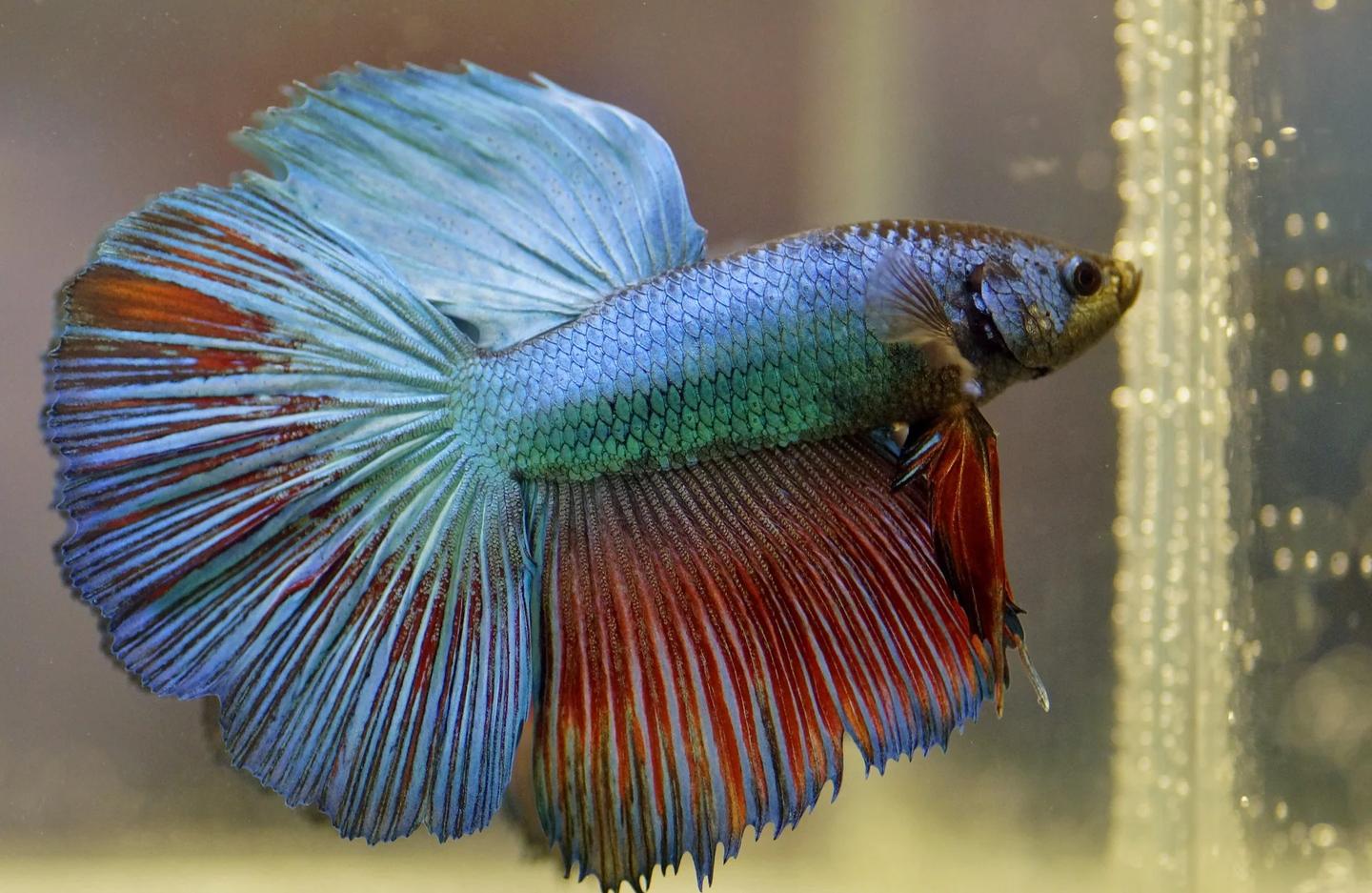
Female Plakat Betta Mix (Betta splendens)
26–28°C · pH 6–8 · 41L
£15.99

A larger-bodied female giant-line Betta splendens selected as A grade stock for a warm, planted aquarium.
Betta splendens
Confirm your email, then we’ll send an availability message for this exact item if it returns within 180 days.
This request is only for this product—no newsletter or other promotions. A mail-provider retry may very rarely duplicate the same availability message. Unconfirmed addresses are removed after 48 hours. See our privacy policy.
A larger-bodied female giant-line Betta splendens selected as A grade stock for a warm, planted aquarium.
For one typical domestic Betta splendens, start with at least 20 litres, a mature filter, thermostatic heater, separate thermometer, gentle flow, a secure lid with surface access, and plants or refuges. Keep one male per aquarium.
Maintain these water conditions for optimal health and vibrant colors
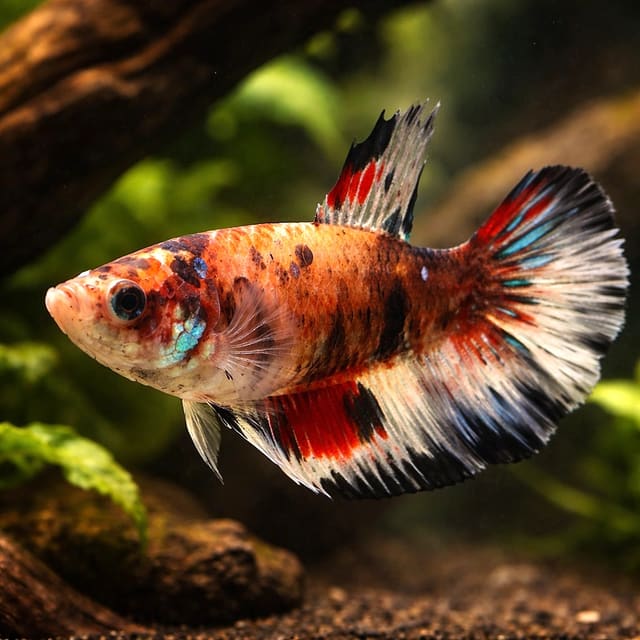
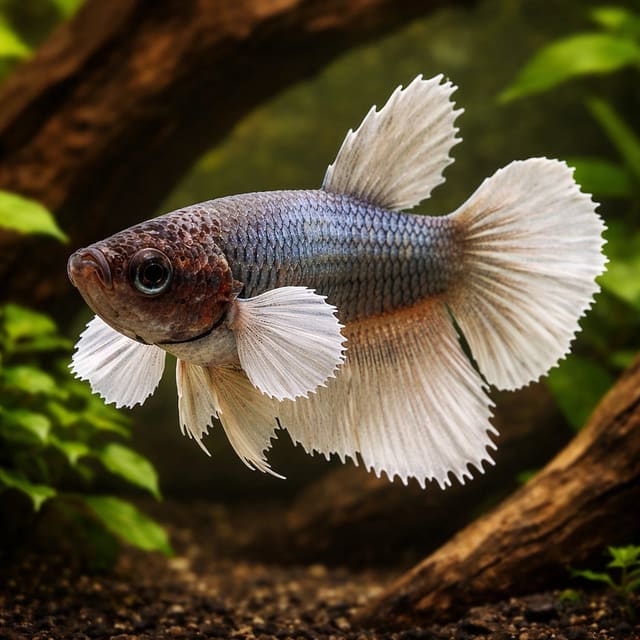
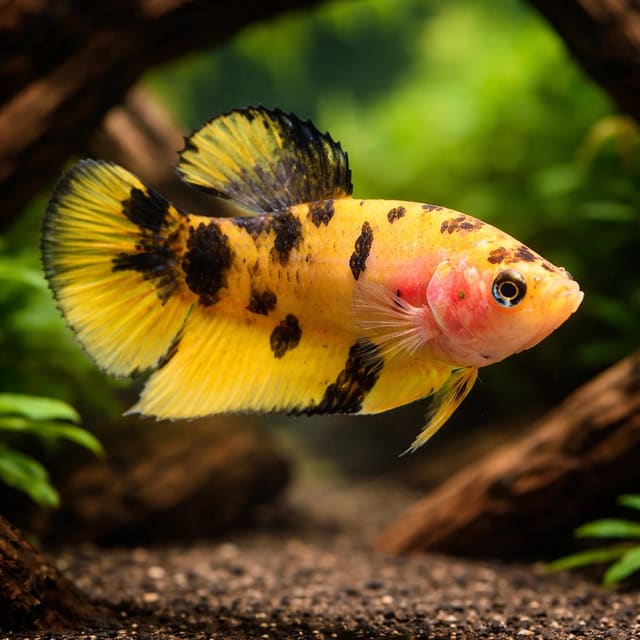
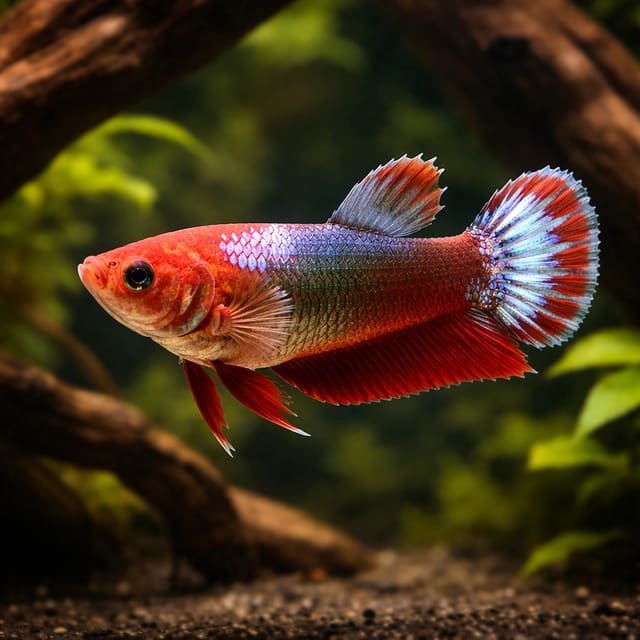
Female Giant A Grade Betta is a larger-bodied domestic form of Betta splendens, selected for size, strength and overall quality rather than extreme finnage. This SKU is sold around 5-6 cm, so it suits keepers who want the presence of a betta with a more substantial body shape and a practical female profile.
Although the product is labelled easy care, a giant-line female still deserves a stable heated aquarium, clean water and careful tank-mate choices. Bettas are labyrinth fish, which means they use surface air as well as gills, so the aquarium must leave clear access to warm humid air above the water. This is not a fish for an unheated bowl or a crowded mixed tank.
| SKU | 7862 |
|---|---|
| Trade name | Female Giant A Grade Betta |
| Scientific name | Betta splendens |
| Sale size | about 5-6 cm |
| Care level | Easy to intermediate, depending on tank mates |
A giant female betta should look deeper and heavier than a standard female, with a confident body shape, tidy fins and good scale coverage. The A grade label is best understood as a quality selection for overall condition and presentation: body, finnage, activity and colour all matter. Females are often less exaggerated than long-finned males, but that is part of their appeal. They move efficiently, turn cleanly and usually handle everyday swimming better than very heavy-finned show males.
The recovered reference image has been added back as the first Shopify image because it shows the product-specific body shape and colour more honestly than a generated scene alone.
Betta splendens originates from warm, slow or standing waters in Southeast Asia, including floodplains, canals and rice-paddy style habitats. Domestic strains are many generations removed from wild fish, but the basic care logic remains the same: warm water, calm flow, cover near the surface and excellent day-to-day water quality. The labyrinth organ is useful, but it is not an excuse for poor filtration or small containers.
| Temperature | 24-30C, with 25-28C ideal for routine care |
|---|---|
| pH | 6.0-7.5 |
| Hardness | 1-15 dGH |
| Flow | Gentle; avoid blasting the fish around the tank |
| Surface access | Essential, with a secure lid and warm air gap |
Use at least 25 litres for a single female giant betta, and choose a larger aquarium if you plan any companions. A 40-litre or larger planted setup is easier to keep stable and gives a bigger female more room to patrol. Add floating plants, broad leaves, wood, smooth decor and shaded areas. Keep the lid secure because bettas can jump, and leave space between the waterline and cover glass so she can breathe surface air comfortably.
Filtration should be mature and gentle. A sponge filter, baffled internal filter or calm hang-on-back setup is usually better than strong current. Use a heater and thermometer rather than relying on room temperature, especially in the UK. Sudden drops are more stressful than a steady value within the normal range.
Bettas are carnivorous insect and small-invertebrate feeders by nature. In the aquarium, use a quality betta pellet or soft micro pellet as the staple, then rotate frozen or live foods such as brine shrimp, daphnia, cyclops, mosquito larvae and bloodworm in sensible portions. A giant female has a bigger body than a standard female, but overfeeding still causes bloat and poor water quality.
| Staple | Quality betta pellets or small carnivore granules |
|---|---|
| Variety | Frozen brine shrimp, daphnia, cyclops and mosquito larvae |
| Treat food | Bloodworm occasionally, not as the daily base |
| Routine | Small meals, remove leftovers, watch body condition |
Female bettas are usually less combative than males, but they are still bettas. This one is best treated as semi-aggressive: peaceful when settled, but capable of chasing, flaring or defending favourite spaces. Do not keep her with another betta unless you are deliberately managing a large, experienced female group, and even then the risk is real. For most customers, a single-specimen display is the cleaner and kinder recommendation.
Possible companions include snails and calm bottom fish in a larger aquarium. Avoid fin nippers, bright long-finned fish, aggressive cichlids, fast boisterous barbs and tiny shrimp you are not willing to lose. If you want a community, build the tank around calm movement and visual breaks, not speed and competition.
| Best as | Single feature fish in a planted heated aquarium |
|---|---|
| Possible companions | Snails; quiet bottom dwellers in larger tanks |
| Avoid | Other bettas, fin nippers, aggressive fish, flashy long-finned tank mates |
| Risk sign | Persistent chasing, clamped fins, hiding or torn finnage |
On arrival, dim the lights, float the bag to equalise temperature and acclimate slowly with small additions of aquarium water. Keep the first day quiet and do not feed heavily until she is settled. Bettas often inspect the surface and rest on leaves or decor, so judge health by alertness, breathing, fin condition, appetite and confident movement rather than constant swimming.
Live fish orders are covered by our Live Arrival Guarantee when the policy conditions are followed. For this listing, the permanent page text avoids fixed discount-code wording and courier claims that may become stale; the current checkout and delivery information should be treated as the source for live fulfilment details.
This is a female domestic Betta splendens. Breeding should only be attempted by keepers who can condition both fish, supervise the introduction and separate the female safely after spawning. Male bettas build bubble nests and guard eggs; female safety is the main concern during and after the pairing. If the goal is simply a display fish, there is no need to breed her.
Choose this fish if you want a larger female betta with presence, simpler finnage than a long-finned male and clear personality in a heated planted aquarium. It is a good fit for a single-fish display, a calm planted desk tank above the minimum size, or an experienced keeper who likes female bettas. Skip it if you want a coldwater fish, an unheated bowl, a busy community with nippy tank mates, or a guaranteed sorority candidate.
| Good match | Keeper wanting a robust female betta display fish |
|---|---|
| Needs | Warm stable water, cover, gentle flow and surface access |
| Not ideal for | Cold tanks, bowls, rough communities or impulse sorority setups |
| Main keyword fit | Female giant betta, A grade betta, Betta splendens |
No reviews for this item yet. Bought one? Honest reviews only, good or bad.
What customers say about ordering from us
I have a small group of long finned mountain minnows. So was delighted to be able to order ten of this variety to increase the genetics in my tank . The ones I recieved are healthy but it’s to early to give a verdict on wether they are of a long finned type since they are small currently.
Gordon Walker · 23 Sept 2026
100% success travel and "installation". Pleased with quality of purchase. The Siamese fighter a bit "shy" so have not yet seen him at his best yet but looking good. Happy customer. GG
George E Garratt · 21 Sept 2026
Reviews of our shop, collected by Judge.me, an independent third-party review collector. Newest first.