Moderate
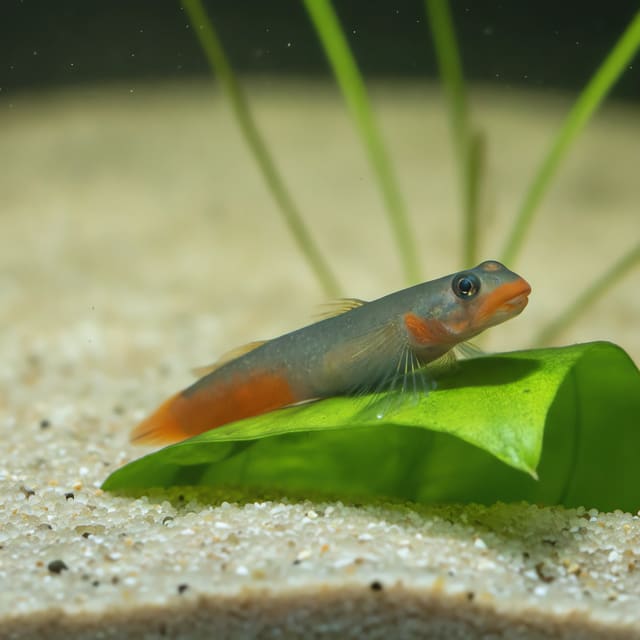
Blue Neon Goby (Stiphodon sp. undio blue)
22–26°C · pH 6.5–7.5 · 54L
£10.99

One unsexed Mahnert's Loach at approximately 4-5 cm per quantity. A territorial Schistura for mature, oxygen-rich river aquariums with smooth stones and separate shelters.
Schistura mahnerti
Shoaling fish: kept in a group they feel safer, stay calmer and show their best colour.
Confirm your email, then we’ll send an availability message for this exact item if it returns within 180 days.
This request is only for this product—no newsletter or other promotions. A mail-provider retry may very rarely duplicate the same availability message. Unconfirmed addresses are removed after 48 hours. See our privacy policy.
One unsexed Mahnert's Loach at approximately 4-5 cm per quantity. A territorial Schistura for mature, oxygen-rich river aquariums with smooth stones and separate shelters.
Maintain these water conditions for optimal health and vibrant colors
Mahnert's Loach (Schistura mahnerti) is a small, barred stream loach for mature aquariums with clean water, a high oxygen level and a carefully arranged rocky floor. It is an engaging fish, but it should not be sold as a passive community scavenger. Like many Schistura, it can defend shelters and feeding spaces, so the aquarium must be planned around territory as well as water quality.
One quantity buys one unsexed fish at approximately 4-5 cm dispatch size. The fish is not sold as a pair, trio or wholesale pack. Sex cannot be guaranteed at this juvenile or subadult size. Adult identity and pattern can also be difficult to judge in the aquarium trade because several barred Schistura look similar, so the scientific name should remain the main reference when comparing care information.
This is a tropical Asian loach, not the native British stone loach Barbatula barbatula. It comes from the Salween drainage in Thailand, where related collection records describe clear, flowing streams over silt, sand, gravel and pebbles. A suitable home aquarium therefore needs moving, oxygen-rich water, rounded substrate, stable chemistry and several dark crevices. Warm, still community tanks are a poor match even when their basic pH appears acceptable.
| Order detail | What it means |
|---|---|
| Quantity 1 | One live Mahnert's Loach, not a group or wholesale pack |
| Approximate size | 4-5 cm at dispatch; individual fish vary naturally |
| Sex | Unsexed; a particular sex cannot be selected or guaranteed |
| Colour and pattern | Natural variation is expected, and stress can temporarily soften the contrast of the bars |
| Stock status | Live availability is shown by the product selector and may change independently of this care guide |
Prepare the aquarium before ordering. A fish that needs current and bottom territory should not be added first and accommodated later. Check that the filter is mature, ammonia and nitrite are zero, the current reaches the lower level without pinning the fish in one place, and every resident bottom fish has a separate retreat. The current livestock dispatch schedule and guarantee conditions are explained on our Delivery and Live Arrival Guarantee page.
Schistura mahnerti was described by Maurice Kottelat in 1990 and belongs to the stone-loach family Nemacheilidae. The trade names Mahnert's Loach, Mahnert Stone Loach and Red-tail Zebra Loach may appear in shops or older aquarium literature. Common names are not reliable identifiers by themselves. In particular, "red-tail zebra loach" is also applied to other barred Schistura, including fish sold as Schistura vinciguerrae.
The scientific name is the identity anchor. FishBase describes a barred species with as many as 17 vertical markings, with the front bars sometimes split and the rear bars more widely spaced. Adult pattern can differ from the broader bars seen in juveniles. Those characters are useful, but a photograph alone may still be insufficient for a certain identification when the fish is small, stressed or photographed at an angle.
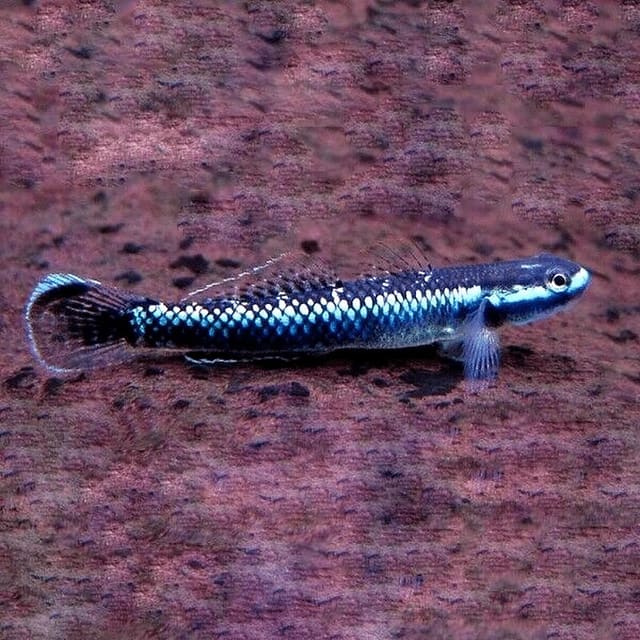
The current product visual is a representative digital aquarium illustration. It shows the intended stream-loach form and habitat theme, but it is not a photograph of the exact animal dispatched and should not be used as proof of diagnostic markings. The live fish can differ in bar shape, base colour, fin tone and body condition within the normal range for imported aquarium stock.
No. The native stone loach is Barbatula barbatula, a different species associated with cool British and European waters. Mahnert's Loach is Schistura mahnerti, an Asian tropical stream fish. The shared words "stone loach" describe a broad body type and habitat association rather than one interchangeable fish.
This distinction affects husbandry. Advice for keeping a native stone loach in an outdoor pond or cool-water system does not apply to this fish. Equally, generic tropical community advice may understate the flow, oxygen and territorial structure required by S. mahnerti. Use the scientific name whenever checking a parameter or comparing information.
FishBase records Schistura mahnerti from the Salween basin in Thailand. Its Thailand field guide narrows records to Salween tributaries in Mae Hong Son and Tak. A detailed northern Thailand field guide places the species in clear, flowing streams with silt, sand, gravel and pebbles.
Stream habitat is more than a visual theme. Flow continually renews dissolved oxygen, moves fine waste away from exposed surfaces and creates a patchwork of fast lanes, sheltered pockets and stone crevices. The fish can move between those microhabitats instead of experiencing one uniform current. A successful aquarium copies that variety: open flow for activity, calm water behind rocks for rest, and several narrow refuges that cannot all be controlled by one dominant fish.
Mahnert's Loach has the elongated, slightly flattened profile expected of a fish that lives close to the bed of moving streams. The mouth faces downwards and is surrounded by sensory barbels used to investigate food among gravel and stones. The body is usually pale beige, tan or brown with darker vertical bars, while the fins can show subtler marks. Colour contrast changes with lighting, substrate, stress, dominance and the fish's recent environment.
FishBase notes up to 17 bars in adults. Some front bars can split vertically, while those nearer the tail may be spaced more widely. Juveniles can show fewer, broader bars, so a 4-5 cm fish need not look identical to an established adult photograph. The male suborbital flap is a diagnostic character in mature fish, but it is not a dependable way to choose the sex of young retail specimens.
Look for a fish that holds itself level, breathes steadily and uses the substrate with deliberate movements. A newly delivered fish may be pale and secretive for a time. Pattern alone is not a health score: respiration, body weight, intact barbels, clean skin and a steady feeding response are more useful indicators once the fish has settled.
FishBase gives a maximum of 6.4 cm standard length. Standard length is measured to the base of the tail and therefore excludes the caudal fin. For aquarium planning, allowing for roughly 7-8 cm total length is a sensible working expectation, but it should not be treated as a guarantee for every fish. Genetics, sex, age, diet and import history all affect final measurements.
The dispatch size of approximately 4-5 cm is not the adult size. Leave enough territory for the mature fish from the beginning, and do not use juvenile body size to justify a temporary crowded layout. Growth is best supported by stable water, appropriate protein-rich foods and low competition rather than heavy feeding.
Schistura mahnerti is territorial in the lower part of the aquarium. It may defend a favoured cave, stone gap or feeding patch and can nip or chase fish that repeatedly enter that space. This behaviour is most likely to become harmful when several bottom fish are forced to share one visible shelter, when food lands in a single spot, or when the tank lacks broken sight lines.
Territorial does not mean that the species attacks every tank mate. It means the aquarist must control the conditions that create repeated conflict. Midwater fish that tolerate the same current can often avoid the defended zone, whereas another cave-dependent loach cannot. Short displays or brief chases may occur; persistent cornering, damaged fins, weight loss or a fish unable to reach food requires intervention.
Do not buy several fish on the assumption that they must form a peaceful shoal. A group is an advanced territorial setup, not a default stocking rule. A single specimen is simpler to accommodate; more than one requires substantially more floor space, repeated shelters, visual barriers and close observation.
There is no evidence-based universal group number that makes Mahnert's Loach safe. Keeping one fish avoids conflict between conspecific territories and is the most straightforward option for a moderate-sized river aquarium. It can still show natural foraging, perching and sheltering behaviour when the environment is complex.
Keeping several can be attempted only in a larger, mature aquarium where the bottom is divided into many separate zones. The owner must be ready to separate an individual if aggression persists. A simple row of identical caves does not create independent territories if every fish can see the whole row; staggered rocks, wood and plants must block direct views.
| Plan | Advantages | Main risk | Practical requirement |
|---|---|---|---|
| Single specimen | Simpler territory management and feeding observation | Can be shy in a bare or brightly lit tank | Complex cover, shaded retreats and compatible midwater activity |
| Several Schistura | More interactions and visible territorial behaviour | Chronic chasing, exclusion from food and injuries | Large footprint, many barriers, duplicate feeding areas and a separation plan |
| Mixed bottom-loach community | Varied display | Overlapping caves and incompatible social signals | Specialist planning; generally avoid in modest aquariums |
A universal litre figure does not make a territorial stream loach safe. For one Mahnert's Loach, choose a mature, long-format aquarium that can provide a flowing lane, several refuges and enough bottom area to separate feeding from resting zones. A taller aquarium can offer less useful habitat than a longer, shallower one with the same nominal volume.
For more than one territorial Schistura, increase the footprint substantially and judge the plan by the number of independent territories rather than litres alone. The aquascape should be complete before the fish are introduced so that no established resident owns the only useful cave.
Start with a base of fine sand or smooth gravel. Add rounded cobbles of different sizes, then create stable gaps with larger stones or aquarium-safe wood. Every structure must be secure enough that digging, maintenance or a startled fish cannot cause it to collapse. Avoid sharp slate edges in the direct travel path even if slate is used higher in the hardscape.
Point filter returns or a circulation pump along the length of the tank rather than directly at one shelter. The aim is a broad current with calmer eddies behind hardscape, not a narrow jet. Test the layout with food or fine debris: particles should move towards the intake without every bottom surface becoming a high-speed channel.
Leave some open substrate for feeding and inspection. A completely packed rock bed can trap waste and make it difficult to see whether the fish is eating. Accessible caves and removable stones make maintenance safer while still providing cover.
High oxygen availability is central to this species' care. Use a filter with enough biological capacity for the aquarium, create vigorous surface movement and keep the water path free of heavy debris. An airstone can add useful gas exchange, particularly in warm weather, but it does not replace filtration or maintenance.
Flow must be strong enough to support a stream environment without exhausting the fish. Watch behaviour rather than relying only on a pump rating. A loach that can choose between current and shelter, rests normally and emerges to feed has more control than one constantly pressed behind the only stone. Protect pump intakes with an appropriate guard and close gaps around lids, because small loaches can enter surprisingly narrow spaces.
Keep temperature within the recommended range and avoid accidental summer overheating. Warmer water holds less dissolved oxygen, so a tank at 26°C needs especially strong surface exchange. Do not compensate for poor gas exchange by simply increasing current under the surface; oxygen enters primarily where water and air meet.
| Parameter | Working range | Why it matters |
|---|---|---|
| Temperature | 23-26°C | Matches specialist aquarium guidance while avoiding an unnecessarily broad range |
| pH | 6.0-7.0 | Suitable for a soft, slightly acidic to near-neutral stream aquarium |
| General hardness | Approximately 2-9 dGH | Reflects the soft-water range used in specialist husbandry references |
| Ammonia | 0 mg/L | Any measurable ammonia indicates an unsafe filtration or maintenance problem |
| Nitrite | 0 mg/L | Nitrite interferes with oxygen transport and is unacceptable in a mature aquarium |
Stability is more important than chasing an exact decimal value. Match the fish gradually to a suitable stable aquarium rather than making abrupt pH or hardness changes. Test source water as well as tank water, and remember that stones, substrate and replacement water can alter hardness over time. Nitrate should be kept low through sensible stocking, plant growth where appropriate and regular partial water changes.
Use sand, smooth fine gravel and rounded pebbles. The fish spends much of its time close to the bottom, so abrasive or sharp materials can damage the belly, mouth and barbels. Rounded stones also create more natural flow lines and safer resting surfaces.
Provide more retreats than there are territorial bottom fish. Useful shelters include gaps beneath stable cobbles, short ceramic tubes hidden by stone, wood arches and shaded areas between plants attached to hardscape. Each retreat needs an escape route; a single dead-end cave can become a trap if another fish guards the entrance.
Break the lower field of view into sections. From one end of the aquarium, it should not be possible to see every cave. This design reduces the frequency with which one fish detects and challenges another, and it allows a subordinate animal to reach food without crossing the dominant fish's centre.
Plants are optional but useful for shade and visual barriers. Choose species that tolerate current and can be attached to rocks or wood, such as Java fern, Anubias and Bucephalandra. Rooted plants can be used in protected pockets where the substrate is not constantly disturbed. Do not sacrifice open flow or maintenance access to achieve dense planting.
Moderate lighting with shaded areas is preferable to an intense, bare display. Floating plants can soften light, but they must not cover the whole surface and restrict gas exchange. A regular day-night cycle helps the fish develop predictable resting and feeding behaviour. Avoid leaving bright lights on late to force visibility; improve shelter placement so the loach feels safe enough to emerge.
FishBase records aquatic insect larvae in the stomach of Schistura mahnerti. In an aquarium, build the diet around small sinking foods with an invertebrate component. Suitable choices include quality sinking granules, small bottom-feeder pellets, frozen bloodworm, brine shrimp, daphnia, cyclops and similar appropriately sized foods.
This loach is not an algae-control product and should not be expected to live on biofilm or community leftovers. It may pick at surfaces while searching for tiny animals, but that behaviour does not make algae a complete diet. A fish that appears to browse all day can still lose weight if suitable food never reaches its territory.
Offer modest portions once or twice daily according to the aquarium's stocking and filtration. Distribute food across two or more bottom areas so a territorial fish cannot control the entire meal. Remove uneaten food before it decomposes beneath the rocks. Small frozen foods can be found in our frozen fish food category; always choose pieces appropriate for the fish's mouth.
| Food type | Role | How to use it |
|---|---|---|
| Sinking granules or small pellets | Reliable prepared staple | Place in separate feeding zones and confirm the loach reaches them |
| Frozen insect larvae or small crustaceans | Dietary variety and strong feeding response | Thaw an appropriate portion and prevent excess food lodging under stones |
| Live foods from a trusted source | Enrichment and natural hunting | Use selectively and consider biosecurity |
| Algae wafers alone | Not a complete species diet | Do not substitute them for insect-rich and balanced sinking foods |
Do not judge feeding only by watching food disappear. Midwater fish, snails or another bottom resident may take it first. Observe the loach from a distance and look for deliberate picking, chewing and a stable body profile. A healthy fish should not develop a pinched abdomen or a sharply hollow line behind the head.
If it hides at feeding time, deliver a small portion near its shelter after the main tank activity settles. Dim the room before the aquarium lights switch off, but do not leave food overnight without checking it. Persistent refusal, rapid breathing or weight loss requires a review of water quality, aggression, food size and health rather than progressively larger meals.
Choose companions by water needs and swimming zone, not by a generic "peaceful community" label. Suitable candidates are active upper- or midwater fish that appreciate clean, oxygen-rich water and do not require very warm conditions. Some danios and rasboras can fit that pattern, but each species must be checked against the 23-26°C, soft-water range before purchase. Our danio and rasbora category is a browsing starting point, not an automatic compatibility list.
Avoid slow, delicate or long-finned fish that dislike current. Avoid large aggressive cichlids and fish likely to swallow a small loach. Be cautious with any species that depends on the same caves, including other territorial Schistura, many catfish and cave-spawning cichlids. Bottom crowding is more important than total fish count because the conflict is concentrated in one layer.
| Potential companion | Assessment | Reason |
|---|---|---|
| Small stream-tolerant danios | Often suitable after parameter checking | Mostly use upper water and appreciate oxygen |
| Compatible rasboras | Possible | Choose species that tolerate current and the same temperature |
| Another territorial Schistura | High caution | Direct competition for shelters and feeding territory |
| Slow fancy fish | Avoid | Flow and activity requirements conflict |
| Large predatory fish | Avoid | Predation or severe intimidation risk |
For a direct comparison with another barred stream loach, see Vinciguerra's Stone Loach. Similar appearance does not guarantee identical behaviour or care, and mixing the two is not recommended merely to create a varied pattern display.
Do not market Mahnert's Loach as shrimp-safe. A fish adapted to eating small aquatic animals may take shrimplets, tiny juveniles or other bite-sized invertebrates. Large adult shrimp might coexist in a complex aquarium, but the risk cannot be removed and the loach may investigate moulting individuals.
Snails are not a guaranteed target or a guaranteed safe companion. Outcomes depend on snail size, shell shape, food availability and the individual fish. If breeding shrimp, conserving fry or maintaining rare snails is the priority, use a separate aquarium rather than testing the limits of compatibility.
Prepare a dim, secure aquarium before the delivery arrives. Compare the transport-water temperature with the tank and follow the current instructions supplied with the livestock. Avoid opening the bag and then leaving the fish in a small volume for an extended period. Once transferred, keep lighting low and provide immediate access to cover.
Do not add shipping water to the display unnecessarily. Use clean equipment reserved for aquarium use, and prevent the loach from jumping during transfer. After introduction, confirm that it can reach a shelter without being challenged by an established bottom resident. Our acclimation timer can help manage a planned drip process when that method is appropriate to the shipment instructions.
A newly arrived fish may hide, breathe faster for a short period or show faded bars. Those signs should improve as it settles. Persistent gasping, loss of balance, inability to rest or severe skin damage is not normal settling behaviour and should be assessed promptly.
A separate mature quarantine aquarium makes observation easier and protects established livestock. It should provide oxygen, a secure lid, smooth substrate or a bare easy-clean floor, and simple shelters that can be inspected. Match the intended temperature and water chemistry rather than keeping the fish in an unsuitable generic quarantine setup.
Observe respiration, body weight, skin, fins, barbels and feeding response. Do not medicate a healthy fish automatically. Loaches can be sensitive to some treatments, and a medication that is safe for one aquarium may be unsafe with invertebrates or at a different water chemistry. Diagnose first, read the current product label and seek an experienced aquatic veterinarian or fish-health professional where needed.
| Task | What to check | Why it matters |
|---|---|---|
| Daily observation | Breathing, posture, feeding access and territorial pressure | Behaviour changes can reveal oxygen or social problems early |
| Regular water testing | Ammonia, nitrite, nitrate, pH and temperature | Clear-looking water can still be chemically unsafe |
| Partial water change | Use temperature- and chemistry-compatible conditioned water | Controls dissolved waste without sudden parameter swings |
| Substrate cleaning | Remove debris from accessible gaps without dismantling every territory | Trapped food consumes oxygen and damages water quality |
| Filter care | Maintain flow while protecting established biological media | A blocked filter reduces both waste processing and oxygenation |
Choose a water-change schedule based on measured conditions, stocking and feeding rather than a universal calendar. Frequent small maintenance is usually less disruptive than allowing heavy debris to accumulate beneath the rockwork. Clean different sections in rotation if lifting every stone would remove all shelter at once.
A settled Mahnert's Loach should maintain steady balance, explore the bottom, rest in chosen shelters and respond to suitable food. Healthy barbels and belly skin are especially important because those areas remain close to the substrate. The body should look filled but not swollen, and the fish should not be excluded from every resting place.
Warning signs include persistent rapid breathing, repeated surface visits, clamped fins, flashing, red or eroded skin, white spots, a hollow abdomen, failure to feed, continuous hiding after the settling period, or damage from chasing. Test water and inspect social conditions immediately. Low oxygen, ammonia, nitrite, excessive heat and territorial exclusion can resemble disease or make an infection worse.
Do not guess a diagnosis or automatically use full-strength copper, salt or mixed treatments. Check the medicine's current label for loach sensitivity and invertebrate warnings, calculate the true water volume, improve aeration where the label permits, and obtain expert help for severe or uncertain cases.
Summer heat creates a double risk: metabolism rises while water holds less oxygen. Monitor the aquarium temperature with an independent thermometer, keep surface movement strong and make sure the room does not trap hot air around the tank. Avoid sudden cooling with ice or large cold-water changes, which can create a more dangerous shock.
During a power cut, aeration is the first priority. A battery air pump, spare batteries and a plan for manually disturbing the surface can protect stream fish while the main filter is off. Do not feed heavily during an outage. When power returns after a long interruption, check stagnant external-filter water before pumping it directly back into the aquarium.
Reliable species-specific breeding information for Schistura mahnerti is limited. Specialist aquarium sources mention reports of breeding in Thailand, but there is no well-validated home protocol that supports promises about a particular tank size, seasonal trigger, egg location, incubation period or fry diet.
For that reason, a speculative step-by-step breeding recipe would be misleading. A mature female may be fuller-bodied and adult males have a suborbital flap, but retail fish at 4-5 cm are sold unsexed. Anyone attempting a breeding project should begin with confirmed identification, excellent long-term conditioning, a large territorial setup and primary records rather than generic advice copied from unrelated stream loaches.
| Feature | Mahnert's Loach | Kuhli Loach | Hillstream Loach |
|---|---|---|---|
| Body form | Elongated stream loach with vertical bars | Eel-like and adapted to softer substrate | Flattened body with broad gripping fins |
| Social concern | Territorial around shelters | Usually kept socially in suitable groups | Varies by species; males may defend feeding areas |
| Preferred layout | Rounded stones, crevices, current and broken sight lines | Soft sand, dense cover and gentle hiding places | Strong oxygenation and broad smooth rock surfaces |
| Feeding emphasis | Small invertebrates and sinking prepared foods | Varied sinking omnivore foods | Species-dependent; biofilm can be important for some |
| Best reason to choose | Visible barred stream-loach behaviour in a structured river tank | Secretive, social activity in a calm planted aquarium | Specialised rock-surface behaviour and distinctive body form |
Mahnert's Loach is the right choice only when its territorial behaviour is part of the plan. It is not a smaller substitute for every other loach, and it should not be chosen simply because the aquarium needs a bottom cleaner. Browse the current Schistura selection to compare available stream loaches by exact scientific name.
One quantity buys one unsexed Mahnert's Loach. Increase the quantity only after assessing whether the aquarium can provide genuinely separate territories.
The dispatch size is approximately 4-5 cm. Natural variation is expected, and the measurement is not a promise of an exact millimetre length.
FishBase records 6.4 cm standard length. For practical aquarium planning, allow for roughly 7-8 cm total length including the tail.
No simple peaceful label is appropriate. It is territorial around shelters and feeding spaces, although carefully chosen upper-water companions can work in a suitable river-style aquarium.
There is no dependable universal litre minimum for this territorial species. Choose a long-format mature aquarium with a flowing lane, several separated refuges and enough bottom area to keep feeding and resting zones apart. Several Schistura need substantially more floor area, many barriers and a separation plan.
It may investigate biofilm, but it is not an algae-control fish. Natural diet evidence includes aquatic insect larvae, so provide small animal-based foods and balanced sinking prepared foods.
Small shrimp and shrimplets may be eaten. Even where adult shrimp coexist, they cannot be considered reliably safe.
No. This product is the tropical Asian species Schistura mahnerti. The native British stone loach is Barbatula barbatula.
No. Fish are sold unsexed, and dependable sex selection is not available at this dispatch size.
The product image is a representative digital aquarium illustration, not a photograph of the exact fish sent. Bar pattern, colour, fin tone and body shape vary naturally and can change with age or stress.
The main references are the FishBase species summary for Schistura mahnerti, the FishBase Thailand field-guide record, the Nagao Natural Environment Foundation's Northern Thai Fishes field guide, and the long-running specialist profile at Loaches Online.
Where those sources do not establish a dependable species-specific fact, the uncertainty is stated clearly. In particular, there is no exact lifespan promise, universal social group, detailed breeding method or certain identification from one illustration. This distinction matters for both animal welfare and informed buying.
Mahnert's Loach is a compact but specialist bottom fish for a mature, oxygen-rich river aquarium. Keep it at 23-26°C in soft, slightly acidic to near-neutral water, use a smooth rocky substrate, and make every shelter part of a deliberately broken field of view. Feed small invertebrate foods and quality sinking prepared foods rather than expecting algae control.
Choose a long aquarium footprint with enough lower-level space for flowing water, separated shelters and distinct feeding and resting zones. Treat a multi-fish Schistura setup as an advanced territorial project requiring much more floor space and a backup separation option. One quantity is one unsexed fish at approximately 4-5 cm. Check the live stock selector and current delivery information before ordering.
No reviews for this item yet. Bought one? Honest reviews only, good or bad.
What customers say about ordering from us
I have a small group of long finned mountain minnows. So was delighted to be able to order ten of this variety to increase the genetics in my tank . The ones I recieved are healthy but it’s to early to give a verdict on wether they are of a long finned type since they are small currently.
Gordon Walker · 23 Sept 2026
100% success travel and "installation". Pleased with quality of purchase. The Siamese fighter a bit "shy" so have not yet seen him at his best yet but looking good. Happy customer. GG
George E Garratt · 21 Sept 2026
Reviews of our shop, collected by Judge.me, an independent third-party review collector. Newest first.