

Cruzi Dwarf Cichlid (Apistogramma cruzi)
22–27°C · pH 6–8
£39.99

The Ivanacara bimaculata Dwarf Cichlid (Ivanacara bimaculata) is a freshwater cichlid endemic to Guyana’s Potaro and Essequibo rivers that reaches 4.5 cm standard length. It suits a well-planned, filtered aquarium kept at 22–27°C, pH 6.0–8.0 and 4–12°dH; OATA gives these as broad dwarf-cichlid guidance, and tank mates need enough space if breeding brings territorial behaviour. Sold individually in 2.5–3 cm and 3.5–4 cm dispatch sizes.
Adult size is the maximum length this species reaches at full maturity (scientific sources). The livestock you receive will be younger and smaller — pick a size variant above for the actual shipping size. Product-photo provenance and any image-specific limitations are stated on the listing.
Ivanacara bimaculata
Save when buying multiple fish. Each quantity is one fish; sex and pair formation are not guaranteed unless the selected variant explicitly states them.
The Ivanacara bimaculata Dwarf Cichlid (Ivanacara bimaculata) is a freshwater cichlid endemic to Guyana’s Potaro and Essequibo rivers that reaches 4.5 cm standard length. It suits a well-planned, filtered aquarium kept at 22–27°C, pH 6.0–8.0 and 4–12°dH; OATA gives these as broad dwarf-cichlid guidance, and tank mates need enough space if breeding brings territorial behaviour. Sold individually in 2.5–3 cm and 3.5–4 cm dispatch sizes.
Adult size is the maximum length this species reaches at full maturity (scientific sources). The livestock you receive will be younger and smaller — pick a size variant above for the actual shipping size. Product-photo provenance and any image-specific limitations are stated on the listing.
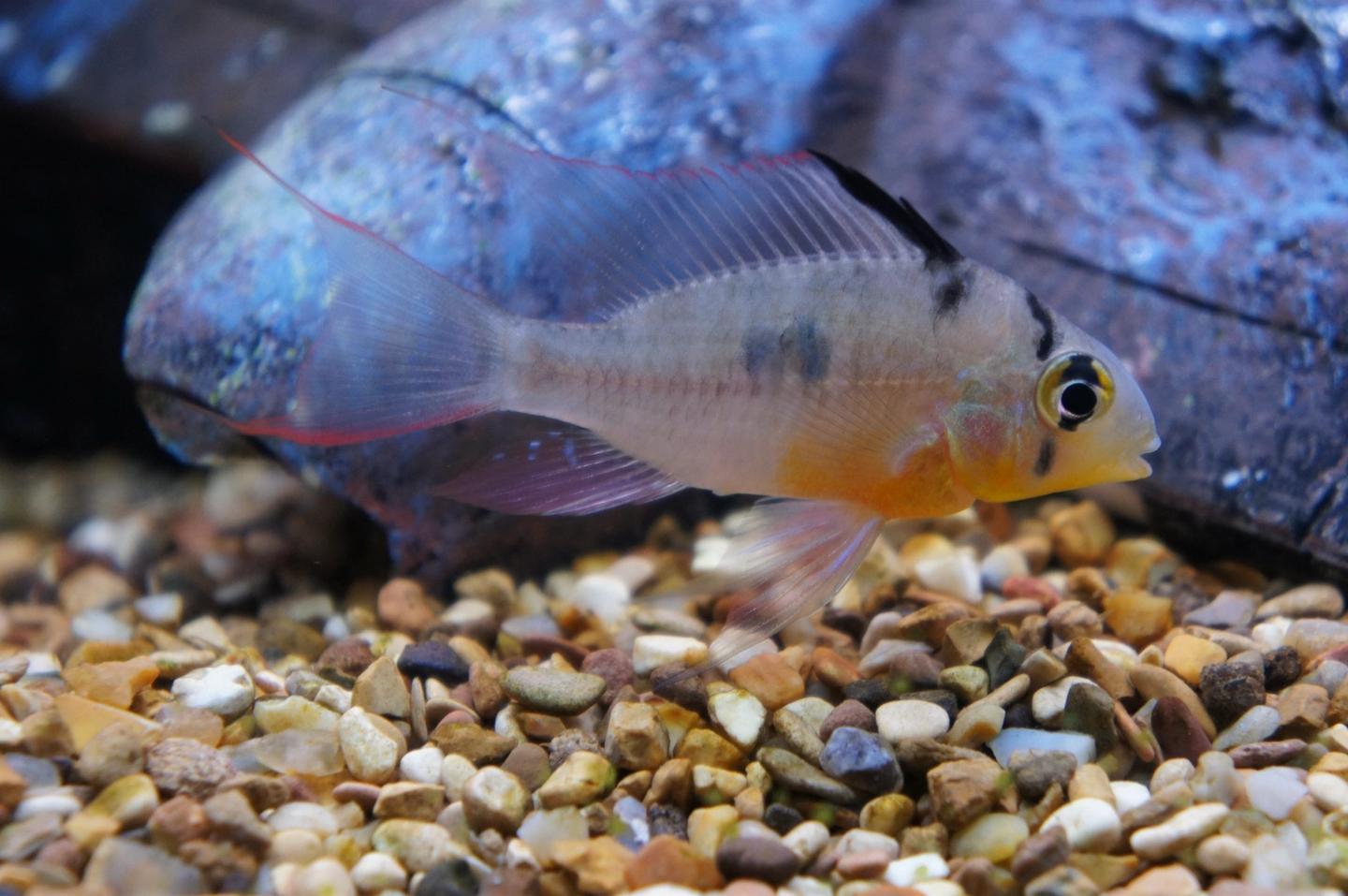
Cichlids are a family of roughly 1,800 accepted species, not one care type. Before buying, identify the exact species and source, then compare adult measurement, usable tank dimensions, social system, territory, tested water, diet and an exit plan. No family-wide minimum tank, water range or tank-mate list is safe.
Maintain these water conditions for optimal health and vibrant colors
The Ivanacara bimaculata Dwarf Cichlid (Ivanacara bimaculata) is a small freshwater member of the cichlid family, Cichlidae. It is endemic to Guyana, where it occurs in the Potaro and Essequibo rivers, and reaches 4.5 cm standard length. It suits a keeper prepared to provide biological filtration, tested water, cover and carefully screened companions rather than choosing tank mates by body size alone.
FishBase records the fish as freshwater and benthopelagic, places it in Cichlidae and gives a maximum of 4.5 cm standard length for male or unsexed fish. FishBase now lists it as Nannacara bimaculata. It is still sold in the aquarium trade as Ivanacara bimaculata, and Wikipedia also describes the species as endemic to Guyana’s Potaro and Essequibo rivers.
Keep the aquarium at 22–27°C, pH 6.0–8.0 and 4–12°dH. OATA’s dwarf-cichlid sheet gives those values as broad guidance for the group. It also recommends at least 60 litres when just a pair is kept, and says an aquarium of at least 80 litres will be needed to mix dwarf cichlids with other fish. Use those volume figures according to the stocking plan rather than treating the fish’s small adult length as permission to crowd the aquarium.
| Suits | Not suited to |
|---|---|
| A filtered aquarium with gravel or sand, plants and shelter | An aquarium without established biological filtration |
| A pair plan using at least 60 litres | A pair crowded into less than OATA’s 60-litre benchmark |
| A mixed aquarium of at least 80 litres with companion space | A mixed aquarium of less than 80 litres |
| A keeper willing to test ammonia and nitrite and maintain both at zero | A setup where water testing and weekly maintenance cannot be sustained |
Choose it for its compact cichlid form and behaviour, but make the decision from the adult size, water range and stocking requirements. The decisive preparation is a mature filter, suitable water and enough covered space for every fish to withdraw if interactions change.
One purchase supplies one animal of the selected size. The live size selector shows 2.5–3 cm and 3.5–4 cm labels. These are dispatch sizes: they describe the fish supplied for that selection and do not replace the recorded adult measurement.
The size you select is the size supplied, not the adult size. Plan the aquarium around the 4.5 cm standard-length maximum recorded by FishBase and around OATA’s space guidance. Standard length excludes the tail. Do not use either dispatch label to infer sex, life stage or origin.
Sex is guaranteed only when the selected option explicitly states male or female. This Ivanacara bimaculata Dwarf Cichlid listing has no sex-guaranteed option.
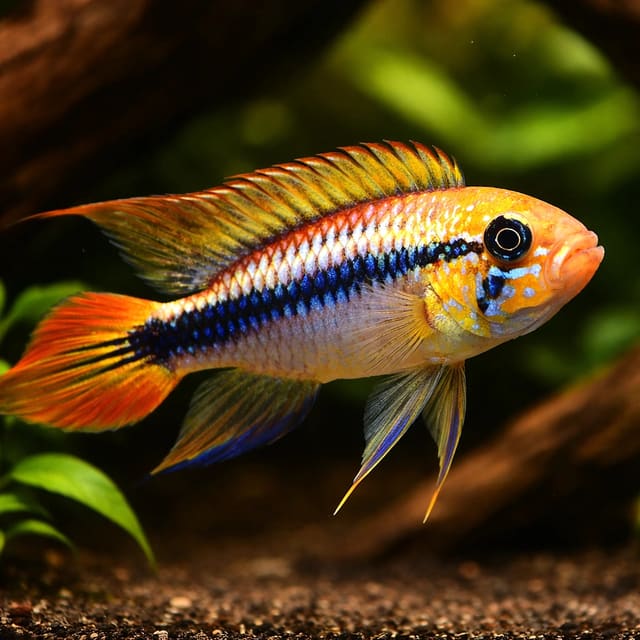
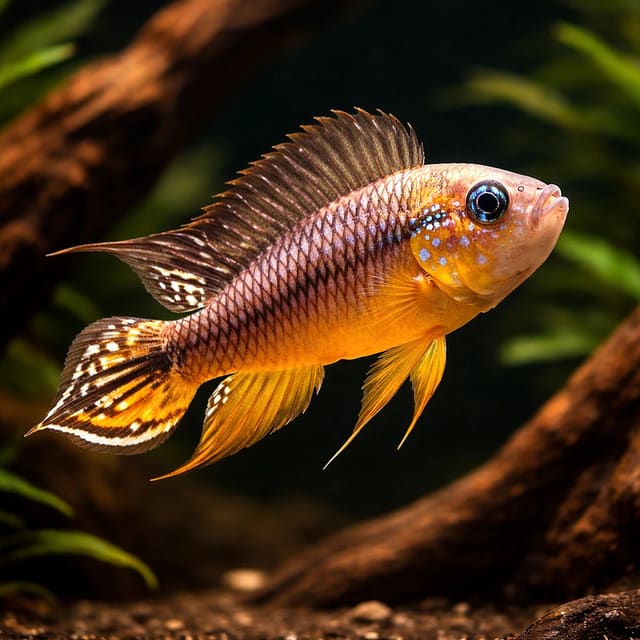
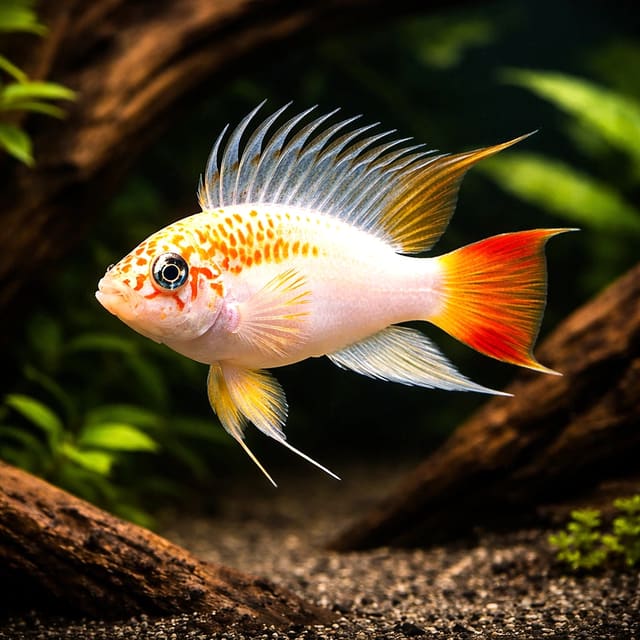
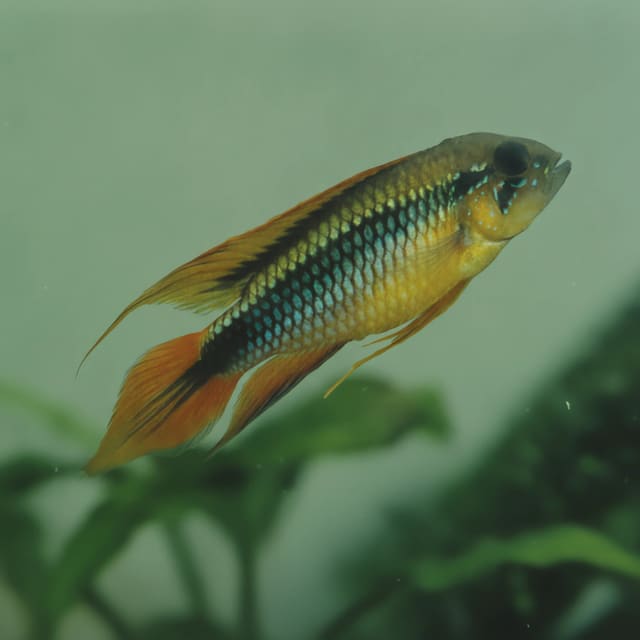
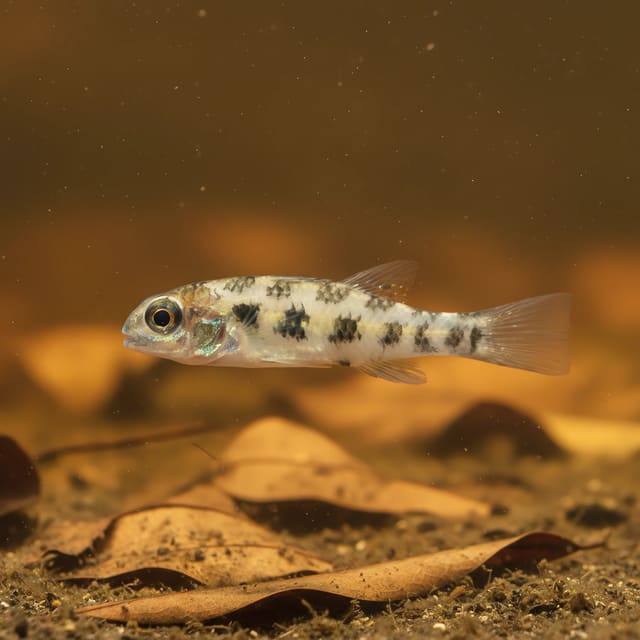
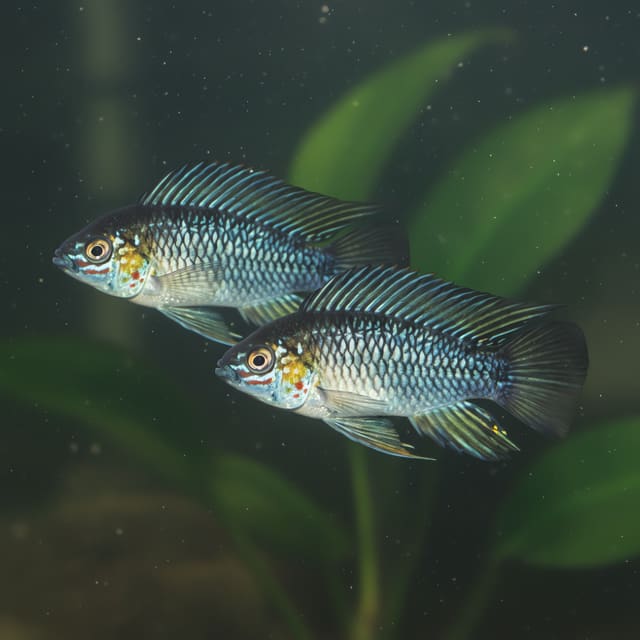
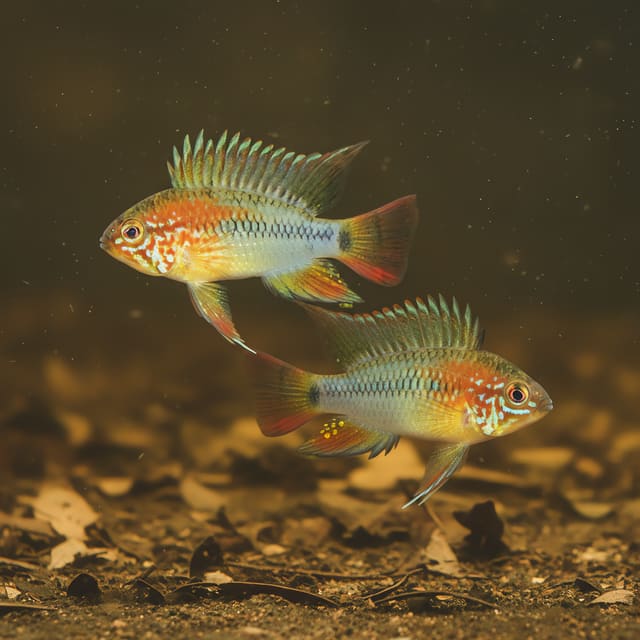
The gallery helps identify the general appearance and aquarium presentation. The gallery images are representative of this type of animal rather than photographs of the exact animal supplied, so colours can look slightly different from the live animal.
Both dispatch sizes require the same preparation: mature biological filtration, regular testing, suitable cover and a controlled feeding routine. A larger dispatch measurement does not remove any of those requirements, while a smaller measurement does not justify a temporary undersized aquarium.
Use the recorded adult size of 4.5 cm standard length as the growth reference, then choose aquarium volume from the intended social arrangement. OATA recommends at least 60 litres if just a pair of dwarf cichlids is kept, and an aquarium of at least 80 litres will be needed to mix them with other fish. The larger aquarium also makes temperature and water quality more stable.
For one fish, buy an aquarium as large as possible within reason, with room for shelter, feeding space and any later stocking plan. Do not reduce the aquarium merely because the selected fish is dispatched at 2.5–3 cm or 3.5–4 cm. If a second dwarf cichlid may be added, build around the pair benchmark from the start. If other fish are part of the plan, use the 80-litre mixed-aquarium benchmark before any livestock is introduced.
If this is a new aquarium, use our guide to preparing and maturing a first tropical tank before livestock arrives. A filter needs an established bacterial population because each added fish and every increase in feeding creates more waste for that population to process.
Add fish slowly rather than completing a community in one step. OATA warns that stocking too quickly can leave too few nitrifying bacteria to handle the increased waste, producing unhealthy ammonia and nitrite levels. That risk is not reduced by the small body size of a dwarf cichlid.
Use the aquarium’s long-term stocking plan as the deciding factor. A pair-only plan, a mixed community and a future breeding project place different demands on space, but every plan needs filtration, cover and room to respond if chasing or hiding increases.
Keep the water at 22–27°C, pH 6.0–8.0 and 4–12°dH. OATA gives these figures as broad group guidance for dwarf cichlids. Keep carbonate hardness at 3–10°dKH. Use measured values from the aquarium when deciding whether the setup fits, rather than relying on a tap-water description such as soft or hard.
Maintain ammonia at zero mg per litre and nitrite at zero mg per litre. Nitrate should not exceed 20 mg per litre above the normal tap-water level. This nitrate instruction is relative to the source water: if the tap water measures 10 mg/L nitrate, the aquarium should remain at or below 30 mg/L under OATA’s guidance. Test the tap and aquarium separately so the comparison uses real values.
Use our aquarium water chemistry guide to understand each test, then compare the measured results with the stated range using the water matcher. Record the numbers rather than making a large adjustment from appearance or fish behaviour alone.
| Reading | Action |
|---|---|
| 22–27°C | Keep the aquarium within this temperature range. |
| pH 6.0–8.0 | Match the aquarium and replacement water to the planning range. |
| 4–12°dH | Use the measured general hardness when assessing suitability. |
| Ammonia or nitrite above zero | Pause further stocking and address water quality immediately. |
| Nitrate more than 20 mg/L above tap water | Carry out maintenance and review feeding and waste removal. |
Check replacement water before it enters the aquarium and treat tap water with conditioner to remove harmful chlorine or chloramine. Weekly testing gives a repeatable trend and can reveal a developing problem before behaviour or appearance changes. Keep a short written log of temperature, pH, hardness, ammonia, nitrite and nitrate so an unusual reading is easy to recognise.
Run a well-established and maintained biological filter at all times. The RSPCA explains that fish release toxic ammonia and that beneficial bacteria in a working filter convert it first to toxic nitrite and then to the safer nitrate. OATA also states that a filter is essential for dwarf-cichlid aquariums.
Test ammonia and nitrite at least weekly and keep both at zero. Carry out a 25% partial water change at least once every week. A siphon is useful for removing solid waste from the substrate during the change.
Do not rinse filter media under the tap. Any chlorine or chloramine present may kill the beneficial bacterial population established in the media. Cleaning lightly in removed aquarium water reduces the amount of bacteria lost while allowing debris to be cleared.
Respond to any ammonia or nitrite reading above zero before adding more animals or increasing food. OATA warns that stocking too quickly can cause new tank syndrome because the bacterial population cannot process the added waste. A reading above zero is therefore a signal to stop expanding the community and restore water quality.
Keep feeding and maintenance linked. Uneaten food breaks down and releases toxic waste, so a consistently dirty substrate or rising nitrogen readings require a review of portions as well as filtration. The aim is not a visually clean tank alone; it is a filter and maintenance routine that repeatedly returns zero ammonia, zero nitrite and controlled nitrate.
Provide aquarium gravel or sand, plants and several shelters before introducing the fish. OATA recommends live plants for dwarf cichlids, especially as cover for shyer species. Where live plants are not used, add plastic plants and suitable ornaments for shelter instead.
Useful shelters include plant pots, model caves, wood and leaf litter. Distribute shelter through the aquarium rather than placing every refuge in one cluster. This gives fish more than one covered place to use and makes it easier to observe whether one area is being defended.
Cover becomes particularly important when more than one dwarf cichlid is kept. OATA notes that even well-settled pairs will often chase each other and calls plenty of cover essential. Put the structure in place before a pair is formed or companions are introduced; rearranging an occupied aquarium is a less reliable response than starting with enough shelter.
Do not treat decorative style as a substitute for function. A planted display still needs a working filter and measurable water quality, while a simple aquarium can meet the cover requirement with suitable artificial plants and ornaments. Choose materials intended for aquarium use and arrange them securely.
After introduction, watch whether the fish uses cover while continuing to swim, feed and maintain normal condition. Hiding more than normal or a change in aggression belongs in the daily health check. Review the amount and distribution of shelter alongside water readings and stocking rather than assuming one decorative feature solves every interaction.
Feed a good-quality flake or granule as the regular prepared food. OATA describes dwarf cichlids as omnivorous and recommends variety through small live or frozen items such as daphnia, brine shrimp or tubifex. Use that group feeding routine for this fish and keep every item small enough to be eaten readily.
Offer food once a day and give only what the fish can eat within a few minutes. Start with a small measured portion. If food remains after the feeding period, reduce the next portion rather than adding another food in an attempt to prompt feeding.
| Meal choice | How to use it |
|---|---|
| Good-quality flake | Offer a small portion eaten within a few minutes. |
| Good-quality granule | Use as an alternative prepared meal in the same controlled amount. |
| Daphnia | Use a small live or frozen portion for variety. |
| Brine shrimp | Include as another small live or frozen option. |
| Tubifex | Offer in a small amount as part of the varied routine. |
Variety means rotating suitable foods, not feeding several full portions in one day. Keep the once-daily schedule and replace part of the normal portion with the chosen live or frozen item. This preserves dietary variety without turning variety into overfeeding.
Overfeeding leaves uneaten food that breaks down and releases toxic waste. If particles remain on the substrate, remove them during maintenance and reduce the amount at the next meal. Check ammonia, nitrite and nitrate if uneaten food has accumulated, because water-quality effects matter more than completing a planned portion.
Use feeding response as one of the regular observations. Reduced intake or a lack of interest in food can signal a developing problem, particularly when it appears with changed swimming, colour, breathing or hiding. Test water quality first and compare the behaviour with the fish’s normal pattern.
Prepare the filtered aquarium before the parcel arrives. Check that temperature is within 22–27°C and that ammonia and nitrite are zero. OATA advises adding fish slowly because the filter’s beneficial bacteria must increase as livestock numbers and feeding rise.
Follow the Tropical Fish Co delivery and Live Arrival Guarantee procedure in this order:
Keep the arrival list separate from routine aquarium checks. The aquarium should already have treated water, a working filter, suitable cover and verified readings before the box is opened. An arrival is not the time to begin maturing the filter or making an unmeasured change to water chemistry.
The dispatch size does not alter these steps. Use the same receiving, filming, floating and release procedure for either 2.5–3 cm or 3.5–4 cm fish. Continue watching the filter’s ability to process waste after introduction, because each added fish and the associated feeding increase the load on its beneficial bacteria.
Observe the fish each day and compare it with its own normal pattern. OATA describes healthy fish as having clear, bright eyes, undamaged fins, intact scales, no ulcerations or bumps and appropriate swimming. Daily observation works best when it is paired with measured water results rather than appearance alone.
| Change | First action |
|---|---|
| Hanging at the surface, sitting on the bottom or erratic swimming | Test water quality and check the filter. |
| Darker or paler colour than normal | Compare behaviour, water readings and recent stocking. |
| More aggression or hiding than normal | Review cover, space and companion interactions. |
| Faster or slower gill-cover movement | Test water and check the fish closely. |
| White spots, fluffy growths, missing fins or scales | Record the change, test water and seek guidance. |
| Weight or condition change | Review feeding response and the measured portion. |
| Reduced intake or no interest in food | Remove leftovers and test water quality. |
During the first week, keep the routine simple: one controlled meal each day, daily observation and no rapid increase in stocking. Test immediately if the fish’s swimming, breathing, colour, temperament or feeding changes. Do not diagnose a disease from one sign while ammonia, nitrite and filtration remain unchecked.
At least once every week, test ammonia, nitrite and nitrate, carry out the 25% partial water change, treat replacement water and check the filter for blockages. Keep ammonia and nitrite at zero and nitrate no more than 20 mg/L above the normal tap-water level. Record the readings so a gradual change is visible.
Across the first month, judge the setup by repeatable results: stable readings within the planning range, a working filter, controlled feeding and behaviour that can be compared from day to day. If you are concerned about the fish’s health, test the water quality first and correct any ammonia or nitrite reading above zero before making any other change. Do not begin a treatment routine without first identifying the water and husbandry conditions surrounding the change.
Dwarf cichlids can be kept in community aquariums, but every companion must fit the same water range and have enough space if breeding brings territorial behaviour. Use at least 80 litres for a mixed aquarium under OATA’s guidance, then judge the final stocking plan by the number of fish, cover and room for each animal to move away.
OATA says dwarf cichlids are best kept with shoals of dither fish. These fish give the cichlids a sense of security and are quick enough to swim away if territorial behaviour starts. This is a companion type rather than a universal species list: screen the proposed dither fish for 22–27°C, pH 6.0–8.0 and 4–12°dH before combining them.
| Decision | Rule |
|---|---|
| Suitable to consider | A shoal of dither fish that fits the water and has enough swimming space. |
| Avoid | Any mixed community without plenty of cover or enough space for tank mates should the cichlids start breeding. |
| Avoid when breeding | Tank mates that might disturb spawning sites. |
| Avoid when raising fry | Tank mates that may predate on the fry. |
Compatibility remains conditional because territorial responses can change, especially during breeding. Do not treat a peaceful label or small adult size as a complete assessment. Use observed behaviour in the actual aquarium and respond if aggression increases or another fish hides more than normal.
A community that passes the initial screening still requires weekly water tests and controlled stocking. Add animals slowly so the biological filter can adjust to increased waste and feeding. If ammonia or nitrite rises above zero, stop adding companions and restore water quality before reconsidering the plan.
Plan for territorial behaviour even though this is a small cichlid. OATA says some dwarf cichlids can be territorial, especially when breeding, and notes that even well-settled pairs will often chase each other. Provide plenty of cover before combining individuals or adding community fish.
Use daily changes as the trigger for action. A higher level of aggression, hiding more than normal, altered swimming, colour change, changed breathing or reduced feeding all deserve attention. Test water quality at the same time, because behaviour should be assessed alongside ammonia, nitrite, nitrate and filter operation.
If breeding is intended, avoid tank mates that might disturb spawning sites or predate on fry. Keep those tank mates out of the aquarium for as long as you intend to breed. Arrange the aquarium around the spawning area and the safety of any fry before breeding behaviour begins.
For an ordinary community, shoals of suitable dither fish are the companion type named by OATA. They still require matching water, enough space and slow introduction. Do not choose any companion only because it is small or described as peaceful.
Check fins during the daily health assessment and compare them with their previous condition. If damage appears alongside increased aggression or hiding, reassess stocking and shelter while also testing the water. Base each decision on what you see in your own aquarium.
It reaches 4.5 cm standard length; FishBase records that maximum for male or unsexed fish.
OATA’s broad dwarf-cichlid guidance recommends at least 60 litres if just a pair is kept, and an aquarium of at least 80 litres will be needed to mix them with other fish.
Choose the number to suit the aquarium: at least 60 litres for a pair, and an aquarium of at least 80 litres once other fish are added. Even well-settled pairs will often chase each other, so provide plenty of cover.
Judge suitability by the setup: the keeper must maintain a mature filter, zero ammonia and nitrite, weekly testing, controlled feeding and water within OATA’s dwarf-cichlid range.
OATA’s dwarf-cichlid guidance describes an omnivorous diet: feed good-quality flake or granules once daily, with small live or frozen daphnia, brine shrimp or tubifex for variety, using only what is eaten within a few minutes.
Keep it at 22–27°C, pH 6.0–8.0 and 4–12°dH; OATA gives these as broad dwarf-cichlid guidance.
Territorial behaviour may occur, especially when breeding. Give tank mates enough space and monitor fins, aggression and hiding because compatibility must be judged in the aquarium.
OATA says dwarf cichlids are best kept with shoals of dither fish, which give them a sense of security and are quick enough to swim away if the cichlids become territorial; choose dither fish that suit 22–27°C, pH 6.0–8.0 and 4–12°dH, and if you intend to breed, avoid tank mates that might disturb spawning sites or predate on the fry.
Tropical Fish Co hand-bags live fish in pure oxygen, uses an insulated poly box and adds a heat pack when the weather calls for it, with transport by a licensed live-animal courier; receive the parcel in person and film continuously from the sealed box before opening.
Max adult size is the length this species reaches at full maturity (from scientific sources). The livestock you receive will be younger and smaller — pick a size variant on the buy box for the actual shipping size. Product-photo provenance and any image-specific limitations are stated on the listing.
Always research specific species before adding them to your tank. Consider:
No reviews for this item yet. Bought one? Honest reviews only, good or bad.
What customers say about ordering from us
I have a small group of long finned mountain minnows. So was delighted to be able to order ten of this variety to increase the genetics in my tank . The ones I recieved are healthy but it’s to early to give a verdict on wether they are of a long finned type since they are small currently.
Gordon Walker · 23 Sept 2026
100% success travel and "installation". Pleased with quality of purchase. The Siamese fighter a bit "shy" so have not yet seen him at his best yet but looking good. Happy customer. GG
George E Garratt · 21 Sept 2026
Reviews of our shop, collected by Judge.me, an independent third-party review collector. Newest first.
22–27°C · pH 6–8
22–27°C · pH 6–7 · 54L
26–27°C · 54L

27–30°C · pH 5–6 · 54L
22–27°C · pH 6–8
26–29°C · pH 5–7

20–26°C · pH 4–6.5 · 72L
22–27°C · pH 6–8
22–27°C · pH 6–8
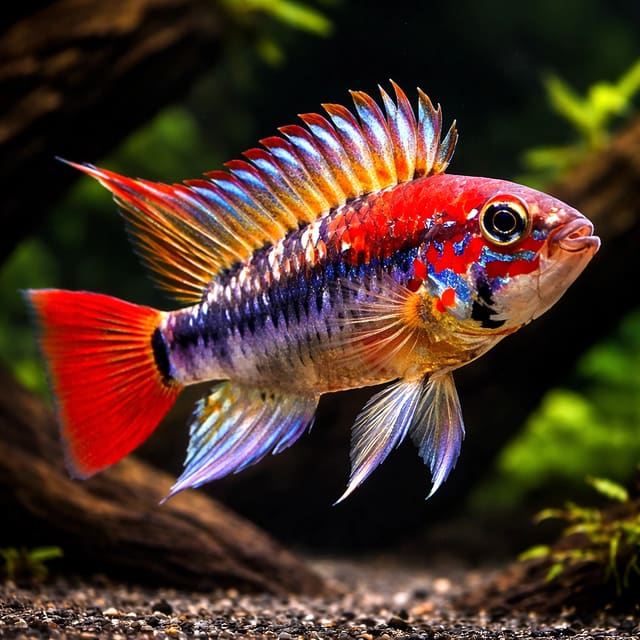
24–28°C · pH 5.5–7 · 41L

27–30°C · pH 5–6 · 54L
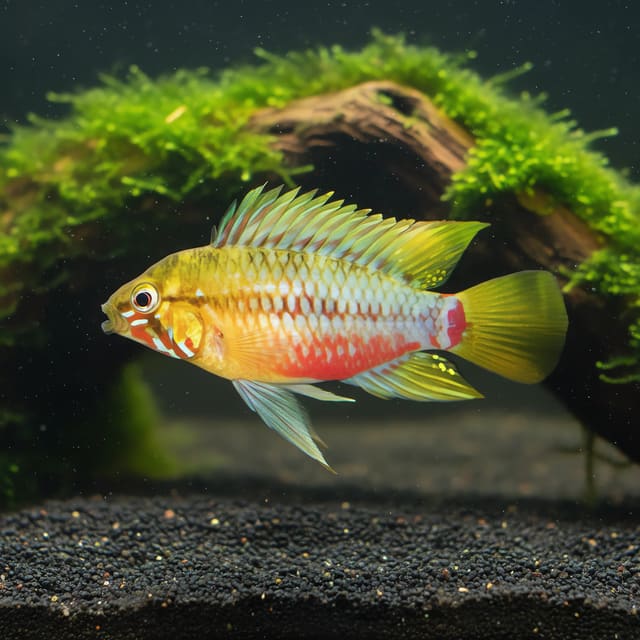
23–27°C · pH 5.5–6 · 41L
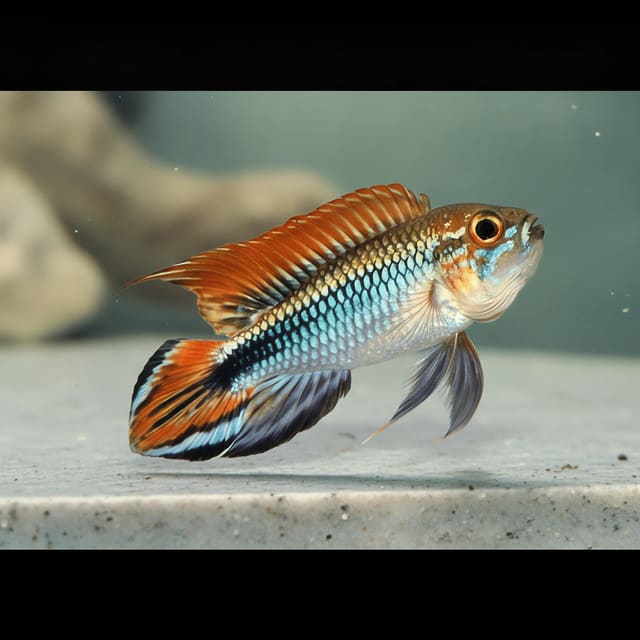
26–27°C · pH 6–7 · 54L
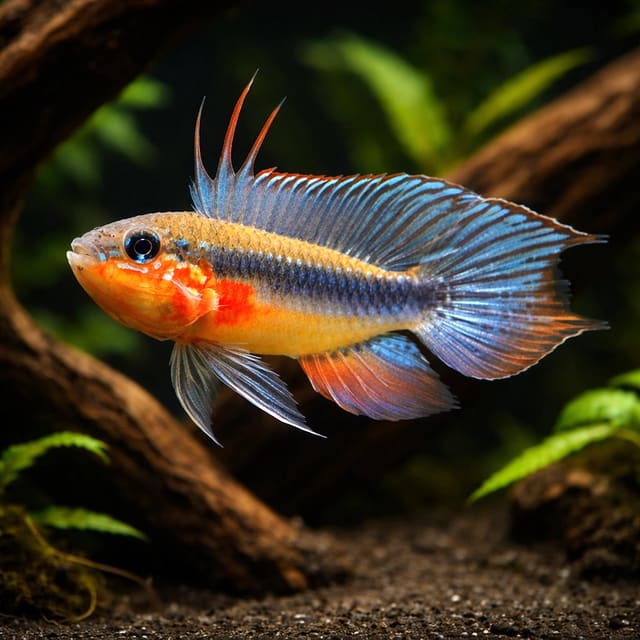
23–29°C · pH 4–6 · 41L
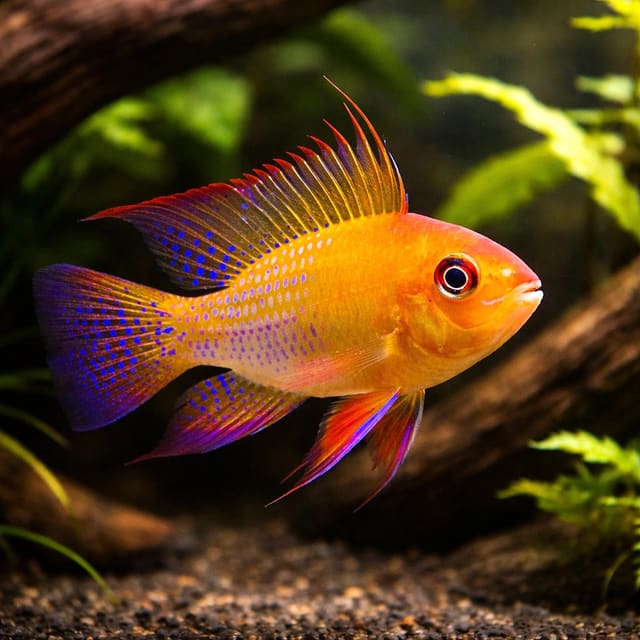
26–30°C · pH 5.5–7 · 60L

22–28°C · pH 7–8 · 41L

21–25°C · pH 5–7
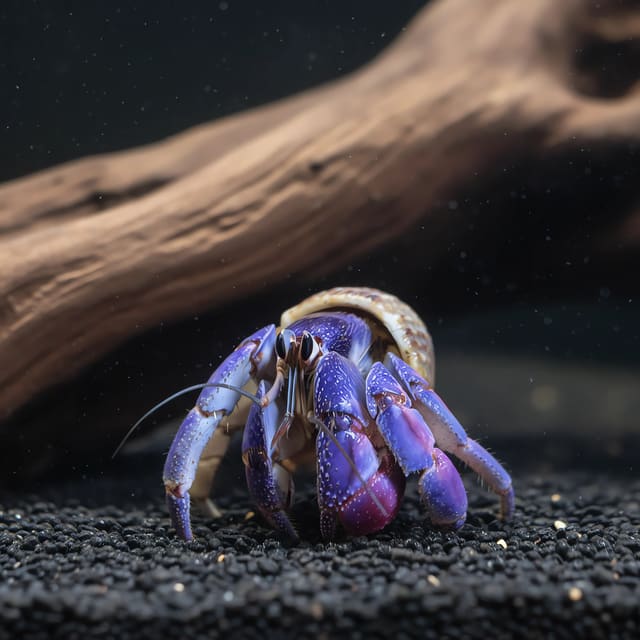
24–29°C

24–27°C · pH 6.5–6.5

22–27°C · pH 6–8 · 72L
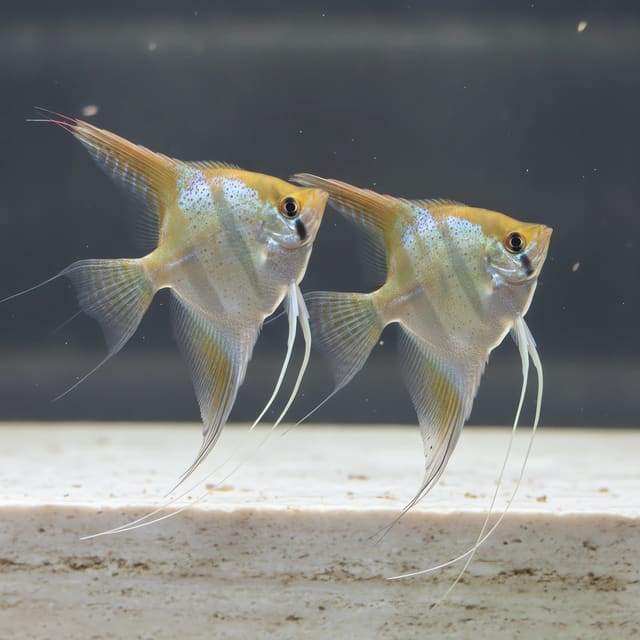
24–27°C · pH 6.5–8 · 200L

23–27°C · pH 5.5–7 · 60L

22–27°C · pH 6–8