
 By Tom Whitfield
Easy
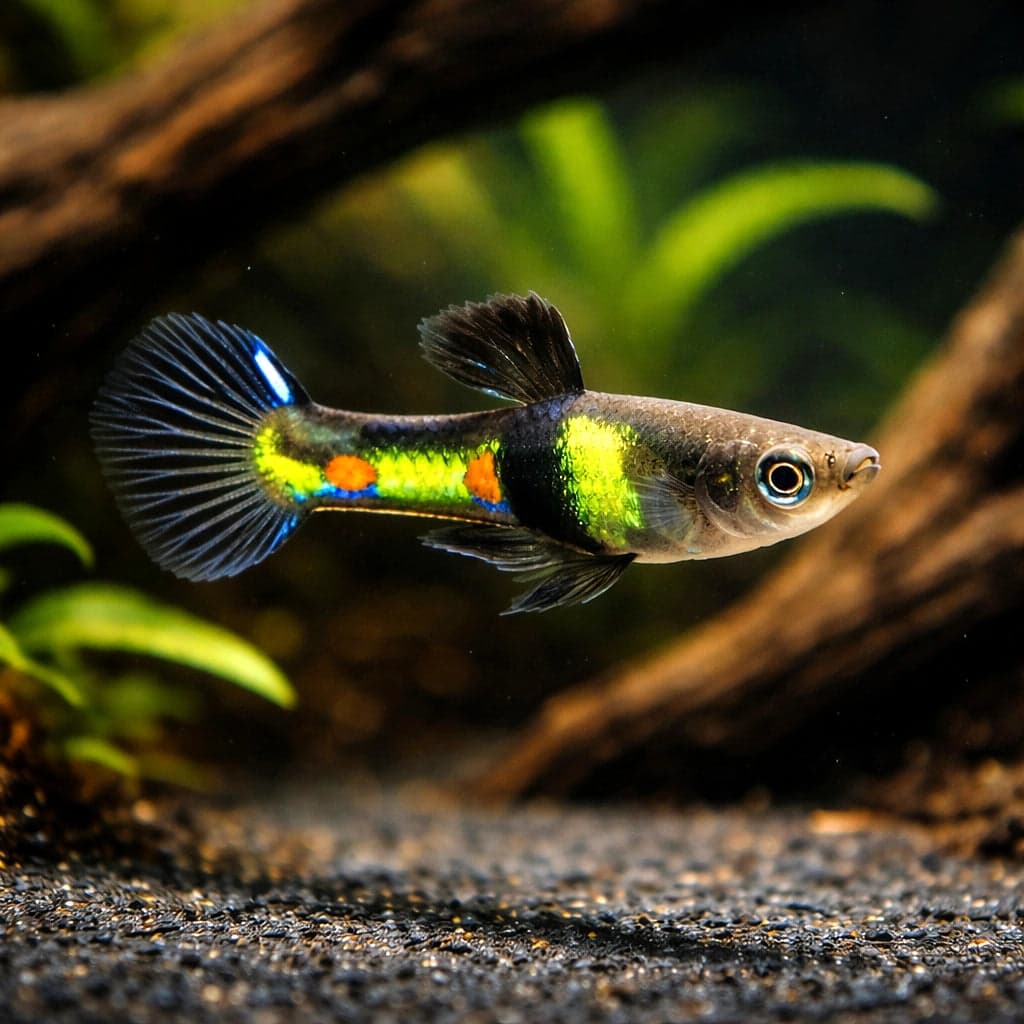
Poecilia endler tiger
22–28°C · pH 6.8–8.5 · 40L
£6.99
Endler Guppy · Buying Guide
UK guide to Endler's livebearers — Endler vs guppy, the hybrid problem, hard-water care, sexing, breeding and which in-stock strains to buy. Read or listen.
10 products in stock today
Live prices and stock. Every fish covered by our Live Arrival Guarantee.
22–28°C · pH 6.8–8.5 · 40L

22–28°C · pH 6.5–8 · 40L

22–28°C · pH 6.8–8 · 60L

22–28°C · pH 6.8–8 · 40L

22–28°C · pH 6.8–8.5 · 40L

22–28°C · pH 6.8–8.5 · 40L

22–28°C · pH 6.8–8.5 · 30L

22–28°C · pH 6.5–8 · 40L


22–28°C · pH 6.8–8.5 · 30L
The shaded band shows the range endlers is comfortable in. Match it to your tap water before you buy.
You searched "Endlers" and every other result is either a thin product listing or a copy-paste care sheet that tells you they like "clean water and a balanced diet." Useless. The two things that actually decide whether you'll enjoy keeping Endlers — your local water hardness and the guppy-hybrid question — are the two things those pages skip.
I'm Tom Whitfield. I write our nano-tank guides and I've kept Endlers in everything from a 20-litre desk tank to a heavily planted shrimp setup. This is the guide I'd give a friend who messaged me saying "I've got a small tank and hard tap water — what should I put in it?" Nine times out of ten the honest answer is: Endlers.
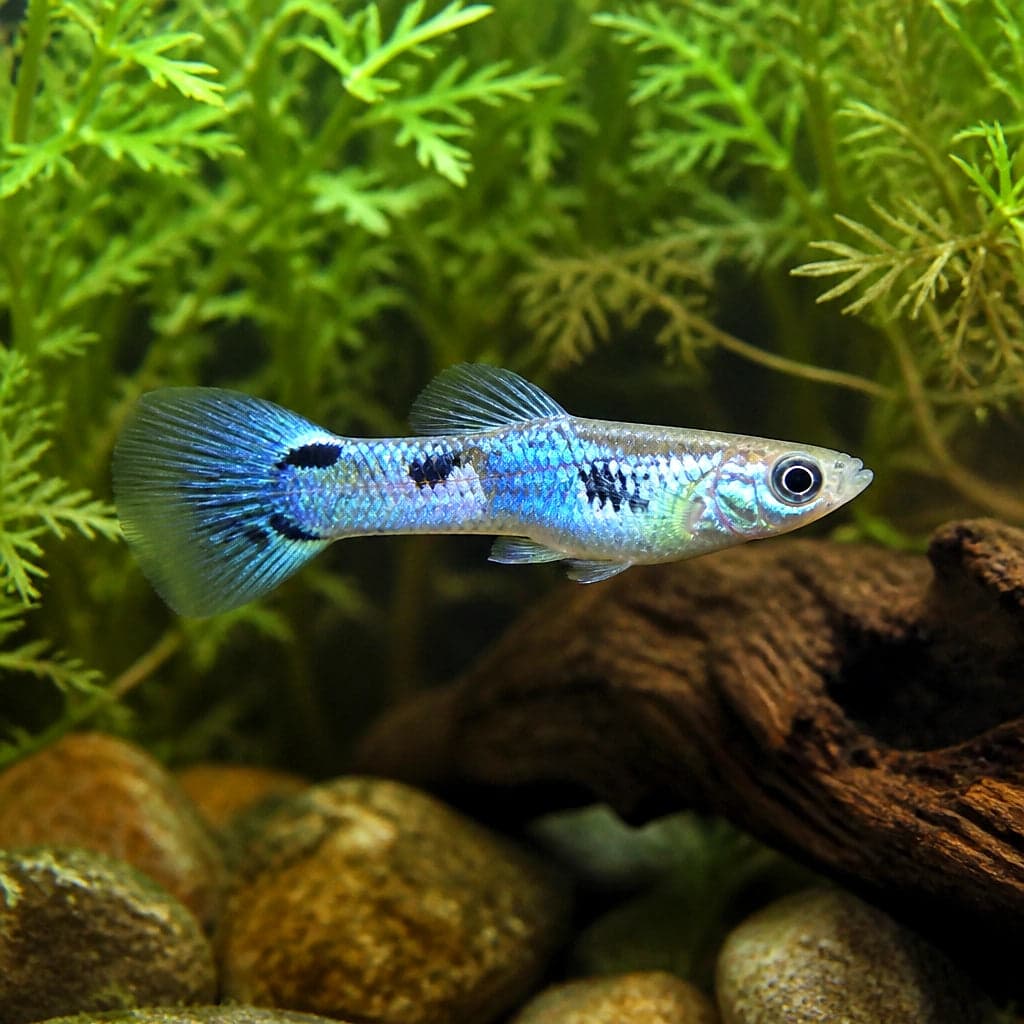
A male blue Endler. That metallic flank isn't pigment — it's structural colour from light bouncing off iridophore cells, which is why Endlers seem to "switch on" under good lighting. Product photo · our warehouse.
This is the single most-searched Endler question, so here's the honest comparison. Neither is "better" — they suit different keepers.
| What matters | Endler (P. wingei) | Guppy (P. reticulata) |
|---|---|---|
| Adult male size | ~2.5 cm | 3–4 cm |
| Colour style | Metallic, neon, natural pattern | Bigger, flowing fancy fins & tails |
| Best tank size | Nano (20–40 L) is ideal | Small–medium (40 L+) |
| Hardiness | Very hardy | Hardy, but fancy strains can be delicate |
| Fry produced | Smaller broods, very frequent | Larger broods |
| Crossbreed risk | They interbreed — keep apart for pure lines | Same |
If you've got a nano tank and want a fish that's always moving, go Endler. If you want big showy tails and a slightly larger fish, go fancy guppy. Just don't mix them if you care about keeping either one pure [2].
Endler colour strains are trade names, not scientific varieties — most are line-bred hybrid lines (Class K), with the occasional pure (Class N) line. We're honest about that distinction at the tank. These are our current in-stock colour forms, from everyday to collector:
The cheaper strains are no less hardy than the premium ones — you're paying for rarer colour genetics, not a tougher fish. If this is your first livebearer, start with the everyday strains above and you'll do fine.
For a first Endler tank I'd run a 40-litre with a sponge filter, a clump of Java moss and some floating plants, filled with dechlorinated hard tap water at room temperature or a low heater setting (24–26 °C). Add a trio — one male, two females — and let them settle for a week before you think about more. That's it. No RO, no buffering, no fuss.
Endlers are shoaling, social fish — a lone pair looks lost and the single female gets pestered. Buy a group, and skew it female: aim for one male to two or three females [4]. A six-fish starter group (two males, four females) in a 40-litre tank is a lovely, balanced setup that will almost certainly be a dozen fish within two months.
Because they're such prolific, frequent breeders [3], you rarely need to buy many — biology does the rest. If you don't want a population explosion, keep males only (all the colour, no fry) or add a few peaceful tank mates that will predate excess fry.
Here's where Endlers flip the usual advice on its head. Most popular tropical fish — tetras, rasboras, dwarf cichlids — want soft, acidic water, which means UK keepers in hard-water areas are forever fighting their tap supply. Endlers are the opposite. They evolved in hard, mineral-rich coastal lagoons and prefer hard, alkaline water: pH 7.0–8.5 and 15–35 °dGH [3].
Thames Water — and most suppliers across the chalk-and-limestone belt of southern and eastern England — classify their supply as hard to very hard [5]. For an Endler keeper, that tap is an asset. Dechlorinate it and you're done.
Search your postcode on your water company's website (Thames Water, Severn Trent, Anglian, etc.) for a hardness figure in mg/l CaCO₃ or °Clarke. If you're in a hard-water area, Endlers are a brilliant choice. If you're in a soft-water area (much of Scotland, Wales, Cornwall, the Lake District), add a small bag of crushed coral to your filter to nudge hardness up.
At 2.5 cm an Endler is bite-sized, so the rule is simple: small, peaceful, and matched to the same hard, alkaline water. These are companions I keep with Endlers and trust:
Avoid: anything large or fin-nippy, and — if you want pure lines — guppies, because they'll interbreed [2].
Transcript / what you're seeing (0:00–0:20): a planted aquarium with livebearers cruising the upper two-thirds of the tank, pausing to graze biofilm off the leaves and glass. Note how the fish use the whole water column and stay out in the open — a sign of a settled, low-stress group. That open, busy behaviour is the tell-tale of healthy Endlers; fish that hide in the corner are usually stressed by water that's too soft, too cold, or a tank that's too bare.
Sexing is easy and early: males are smaller, slimmer, far more colourful, and have a gonopodium — a modified, rod-shaped anal fin used to fertilise the female. Females are larger, rounder and plainer, often with just a greenish sheen and a dark gravid spot near the vent.
Breeding needs almost no effort from you — a settled group in a planted tank will produce live fry every few weeks [3]. The fry are big enough to eat crushed flake and baby brine shrimp immediately. If you want them to survive, give them dense planting (Java moss, floating plants) to hide in; if you'd rather control numbers, the adults and tank mates will thin the fry naturally.
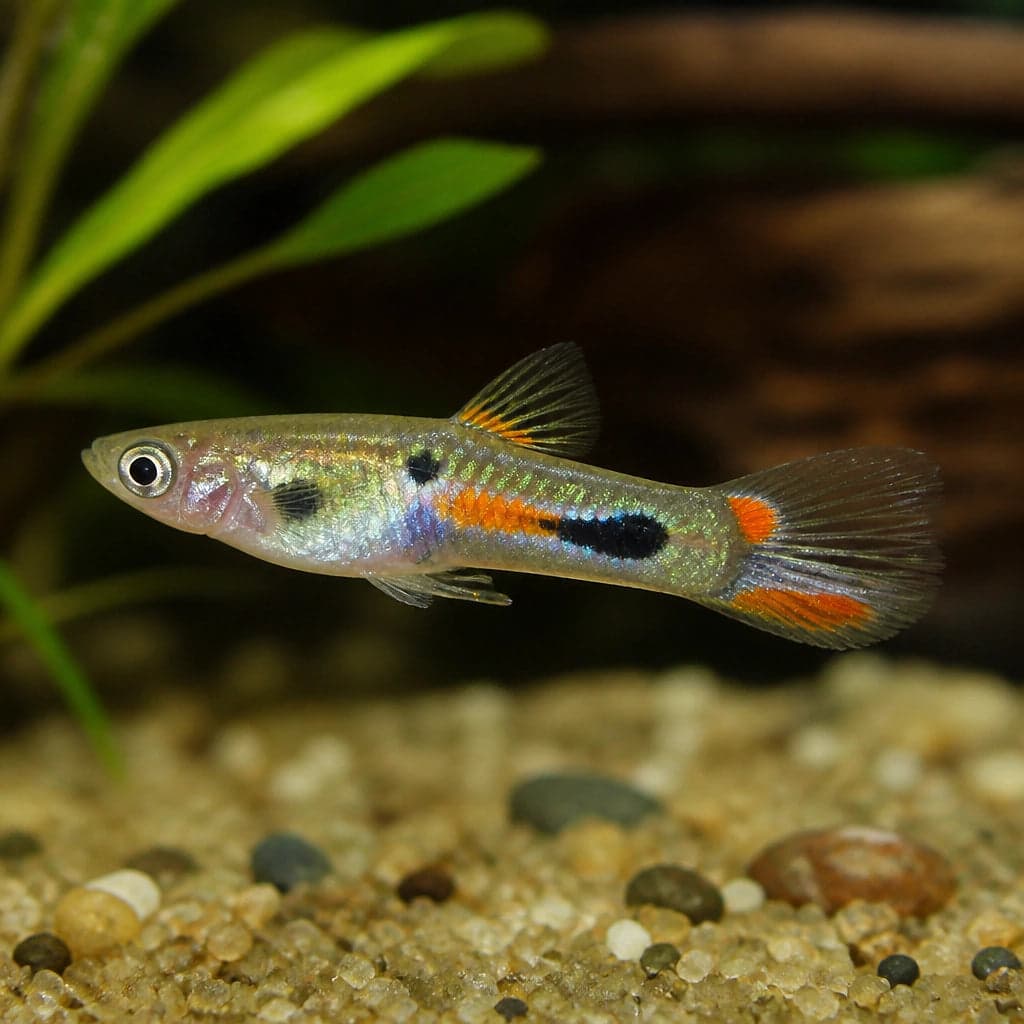
The "Santa Maria" strain — one of the premium line-bred colour forms. Strains like this are still the same hardy fish underneath; you're paying for the genetics of the colour, not a more demanding animal.
Whether you buy from us or anyone else, these are the welfare markers that separate a good Endler from a problem one:
Endlers have a passionate UK following, and the best place to learn strain genetics and source pure lines is the hobby itself, not a shop shelf:
Endlers are about as forgiving as fish get, so they don't need the long, fiddly drip acclimation that sensitive soft-water species do. The one parameter to respect is hardness and pH matching, since a sudden swing between soft and hard water is the main thing that stresses them:
Visual route into the rest of our UK live-fish range.
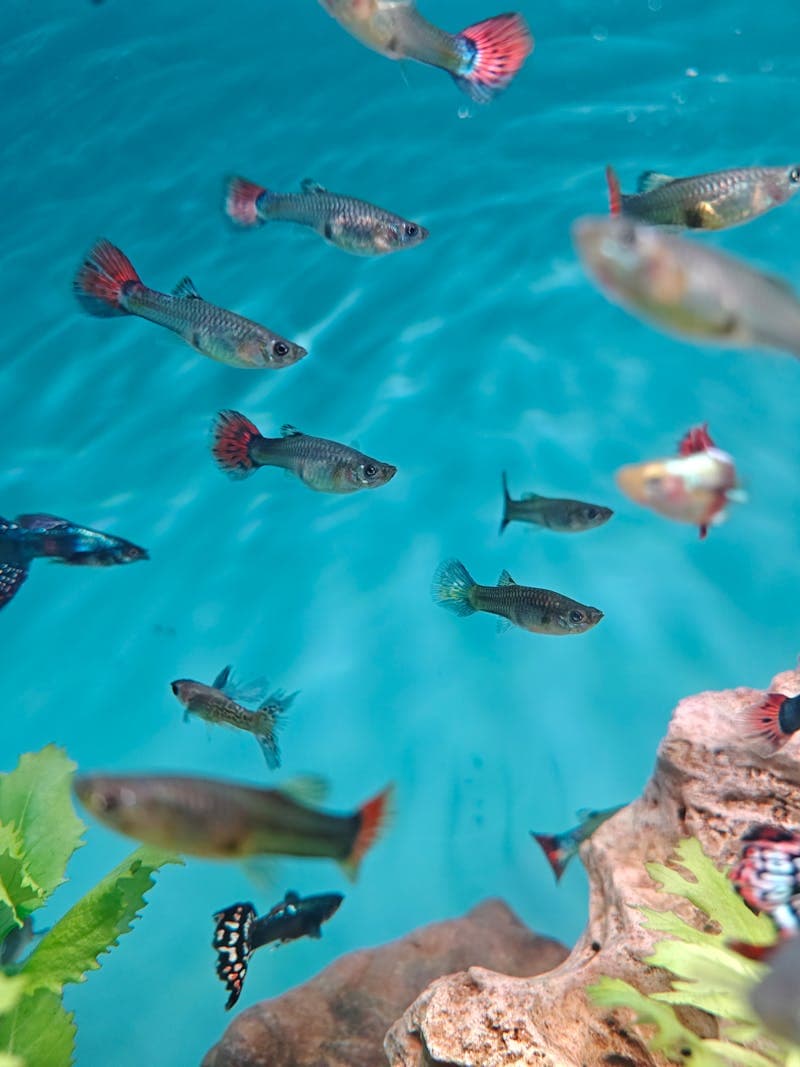
Endler guppies for sale UK — wild-type and selectively bred Poecilia wingei strains, ideal for colourful nano and planted tanks.
Guppies for sale UK — fancy male and female guppy fish including Moscow, Cobra, Tuxedo and Dumbo Ear strains. Live arrival guarantee.
Livebearer fish for sale UK — Guppies, Mollies, Platies, Swordtails, Endlers, Limias. Easy-breeding community favourites.
Every claim in this article is backed by a source below. We group them by type so you can judge the weight of each one at a glance.
The formal scientific description — the paper that named Poecilia wingei as a species distinct from the guppy.
Used for taxonomy, distribution (Campoma & Buena Vista lagoons) and IUCN Endangered status.
Independent cross-check of size, water parameters, sex ratio and temperament.
Practical husbandry — Class N purity, room-temperature keeping, breeding cadence.
Video walk-through of beginner Endler care and the guppy comparison.
UK authority confirming much of southern England is hard (200–300 mg/l CaCO₃) to very hard (>300).
Fishkeeping moves fast and we want every guide spot-on. If you think something here is wrong, out of date, or could be clearer, tell us — our team reads every message and updates the page.
Suggest an editEndler guppies for sale UK — wild-type and selectively bred Poecilia wingei strains, ideal for colourful nano and planted tanks.
Guppies for sale UK — fancy male and female guppy fish including Moscow, Cobra, Tuxedo and Dumbo Ear strains. Live arrival guarantee.
Livebearer fish for sale UK — Guppies, Mollies, Platies, Swordtails, Endlers, Limias. Easy-breeding community favourites.
Complete Endler Guppy (Poecilia wingei) care guide — tank size, water parameters, diet, tank mates, breeding. The colourful nano livebearer for UK hobbyists.
Keep guppies thriving in UK tap water — the right male/female ratio, how to stop endless fry, tank size, lifespan and the best tank mates.
Complete Molly Fish (Poecilia sphenops / latipinna) care guide — tank size, water, diet, tank mates, breeding, and the salt myth debunked. Written by a UK aquarist, cited sources.