Opal Dwarf Cichlid (Apistogramma sp. opal)
22–27°C · pH 6–8
£12.99

A cooler-water South American dwarf cichlid with yellow-headed males, blue-green sheen and calm community potential when the tank is well planned.
Adult size is the maximum length this species reaches at full maturity (scientific sources). The livestock you receive will be younger and smaller. Product-photo provenance and any image-specific limitations are stated on the listing.
Apistogramma borellii
Save when buying multiple fish. Each quantity is one fish; sex and pair formation are not guaranteed unless the selected variant explicitly states them.
Confirm your email, then we’ll send an availability message for this exact item if it returns within 180 days.
This request is only for this product—no newsletter or other promotions. A mail-provider retry may very rarely duplicate the same availability message. Unconfirmed addresses are removed after 48 hours. See our privacy policy.
A cooler-water South American dwarf cichlid with yellow-headed males, blue-green sheen and calm community potential when the tank is well planned.
Adult size is the maximum length this species reaches at full maturity (scientific sources). The livestock you receive will be younger and smaller. Product-photo provenance and any image-specific limitations are stated on the listing.

Cichlids are a family of roughly 1,800 accepted species, not one care type. Before buying, identify the exact species and source, then compare adult measurement, usable tank dimensions, social system, territory, tested water, diet and an exit plan. No family-wide minimum tank, water range or tank-mate list is safe.
Maintain these water conditions for optimal health and vibrant colors
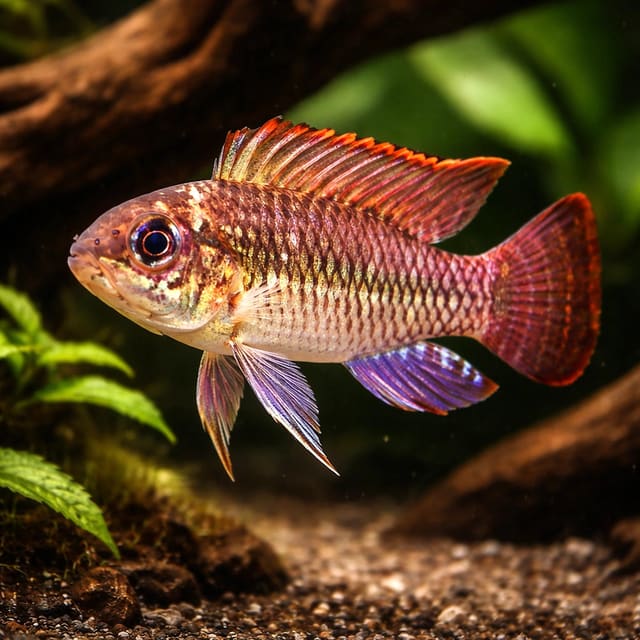
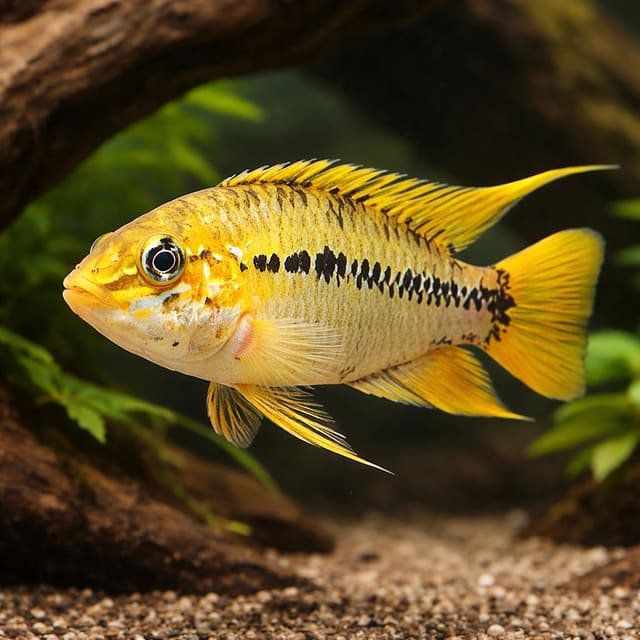
Yellow Head Borelli Dwarf Cichlid is a colour form of Apistogramma borellii, a South American dwarf cichlid valued for its calm manner, cooler-water tolerance and bright male colour.
This is one of the more approachable apistogrammas for a planted community or specialist dwarf-cichlid aquarium. It still behaves like a cichlid, especially around caves and fry, but it is usually less forceful than many larger South American cichlids. The best results come from a mature tank with soft to medium water, shaded cover, small peaceful tank mates and a layout that gives the fish a territory without making the whole aquarium feel crowded.
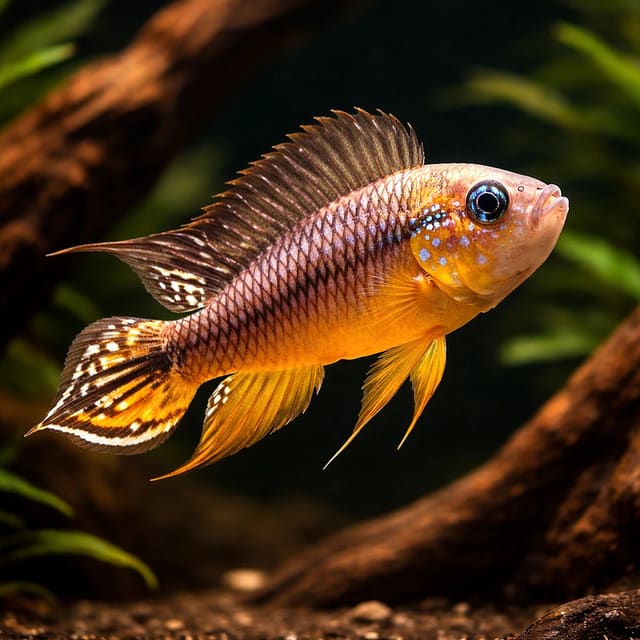
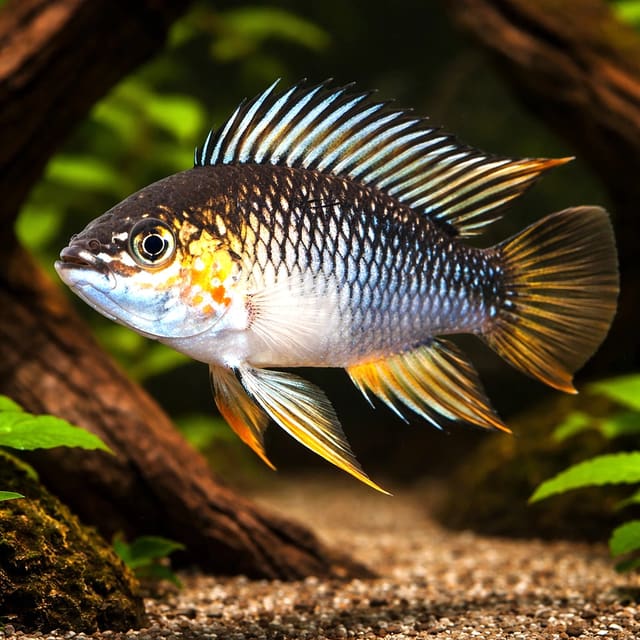
Males show the strongest yellow head colour, blue-green body sheen and extended fin rays. In good condition they can become a vivid centrepiece without needing the size or aggression of larger cichlids. Females are smaller and more understated until breeding, when they can turn bright yellow and become assertive around a cave or fry cloud.
Colour depends on maturity, lighting, background, diet and confidence. A dark substrate, floating plants and broken lines of sight often show the fish better than a bright bare tank. The original reference image has been added to this product so customers can inspect the supplied trade form alongside the existing gallery.
Apistogramma borellii is associated with the Paraguay River basin and lower Paraná system. Compared with many apistogrammas, it is comfortable in cooler subtropical conditions, which is one reason it is popular with planted-tank keepers who do not want very warm water. Clean, stable water matters more than chasing an extreme number.
Use a mature filter, gentle flow and regular water changes. Soft, slightly acidic to neutral water is ideal, but many captive-bred fish adapt well if hardness and pH are stable. Avoid newly set-up aquariums, ammonia or nitrite exposure, and sudden parameter swings.
Think in terms of floor space and shelter. Fine sand, leaf litter, small caves, coconut shells, wood, plants and shaded corners all help this dwarf cichlid feel secure. A low, long aquarium can work better than a tall narrow one because apistogrammas live and defend space near the bottom.
Provide more than one potential cave, even if keeping a pair. The female will choose the site she likes, and spare cover lets the male or tank mates move away when she is guarding eggs or fry. Floating plants or dimmer lighting help reduce stress and bring out colour.
Feed small foods that match the mouth size. A quality micro-pellet can be the staple, but this fish looks and behaves better when offered variety: frozen daphnia, cyclops, artemia, small bloodworm portions and similar foods. Avoid large hard foods and heavy feeding that leaves waste in the substrate.
Because apistogrammas feed near the bottom, make sure quick midwater fish do not take everything first. Small calm tetras, pencilfish or rasboras can work well, but the dwarf cichlid still needs time to feed.
Yellow Head Borelli is suitable for a peaceful, planted community when stocked thoughtfully. Good companions include small calm schooling fish that enjoy similar water, and peaceful bottom fish only if the tank has enough floor area. Avoid large cichlids, aggressive fish, fin nippers, boisterous fast feeders and anything small enough to be treated as prey.
During breeding, the female may guard a cave and push away fish that come too close. This is normal cichlid behaviour, not a reason to cram the tank with more hiding places at random. The aquarium should already have territories, shade and escape routes before breeding starts.
This species is a cave spawner. The female usually cares for eggs and fry closely while the male guards a wider area. Soft, clean water and quiet surroundings help, but breeding should not be encouraged unless the tank has space for territorial behaviour and a plan for fry.
If you simply want a display fish, a single male can be a sensible option in a calm community. A pair or trio can be rewarding, but it needs more thought, more cover and closer observation.
When the product is available again, the live product page will show the current price, stock state and checkout terms. Livestock dispatch is packed for courier movement and covered by Tropical Fish Co's Live Arrival Guarantee under the conditions shown at checkout.
No reviews for this item yet. Bought one? Honest reviews only, good or bad.
What customers say about ordering from us
I have a small group of long finned mountain minnows. So was delighted to be able to order ten of this variety to increase the genetics in my tank . The ones I recieved are healthy but it’s to early to give a verdict on wether they are of a long finned type since they are small currently.
Gordon Walker · 23 Sept 2026
100% success travel and "installation". Pleased with quality of purchase. The Siamese fighter a bit "shy" so have not yet seen him at his best yet but looking good. Happy customer. GG
George E Garratt · 21 Sept 2026
Reviews of our shop, collected by Judge.me, an independent third-party review collector. Newest first.