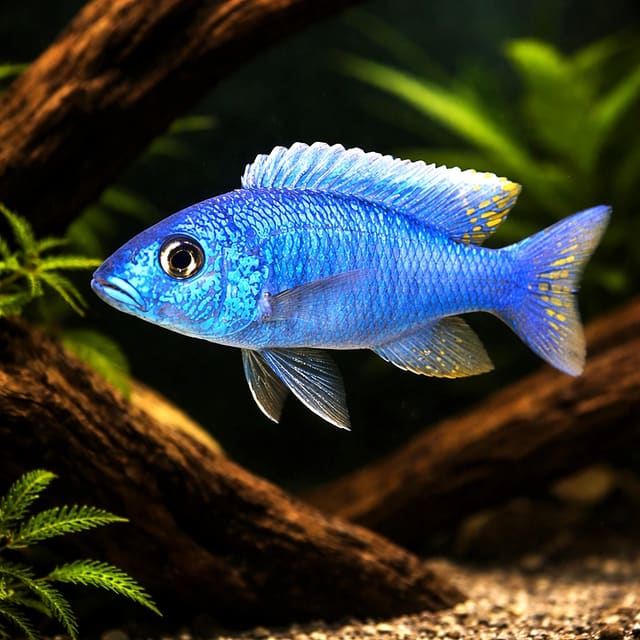
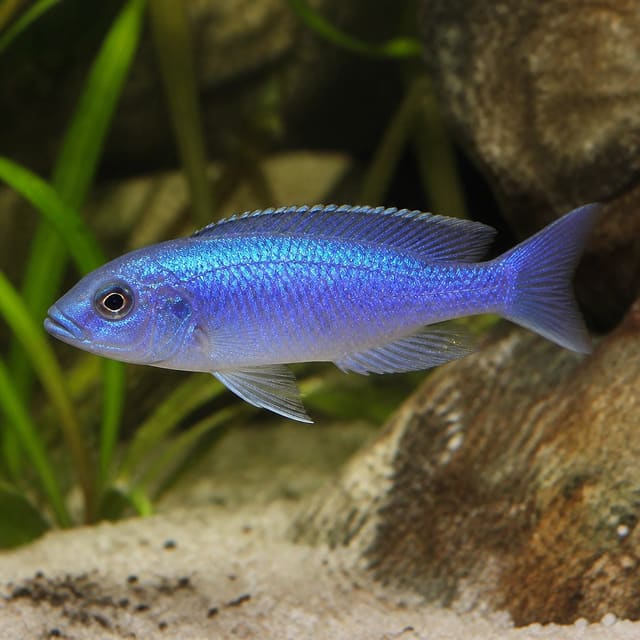
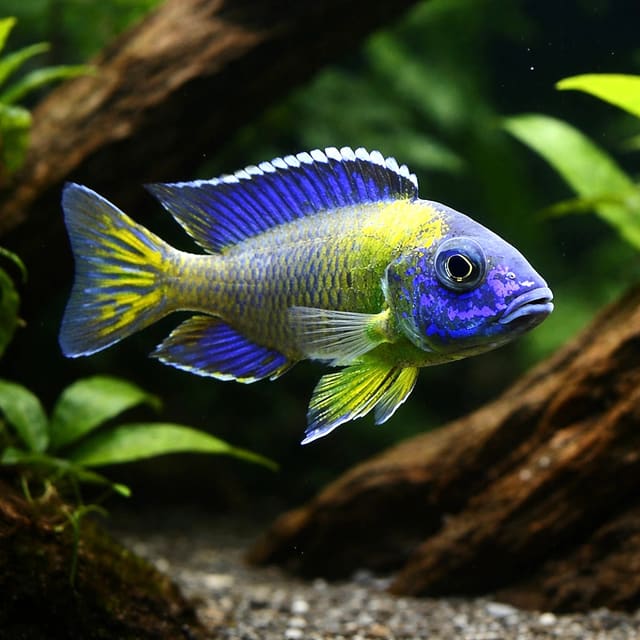
Azureus Cichlid (Copadichromis azureus)
26–27°C · pH 8–8.5 · 304L
£9.99

A blue Lake Malawi utaka/hap for spacious hard-water cichlid aquariums. Best kept with robust Malawi tank mates, open swimming space and stable alkaline water.
Adult size is the maximum length this species reaches at full maturity (scientific sources). The livestock you receive will be younger and smaller — pick a size above for the actual shipping size. Product-photo provenance and any image-specific limitations are stated on the listing.
Copadichromis verduyni
Save when buying multiple fish. Each quantity is one fish; sex and pair formation are not guaranteed unless the selected variant explicitly states them.
Confirm your email, then we’ll send an availability message for this exact item if it returns within 180 days.
This request is only for this product—no newsletter or other promotions. A mail-provider retry may very rarely duplicate the same availability message. Unconfirmed addresses are removed after 48 hours. See our privacy policy.
A blue Lake Malawi utaka/hap for spacious hard-water cichlid aquariums. Best kept with robust Malawi tank mates, open swimming space and stable alkaline water.
Adult size is the maximum length this species reaches at full maturity (scientific sources). The livestock you receive will be younger and smaller — pick a size above for the actual shipping size. Product-photo provenance and any image-specific limitations are stated on the listing.
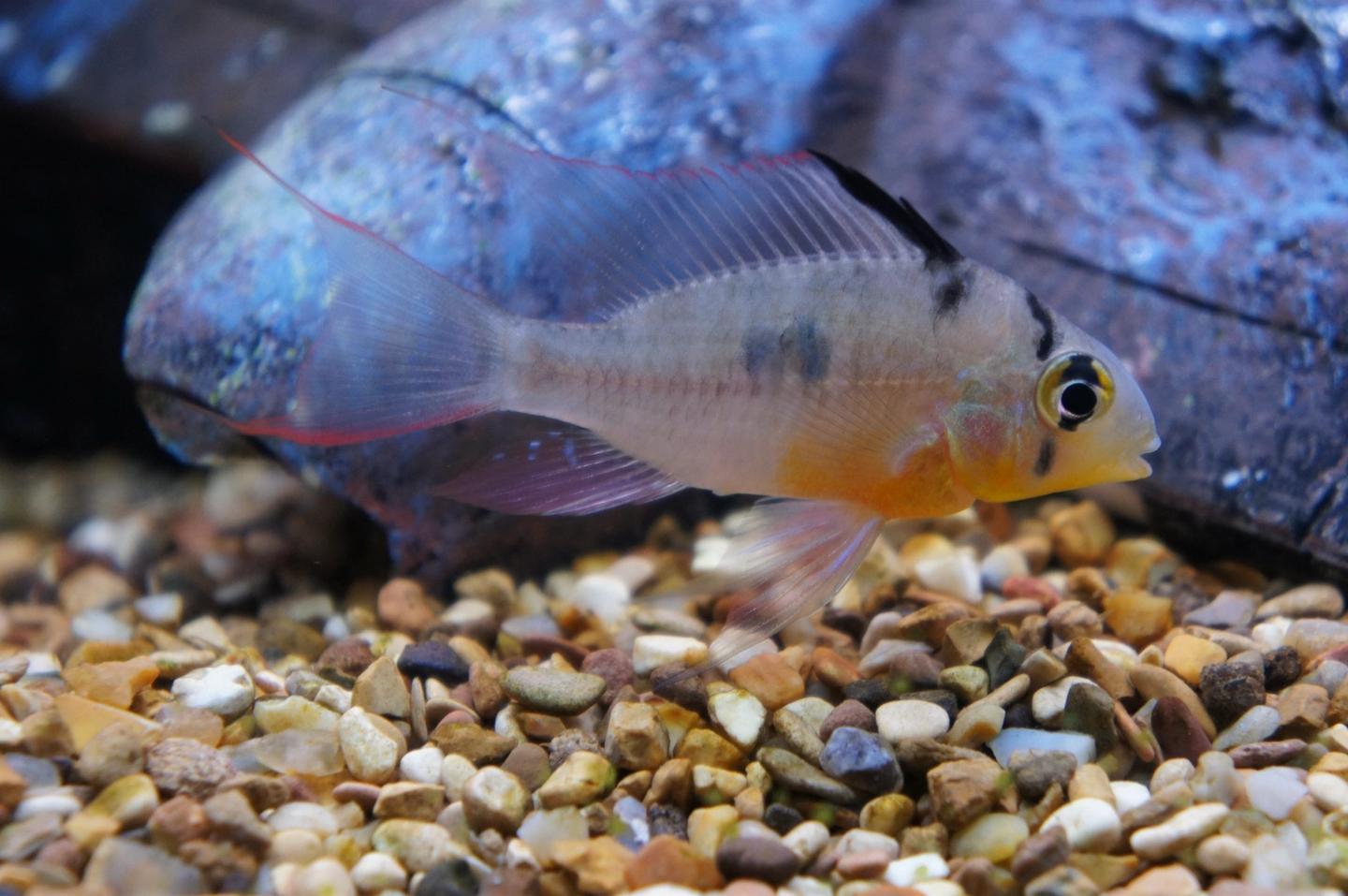
Cichlids are a family of roughly 1,800 accepted species, not one care type. Before buying, identify the exact species and source, then compare adult measurement, usable tank dimensions, social system, territory, tested water, diet and an exit plan. No family-wide minimum tank, water range or tank-mate list is safe.
Maintain these water conditions for optimal health and vibrant colors
Verduyni Deep Blue Hap is the cleaner working name for this Lake Malawi Copadichromis supplied to us as “Verduya's Hap Deep Blue” / Copadichromis verdunji deep blue. Source checks point to Copadichromis verduyni and the trade spelling “Verduyni Deep Blue”, so this page keeps the supplier wording as identification history while using the more reliable spelling in the main title, care notes and search metadata.
This is a blue utaka-type hap rather than a rock-bound mbuna. It suits aquarists who want the open-water movement, metallic colour and social display of Malawi haps, but who can provide the space, water stability and group planning these fish need. The best display comes from a long aquarium with open swimming room, a sandy foreground and rockwork arranged into clear sight breaks.
Mature males can show an intense metallic blue body with a clean, streamlined hap shape. The colour is usually strongest when the fish is settled, well fed and confident in its hierarchy. Younger fish, females and subdominant males are typically more restrained, often showing silver, grey or muted blue tones with the natural markings expected from Copadichromis-type Lake Malawi cichlids.
Because this fish has circulated under more than one trade spelling, it is worth treating the exact colour form with care. Do not expect every individual to look like a fully coloured dominant male every day. Light, background, social position, diet and maturity all affect the shade you see in the aquarium.
Copadichromis verduyni is associated with the sand-and-rock interface of Lake Malawi. Published species notes describe males using less obvious spawning sites at depth, while females and non-territorial males feed in the water column and take small invertebrates close to the bottom. That ecology matters in the aquarium: this is not a fish that wants a cramped pile of rocks only. It needs swimming lanes, broken sight lines and stable hard-water conditions.
A practical layout is a sand base, open middle water and rock piles placed at the ends or rear corners. The rockwork should create territories without filling the whole tank. Leave a clear front-to-back route so fish can move away from pressure instead of being trapped in one visual line.
Use a mature, well-filtered aquarium with strong oxygenation and steady mineral content. Lake Malawi haps do badly in soft, acidic or unstable water. Keep pH and hardness consistent, and avoid sudden changes during water changes. A long tank is more valuable than a tall tank because it gives males space to display and gives females room to move out of direct attention.
Fine sand is ideal. It protects the mouth and gill area during natural foraging and gives the aquarium the right open-shore feel. Hardy rockwork, limestone-style decor or inert stone can be used as long as the layout is secure. Plants are not essential and may be disturbed, so most keepers use rock, sand and open water rather than a planted aquascape.
Feed a varied diet built around high-quality Malawi cichlid pellets or flakes. Add frozen cyclops, mysis, artemia and similar small foods to support condition and colour. The natural feeding pattern is linked to plankton and small invertebrates, so smaller foods offered in sensible portions are better than heavy, fatty meals.
Feed modestly and keep water quality high. Overfeeding haps in hard-water cichlid aquariums quickly creates nitrate and dissolved-waste problems, especially in busy mixed communities. If food is still drifting around after a few minutes, the portion is too large.
Verduyni Deep Blue Hap is best housed with other robust Lake Malawi haps and peacocks of suitable size and temperament. It is usually a poor match for tiny peaceful community fish, soft-water species, delicate long-finned fish or very aggressive mbuna that will dominate feeding and territory.
Avoid keeping it with very similar Copadichromis forms if you intend to breed or keep strain identity clean. Similar females can be hard to separate visually, and hybridisation risk is real in mixed Malawi tanks. If you want related fish with a different look, consider pages such as Copadichromis Blue Neon or Copadichromis virginalis Fire Crest only after checking adult size, male colour and group balance.
The safest plan is a single male with several females in a spacious tank, or a carefully managed all-male display where each fish has different colour and body language. Multiple males of the same or similar form can work only in larger aquariums with enough space and visual separation. Watch the group after introduction; chasing that never stops, fish hiding at the surface, refusal to feed or dark stress barring are signs the stocking plan needs changing.
If this product is offered in more than one size, choose the size that fits your current group rather than only the most colourful option. A slightly smaller fish can settle better into an established hierarchy, while a larger male may need more room and stronger tank mates from day one.
Copadichromis are maternal mouthbrooders. A male displays and tries to lead females to a chosen spawning area; after spawning, the female carries the eggs and young in her mouth. If you are breeding deliberately, use a species-only or carefully selected group, avoid lookalike Copadichromis, and give brooding females a quiet route away from dominant males.
For display aquariums, breeding behaviour is mostly useful as a welfare signal. Confident colour, steady feeding and normal courtship usually mean the fish are settled. Constant harassment or a female holding too frequently without recovery time means the sex ratio or tank layout may need adjustment.
Acclimate slowly into a mature cichlid aquarium with matching temperature and mineral content. Keep the lights low at introduction, offer several hiding routes, and avoid feeding heavily on the first day. Stable water, quarantine where practical, and steady observation are more important than rushing the fish straight into a busy display.
This listing can show as unavailable when the current size options are out of stock. When available again, the product page will show the live variant, current price and dispatch options. Livestock orders are packed for overnight courier movement, and Live Arrival Guarantee terms apply under the conditions shown at checkout.
For this fish, the numbers matter less than the stability behind them. A tank kept steadily at pH 7.8 with good carbonate hardness is usually safer than one that swings between readings because buffers are added irregularly. Use a reliable dechlorinator, maintain strong biological filtration, and make water changes with replacement water that is close to the aquarium's temperature and hardness.
Nitrate control is especially important in Malawi displays because active cichlids eat confidently and produce a lot of waste. Keep stocking realistic, clean mechanical filter media before it becomes clogged, and avoid allowing uneaten food to settle behind rock piles. If colour fades, breathing looks heavy, or fish begin hanging near the filter return, test water quality before assuming the issue is social.
Male colour develops with age, confidence and social position. A young or recently moved male may look modest at first, then deepen into blue once feeding, hierarchy and water conditions are settled. Females and non-dominant fish are naturally more understated, so a mixed group should be judged by body shape, condition and behaviour rather than by full male colour alone.
Strong lighting can show the blue nicely, but harsh lighting over pale sand may wash fish out. Many keepers get a better display with a darker rear background, clean open water and rock shadows where fish can choose cover. Colour foods can help condition, but they cannot replace clean water, correct minerals and low stress.
The 4-5 cm and 5-6 cm size labels refer to the supplied livestock size, not the final adult size. Smaller fish are often easier to settle into a growing Malawi community, while larger fish may show shape and early colour sooner. If your existing tank already contains confident males, introduce new haps carefully and watch feeding access for the first week.
When this product is unavailable, do not substitute a similar-looking Copadichromis automatically if you are building a breeding group. Trade names can overlap, and females from related forms can be difficult to separate. For display tanks this is less critical, but for strain management it matters a lot.
The useful care information has been kept and rebuilt around the fish itself: identity, habitat, water, feeding, tank mates, behaviour and responsible availability. The result should read naturally to aquarists while still giving search engines a clear, accurate product entity.
Choose Verduyni Deep Blue Hap if you want a blue Malawi cichlid with open-water movement and a more refined presence than many mbuna. It rewards good planning: hard alkaline water, space, compatible cichlids and a diet that supports clean condition rather than overfed bulk. In the right aquarium it becomes a confident, elegant centrepiece for a Lake Malawi hap or peacock community.
No reviews for this item yet. Bought one? Honest reviews only, good or bad.
What customers say about ordering from us
I have a small group of long finned mountain minnows. So was delighted to be able to order ten of this variety to increase the genetics in my tank . The ones I recieved are healthy but it’s to early to give a verdict on wether they are of a long finned type since they are small currently.
Gordon Walker · 23 Sept 2026
100% success travel and "installation". Pleased with quality of purchase. The Siamese fighter a bit "shy" so have not yet seen him at his best yet but looking good. Happy customer. GG
George E Garratt · 21 Sept 2026
Reviews of our shop, collected by Judge.me, an independent third-party review collector. Newest first.