Steatogenys duidae
£85.99

Tiny North American planted-aquarium specialist for calm, cooler setups; best for keepers who can provide very small live and frozen foods.
Adult size is the maximum length this species reaches at full maturity (scientific sources). The livestock you receive will be younger and smaller. Product-photo provenance and any image-specific limitations are stated on the listing.
Elassoma evergladei
Shoaling fish: kept in a group they feel safer, stay calmer and show their best colour.
Confirm your email, then we’ll send an availability message for this exact item if it returns within 180 days.
This request is only for this product—no newsletter or other promotions. A mail-provider retry may very rarely duplicate the same availability message. Unconfirmed addresses are removed after 48 hours. See our privacy policy.
Tiny North American planted-aquarium specialist for calm, cooler setups; best for keepers who can provide very small live and frozen foods.
Adult size is the maximum length this species reaches at full maturity (scientific sources). The livestock you receive will be younger and smaller. Product-photo provenance and any image-specific limitations are stated on the listing.
Maintain these water conditions for optimal health and vibrant colors
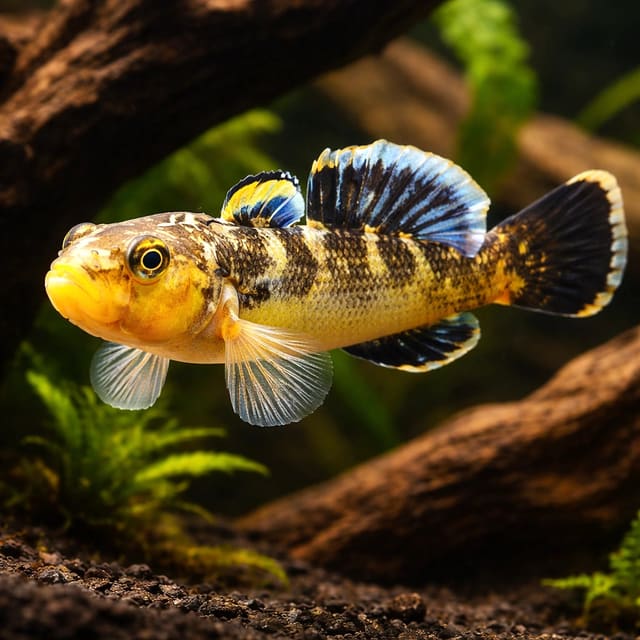
Everglades Pygmy Sunfish is Elassoma evergladei, a tiny North American native fish for quiet, mature aquariums. It is not a bright community-fish substitute and it should not be filed under an unrelated dwarf-fish category. The appeal is more specialist: a small, secretive fish that lives among plants, hunts tiny foods, and rewards patient keepers with beautiful dark breeding males and blue-green iridescent bars.
The previous live listing had become too short and too generic for this fish.
| Best for | Cool, calm, heavily planted species or specialist nano aquariums |
|---|---|
| Adult size | About 2.5-3.5 cm; FishBase lists 3.4 cm TL |
| Behaviour | Peaceful, shy, territorial in tiny display areas, and easily outcompeted |
| Feeding style | Micro-predator; best with small live and frozen foods |
FishBase lists Elassoma evergladei as the Everglades pygmy sunfish in Elassomatidae, with a North American range from the Cape Fear drainage in North Carolina to Mobile Bay in Alabama, south into Florida near the Everglades. Outdoor Alabama describes the species from vegetated margins of low-gradient streams, overflow pools and swamps with little current and soft silt or mud.
That habitat explains the aquarium style better than the word “sunfish” alone. This is a plant-associated, low-flow micro-predator. It should be sold with the expectations of a specialist native fish, not with broad tropical community wording.
| Scientific name | Elassoma evergladei |
|---|---|
| Common names | Everglades Pygmy Sunfish, Pygmy Sunfish, Dwarf Sunfish |
| Temperature | 10-22 C for long-term cool care; avoid constant high tropical heat |
| pH | 6.0-7.5 practical range; stable, slightly acidic to neutral is ideal |
| Hardness | Soft to moderate, up to around 12 dGH |
| Minimum aquarium | 40-60 litres depending on group and layout |
| Care level | Moderate to specialist |
| Diet | Daphnia, cyclops, baby brine shrimp, microworms, mini bloodworm and similar tiny foods |
The tank should feel like a planted margin rather than an open display tank. Use dense fine-leaved plants, moss, floating cover, botanicals, small pieces of wood and visual breaks. Outdoor Alabama notes aquatic vegetation, soft substrates and little current in the natural habitat; Fishkeeper also points to Ceratophyllum-style planting, dim light and gentle filtration.
Give them cover first and a small open viewing area second. A bare aquarium makes them nervous and invisible. A planted aquarium with shaded corners lets males choose small territories and gives females places to avoid attention.
| Setup choice | Reason |
|---|---|
| Dense live plants and moss | Creates security, spawning cover and microfauna |
| Dim or plant-diffused lighting | Encourages natural behaviour and reduces hiding stress |
| Gentle filtration | Matches quiet backwaters and weak swimming style |
| Leaf litter or botanicals | Helps create a calmer, natural-looking native-fish setup |
This is best kept as a small group or harem-style setup. In a smaller aquarium, one male with two or three females is often easier to manage. In a larger, very heavily planted aquarium, more than one male can work if there are enough visual barriers and females outnumber males. Males may hold tiny display areas, but the fish are not aggressive in the way larger territorial species can be.
Tankmates must be chosen carefully. Fast feeders will take the food before the pygmy sunfish has a chance. Large fish, pushy livebearers, fin nippers and active bottom fish are poor matches. A species-only aquarium is often the cleanest recommendation. If mixing, choose very small, peaceful, slow-feeding fish or suitable invertebrates only when the tank is dense enough and the sunfish are feeding confidently.
FishBase records worms and crustaceans in the diet, and aquarium care sources consistently treat this as a tiny live/frozen-food fish. Offer daphnia, cyclops, baby brine shrimp, microworms, grindal worms, mini bloodworm and other small moving foods. Some individuals may learn prepared micro foods, but this should be treated as a bonus rather than the main plan.
The most common failure is not water chemistry; it is starvation in a busy aquarium. Feed where the fish hold territory, watch the belly line, and avoid tankmates that rush every feeding spot.
Because this fish comes from the southeastern United States, people often assume it wants constant warm tropical conditions. It is better treated as a cool to temperate aquarium species. FishBase gives a broad 10-30 C tolerance, while UK aquarium care guidance is more conservative for long-term keeping at cooler temperatures. A cool winter rest is useful, especially if the keeper wants natural breeding behaviour.
A normal room-temperature aquarium can suit them well if it stays stable and does not overheat in summer. Avoid placing the tank where it will swing quickly between hot days and cold nights.
Outdoor Alabama and FishBase both connect spawning with aquatic vegetation. FishBase notes eggs deposited in plants, especially Ceratophyllum when available, and male guarding behaviour. In the aquarium, dense plant growth and tiny first foods are more important than trying to force breeding with heavy feeding alone.
If fry appear, they need microscopic first foods such as infusoria before they can take larger live foods. This is one reason mature planted aquariums are so valuable for the species.
| Question | Good answer |
|---|---|
| Is the tank mature and planted? | Yes, with dense cover, gentle flow and stable water |
| Can you provide tiny foods? | Yes, live or frozen micro foods are available regularly |
| Are tankmates slow and peaceful? | Yes, or the fish will be kept species-only |
| Will the tank stay cool? | Yes, it will not be kept at constant high tropical heat |
Livestock orders are packed for animal transport and sent with a licensed live-animal courier; eligible orders are covered by our Live Arrival Guarantee. Prepare the planted aquarium before dispatch, keep lights low on arrival, and offer tiny frozen or live foods once the fish have settled.
No reviews for this item yet. Bought one? Honest reviews only, good or bad.
What customers say about ordering from us
I have a small group of long finned mountain minnows. So was delighted to be able to order ten of this variety to increase the genetics in my tank . The ones I recieved are healthy but it’s to early to give a verdict on wether they are of a long finned type since they are small currently.
Gordon Walker · 23 Sept 2026
100% success travel and "installation". Pleased with quality of purchase. The Siamese fighter a bit "shy" so have not yet seen him at his best yet but looking good. Happy customer. GG
George E Garratt · 21 Sept 2026
Reviews of our shop, collected by Judge.me, an independent third-party review collector. Newest first.