Easy
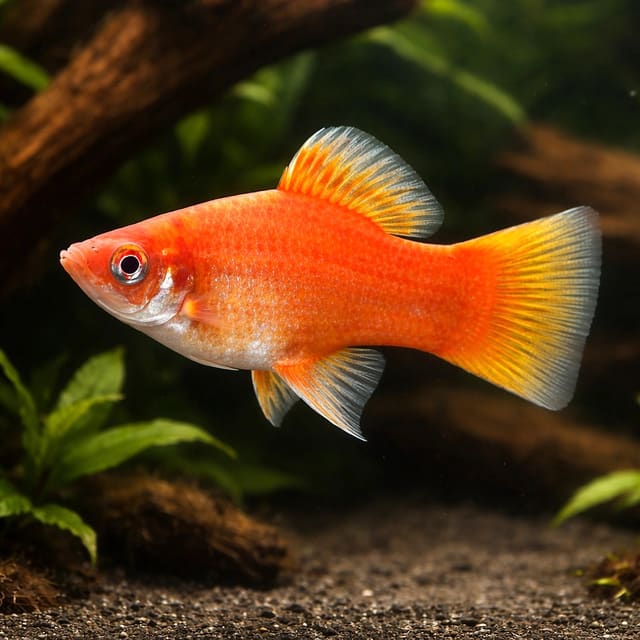
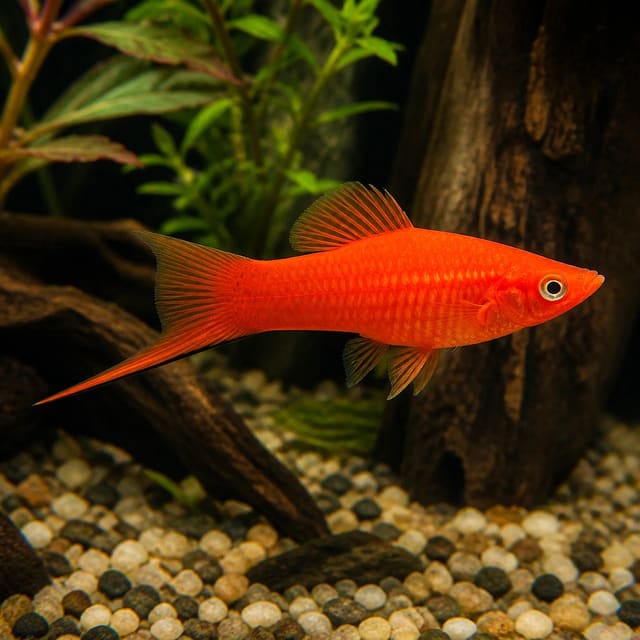
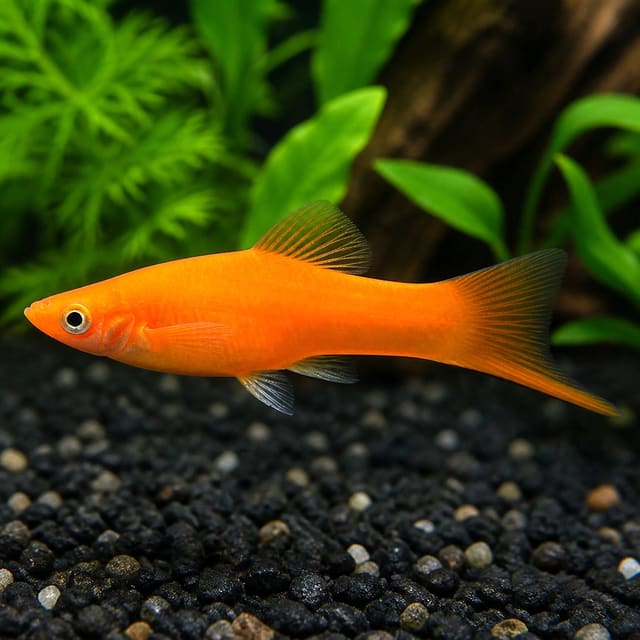
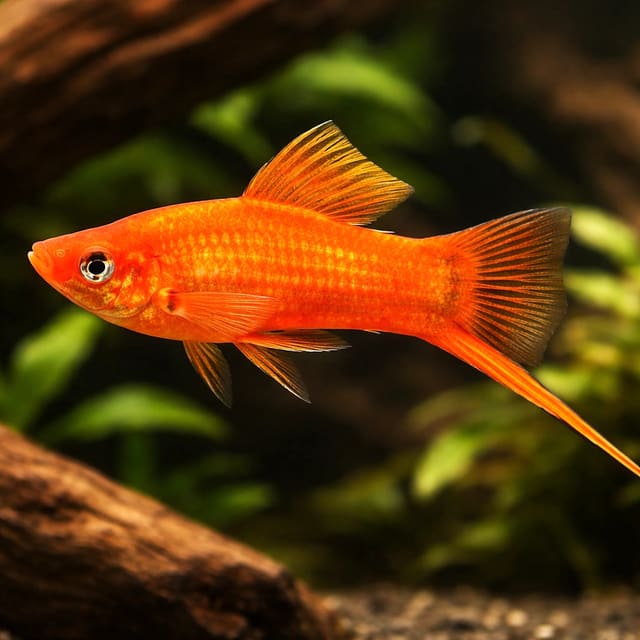
Swordtail Red (Xiphophorus helleri red)
22–27°C · pH 7–8 · 108L
£3.99
Xiphophorus pygmaeus is a small livebearing swordtail, sold as one live fish per purchase at 2 cm, 2.5–3 cm or 3–5 cm. Plan a group of at least three, two females to each male, in a mature, filtered and planted aquarium; OATA guidance for swordtails is 22–27 °C and pH 7.0–8.0.
Xiphophorus pygmaeus
Shoaling fish: kept in a group they feel safer, stay calmer and show their best colour.
Xiphophorus pygmaeus is a small livebearing swordtail, sold as one live fish per purchase at 2 cm, 2.5–3 cm or 3–5 cm. Plan a group of at least three, two females to each male, in a mature, filtered and planted aquarium; OATA guidance for swordtails is 22–27 °C and pH 7.0–8.0.
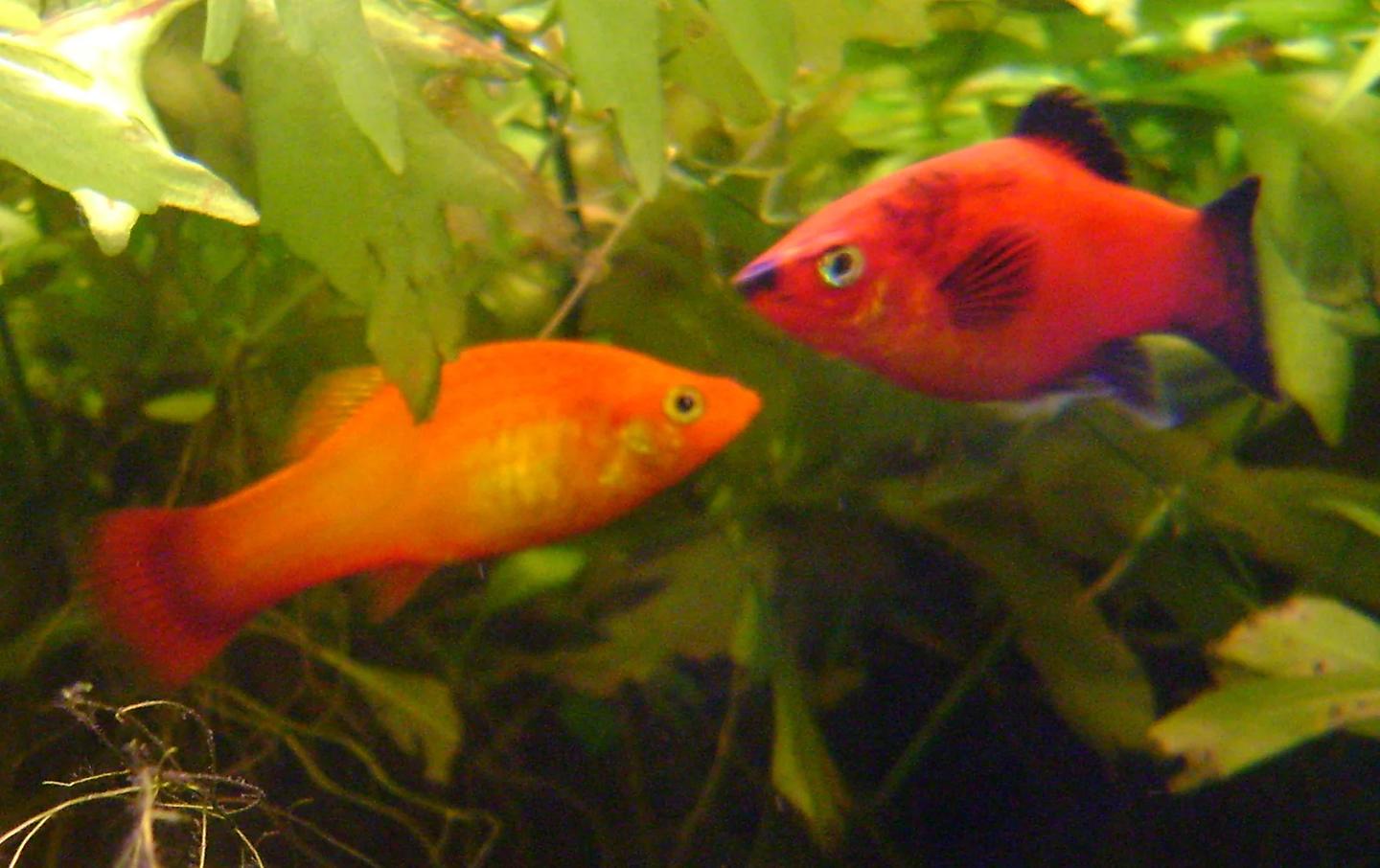
Platy is a trade name used for Xiphophorus maculatus, X. variatus and domestic forms. Start with at least three in a mature aquarium of at least 45 litres, verify the exact fish and measured water, and plan extra capacity before mixing sexes.
Maintain these water conditions for optimal health and vibrant colors
Xiphophorus pygmaeus is a small livebearing swordtail from the family Poeciliidae, the same family as the platies and swordtails that fill so many community aquariums. It is widely known in the hobby as the pygmy swordtail. Each purchase is one live fish of the size you choose: 2 cm, 2.5–3 cm or 3–5 cm. The size you select is the size supplied, not the adult size.
The decision that matters most comes before the order. Platies and swordtails need company, and the UK trade body OATA suggests keeping at least three together, two females to each male, so that no single fish carries all the attention. Think of this fish as part of a small group for a mature, filtered and planted aquarium rather than a single addition to a brand-new set-up.
| Suits | A settled, filtered aquarium of around 80 litres or more, planted for cover with open water to swim in |
|---|---|
| Group plan | At least three fish, two females to each male |
| Water | OATA swordtail guidance of 22–27 °C and pH 7.0–8.0, held steady |
| Less suited to | A tank that holds large, boisterous or predatory fish, or has not finished maturing |
Platies and swordtails earn their place in community aquariums because they are generally small, colourful and peaceful, and OATA describes most of them as undemanding and easy to keep. A small swordtail adds steady movement through the open water of a planted tank, and because these are livebearers, a settled group with both sexes can produce young in the aquarium. What it asks in return is clean, stable water and companions that will not crowd it out.
FishBase records the species as Xiphophorus pygmaeus Hubbs & Gordon, 1943. Some trade lists spell it Xiphophorus pigmaeus, which is why that spelling appears in a few places on this page; both refer to the same fish, and pygmaeus is the accepted form.
You receive one live fish for each unit in your basket, packed at the size shown on the option you picked. The three sizes suit slightly different plans:
Not every size can be ordered at every moment; the size menu on this page always shows which ones are open for ordering.
Sex is guaranteed only when the selected option explicitly states male or female. This Xiphophorus pigmaeus listing has no sex-guaranteed option.
That matters for the two-females-to-one-male balance, because the mix in your group depends on the fish packed for you. The compatibility section explains how to tell the sexes apart as the fish mature and what to do if a group turns out heavy on males.
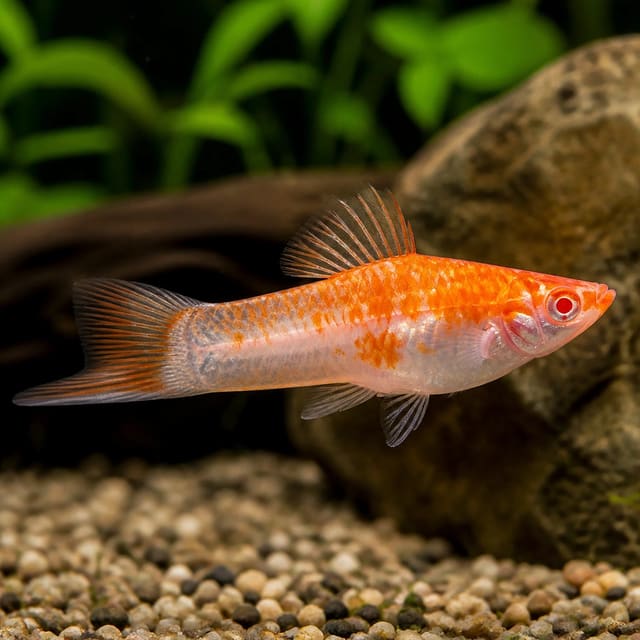
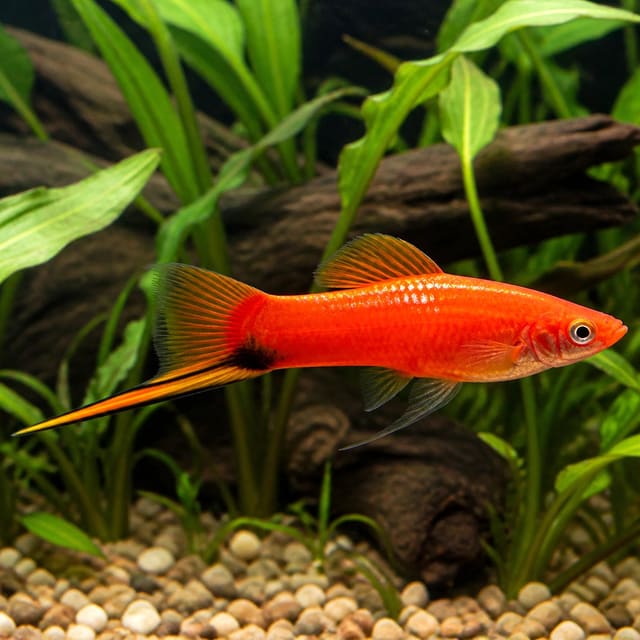
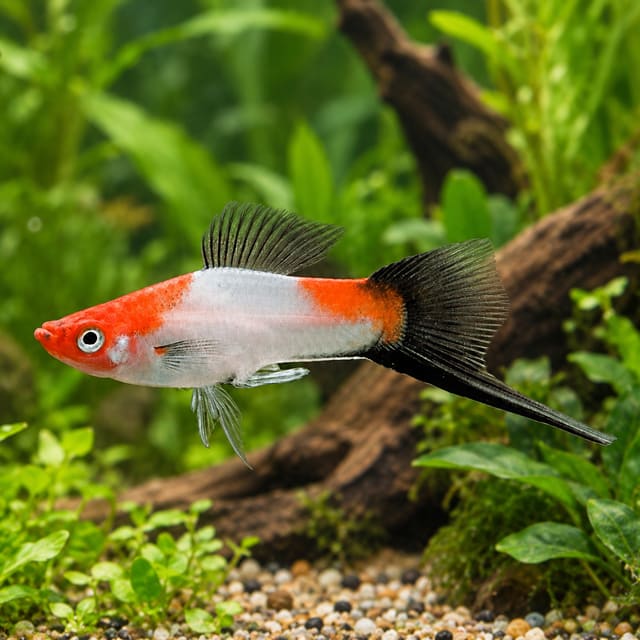
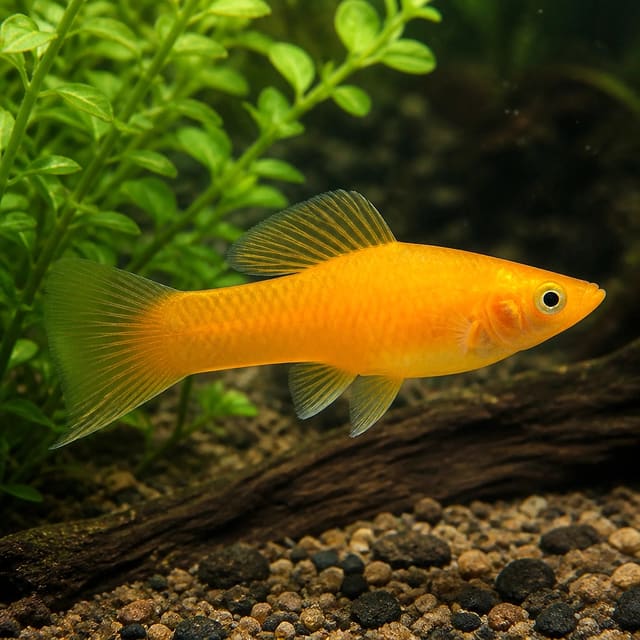
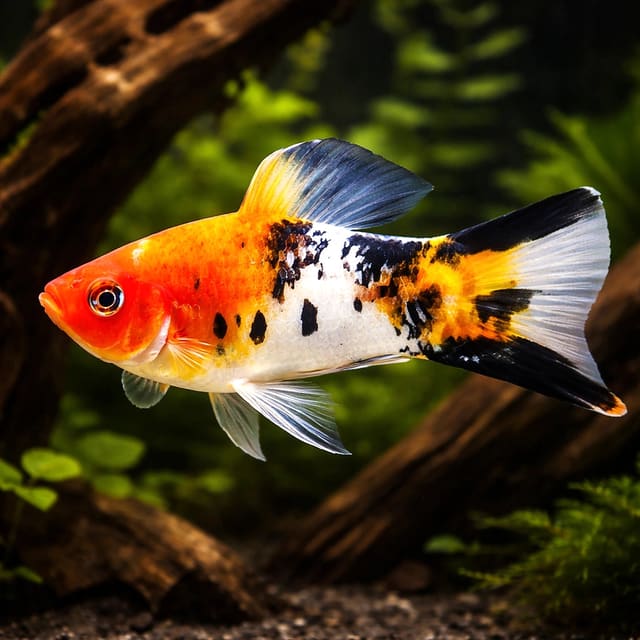
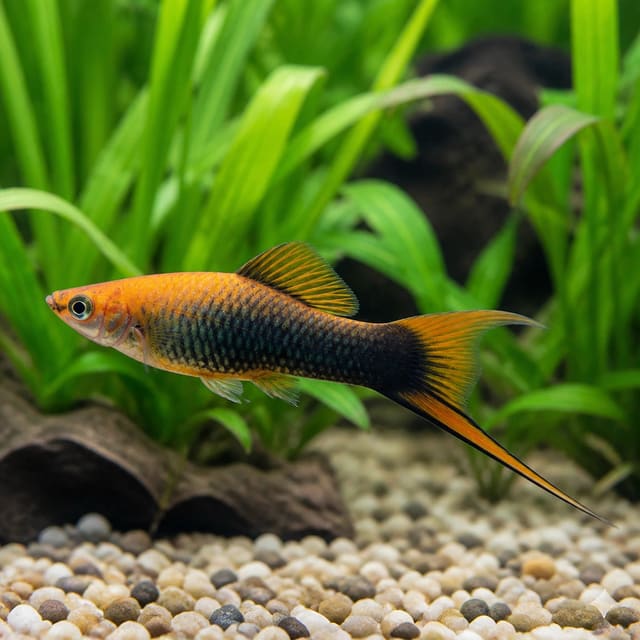
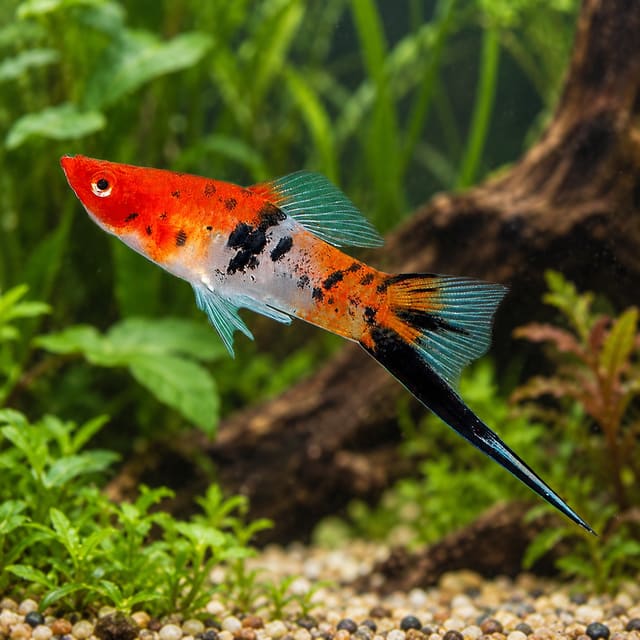
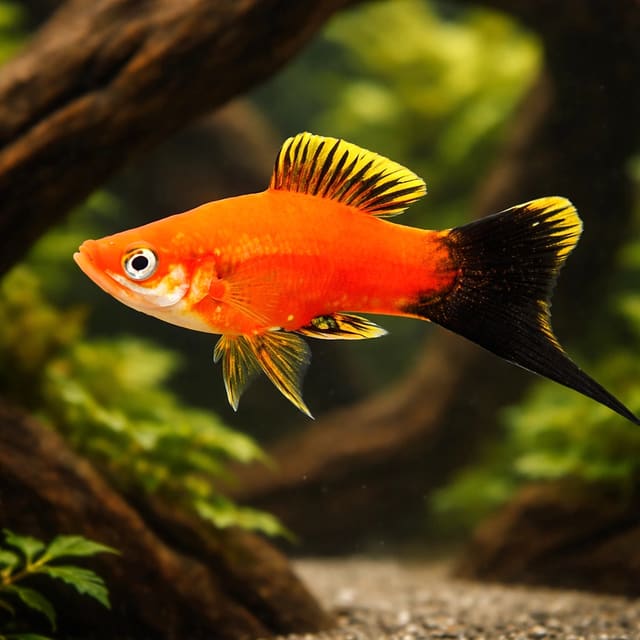
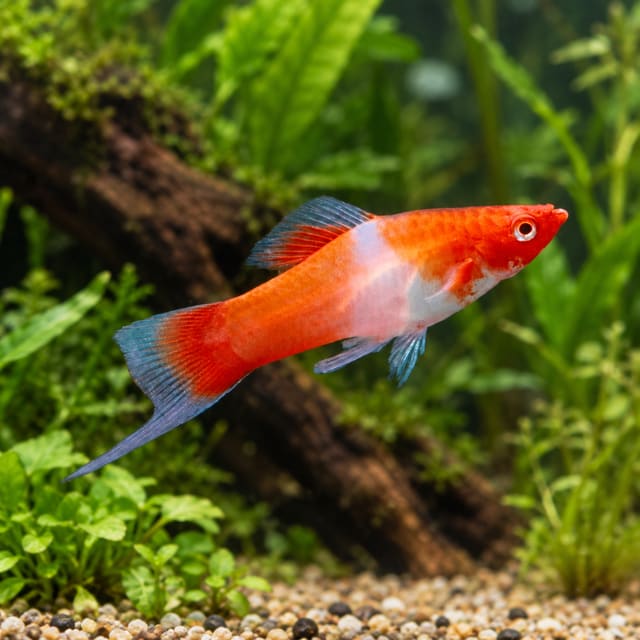
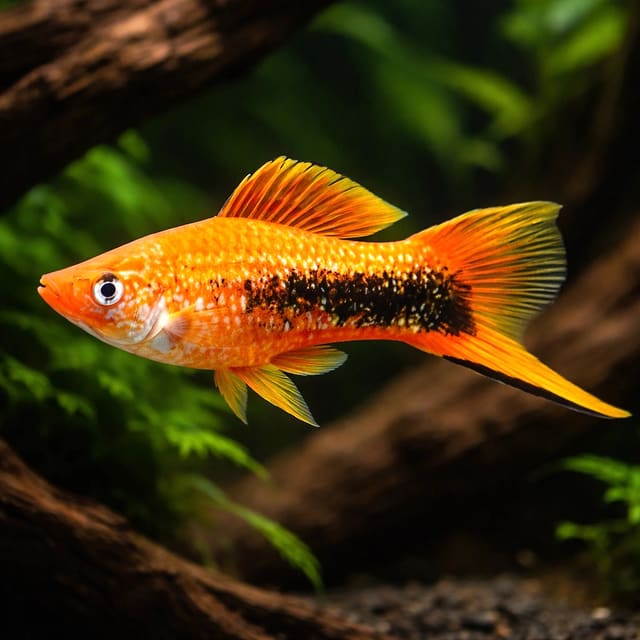
Gallery images have been digitally enhanced to improve image quality. Natural colour, pattern, size and maturity can vary between live animals.
If you are planning a wider livebearer community, you can browse our livebearers collection and compare the fish that share this family.
A small fish does not mean a small aquarium. OATA advises buying a tank as large as is reasonably possible, big enough to hold at least a small group, because a larger volume keeps temperature and water quality more stable. Its platy and swordtail sheet recommends at least 45 litres for a small group of platies and at least 80 litres for swordtails, with more space again for each additional group. As Xiphophorus pygmaeus is a swordtail, we plan around the 80-litre figure for a group and treat it as a starting point rather than a target to squeeze up against.
A layout like this lets a small fish move between shelter and open water, and it gives females somewhere to rest away from a persistent male.
The RSPCA says no fish should be kept without a well set up and maintained filter. Fish release ammonia, which is toxic. A working biological filter grows beneficial bacteria that turn ammonia into nitrite, which is also toxic, and then into nitrate, which is safer. Those bacteria take time to establish, which is why the tank needs to be running and matured before any fish go in.
Skipping that stage, or adding too many fish too quickly, leads to what OATA calls new tank syndrome: there are not yet enough nitrifying bacteria to cope with the extra waste, ammonia and nitrite rise, and fish become ill or die. Our guide to setting up and maturing a first tropical tank walks through the steps in order, from filling and heating to confirming the filter can process waste.
OATA gives swordtails a temperature of 22–27 °C. Most UK rooms sit below that for much of the year, so plan on a heater with a thermostat and a separate thermometer you can read at a glance. Check it each day while the fish settle and after any change in the weather, heating or room layout.
OATA describes platies and swordtails as usually undemanding of water chemistry and gives the following suggested values. The swordtail temperature row is the one we follow for this fish.
| Value | OATA guidance |
|---|---|
| Temperature | 22–27 °C for swordtails (17–27 °C for platies) |
| pH | 7.0–8.0 |
| General hardness | 4–12 °dH |
| Carbonate hardness | 3–10 °dKH |
| Ammonia | Zero mg per litre |
| Nitrite | Zero mg per litre |
| Nitrate | No more than 20 mg per litre above your tap water |
These figures come from the OATA care sheet for platies and swordtails and cover the group as a whole. The practical aim is stability: water that stays in the same place within those ranges from one week to the next does far more for a small livebearer than water pushed towards a particular number.
The nitrate guidance is measured against your own tap water, so test the tap first. If your tap reads 10 mg per litre, the aquarium should stay at or below 30 mg per litre. When the gap widens, the usual causes are too much food, too many fish for the filter or water changes that have slipped.
Hardness and pH vary a great deal across the UK. Before the fish arrive, test your tap water for pH, general hardness and carbonate hardness so you know whether it already falls in the ranges above. Our guide to what each water test tells you explains the readings, and the water parameter matcher lets you compare your own results with the figures on this page.
Once the fish are in, test at least once a week so that ammonia and nitrite never have the chance to build up. Keep a simple note of the readings; a slow upward drift in nitrate or a first trace of nitrite is far easier to correct when you catch it early.
Liquid test kits and strips both work if you use them consistently and read them in good light. What matters most is testing the same way each time, so that a change in the result reflects a change in the water.
Because platies and swordtails are usually undemanding of water chemistry, a tap reading slightly outside one row is less important than keeping the aquarium steady. A reading well outside the pH or hardness ranges is different: talk to us with your results before ordering, so we can look at the options together. Avoid chasing numbers with repeated doses of chemicals, which tends to make water swing from one week to the next, and never change the chemistry quickly once fish are in the tank.
Stable temperature is one of the easiest ways to keep small livebearers comfortable, and it starts with where the aquarium stands.
In winter the heater does the work, so check the thermometer each morning during the first cold spell of the year to confirm it is keeping up. In a warm summer the risk runs the other way: a heater cannot cool the water, so a room that gets hot will carry the aquarium with it. Watch the thermometer on hot days, keep curtains or blinds drawn against strong sun, and make your weekly water change with water at the same temperature as the tank rather than using cold water to force it down.
Steady conditions also make testing more meaningful. When temperature, feeding and water changes follow the same pattern each week, any sudden change in a reading points clearly to a cause you can find.
OATA is clear that good husbandry is essential for platies and swordtails, which can be stressed by even the smallest amounts of ammonia. A steady weekly routine is the simplest way to keep a group of small livebearers comfortable.
Matching the temperature of the new water to the aquarium keeps each change gentle. A thermometer in the bucket makes that easy.
Two habits make this routine more reliable. First, change water on the same day each week so it becomes automatic. Second, look at the fish during every change: a quick count and a glance at fins and breathing will show you most problems long before they become serious.
Platies and swordtails are omnivorous and will take most food types. OATA recommends a good-quality flake or granule with a high algae content as the everyday food, with small items of live or frozen food such as daphnia, small bloodworm or tubifex as extras.
Feed once a day, and only as much as the fish can eat within a few minutes. Uneaten food breaks down and releases toxic waste into the water, so overfeeding shows up as rising ammonia or nitrate rather than as better-fed fish.
Well-fed livebearers are active and alert and come forward at feeding time. A fish that stops showing interest in food is worth a closer look, starting with a water test.
Before you order, confirm that the aquarium is matured and that ammonia and nitrite both read zero. Your fish are hand-packed by our team, bagged in pure oxygen inside an insulated poly box, with a heat pack when the weather calls for it, and carried by a licensed live-animal courier. We email the tracking number and your confirmed delivery date so you know when to be in.
Keep the video until you are happy the fish are well. For any Live Arrival Guarantee claim, we need that continuous video, sent with your order number when you contact us the same day; WhatsApp is the fastest route, and we will arrange a replacement or refund. The full terms are on our delivery and Live Arrival Guarantee page.
Adding fish increases the waste the filter bacteria must handle, and those bacteria need time to catch up. OATA advises increasing fish numbers only slowly, because the bacterial population has to grow each time more fish are added and feeding increases. A simple plan for the first month:
| When | What to do |
|---|---|
| Arrival day | Follow the steps above, then leave the fish to explore and offer only a small amount of food at first |
| First week | Test ammonia and nitrite every couple of days, and remove any food left after a few minutes |
| Weeks two to four | Move to the weekly routine of testing and a 25% water change, and watch how the group shares space and food |
| Adding more fish | Only once readings have stayed at zero ammonia and nitrite, and in small steps rather than all at once |
Small fish can be shy for the first days in a new tank, particularly if the aquarium is busy. Plenty of planted cover helps them settle, and they usually become bolder once they learn where food arrives.
OATA describes healthy fish as having clear, bright eyes, undamaged fins, intact scales and no ulcerations or bumps. Every fish varies a little in behaviour and appearance, so learn what normal looks like for your group in the first days and watch for changes in:
If you notice any of these, test the water first, because a problem with ammonia, nitrite or temperature is the most common cause and the quickest to put right. Then get in touch with the readings and a description of what you are seeing so we can talk it through with you.
OATA suggests keeping at least three platies or swordtails together, two females to each male, to reduce stress on the females and on other fish in the tank. More can be kept, provided they are added in the same proportion, and every extra group needs more aquarium volume.
The ratio exists to spread a male's attention. With a single female, all of it falls on her; with two or more, it is shared, and a planted tank lets each of them slip out of view for a while. OATA links the same balance to less stress for other fish in the aquarium, so a well-proportioned group tends to make for a calmer tank overall.
In platies and swordtails the male has a specialised anal fin called a gonopodium, while the female has a triangular anal fin. The male is also generally smaller than the female. These differences are easiest to see once the fish have matured, so a group of small fish may not reveal its make-up straight away.
Platies and swordtails are livebearers and give birth to live young. With both sexes in the tank, young fish may appear. Decide in advance whether you will keep them, because every extra fish adds to the waste the filter has to handle and to the space the group needs.
OATA describes platies and swordtails as generally peaceful and compatible with other species. For a small swordtail the more useful question is which companions will leave it room to feed and swim.
| Companion type | Our advice |
|---|---|
| Other peaceful fish of a similar size | Good choices when they are comfortable at 22–27 °C in neutral to slightly alkaline water of soft to medium hardness |
| Large swordtails | Take care; OATA notes they can be boisterous and may chase more timid tankmates |
| Fish big enough to swallow a small livebearer | Leave out of the same tank |
A peaceful companion still needs to share the same water. Before adding anything else, check that it is happy within the swordtail values above, especially the pH of 7.0–8.0 and soft-to-medium hardness. A fish that needs soft, acidic water would pull the aquarium away from what suits this livebearer.
In a mixed aquarium the fastest fish tend to eat first. Watch that the pygmy swordtails are reaching food, spread food across the surface, and choose companions that are not so large or quick that the small fish go hungry.
When the pygmy swordtails are settled and the water has held steady for a few weeks, companions can follow. Add them in small numbers, test ammonia and nitrite for a week or two afterwards, and watch the first few feeds closely. Check the adult size of anything you add, not just its size on arrival: a fish that fits well at first can grow into one that dominates the food or the open water. Remember that every group of platies or swordtails needs its own share of the aquarium volume, so a tank that suits one group of this fish may not have room for a second group of another livebearer as well.
Other products shown alongside this one are options to consider, not a recommendation to keep them together.
It is sold at 2 cm, 2.5–3 cm or 3–5 cm, and the fish you receive matches the size you choose. That is its length on the day it is packed, not a finished adult size. Across platies and swordtails the males are generally smaller than the females, so a settled group usually shows a spread of sizes.
OATA recommends at least 80 litres for swordtails and at least 45 litres for a small group of platies. We plan a group of pygmy swordtails around the 80-litre swordtail figure, and more room again for each extra group or for other fish sharing the tank.
Keep at least three, in the proportion of two females to each male, which OATA suggests for platies and swordtails to reduce stress on the females and on other fish. Larger groups work too when they are added in the same proportion and the aquarium has room for them.
It can be, provided the aquarium is filtered, fully matured and tested before the fish arrive. OATA describes most platies and swordtails as undemanding, but they are still stressed by even small amounts of ammonia, so weekly testing and water changes matter more than experience.
It is an omnivore. Offer a good-quality flake or granule with a high algae content, broken small enough for its mouth, and add small live or frozen foods such as daphnia or small bloodworm. Feed once a day, only as much as the group eats within a few minutes.
OATA care-sheet guidance for swordtails is 22–27 °C, pH 7.0–8.0, general hardness 4–12 °dH and carbonate hardness 3–10 °dKH, with zero ammonia and nitrite. These are group figures for platies and swordtails, so aim for steady values inside them rather than chasing either end.
It belongs to a group that OATA describes as generally peaceful and compatible with other species. The main risk runs the other way: large swordtails can be boisterous and may chase more timid tankmates, and a small fish is easily pushed away from food.
Choose other peaceful fish of a similar size that are comfortable in the same temperature and in neutral to slightly alkaline water. Leave out any fish big enough to swallow a small livebearer, and be careful with large, boisterous swordtails, which may chase smaller companions.
Each fish is hand-packed by our team, bagged in pure oxygen inside an insulated poly box, with a heat pack when the weather calls for it, and carried by a licensed live-animal courier. Someone needs to be in to receive it. Film one continuous unboxing video from the sealed parcel to the fish still in their bag, open and inspect it the same day, float the bag for 20–30 minutes, then release the fish without the bag water. For a Live Arrival Guarantee claim, contact us the same day with your order number and the video.
No reviews for this item yet. Bought one? Honest reviews only, good or bad.
What customers say about ordering from us
Easy website plenty of info on fish your buying great to pick a time slot
TRACEY DURRANT · 7 Oct 2026
Got some lovely fish thank you
Kevin Mackie · 7 Oct 2026
Reviews of our shop, collected by Judge.me, an independent third-party review collector. Newest first.