
X Swordtail (Xiphophorus hellerii) - UK
Bright and active X Swordtail ideal for spacious community aquariums. A striking livebearer with great character. Order today with UK delivery.
Premium Quality
Healthy, vibrant fish from trusted suppliers
Expert Care
Detailed care guides and support
Live Arrival Guarantee
Your fish arrives healthy or we'll replace it
Acclimated
Properly quarantined and ready for your tank
Why Choose This Fish?
Bright and active X Swordtail ideal for spacious community aquariums. A striking livebearer with great character. Order today with UK delivery.
The X Swordtail, Xiphophorus hellerii, is one of the most reliable ways to add movement, colour, and constant activity to a tropical community aquarium. Best known for the male’s long “sword” extension on the tail, this peaceful livebearer combines hardy care with striking variety, from red swordtail and wagtail forms to koi-pattern fish and mixed strains. If you have been searching for an assorted swordtails care guide, how to care for assorted swordtails, or even wondering whether assorted swordtails for beginners are a sensible choice, the answer is yes—provided the tank is large enough and the water is on the harder, more alkaline side. These are active fish, not tiny nano species, and their adult size of 10-16 cm means assorted swordtails tank size matters far more than many first-time keepers expect.
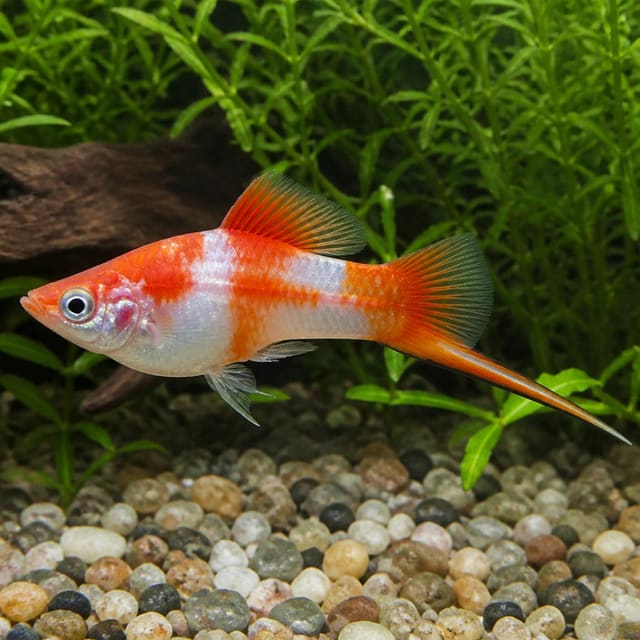
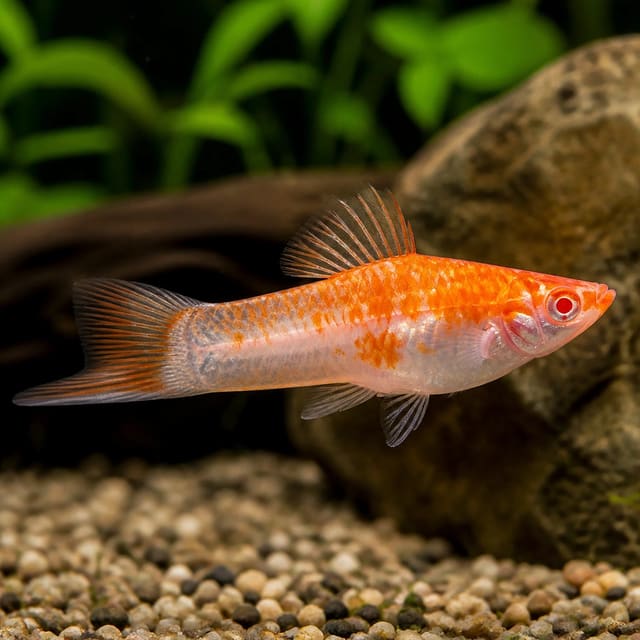
Captive-bred Assorted Swordtail fish are popular because they are adaptable, social, and easy to feed. They suit many freshwater tropical fish UK setups, especially planted community aquariums with open swimming space. They also overlap with many common searches around platy fish requirements, platies tank requirements, and what fish can live with platys because swordtails and platies are close relatives in the same livebearer group. See our detailed photos showing body shape, swordtail fish male and female differences, and the range of colourful assorted swordtails for aquarium display tanks. For fishkeepers who want a lively centrepiece for a medium to large community setup, Xiphophorus hellerii offers excellent value, straightforward care, and fascinating behaviour.
🔹 Quick Facts
- Scientific Name: Xiphophorus hellerii
- Care Level: Beginner
- Min Tank Size: 108 litres (24 gallons)
- Temperature: 16-28°C (61-82°F)
- pH Range: 7.0-8.0
- Lifespan: Up to 5 years
- Temperament: Peaceful
- Diet: Omnivore
Classification
- Order: Cyprinodontiformes
- Family: Poeciliidae
- Genus: Xiphophorus
Xiphophorus hellerii sits within the same livebearer family as guppies, mollies, and platies. In the hobby, it is often compared with xiphophorus maculatus and xiphophorus variatus, which are platies rather than swordtails. The scientific name of platy fish usually refers to those related Xiphophorus species, which is why searches for xiphophorus platy often overlap with swordtail care. Other members of the genus, such as xiphophorus kallmani, xiphophorus signum, xiphophorus alvarezi, and xiphophorus montezumae, are of interest to specialist keepers, but X. hellerii remains the classic aquarium swordtail for everyday community tanks.
Where Do X Swordtails Come From? Natural Habitat Explained
The platy fish origin and swordtail origin discussions often get mixed together because both fish belong to the same genus, but Xiphophorus hellerii naturally comes from Central America. Wild populations are associated with flowing waters in southern Mexico, Guatemala, Belize, and Honduras. The assorted swordtails habitat in aquaria is based on these warm, mineral-rich environments: streams, canals, river margins, and vegetated shallows where fish can browse algae, biofilm, insect larvae, and plant matter.
In the platy fish in wild and platy fish natural environment sense, swordtails share many of the same broad ecological preferences as platies: hard water, stable chemistry, and plenty of plant cover. Their platy fish natural habitat equivalent is not blackwater rainforest stream conditions. Instead, think clearer water with dissolved minerals, moderate current, and sunlit margins. This is why assorted swordtails water hardness is important. Soft, acidic water may keep them alive for a while, but it rarely shows them at their best.
Many keepers ask about platy fish habitat, platy native range, and whether platys in outdoor pond or platy fish outdoor pond setups are possible. In the UK, swordtails and platies can spend warm summer periods outdoors in secure, filtered ponds or tubs, but they are still tropical fish and should not be left out through cold weather. Platys in a pond and swordtails outdoors can work only when temperatures remain safely stable and predators are excluded.
Another common question is where do platy fish sleep. Swordtails do the same thing platies do: they rest in quieter areas of the tank, often among plants or near decor, reducing activity after lights out rather than “sleeping” in a mammal-like way. Mimicking the platy natural habitat with dense planting around the edges and open water in the centre helps them feel secure and display more natural behaviour.
💡 Expert Tip
Mimicking the natural habitat of Xiphophorus hellerii improves colour, appetite, and social behaviour. Use hard, alkaline water, keep the tank mature, and provide both open swimming lanes and dense side planting. In our experience, swordtails settle faster in tanks with Vallisneria, floating cover, and steady filtration rather than sparse, brightly lit bare setups.
How to Set Up the Perfect Tank for Xiphophorus hellerii
If you are researching platy fish tank setup, platy fish tank requirements, or assorted swordtails tank setup, the biggest point to understand is that swordtails need more swimming room than platies. They are active mid-top swimmers and males can be assertive with one another, so cramped tanks quickly lead to chasing and stress.
Tank Size Requirements
The assorted swordtails tank size minimum is 108 litres, but a recommended size of 150 litres is much better for a mixed group. A 60 litre aquarium is too small for adult swordtails, so assorted swordtails in 60 litre tank searches usually lead to disappointment once the fish mature. For a proper group, think one male with three or more females, or a larger female-heavy group. If you keep multiple males, extra space and line-of-sight breaks are essential.
People comparing platy fish tank size, platies tank size, and platy tank size often assume swordtails can be housed the same way. They cannot. Swordtails are longer, faster, and more boisterous. A long aquarium footprint matters more than height because these fish use horizontal swimming space constantly.
Water Parameters
For those searching what temperature for platy fish, what temperature should platy fish be in, or platy fish ideal temperature, swordtails and platies overlap well. The platy fish temperature range often quoted for community tanks also suits swordtails: 22-26°C is a practical everyday target, with 24°C ideal. The full safe range for this species is 16-28°C, but long-term care is best in the middle of that range.
That means platy fish water temperature, platy fish tank temperature, platy fish temperature, platy ideal temperature, and platy tank temperature questions all point toward the same answer for mixed livebearer tanks: stable warmth matters more than chasing extremes. For UK homes, platy fish temperature UK concerns are usually solved with a reliable heater because room temperatures fluctuate too much across seasons. Assorted swordtails temperature and assorted swordtails ideal water temperature are best kept around 24°C, while assorted swordtails tropical tank temperature can safely sit between 23-25°C in most community aquariums.
Assorted swordtails pH level requirements are straightforward: aim for pH 7.0-8.0, ideally around 7.5. Hardness should sit between 10-25 dGH. They generally do better in naturally hard tap water than in very soft reverse osmosis setups unless minerals are re-added correctly.
Filtration
Because swordtails are active feeders and prolific livebearers, filtration should be sized for a moderately stocked community tank. A quality external filter or a strong internal filter that turns over the tank 5-8 times per hour works well. Good oxygenation supports appetite and activity. While people ask can platy fish live without air pump, the better question is whether the tank has enough surface movement. In a well-filtered aquarium, an air pump is optional. As for can platy fish live without oxygen, no fish can—what matters is dissolved oxygen, which comes from gas exchange and circulation.
Substrate, Plants & Decor
Dark sand or fine gravel helps colours stand out and makes fish feel secure. Swordtails are not substrate sifters, so substrate choice is mostly aesthetic and practical. Use rooted plants around the back and sides, leaving open swimming space in the middle. Assorted swordtails aquarium plants compatible options include Vallisneria, Java fern, Amazon swords, floating Salvinia, and hardy stem plants. This is one reason assorted swordtails for planted aquarium layouts are so popular.
If you want to explore more colour forms, our X Swordtails - Xiphophorus Hellerii - page is a useful starting point, while hobbyists building a brighter display often pair these fish visually with X Koi Tricolour Swordtails - Xiphophorus or X Green Wagtail Swordtails - Xiphophorus. For tanks focused on elegant finnage, X Red Lyretail Swordtails - Xiphophorus offer a different silhouette.
Lighting Requirements
Moderate lighting for 7-9 hours daily works well. Strong light is fine if balanced with plants and cover. Too much intense light in a bare tank can make swordtails skittish. Floating plants soften the effect and help females avoid constant male attention.
Quick Setup Checklist
- Choose at least 108 litres, ideally 150 litres for a group
- Set temperature to around 24°C
- Maintain pH 7.0-8.0 and 10-25 dGH hardness
- Use a lid because swordtails are known jumpers
- Plant the sides and back, leaving open swimming space
- Keep at least 3 females per male
💡 Pro Tip
Always cycle the aquarium for 4-6 weeks before adding swordtails. In newly set up tanks, even hardy assorted swordtails for new tank searches can be misleading—no livebearer is truly safe in uncycled water. Stable biological filtration is the difference between fish that merely survive and fish that breed, colour up, and live for years.
What Do Xiphophorus hellerii Eat? Complete Feeding Guide
Xiphophorus hellerii is an omnivore, so if you are asking what do platy fish eat, what do platies eat, what platys eat, or are platy fish omnivores, the same general answer applies here. Swordtails eat a mixed diet of plant matter, algae, small invertebrates, and prepared foods. A balanced assorted swordtails diet should include a quality flake or micro pellet as the staple, with regular vegetable content and occasional protein-rich treats.
Staple Foods
A good tropical flake or small pellet designed for livebearers is ideal. This covers the core platy fish diet and platy diet approach used by many keepers. Because swordtails browse throughout the day, smaller portions fed twice daily are better than one large meal. If you are unsure what to feed platy fish or when to feed platy fish, morning and evening feeds are a dependable routine.
Supplemental Foods
Blanched spinach, shelled peas, spirulina-based foods, and algae-rich flakes help digestion and support colour. People often ask do platy fish eat algae. They will graze soft algae and biofilm, but they are not a dedicated algae solution. Likewise, are platy fish bottom feeders? No. Swordtails are mainly mid-top feeders, though they will pick at food as it sinks.
Treats & Breeding Foods
For conditioning adults, use daphnia, mosquito larvae, bloodworm in moderation, and brine shrimp. This is especially helpful before swordtail fish breeding attempts. A varied assorted swordtails feeding guide should always include some plant content alongside meaty treats, not just protein-heavy foods.
Fry Feeding
What do baby platy fish eat is another question that applies well to swordtail fry. Newly born fry can take crushed flake, powdered fry food, microworms, and baby brine shrimp. Frequent small meals produce faster, stronger growth.
| Time | Food | Amount |
|---|---|---|
| Morning | Quality livebearer flake or micro pellet | Only what they finish in 30-60 seconds |
| Evening | Vegetable-rich flake, spirulina, or frozen treat | Small second feed, no leftovers |
Some beginners worry do platy fish eat each other or do platy fish eat other fish. Healthy adults do not hunt tank mates, but they may eat very small fry if given the chance. That is also the answer to why do platys eat their babies: it is opportunistic feeding, not malice. Dense plants reduce losses. And for anyone who accidentally types what platypus eat, the aquarium answer is still the same here—swordtails need a mixed omnivorous diet, not mammal food.
⚠️ Feeding Warning
Overfeeding causes ammonia spikes, cloudy water, and digestive stress. Swordtails are enthusiastic feeders and will beg even when full, so portion control matters. Remove uneaten food promptly, especially in warm tanks where waste breaks down quickly.
Xiphophorus hellerii Appearance: Colors, Patterns & Varieties
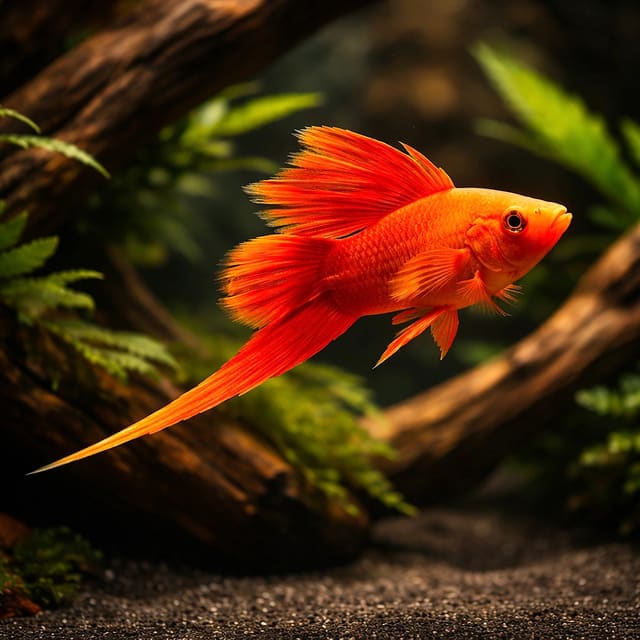
The classic swordtail shape is long and streamlined, built for constant movement. Adults usually reach 10-16 cm depending on sex, genetics, and diet. Males are slimmer and carry the famous lower tail extension, while females are heavier-bodied and usually larger overall. If you are comparing swordtail male and female or swordtail fish male and female, the sword is the easiest clue on mature fish, but body shape also helps.
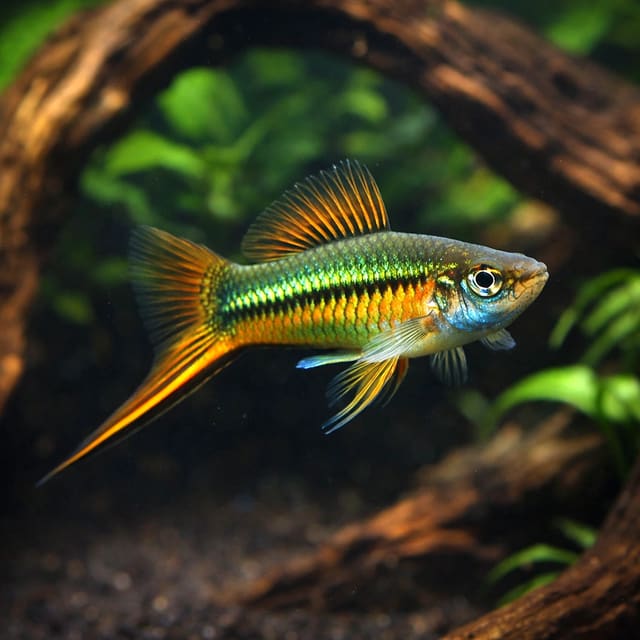
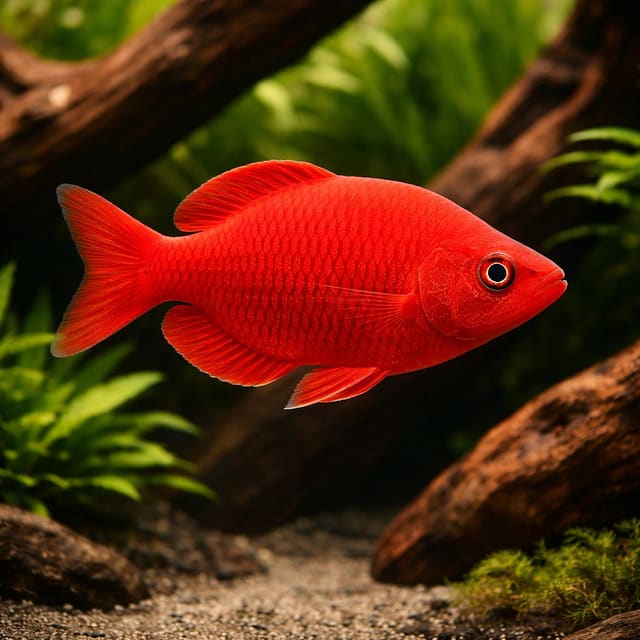
What color are platy fish is a common search, and swordtails invite the same question because captive strains come in a huge range of colours. Assorted Swordtail fish may include red, orange, black, green, pineapple, tuxedo, wagtail, koi, and marbled forms. The popular xiphophorus helleri koi pattern combines white, orange, and black patches, while red swordtail strains remain a long-time favourite for community tanks.
When do platys get their color is often asked by livebearer keepers, and swordtails are similar: juveniles gain stronger colour as they mature, settle into good water, and receive a varied diet. Males often intensify most during social display. Assorted swordtails for planted aquarium displays look especially vivid over dark substrate with green background planting.
Our photos show the range of body colours and the finnage differences seen in mixed strains, including fish similar in style to X Mickey Mouse Swordtails - Xiphophorus and the elegant proportions seen in Male of Xiphophorus Hellerii «Yucatán» -. This variety is one reason assorted swordtails tropical fish for kids and family community tanks remain so popular: every group looks slightly different.
What Fish Can Live With Xiphophorus hellerii? Compatibility Guide
Assorted swordtails peaceful community fish status is well deserved, but peaceful does not mean passive. Males establish hierarchies, chase rivals, and court females persistently. In the right group ratio, they are excellent community fish UK choices. In cramped tanks, they become pushy.
Ideal Tank Mates
If you are asking what fish can live with platys, what fish can you mix with platys, what fish live with platys, what fish to mix with platys, or which fish can live with platys, swordtails fit many of the same community plans. Good companions include platies, mollies, Corydoras, Bristlenose Plecos, and many peaceful tetras. These fish share similar temperatures and temperaments, though water chemistry should always be checked.
For related livebearers, assorted swordtails with other livebearers can work very well. You can build a lively hardwater community using X Swordtails - Xiphophorus Hellerii - alongside platy-like colour forms such as X Koi Tricolour Swordtails - Xiphophorus or X Green Wagtail Swordtails - Xiphophorus. A more dramatic centrepiece mix can include X Red Lyretail Swordtails - Xiphophorus in larger tanks.
Swordtail fish tank mates should be active enough not to be intimidated, but not aggressive. Peaceful aquarium fish UK community species that occupy the lower levels often work best because swordtails dominate the mid-water zone.
Species to Avoid
Avoid aggressive cichlids, tiger barbs, and other fin nippers. Long-finned swordtails can be targeted, and constant harassment leads to stress and disease. Can platy fish live with bettas? Sometimes, but it is risky because both species may react to bright colours and flowing fins. Can platy fish live with goldfish? No—goldfish prefer cooler water, produce heavy waste, and have very different care needs.
Invertebrates
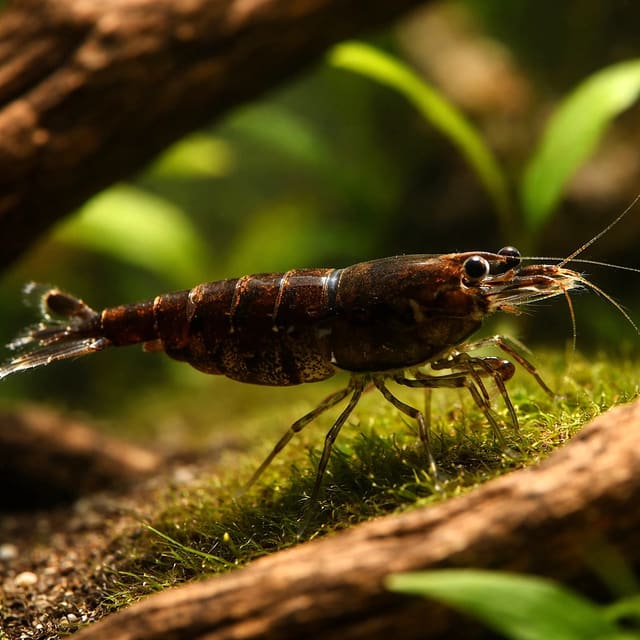
Can platy fish live with shrimp? Adult swordtails may ignore larger shrimp, but shrimplets are at risk. Snails are usually fine. Dense moss and cover improve survival if shrimp are included.
Social Structure
Are platies schooling fish, are platy fish schooling fish, and are platy fish social are all common questions. Swordtails are not true schooling fish, but they are social livebearers that do best in groups. Are platy fish aggressive? Usually no, but males can be competitive. Are platys good community fish? Yes—and swordtails are too, when stocked thoughtfully. Keep one male to three or more females to spread attention and reduce stress.
| Species | Compatible? | Notes |
|---|---|---|
| X Tuxedo Swordtails - Xiphophorus Hellerii | ✅ Yes | Same species group; best in larger tanks with female-heavy ratios |
| X Koi Tricolour Swordtails - Xiphophorus | ✅ Yes | Excellent visual mix in hardwater livebearer communities |
| X Green Wagtail Swordtails - Xiphophorus | ✅ Yes | Compatible if space is generous and males are not overcrowded |
| Shrimp | ⚠️ Caution | Adults may leave large shrimp alone, but young shrimp can be eaten |
| Aggressive cichlids | ❌ Avoid | Too rough for peaceful livebearers |
A practical stocking example for a 150 litre aquarium would be 1 male and 4-5 female swordtails, 8 Corydoras, and a Bristlenose Pleco. In larger tanks, a mixed livebearer setup with mollies and platies can work well. Assorted swordtails tank mates should always be chosen around water hardness, swimming level, and temperament rather than colour alone.
💡 Compatibility Tip
Always quarantine new arrivals for 2-4 weeks before adding them to a community aquarium. Even peaceful fish can introduce parasites or bacterial issues. A short quarantine period protects established swordtails and makes it easier to observe appetite, waste, and any signs of flashing or white spots.
How to Breed Xiphophorus hellerii: Complete Breeding Guide
Swordtail fish breeding is considered easy. Like platy fish breeding, assorted swordtails breeding relies on internal fertilisation and live birth rather than eggs. If you are searching xiphophorus helleri breeding or when do platy fish breed, the answer is usually “whenever conditions are good.” Warm, stable water, plenty of food, and mature adults often lead to regular fry production.
Male vs Female
Platy how to tell male from female is almost identical to swordtails in principle. Males are slimmer and have a gonopodium, a modified anal fin used for mating. Females have a fan-shaped anal fin and are usually deeper-bodied. Swordtail fish male and female differences become very obvious once mature.
Breeding Setup
Use a mature, planted tank of at least 60 litres for a breeding group, though adults should still be housed long-term in larger quarters. Fine-leaved plants and floating cover are important. A female-heavy ratio reduces stress. Platy breeding box products are often used, but they can stress females if used too early or for too long. Dense planting is usually kinder and often just as effective.
Birth, Fry Care & Growth
Because these are livebearers, what do platy fish eggs look like has a simple answer here: there are no externally laid eggs to collect. Females give birth to free-swimming fry. Platy fish breeding time, meaning gestation, is usually around 4 weeks depending on temperature and feeding. How big are platy fry when born? Swordtail fry are similarly small but large enough to take powdered foods immediately.
Platy fish baby care and platy fish fry care both translate well to swordtails: feed small amounts 3-5 times daily, maintain excellent water quality, and separate fry if survival is the goal. Adults may eat newborns, especially in bare tanks. Platy cross breeding is possible within some Xiphophorus groups under certain conditions, which is one reason hobby strains can become complex over generations.
Advanced Breeding Tip
For stronger fry growth, condition adults for 10-14 days with a varied diet including spirulina, quality flake, and live or frozen foods before pairing. Then move the heavily pregnant female to a densely planted rearing tank only when birth is close. This reduces stress compared with long-term confinement and usually results in better fry survival.
Some keepers use a platy breeding chart to estimate due dates from body shape changes, but livebearers are not exact. Watch for a squarer abdomen, reduced appetite, and increased hiding. Once born, fry should receive immediate cover and frequent feeding.
Xiphophorus hellerii vs Similar Species: Which Should You Choose?
Many fishkeepers compare swordtails with platies because both belong to the same genus and share hardwater preferences. If you are deciding between a swordtail and a platy, the main differences are size, activity level, and tank requirement. Swordtails are larger and more dynamic; platies are smaller and easier to keep in modest community tanks.
| Feature | Xiphophorus hellerii | Xiphophorus maculatus |
|---|---|---|
| Max Size | 10-16 cm | 5-7 cm |
| Care Level | Beginner | Beginner |
| Temperature | 16-28°C | 20-26°C |
| Price | £26.13 | Varies by strain |
| Best For | Larger active community tanks | Smaller livebearer communities |
| Feature | Xiphophorus hellerii | Xiphophorus variatus |
|---|---|---|
| Body Shape | Long, streamlined | Shorter, stockier |
| Male Display | Distinct sword extension | No sword |
| Swimming Style | Fast, mid-top active | Gentler, mixed levels |
| Water Preference | Hard, alkaline | Hard, alkaline |
| Best For | Statement fish with movement | Compact mixed livebearer tanks |
If you want a bolder fish with more visible social behaviour, choose swordtails. If you want a smaller fish for a lighter-stocked tank, platies may be easier. Hobbyists interested in rarer relatives sometimes look up xiphophorus kallmani, xiphophorus signum, or xiphophorus montezumae, but these are usually specialist choices. For most aquarists, Xiphophorus hellerii is the best assorted swordtails for community tank option because it combines colour, hardiness, and availability.
If you prefer a specific morph rather than a mixed group, compare our X Tuxedo Swordtails - Xiphophorus Hellerii, X Red Lyretail Swordtails - Xiphophorus, and X Mickey Mouse Swordtails - Xiphophorus listings.
Common Health Problems in Xiphophorus hellerii & How to Prevent Them
Healthy swordtails are alert, hungry, brightly coloured, and constantly on the move. Fins should be open, breathing steady, and waste normal. A platy fish sick appearance in swordtails usually includes clamped fins, isolation, flashing, rapid breathing, weight loss, or refusal to eat.
Common Diseases & Symptoms
Platy fish diseases and assorted swordtails diseases often stem from stress or poor water quality. The most common issue is ich, often searched as platy fish ich, platy fish has white spots, or platy fish white spots. This appears as tiny salt-like grains on the body and fins, often with rubbing behaviour. Fin damage, bacterial infections, and wasting can also occur. Platy wasting disease is a broad hobby term rather than a single diagnosis, but persistent thinness despite feeding should always be investigated.
Customers often search platy fish diseases pictures when trying to identify symptoms online. While images can help, behaviour and water testing are just as important. A fish with white spots in a tank that recently had temperature swings or new arrivals is more likely to have ich than random pigment changes.
Treatment & Prevention
First correct the environment: test ammonia, nitrite, nitrate, temperature, and pH. Then isolate affected fish if possible. Increase aeration during treatment. Use proven medications appropriate for the diagnosis and always follow dosage instructions carefully. Because swordtails are often kept in mixed communities, check whether shrimp or snails are present before medicating.
⚠️ Health Warning
Never use copper-based medications in tanks containing shrimp or other sensitive invertebrates. Copper can be lethal even at low doses. If in doubt, move the affected fish to a separate hospital tank before treatment.
Quarantine Protocol
- Keep new fish in a separate tank for 2-4 weeks
- Observe appetite, swimming, breathing, and waste daily
- Check for white spots, fin damage, flashing, or weight loss
- Maintain stable temperature and excellent water quality
- Only add fish to the display tank once fully settled and symptom-free
Assorted swordtails health is best protected by stability. Avoid sudden temperature drops, overstocking, and poor diet. Most disease outbreaks in livebearers begin with stress, not bad luck.
Understanding Xiphophorus hellerii Behavior in the Aquarium
Swordtails are active, visible fish that spend most of the day cruising the mid and upper levels. They are not shy once settled, and they quickly learn feeding times. This makes them ideal for family tanks and display aquariums where constant movement is wanted.
They are social rather than schooling, so are platy fish social is a useful comparison question. Swordtails prefer company and show more natural behaviour in groups. Males display to one another, flare, and chase, especially when females are present. This is normal, but the tank must be large enough to let weaker fish get away.
One of the most interesting behaviours is the male’s courtship display, where he circles the female and shows off the sword extension. In planted tanks, fish often weave through leaves and rest among stems after lights out. If you want to encourage natural behaviour, keep them in a female-heavy group, provide open swimming space, and avoid overly aggressive tank mates.
Why Buy from Tropical Fish Co?
Our Assorted Swordtails are selected for health, body shape, and active behaviour rather than being treated as anonymous mixed livebearers. Because mixed strains can vary widely, we focus on fish that are feeding strongly, swimming confidently, and showing the robust frame expected of healthy Xiphophorus hellerii. This matters if you are looking for xiphophorus hellerii for sale uk, swordtail fish for sale, or xiphophorus hellerii for sale with confidence rather than simply searching platy fish for sale near me or platy fish for sale nearby and hoping for the best.
Before dispatch, fish are observed in holding systems and checked for feeding response and obvious signs of stress or disease. We prepare them for live tropical fish delivery UK conditions using insulated packaging and season-appropriate heat packs in winter. Each shipment is packed to minimise sloshing, temperature loss, and transit stress. That is especially important for active livebearers, which travel best when bagged securely with proper oxygen volume.
Customers who usually order platy fish, browse platies fish for sale, or compare platy fish online options often choose swordtails when they want a larger, more eye-catching livebearer. If you have seen platy fish for sale uk listings and want something with more movement and stronger presence, this species is a smart upgrade. We also know buyers may compare platy fish for sale cheap, platy fish for sale online, or even platy fish for sale pets at home style listings, but careful packing, stable stock, and accurate care guidance make the difference once the fish arrive.
Order your X Swordtail today with confidence if you want a hardy, colourful livebearer suited to a well-planned community aquarium. Whether you are building your first hardwater setup or expanding an established livebearer group, these fish bring visible personality from day one.
Why Choose Tropical Fish Co for Xiphophorus hellerii
- Selected for active behaviour, strong body condition, and clear finnage rather than random mixed stock quality
- Prepared for UK transit with insulated fish boxes and winter heat packs when required
- Supported by detailed care guidance on tank size, water hardness, feeding, and group ratios specific to swordtails
You Might Also Like
Build a stronger livebearer setup with related varieties and compatible options. For a classic mixed group, explore X Swordtails - Xiphophorus Hellerii -. If you prefer bold patterning, try X Koi Tricolour Swordtails - Xiphophorus. For darker contrast, X Tuxedo Swordtails - Xiphophorus Hellerii are a standout choice. Keepers wanting elegant finnage often add X Red Lyretail Swordtails - Xiphophorus, while bright community displays benefit from X Green Wagtail Swordtails - Xiphophorus. If you want to compare male form and regional style, take a look at Male of Xiphophorus Hellerii «Yucatán» -.
You Might Also Like


Aulonocara sp. 'Firefish' - Tropical Fish for Sale UK

Best Food for Tropical Fish - White Worms (90 ML) | UK

Orange Venezuelan Cory (Corydoras venezuelanus var. 'Orange') - UK

Yellow Lepturus Cichlid - UK

Apistogramma agassizii “Super Red” - UK

X Neon Green Rasbora - UK

Rasbora Heteromorpha (Trigonostigma heteromorpha) - UK
Popular Right Now

Endler Gold Guppy Breeding (Poecilia wingei) - UK

Chindongo saulosi 'Coral Red' - UK
10x Assorted Swordtails – Xiphophorus Hellerii

Glass Catfish (Kryptopterus vitreolus) - UK

Blood Red Dwarf Gourami - UK

Striped Kribensis Dehane - Tropical Fish for Sale UK