Moderate
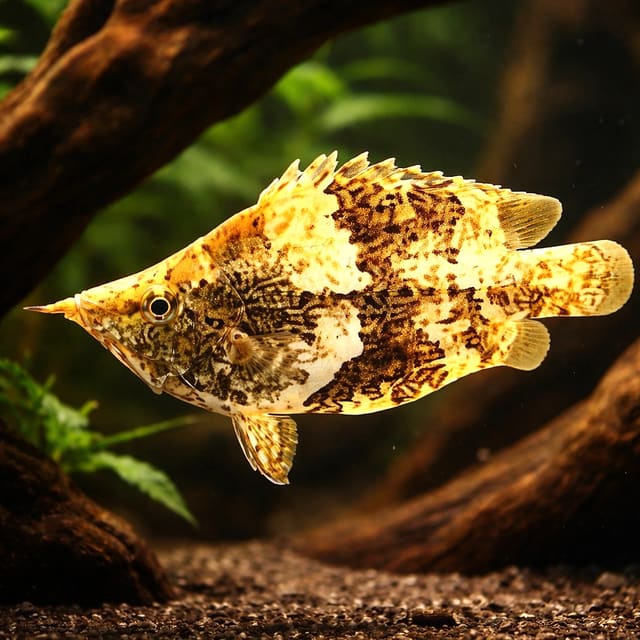
Chameleon Fish (Badis badis)
18–24°C · pH 6–8
£12.99

A transparent South Asian shoaling glassfish for calm mature aquariums, best kept in a group with stable neutral to moderately hard water.
Adult size is the maximum length this species reaches at full maturity (scientific sources). The livestock you receive will be younger and smaller. Product-photo provenance and any image-specific limitations are stated on the listing.
Parambassis ranga
Confirm your email, then we’ll send an availability message for this exact item if it returns within 180 days.
This request is only for this product—no newsletter or other promotions. A mail-provider retry may very rarely duplicate the same availability message. Unconfirmed addresses are removed after 48 hours. See our privacy policy.
A transparent South Asian shoaling glassfish for calm mature aquariums, best kept in a group with stable neutral to moderately hard water.
Adult size is the maximum length this species reaches at full maturity (scientific sources). The livestock you receive will be younger and smaller. Product-photo provenance and any image-specific limitations are stated on the listing.
Maintain these water conditions for optimal health and vibrant colors
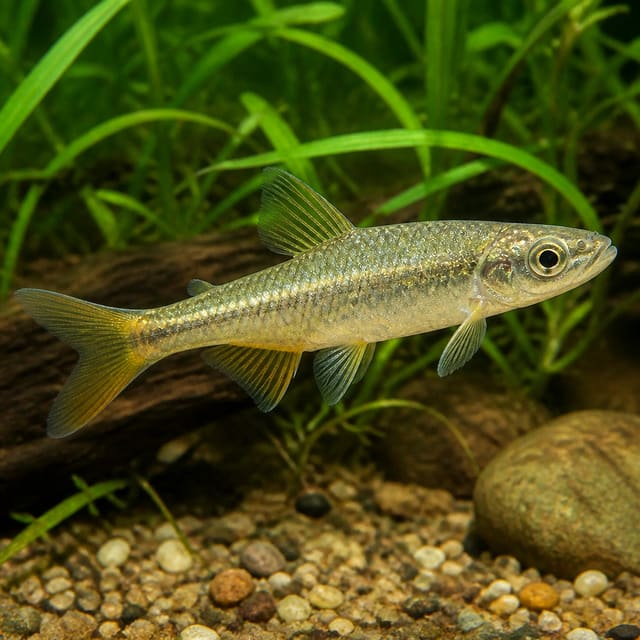
Indian Glassfish is best presented as Parambassis ranga, a transparent South Asian glassfish with a delicate mid-water shoaling style. The older trade trail around this fish can be messy: our stock records may mention Ambassis, Chanda, lala or ranga, and older aquarium articles may still use Indian glass perch or Indian glassy fish. This listing keeps those names as natural search and identity context, but anchors the product to Indian Glassfish / Parambassis ranga so the page is clear for customers and for search engines.
This is not a rough-and-ready community filler. It is a subtle, transparent shoaling fish for a mature aquarium with stable water, calm tankmates and plenty of visual cover. The reward is a very different display from brighter tetras or barbs: the body is almost see-through, the fish hover together in open water, and males can show darker edging through the fins when settled.
| Best for | Peaceful, planted or gently decorated community aquariums |
|---|---|
| Adult size | Up to about 9.5 cm total length; many aquarium specimens are smaller |
| Group size | Keep at least 5, with 6+ preferred for confidence |
| Water type | Freshwater to lightly brackish tolerant, but not a fish that must be kept in salt |
FishBase lists the species as Parambassis ranga, Indian glassy fish, in the family Ambassidae. It records freshwater and brackish habitat, a demersal lifestyle, a broad South Asian range and a maximum published length of 9.5 cm total length. The old name Chanda ranga remains useful because many hobby references and older supplier lists still use it. The supplier phrase around Ambassis / Chanda lala / ranga is a mixed trade phrase, so the customer-facing title uses the clearer Indian Glassfish identity while the description explains the synonym bridge.
That distinction matters because glassfish are often confused with related species such as highfin glassy perchlets and other transparent Ambassidae. If you are matching a group, compare body shape, fin height, supplier size and existing stock photos rather than buying by one old trade name alone.
| Scientific name | Parambassis ranga |
|---|---|
| Common names | Indian Glassfish, Indian glassy fish, Indian glass perch |
| Temperature | 20-30 C, with stable mid-range tropical conditions preferred |
| pH | 7.0-8.0 as a practical target from FishBase; avoid sudden swings |
| Hardness | 9-19 dGH; neutral to moderately hard water suits them well |
| Minimum aquarium | 75 litres for a small group, larger if mixing with active tankmates |
| Temperament | Peaceful, shy, social and easily outcompeted |
| Diet | Small frozen, live and fine meaty prepared foods |
Build the aquarium around security first. Indian Glassfish look best when they have open swimming room at the front and centre, then plants, wood or fine-leaved cover around the edges. A dark background or shaded planting helps the transparent body stand out without forcing the fish into bright, exposed water.
They are associated with sluggish and standing waters, so avoid blasting them with strong direct flow. Use gentle filtration, stable oxygenation and regular maintenance. A mature aquarium is strongly preferred because delicate transparent fish show stress quickly when water quality swings.
| Layout choice | Why it helps |
|---|---|
| Planted edges and open centre | Lets the shoal retreat, then drift out where customers can actually see them |
| Dark substrate or background | Makes the glass body and fin edges easier to see |
| Gentle flow | Matches the calm-water behaviour and stops weaker fish being pushed around |
| Tight acclimation routine | Reduces shock in a fish that can be shy after transport |
Keep Indian Glassfish in a group. A single fish often hides, feeds poorly and looks unimpressive, which leads to the false impression that the species is dull. In a group of five or more, they behave more naturally: hovering together, moving through the mid-water and responding as a loose shoal when food appears.
They are peaceful rather than pushy. Their best companions are small to medium peaceful fish that enjoy similar water: calm rasboras, many small barbs, danios, blue-eyes, peaceful livebearers, gentle Cory-style bottom dwellers and non-aggressive small gouramis. Avoid fin nippers, large predators, boisterous cichlids, large loaches and any fish likely to treat a transparent mid-water fish as food.
FishBase records invertebrates, worms and crustaceans in the diet. In the aquarium, offer small foods that match that feeding style: daphnia, cyclops, brine shrimp, mosquito larvae, finely chopped bloodworm and good-quality micro granules or fine meaty prepared foods. Newly arrived glassfish can ignore dry flakes at first, so use frozen or live foods to settle them and then introduce prepared foods once they are feeding confidently.
Feed little and often enough that food reaches the group before faster tankmates take everything. Their transparent body can make body condition easy to judge: a pinched belly means they are not getting enough, while a gentle rounded belly after feeding is normal.
The species is often surrounded by a brackish-water myth. It can tolerate some brackish conditions, but it is not a fish that automatically needs salt. For most community keepers, the safer route is stable freshwater in the neutral to moderately hard range. Do not chase numbers with sudden chemical changes; stability matters more than trying to hit an extreme.
Acclimate slowly, keep the lights low at first, and avoid adding them to a newly set-up aquarium. If the fish arrive pale or withdrawn, give them cover and quiet rather than extra handling. Once settled, the group should come forward for small meaty foods.
| Question | Good answer |
|---|---|
| Is the aquarium mature? | Yes, with stable water and no recent ammonia or nitrite issues |
| Will they be kept as a group? | Yes, ideally 5-6+ fish rather than one specimen |
| Are tankmates calm? | Yes, no fin nippers, large predators or very boisterous feeders |
| Can you feed small foods? | Yes, frozen/live micro foods plus fine prepared foods once settled |
This listing is for a living fish, so the priority is a calm handover rather than a rushed unpacking. Livestock orders are packed for animal transport and sent with a licensed live-animal courier; eligible orders are covered by our Live Arrival Guarantee. Have the aquarium ready before dispatch, dim the lights during acclimation and avoid feeding heavily on the first day.
Indian Glassfish are best bought as a visible group, not as one or two nervous fish. If you are still planning the aquarium, compare them with other calm mid-water species in the community fish range, and use the freshwater fish collection to avoid mixing them with large predators or very boisterous cichlids.
| Planning point | Best choice | Reason |
|---|---|---|
| Group size | At least five, preferably more | FishBase and hobby care sources both treat this as a group fish; single specimens hide and feed poorly. |
| Water style | Freshwater, stable and clean | The species is commonly kept in freshwater; avoid sudden salt changes unless you have a specific plan. |
| Tank layout | Open middle water with plants or cover at the sides | The transparent body shows best when fish can shoal confidently rather than hide constantly. |
| Tank mates | Peaceful fish too large to be eaten and too calm to bully them | Indian Glassfish are delicate-looking, quick feeders, but not suited to aggressive tank mates. |
| Food | Small frozen/live foods plus accepted fine prepared foods | They feed naturally on small invertebrates, worms and crustaceans, so tiny protein foods help condition. |
No reviews for this item yet. Bought one? Honest reviews only, good or bad.
What customers say about ordering from us
I have a small group of long finned mountain minnows. So was delighted to be able to order ten of this variety to increase the genetics in my tank . The ones I recieved are healthy but it’s to early to give a verdict on wether they are of a long finned type since they are small currently.
Gordon Walker · 23 Sept 2026
100% success travel and "installation". Pleased with quality of purchase. The Siamese fighter a bit "shy" so have not yet seen him at his best yet but looking good. Happy customer. GG
George E Garratt · 21 Sept 2026
Reviews of our shop, collected by Judge.me, an independent third-party review collector. Newest first.