Expert
Red Giant Carpet Anemone
24–28°C · pH 8.1–8.4 · 300L
£1080.99

Stichodactyla gigantea - green from our Stichodactyla range. Check care, compatibility and delivery details before ordering.
Stichodactyla gigantea - green
Confirm your email, then we’ll send an availability message for this exact item if it returns within 180 days.
This request is only for this product—no newsletter or other promotions. A mail-provider retry may very rarely duplicate the same availability message. Unconfirmed addresses are removed after 48 hours. See our privacy policy.
Stichodactyla gigantea - green from our Stichodactyla range. Check care, compatibility and delivery details before ordering.
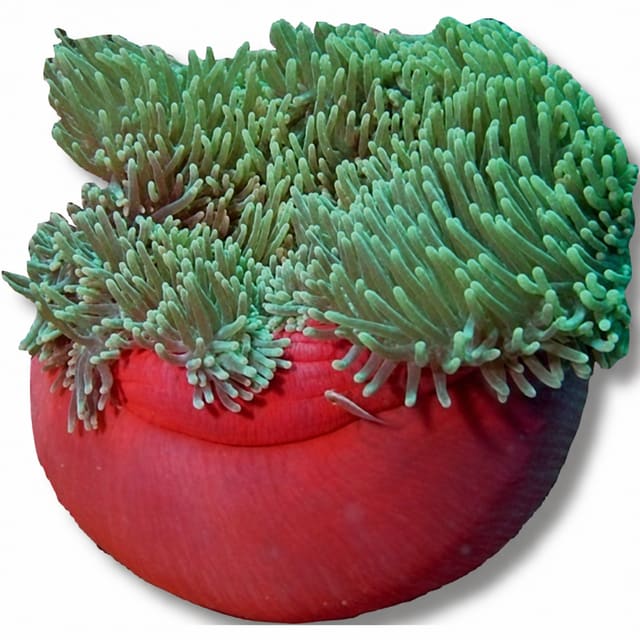
Green Giant Carpet Anemone (Stichodactyla gigantea) is an advanced marine invertebrate for mature reef aquariums with strong lighting, stable water and careful livestock planning. our stock records list this green M/L form as Stichodactyla gigantea - green; the customer-facing name keeps the accepted species anchor and makes clear that this is a carpet anemone, not a general marine livestock placeholder.
This is a specialist animal, best suited to experienced reef keepers rather than a first anemone. It can grow large, move if unsettled, sting neighbouring corals or anemones, and catch unsuitable fish. Buy it only for a stable system where the aquascape, lighting, flow and tank mates have already been planned around a carpet anemone.
| Scientific name | Stichodactyla gigantea |
|---|---|
| Common names | Green Giant Carpet Anemone, Gigantea Carpet Anemone |
| Form: | Green M/L form; |
| Care level | Expert marine keeper / mature reef system |
| Adult spread | Often around 40-50 cm across; allow room for growth |
| Placement | Sand/rock interface, with the foot protected and attached |
| Lighting | Strong reef lighting for zooxanthellae support |
| Flow | Moderate to strong, indirect and stable; avoid blasting the oral disc |
| Temperament | Powerful sting; can harm fish, corals and other anemones |
| Feeding | Occasional small marine meaty foods once settled |
Stichodactyla gigantea is a photosynthetic carpet anemone with symbiotic zooxanthellae, so lighting is not a decorative extra; it is central to long-term health. It also needs water quality suitable for sensitive reef invertebrates: zero ammonia and nitrite, stable salinity, stable alkalinity, low nutrients and no sudden swings in temperature or pH.
A healthy carpet anemone should attach firmly, show a closed mouth, respond to flow and light, and have a sticky tentacle surface. A loose, gaping, melting or repeatedly deflating specimen needs urgent attention and should not be ignored. Because this species is known for shipping sensitivity, careful acclimation and observation after arrival matter more than speed.
Provide a mature reef aquarium with a settled sand bed, live rock and enough open space around the chosen site. Practical carpet-anemone care guidance describes S. gigantea as often placing its base against hard structure while much of the column is protected by sand. Do not wedge the animal into rockwork or force it to stay in a visible position if it is trying to move.
Protect pumps and wavemakers before introduction. A wandering carpet anemone can be injured by exposed intakes, and it can damage corals or sessile invertebrates as it searches for a better location. Give at least a wide clearance zone around it; this is not a small coral to tuck between frags.
Use reef-grade lighting strong enough for photosynthetic corals, acclimating carefully if the anemone has travelled under lower light. Flow should keep the tentacles moving and the surface clean without folding the animal over or blasting sand into the oral disc.
Once settled, offer modest pieces of suitable marine meaty food such as shrimp, squid, clam or marine fish flesh. Overfeeding can harm water quality and does not replace light. Feed small enough pieces that the anemone can close over them cleanly, then watch the response.
This species can host some clownfish, including Amphiprion ocellaris, A. percula and A. clarkii, but hosting is never guaranteed and should not be forced. Avoid delicate fish, bottom-resting fish, slow gobies, seahorses, ornamental shrimp that may wander into the disc, and valuable corals close to the anemone's reach.
Use gloves when handling or moving rock around the anemone. Its sting and sticky tentacles can make it difficult to detach safely, and rough handling can tear the foot or oral disc. Never pull it from an attachment point.
Prepare the aquarium before dispatch, including covered pump intakes, stable salinity and a planned placement area. Acclimate slowly, keep the animal submerged where possible, and give it a quiet period to attach before feeding. Avoid moving it repeatedly in the first few days unless there is a safety problem.
Your order is packed for marine invertebrate travel and sent by UK live-animal courier where eligible. The Live Arrival Guarantee applies to qualifying livestock orders, and WELCOME10 gives eligible first-time customers 10% off.
Care notes were checked against our stock records for SKU M111, WoRMS/SeaLifeBase taxonomy for Stichodactyla gigantea, MarineBio habitat notes and Tropical Fish Hobbyist carpet-anemone husbandry guidance.
No reviews for this item yet. Bought one? Honest reviews only, good or bad.
What customers say about ordering from us
I have a small group of long finned mountain minnows. So was delighted to be able to order ten of this variety to increase the genetics in my tank . The ones I recieved are healthy but it’s to early to give a verdict on wether they are of a long finned type since they are small currently.
Gordon Walker · 23 Sept 2026
100% success travel and "installation". Pleased with quality of purchase. The Siamese fighter a bit "shy" so have not yet seen him at his best yet but looking good. Happy customer. GG
George E Garratt · 21 Sept 2026
Reviews of our shop, collected by Judge.me, an independent third-party review collector. Newest first.