Advanced
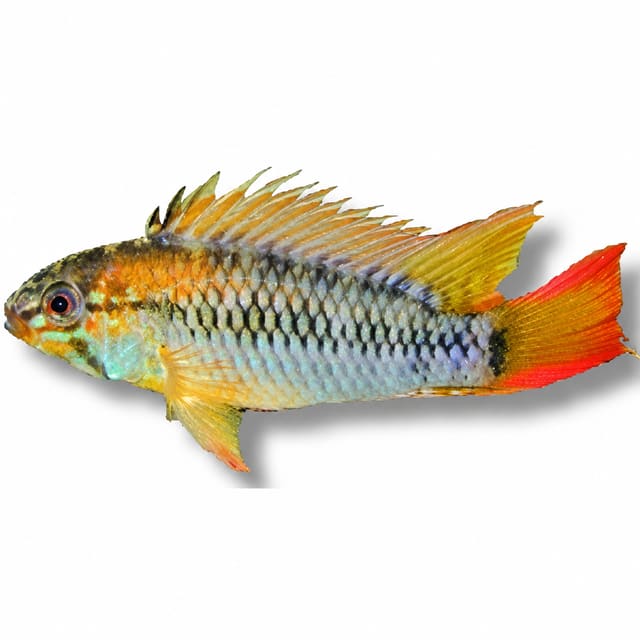
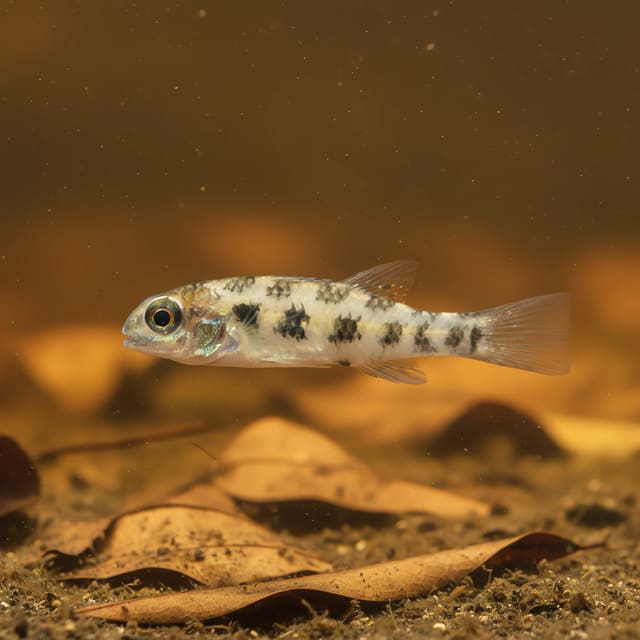
Spotted Checkerboard Cichlid (Dicrossus maculatus)
22–30°C · pH 3.4–6
£23.99
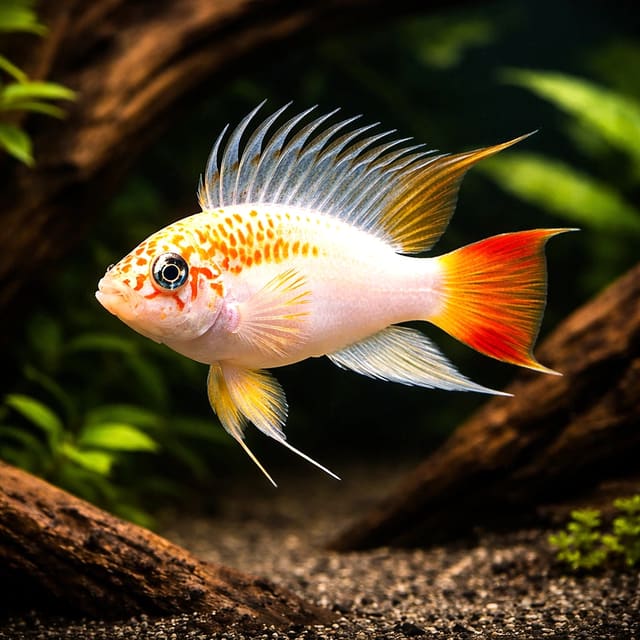
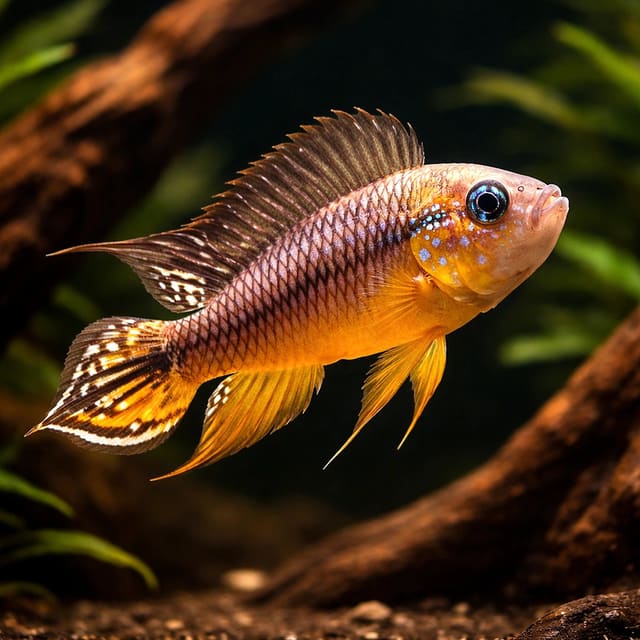
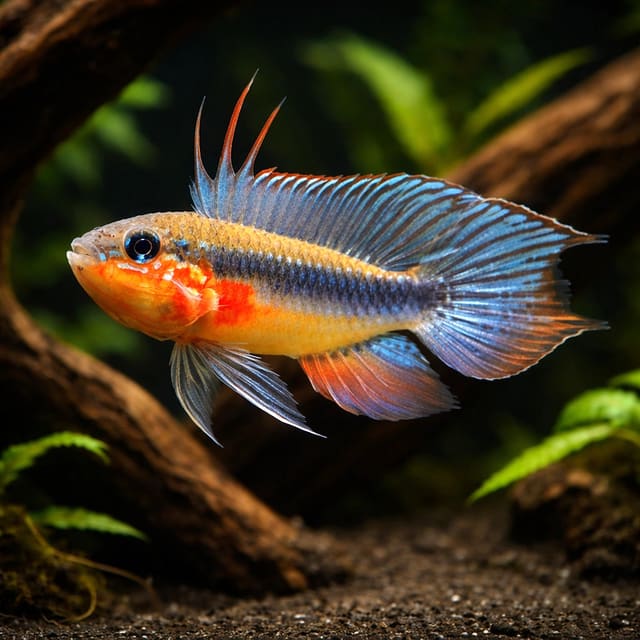
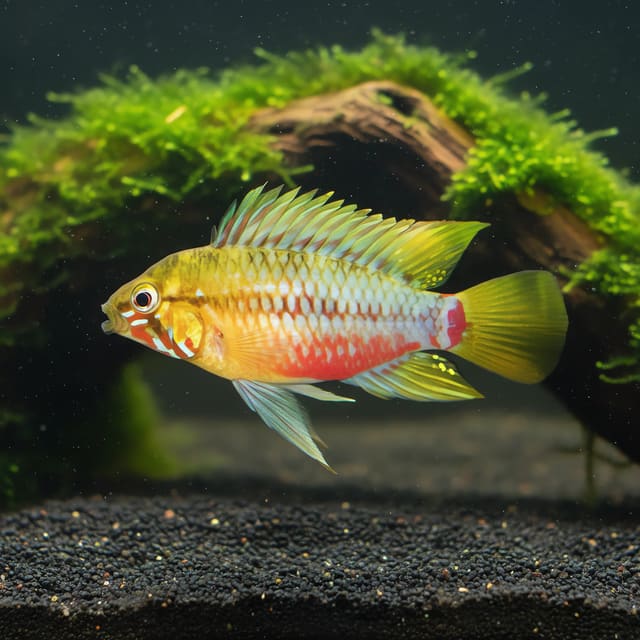
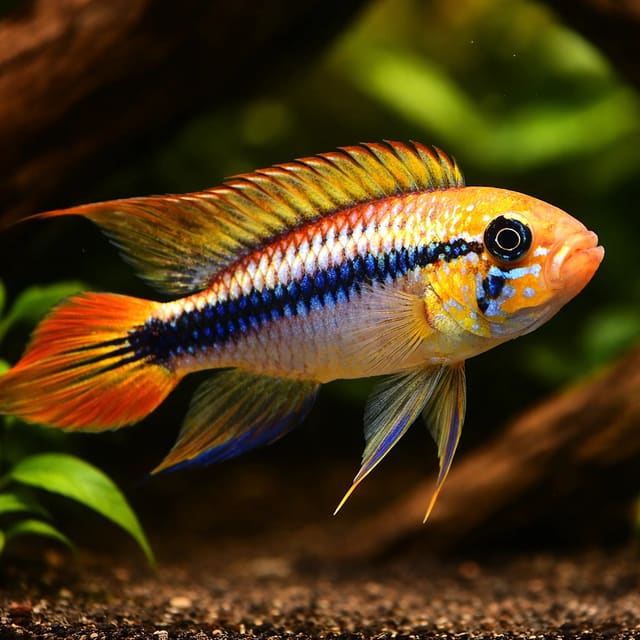
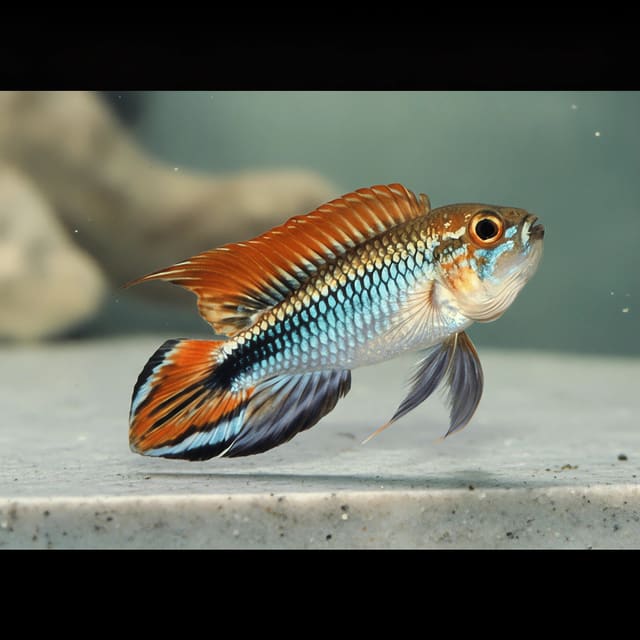
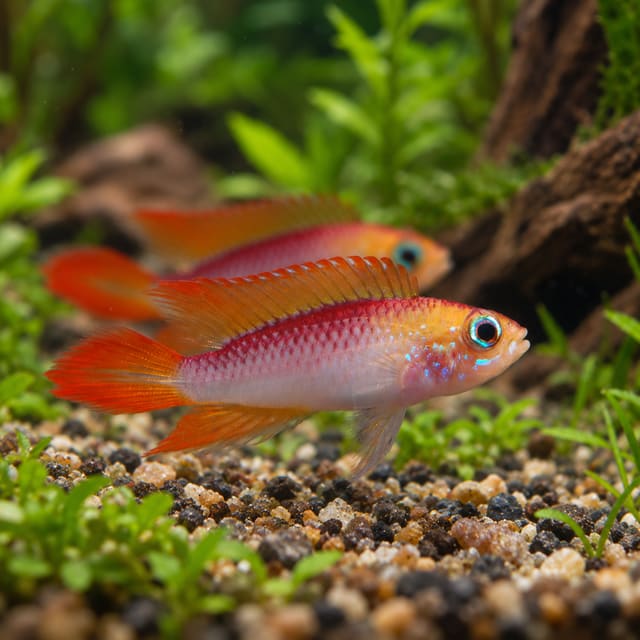
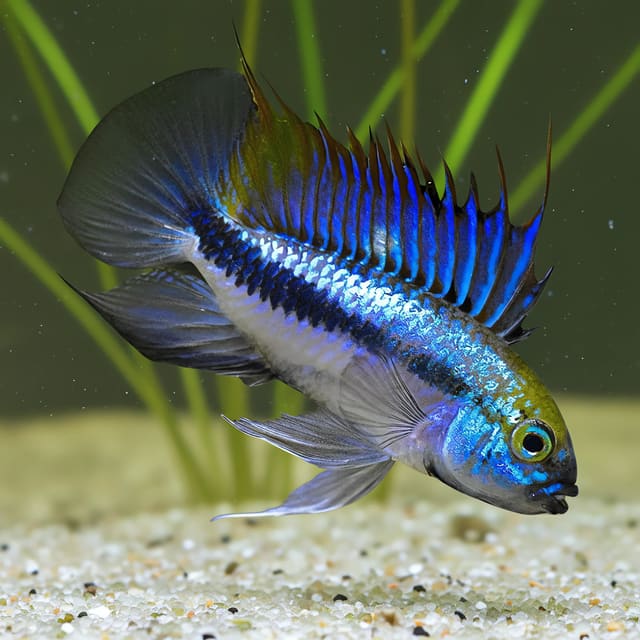
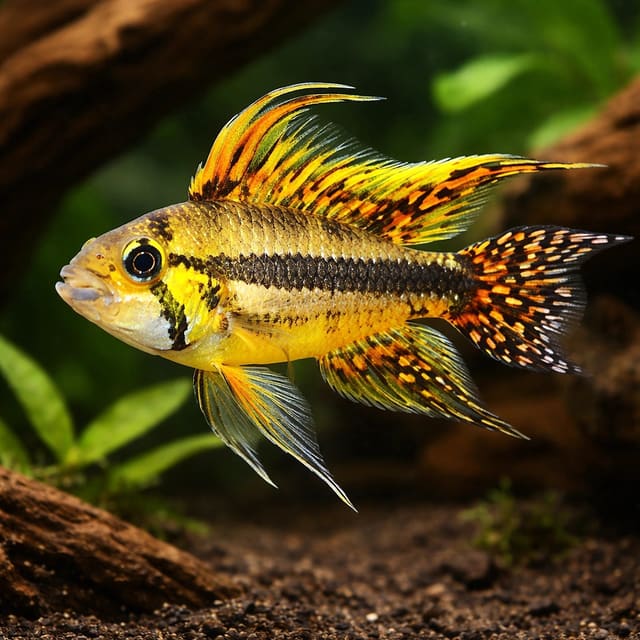
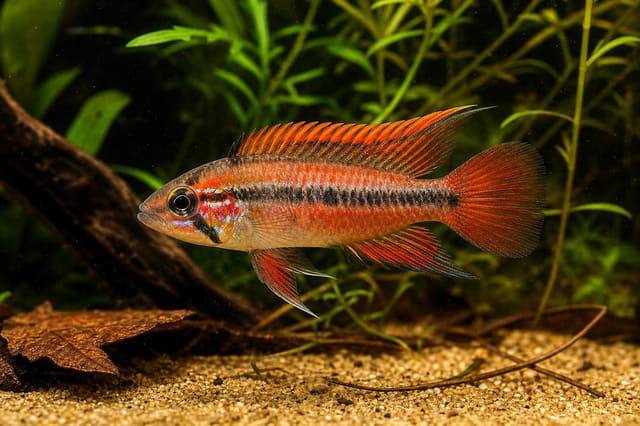
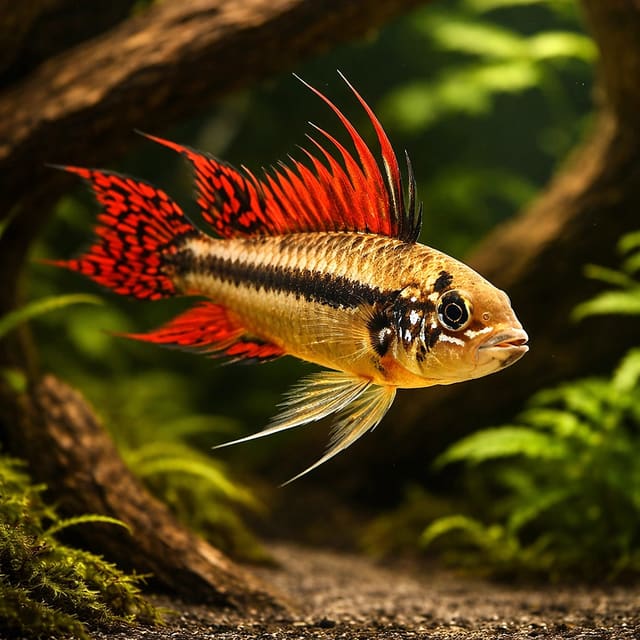
Inca Dwarf Cichlid (Apistogramma baenschi) is a small Peruvian cichlid for a mature, soft-water aquarium with shaded caves and calm surroundings. One purchase supplies one fish in the selected L or 3 - 4 cm size; neither option guarantees sex.
Adult size is the maximum length this species reaches at full maturity (scientific sources). The livestock you receive will be younger and smaller — pick a size above for the actual shipping size. Product-photo provenance and any image-specific limitations are stated on the listing.
Apistogramma baenschi
Save when buying multiple fish. Each quantity is one fish; sex and pair formation are not guaranteed unless the selected variant explicitly states them.
Inca Dwarf Cichlid (Apistogramma baenschi) is a small Peruvian cichlid for a mature, soft-water aquarium with shaded caves and calm surroundings. One purchase supplies one fish in the selected L or 3 - 4 cm size; neither option guarantees sex.
Adult size is the maximum length this species reaches at full maturity (scientific sources). The livestock you receive will be younger and smaller — pick a size above for the actual shipping size. Product-photo provenance and any image-specific limitations are stated on the listing.
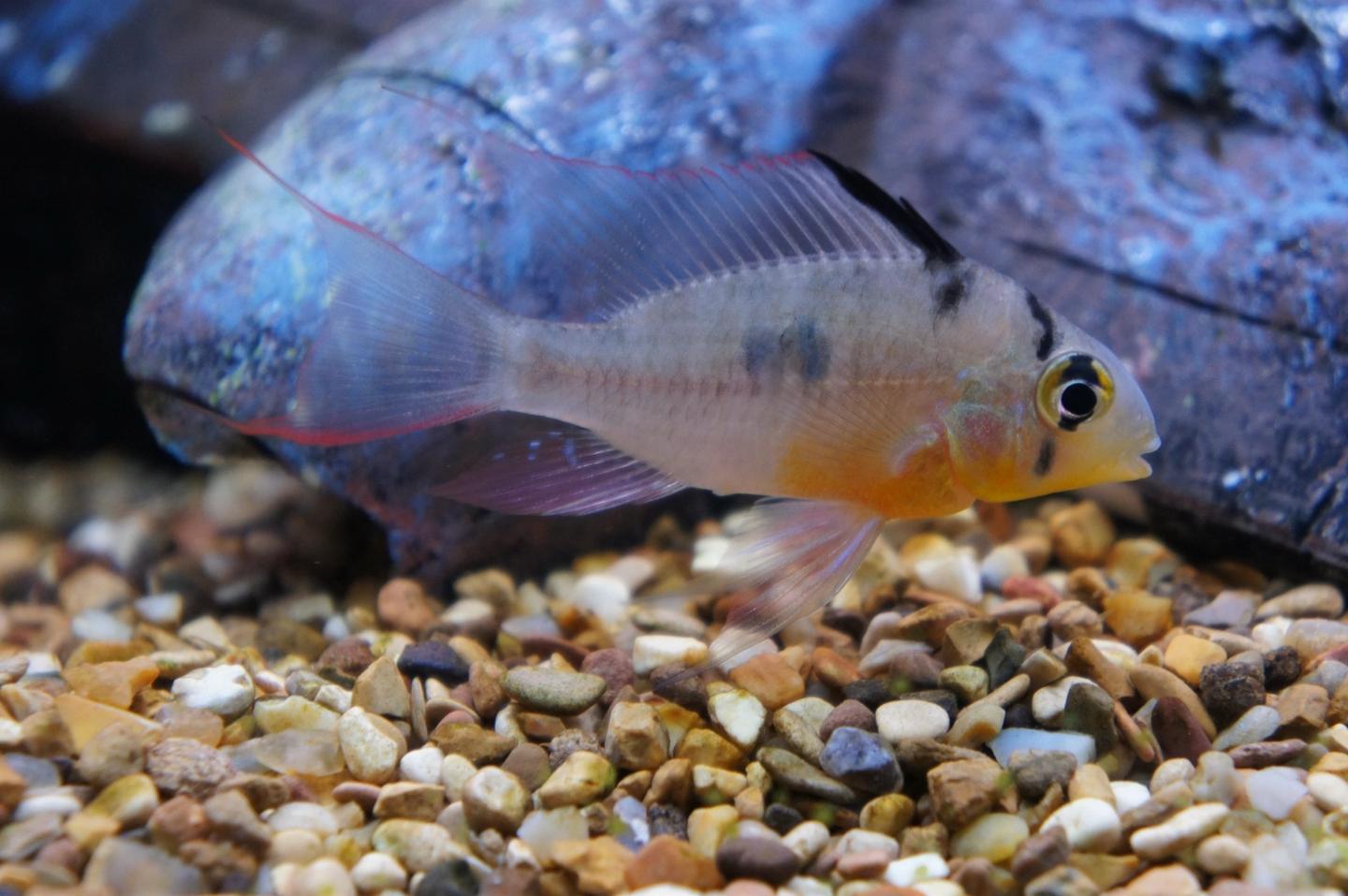
Cichlids are a family of roughly 1,800 accepted species, not one care type. Before buying, identify the exact species and source, then compare adult measurement, usable tank dimensions, social system, territory, tested water, diet and an exit plan. No family-wide minimum tank, water range or tank-mate list is safe.
Maintain these water conditions for optimal health and vibrant colors
The Inca Dwarf Cichlid, Apistogramma baenschi, is a freshwater cichlid from Peru. Its appeal is as much behavioural as visual: a fish that explores cover, selects sheltered places and responds to the other fish around it. It suits an aquarist who enjoys watching the lower part of an aquarium and can provide soft, acidic water, a mature filter and enough structure for territories. Small adult size makes it possible to plan a modest aquarium, but does not remove the need for floor space or make it a suitable addition to every community.
One purchase from Tropical Fish Co supplies one live fish of the selected size. The size choices are L and 3 - 4 cm. L is a size grade, rather than a precise measurement, and the numerical choice describes the dispatch size. The size you select is the size supplied, not the adult size. Sex is guaranteed only when the selected option explicitly states male or female. This Inca Dwarf Cichlid listing has no sex-guaranteed option. Buying two fish does not guarantee a male and female pair, a bonded pair or a peaceful relationship between them.
Inca is the aquarium trade name; the scientific species name is Apistogramma baenschi. Seriously Fish also records historical trade names including Inka, Inka 50 and the code A188. These names can help recognise the fish in older aquarium literature, but the supported identity here is the named species. They are not separate forms with different water requirements. The listing does not establish wild origin, captive breeding, collection locality or a particular lineage for the fish supplied.
FishBase records a maximum of 5.3 cm standard length for male or unsexed fish. Standard length measures the body to the base of the tail, excluding the tail fin. Seriously Fish gives approximately 5.5 cm standard length for males and 4 cm for females. These are useful adult planning figures, not a promise that every individual reaches that measurement or arrives at that size. Mature males and females differ in appearance, but a photograph, colour or size grade cannot provide a sex guarantee for this offer.
The most useful starting point is a quiet, established aquarium with a base of at least 80 × 30 cm or equivalent, as recommended by the species profile. That profile associates this footprint with approximately 72 litres. The base matters because caves, feeding positions and routes away from another fish all occupy the lower aquarium. A taller tank with a small floor is not an equivalent arrangement simply because its volume is similar. A community or larger group needs additional space and a more deliberate layout.
Use the species-specific aquarium guidance of 20–26 °C, pH 4.0–6.5 and general hardness of 1–5 dGH as the planning range. These figures describe a soft, acidic aquarium, not the broad range suitable for all dwarf cichlids. Establish a stable, manageable water supply before purchase. Regular testing, suitable replacement water and a filter that can support the fish are more valuable than sudden adjustments made after arrival. The fish should enter an aquarium with zero ammonia and zero nitrite.
A sand-based arrangement with wood, caves, shaded planting and carefully managed leaf litter provides a useful setting. Cover should offer several choices rather than one attractive cave at the centre of an open tank. Food should reach the fish near its preferred shelter; small live and frozen invertebrate foods are central to the diet guidance, with suitable pellets where accepted. Compatibility depends on the aquarium, the individual fish and breeding behaviour. Plan for separation if a fish is repeatedly prevented from feeding or resting.
Before ordering, check the water you can maintain, the floor area available and the behaviour of existing inhabitants. An empty sheltered area is more useful than spare litres above a crowded bottom. This species is an engaging choice when those conditions are in place, particularly for a keeper ready to observe territorial interactions and adapt the aquarium as the fish mature.
Start with the species recommendation of an 80 × 30 cm base or equivalent. Think of that rectangle as usable habitat, rather than a place to collect ornaments. A cave, the shaded approach to it and a route around a piece of wood all contribute to the space a fish can use. If most of the floor is exposed, two fish can see one another continuously even when the aquarium has an adequate stated volume. If every route leads past the same cave, cover may appear plentiful while escape routes remain poor.
Place wood and branches so that they break the view across the lower aquarium. Provide shaded areas on more than one side, with caves or crevices amongst the structure. Ceramic flowerpots and suitable artificial shelters can serve the same practical purpose as a natural-looking arrangement. The important features are shelter, room to enter and leave, and the ability to move away from another fish. Avoid arranging all refuges in one tight cluster that can be defended as a single territory.
A soft sandy substrate is recommended in the species guidance. Keep the floor accessible for sensible maintenance: you need to remove uneaten food and accumulated waste without dismantling every shelter. Wood and plants can be positioned to create distinct areas while preserving routes for a siphon. A layout that is easy to maintain helps you retain cover over time instead of repeatedly stripping the aquarium when debris becomes difficult to reach.
Fairly dim lighting suits the described arrangement. Shade can come from plants, wood and the position of shelters, allowing the fish to choose between more open and more protected areas. Seriously Fish mentions plants suited to subdued conditions, including Microsorum and Taxiphyllum. Select planting for the lighting you can provide and the space it leaves below. Dense decoration that stops a subordinate fish moving away is less useful than several accessible shelters linked by clear routes.
Dried leaf litter can add cover and support microbial growth as it decomposes. Those micro-organisms can provide a secondary food resource for fry, while the leaves contribute to the character of a shaded aquarium. Treat leaf litter as managed aquarium material, not a substitute for testing water or feeding adult fish. Observe its condition and remove excessive debris during maintenance. Neither the colour of the water nor the presence of leaves demonstrates that pH and hardness are suitable.
For Apistogramma baenschi, Seriously Fish recommends 20–26 °C, pH 4.0–6.5 and 1–5 dGH. Keep those values together when planning the aquarium: the pH range describes acidic water and the hardness range describes soft water. A general community aquarium may be healthy for its current inhabitants while lying outside this species guidance. Measuring your supply and aquarium water before purchase is the practical way to decide whether the fish fits your circumstances.
OATA's dwarf-cichlid sheet gives broader group guidance of 22–27 °C, pH 6.0–8.0 and 4–12 dGH. It explicitly says that species-specific requirements need checking. Those wider group figures should not replace the narrower species guidance on this page. Dwarf cichlids include animals with different origins and requirements; sharing a retail group does not establish interchangeable water conditions. The Inca Dwarf Cichlid should be planned as the soft-water Apistogramma described by its species profile.
Use a reliable thermometer and appropriate water tests, and consider the replacement water as well as the water currently in the aquarium. A tank can look stable between changes but swing when water of a different chemistry is added. Work out a consistent preparation routine in advance. If your tap water is unsuitable and you have not established a reliable alternative, pause the purchase and seek advice about the aquarium you intend to run.
Do not chase the lower end of the pH range simply because it is printed on a care card. Equally, do not use stability as a reason to ignore persistently unsuitable conditions. The aim is a suitable range that you can maintain, with changes planned and measured. Sudden improvised corrections can make it harder to understand how the fish is responding. Where water preparation is unfamiliar, obtain guidance before introducing livestock rather than experimenting around newly arrived animals.
A mature biological filter is essential. Fish release ammonia; the established bacteria in the filter process it through nitrite to nitrate. Ammonia and nitrite are toxic, and both should test at zero before the fish is introduced. Clear water alone is not evidence of a mature aquarium, and a new filter is not ready merely because it has been running for several days. Confirm performance through testing and an appropriate maturation process.
RSPCA's general aquarium guidance explains why a maintained biological filter is necessary, while OATA warns against adding too many fish too quickly. The bacterial population must respond to increased waste and feeding. Additions should be gradual and followed by observation and water tests. A small cichlid still adds to the aquarium's waste load, especially when offered rich foods. Its size does not exempt it from the same need for established filtration as larger fish.
Set up water movement so that the filter works effectively without removing all sheltered resting places. The species profile gives equipment examples for its suggested aquarium, but a printed filter rating is not a complete description of the flow the fish experiences. Position outlets with the actual layout in mind. Watch whether the fish can hold position comfortably, reach food and use caves without being forced continually into exposed areas.
Check equipment as part of a routine rather than waiting for the aquarium to look neglected. An obstructed filter or a heater that is behaving inconsistently can affect conditions before a visible problem becomes obvious. Keep intake areas accessible and follow the equipment's maintenance instructions. Retaining the established biological media is especially important when cleaning or making changes to filtration; replacing everything at once can undermine the very system protecting the fish.
Apistogramma species are chiefly carnivorous in the specialist diet guidance, taking benthic invertebrates in nature. For this aquarium, offer small live and frozen foods such as Artemia, Daphnia, Moina and chironomid larvae. Suitable pelleted foods can provide a useful prepared-food option where accepted. Choose food small enough for the fish to take comfortably, and vary the menu within the applicable guidance rather than relying entirely on a single food type.
Watch a whole feeding, including what happens near the bottom. Food disappearing from the surface does not show that an Inca Dwarf Cichlid has eaten. Faster companions may take it first, or a fish may remain in cover when another fish patrols the feeding area. Place food so that it reaches accessible sheltered positions, and observe whether each fish takes it. This is particularly useful when checking the relationship between fish sharing the lower aquarium.
OATA's broader dwarf-cichlid guidance advises only what can be eaten within a few minutes, once a day. Use that as general portion guidance while paying attention to the fish and the food offered. Avoid turning a suggested portion into an exact ration that ignores individual size or waste. Uneaten food should not accumulate in caves or behind wood, where it can decay unnoticed and contribute to poor water quality.
A fish that has stopped feeding needs investigation before simply adding more food. Check water quality, whether another fish is excluding it and whether the food is reaching its refuge. Observe body condition over time instead of judging a single brief visit to the aquarium. Persistent loss of appetite, abnormal breathing or visible deterioration warrants advice from an experienced aquatic retailer or fish-health professional. Do not select a treatment solely because another keeper reported a similar-looking symptom.
OATA's group guidance recommends a partial water change of 25% at least once every week, strongly recommended, with regular water testing at least weekly. This is a useful general routine, to be adapted to the actual aquarium and its measured conditions. Replacement water should be prepared appropriately, including treatment for chlorine or chloramine where applicable. Keep its temperature and chemistry consistent with the aquarium, so that routine maintenance supports stability rather than introducing a new disturbance.
Use a siphon to remove solid waste and leftover food from reachable areas. Work around shelters carefully, preserving the arrangement that gives the fish security. Repeatedly moving caves and wood can change territorial relationships as well as appearance. If a larger reorganisation is needed to address aggression, make it deliberately, with a plan for the fish, rather than allowing every weekly clean to reset the entire lower aquarium.
If filter media needs cleaning, OATA recommends a light rinse in aquarium water removed during a water change, rather than under the tap. Chlorine or chloramine can harm the established bacteria. Clean only as needed to maintain function and follow the filter's instructions. Water changes and filter care work together; a clean-looking aquarium with damaged biological filtration can still be unsafe.
Keep a simple record of tests, maintenance and significant observations. It helps reveal whether a change in feeding or behaviour follows a water change, an addition or a territorial dispute. Useful observations include breathing, swimming, time spent hiding and access to food. Watch trends, because temporary colour or behaviour changes may occur, and one observation without context can be misleading. A developing pattern is a better reason to investigate than an isolated glance.
Prepare a quiet introduction period, with the aquarium ready and someone available to receive the parcel. Tropical Fish Co uses hand-bagging in oxygen and insulated packaging, with a heat pack when conditions require it, and a licensed live-animal courier. Read the current delivery and Live Arrival Guarantee policy before ordering so that you understand the arrangements and the evidence needed if an animal arrives in poor condition.
Open and inspect the parcel the day it arrives. For a Live Arrival Guarantee claim, the policy requires someone at the delivery address and clear photos or an optional continuous unboxing video showing the sealed parcel being opened and the fish still inside its sealed bag. This records arrival condition; it is separate from the fish's introduction to the aquarium. Contact the shop the same day with the order number and clear photos or an optional video if there is a problem. We strongly recommend an unboxing video when practical: it helps us investigate arrival concerns faster, resolve them with less back-and-forth and understand packing or transit issues so we can reduce recurrence. Video is optional and clear photos are accepted. Never delay necessary animal care to record evidence.
The supplied arrival guidance advises floating the bag for 20–30 minutes and acclimatising slowly. Introduce the fish gently according to the delivery instructions, and do not pour transport water into the aquarium. Arrange the introduction so that the fish can reach shelter without immediately encountering a dominant resident. Avoid simultaneous major maintenance or new decorations, which make it harder to distinguish settling behaviour from a change in the aquarium.
Observe after release without repeatedly disturbing the fish. It may seek cover; what matters is whether it can rest, breathe normally and move without persistent harassment. Continue checking water quality and watch subsequent feeding. If a resident repeatedly drives it from every refuge, use the separation plan rather than waiting for injury. A delivery guarantee does not replace the need for a suitable, mature aquarium and careful management after introduction.
Apistogramma baenschi is a substrate spawner that uses cavities or crevices amongst the décor. Species observations describe sexually mature males defending large territories and females tending eggs and fry. That helps explain why caves and visual barriers matter even in an aquarium intended simply for display. Territorial defence can change which areas other fish can use, so access to shelter remains important.
Seriously Fish describes pairs or larger groups with several males and more females in a larger arrangement. Such observations do not make any two unsexed fish a suitable pair, or provide a stocking formula for the minimum footprint. Sexually mature males can react aggressively to one another, and females can also spar strongly. Buy with an understanding that individuals and relationships need observation, not with the expectation that small fish will automatically share one cave peacefully.
Very soft, acidic water is reported as necessary for successful egg development. This is context for breeding biology, not a home-breeding recipe or a reason to make abrupt changes in a display aquarium. The priority for an ordinary keeper remains sound water quality, appropriate shelter and the ability to protect a fish that is being excluded. Do not allow an interest in seeing fry to obscure the welfare of the adults already present.
Even well settled pairs will often chase each other, so providing plenty of cover is essential.
See the tropical tank setup guide, aquarium water parameters guide and Water Parameter Matcher for preparation and test interpretation. Browse the bottom-dweller fish collection with each animal’s needs in mind.
Compatibility starts with shared water requirements and the behaviour of the existing fish. An animal that needs hard, alkaline water cannot be made suitable simply because it occupies a different part of the tank. Likewise, a peaceful reputation does not tell you whether it will compete for the same sheltered feeding area. Assess the aquarium as a whole, including the routes fish use and the space around caves, before adding an Inca Dwarf Cichlid.
Seriously Fish recommends captive-raised examples for community aquaria, while wild examples are best kept alone or with small dither fish such as Nannostomus species. The supplied offer does not establish origin, so do not assume that the fish belongs to one of those categories. Use a cautious plan, seek advice for your proposed inhabitants and retain a way to separate fish. Small pencilfish are an example in the species guidance, rather than an unconditional compatibility promise for every species sold under that broad name.
OATA explains that shy Apistogramma may not do well with very active or boisterous tank mates. Feeding pressure and constant movement can matter even where there is no obvious attack. Watch whether the cichlid appears only after companions retreat, receives little food or spends most of its time in one inaccessible corner. These signs deserve an examination of the layout and stocking, alongside water tests, rather than being dismissed as normal shyness.
Avoid mixing this species casually with other Apistogramma. The specialist profile particularly cautions against this for wild examples, and the potential for overlapping territories remains a practical concern when origin is unknown. Adding a different dwarf-cichlid species does not guarantee that each will keep to a separate area. A larger aquarium must still supply distinct shelters and usable retreat routes; extra volume cannot by itself resolve competition for one attractive patch of floor.
Both sexes can dispute rank, with female interactions sometimes especially forceful. Lip-locking, repeated chasing and territorial defence are described in the species account. Brief displays and persistent exclusion are different management situations. A fish that cannot eat, is repeatedly cornered or has damaged fins needs intervention. Rearranging visual barriers may help in some situations, but a ready alternative aquarium or divider is important when fish cannot safely remain together.
Do not interpret the suggestion of pairs as a guarantee that a purchased pair will remain harmonious. This offer has no sexed option, and even appropriately identified adults require observation. Larger groups demand larger arrangements and careful management; the ratio mentioned in the specialist account describes a possible group structure, not a simple calculation that makes a small aquarium safe. For a first attempt, discuss the actual dimensions, number of caves and existing stock before choosing numbers.
If breeding behaviour occurs, reassess companions near the spawning area. OATA advises avoiding tank mates that disturb sites or prey on fry when breeding is intended. Adults may defend cover more strongly, reducing the space available to others. Consider the needs of every resident, not only the attractive cichlid. A workable community gives each fish access to suitable water, food and shelter, with enough space to withdraw from disputes.
FishBase records Apistogramma baenschi at 5.3 cm standard length for male or unsexed fish. Seriously Fish gives about 5.5 cm standard length for males and 4 cm for females. Standard length excludes the tail fin. These adult reference figures are separate from the size supplied, and individual growth varies.
The species profile recommends a base of at least 80 × 30 cm or equivalent, associated with approximately 72 litres. Floor space, caves and sight barriers matter particularly for territories. A community or larger group needs more space; a tall narrow aquarium is not equivalent merely because it holds a similar volume.
The species can be maintained in pairs or larger, carefully arranged groups, but territorial disputes require observation and a separation plan. Several males with more females are described for larger set-ups, not as a stocking formula for the minimum aquarium. Two fish are not automatically a compatible pair.
It can suit a keeper new to dwarf cichlids who already understands aquarium maturation, water testing and soft-water preparation. A mature filter, stable species-appropriate water and several shelters are essential. It is less suitable as an impulse addition to a new tank or a busy community with no separation option.
Offer small live and frozen foods such as Artemia, Daphnia, Moina and chironomid larvae, with suitable pellets where accepted. Apistogramma are chiefly carnivorous in the specialist guidance. Observe that food reaches the fish near cover, and remove leftovers rather than increasing portions when other fish take the food first.
Seriously Fish recommends 20–26 °C, pH 4.0–6.5 and general hardness of 1–5 dGH for this species. Keep the water stable within a suitable soft, acidic range. Broader dwarf-cichlid figures are group guidance and should not replace these species-specific planning values.
It is territorial, particularly around shelter and breeding sites. Both males and females can spar, and females may dispute rank strongly. Provide several refuges and broken sightlines, watch feeding access and separate fish when persistent chasing prevents resting or causes damage. Small adult size does not mean an absence of aggression.
Quiet companions with matching water needs may be considered in a suitable aquarium. The species profile mentions small dither fish such as Nannostomus species, while OATA cautions against boisterous companions for shy Apistogramma. Avoid treating other dwarf cichlids as automatic tank mates, and assess each proposed combination individually.
Tropical Fish Co hand-bags fish in oxygen, uses insulated packaging and a heat pack when conditions require it, and sends them by licensed live-animal courier. Someone must receive the parcel. Read the delivery policy for Live Arrival Guarantee conditions, including same-day inspection and clear photos or an optional continuous unboxing video showing the sealed parcel being opened and the fish still in its sealed bag.
FishBase: Apistogramma baenschi supports identity, native range and the recorded 5.3 cm standard length. Seriously Fish: Apistogramma baenschi provides the species aquarium guidance used for water, floor area, feeding and territorial behaviour.
OATA's dwarf-cichlid care sheet supplies broader maintenance and welfare guidance; its general group values are not a species-specific substitute. RSPCA aquarium environment advice explains biological filtration. Use these resources alongside observations and water tests when planning ongoing care.
No reviews for this item yet. Bought one? Honest reviews only, good or bad.
What customers say about ordering from us
Easy website plenty of info on fish your buying great to pick a time slot
TRACEY DURRANT · 7 Oct 2026
Got some lovely fish thank you
Kevin Mackie · 7 Oct 2026
Reviews of our shop, collected by Judge.me, an independent third-party review collector. Newest first.