
 By Hannah Nielsen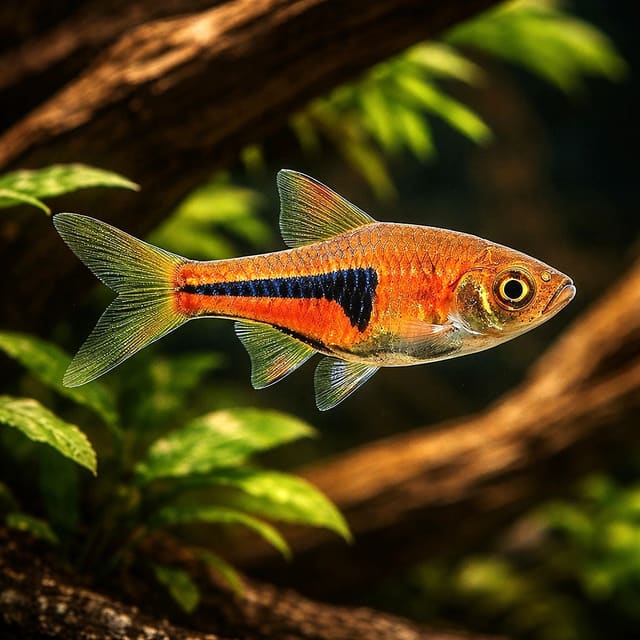
Lambchop Rasbora (Trigonostigma espei)
23–28°C · pH 5.5–7.5 · 54L
£4.99
Rasboras & Danios · Buying Guide
Lambchop rasbora (Trigonostigma espei) care for UK keepers — the slim copper cousin of the harlequin. Tank size, water, tank mates. Shop live stock now.
11 products in stock today
Live prices and stock. Every fish covered by our Live Arrival Guarantee.
23–28°C · pH 5.5–7.5 · 54L

21–25°C · pH 5–7

23–27°C · pH 5.5–7 · 60L
22–25°C · pH 6–7.4
22–26°C · pH 6.4–7.4 · 41L
17–27°C · pH 6.5–8
17–27°C · pH 6.5–8
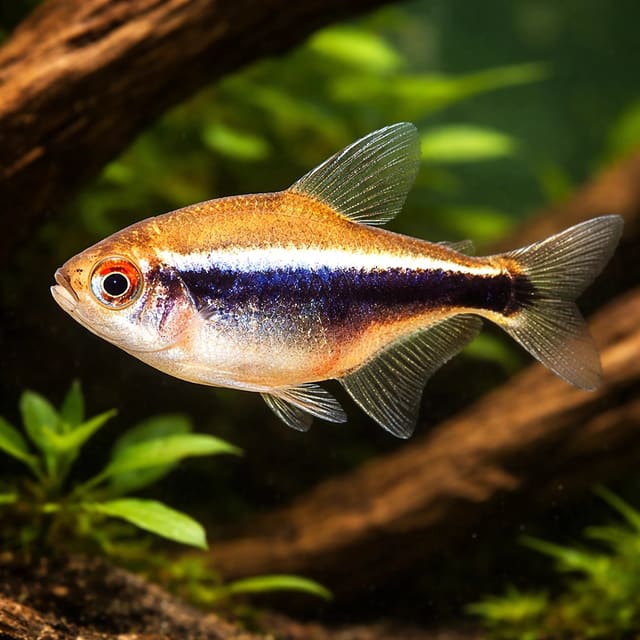
20–28°C · pH 5–7.5 · 72L

21–25°C · pH 5–7
The shaded band shows the range trigonostigma espei is comfortable in. Match it to your tap water before you buy.
Our trained assistant knows this trigonostigma espei page inside out. Ask it anything — water parameters, tank mates, how many to buy — or have it read the guide aloud while you set up your tank.
You've probably arrived here because you saw a tank of small copper-orange fish, looked them up, and fell down the rabbit hole of "is that a harlequin or a lambchop?" It's the single most common point of confusion in the rasbora world, and almost every guide online glosses over it — or worse, recycles harlequin advice and slaps a lambchop photo on top.
I'm Hannah. I photograph planted community tanks for a living, and the lambchop rasbora (Trigonostigma espei) is one of the fish I reach for again and again when I want a warm, glowing mid-water shoal that won't pick fights. This is the guide I'd give a friend setting up their first planted 60 L who wants something a little less obvious than the usual neon tetra — the calmer, slimmer cousin of the harlequin.
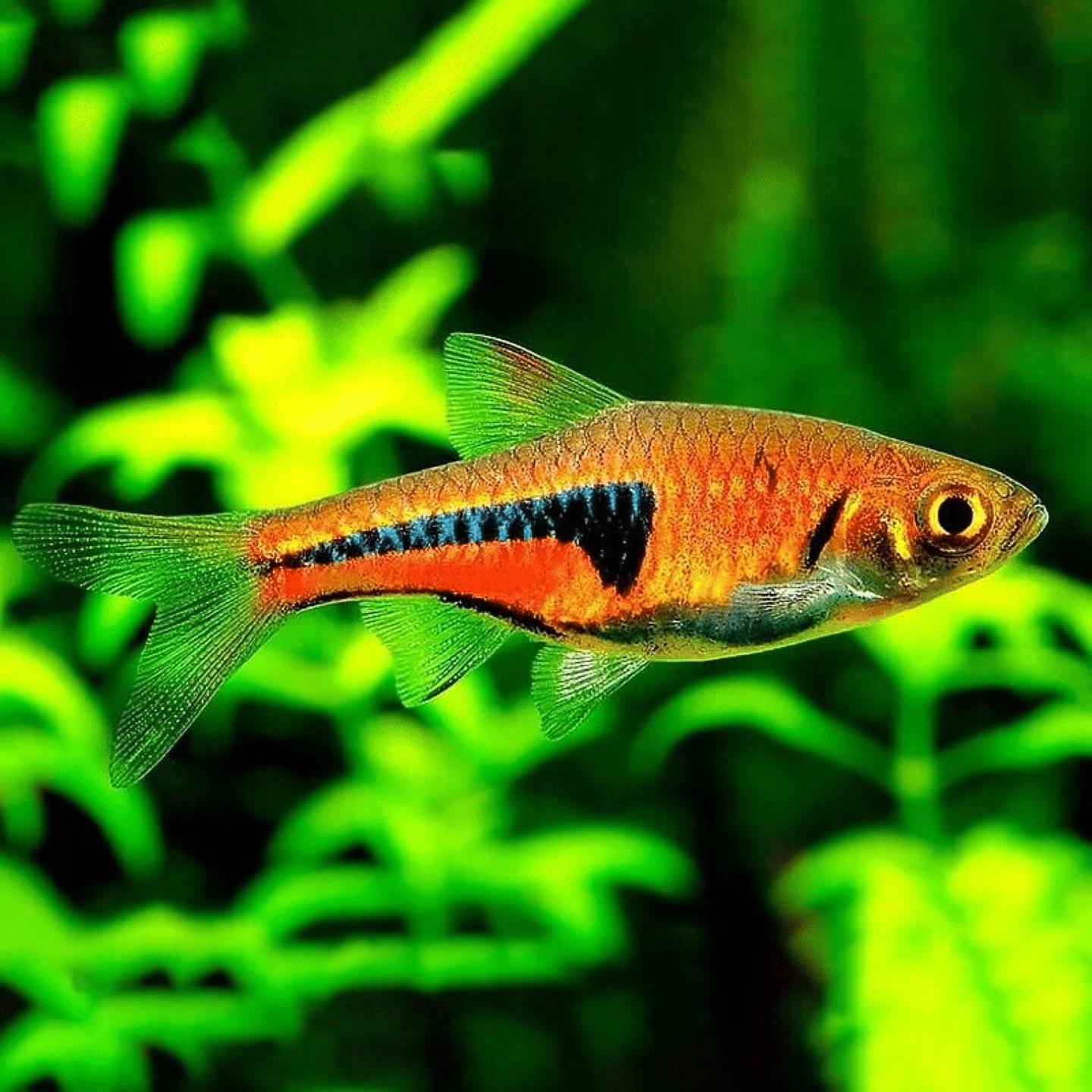
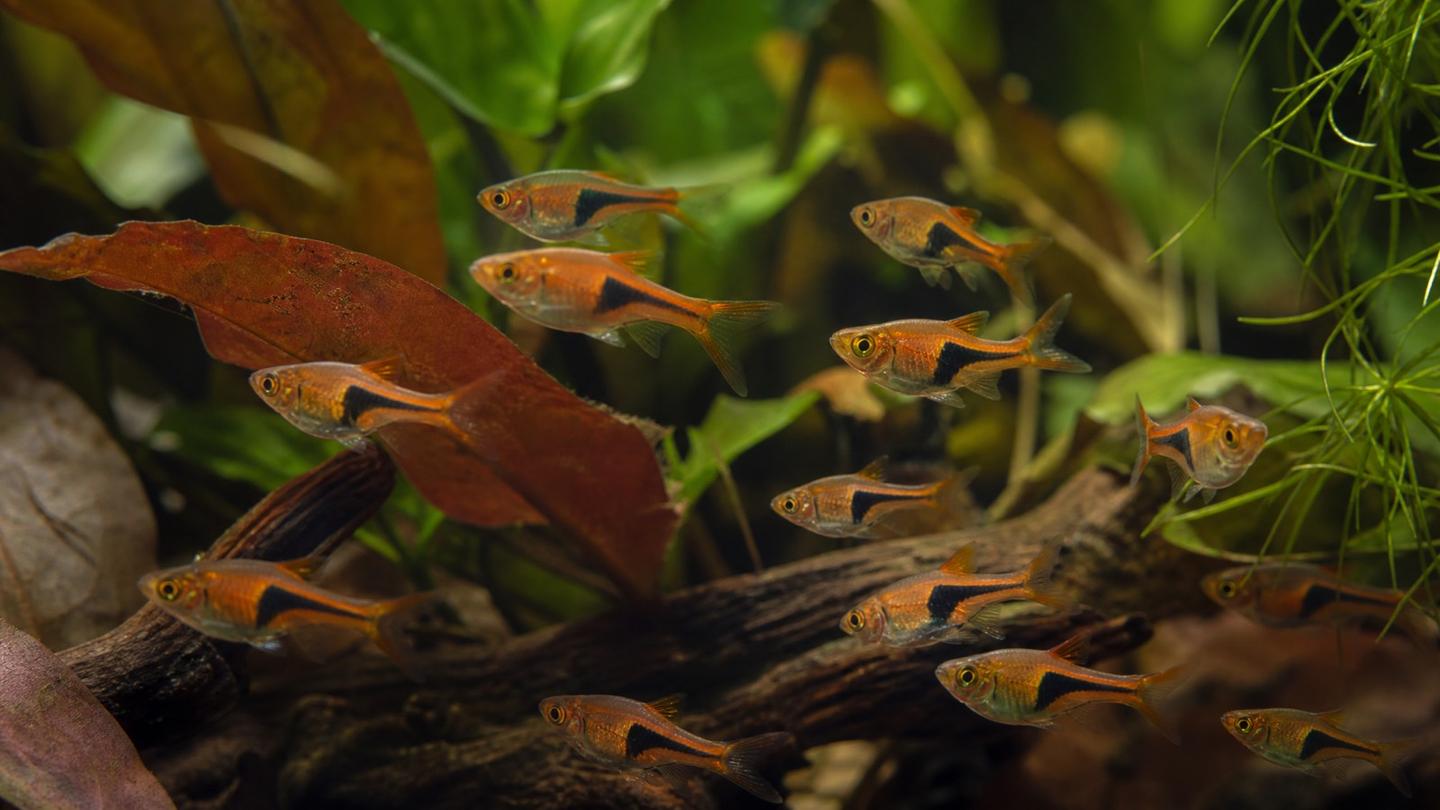
A lambchop rasbora from our current holding tank. Note the bright copper-orange body and the thin, hook-shaped black "lambchop" wedge — much narrower than the harlequin's broad triangle. Photo: Tropical Fish Co.
It was once a harlequin "subspecies." The lambchop spent years filed away as a variety of the harlequin before being recognised as its own species, and in 1999 it was moved out of the old genus Rasbora into the newly erected genus Trigonostigma — which is why you'll still see it sold as both Trigonostigma espei and Rasbora espei [3].
The black mark is genuinely "lambchop-shaped." This isn't marketing fluff — it's the diagnostic feature. FishBase describes a "lambchop-shaped black blotch on the caudal peduncle," and Seriously Fish contrasts the lambchop's "thinner, lambchop-shaped body marking" against the harlequin's broad triangle [1].
They lay eggs on the underside of leaves. Most small cyprinids scatter eggs and walk away. Lambchops are fussier — the female attaches eggs to the underside of a broad plant leaf, a behaviour shared across the Trigonostigma genus and unusual enough to be part of why the genus was split off in the first place [2].
They're a Thailand-and-Cambodia fish, not an Amazon one. Unlike the South American tetras they're often kept with, lambchops come from tannin-stained ponds, marshes and slow streams in southeast Asia [1]. That blackwater origin is why leaf litter and soft water bring out their best colour.
The ones you buy are almost all farm-bred. The species is listed as Least Concern by the IUCN, and the aquarium trade runs overwhelmingly on captive-bred stock rather than wild-caught fish [6] — good news for both the wild populations and for you, since farmed fish settle more readily into a home tank.
The decision most people are really making isn't "lambchop yes or no" — it's "lambchop or one of the other small schoolers I keep seeing." Here's how the lambchop stacks up against its famous cousin and two other nano favourites.
| Attribute | Lambchop Rasbora | Harlequin Rasbora | Ember Tetra | Cardinal Tetra |
|---|---|---|---|---|
| Scientific name | T. espei | T. heteromorpha | H. amandae | C. axelrodi |
| Adult size | 2.5–3 cm | 4–4.5 cm | 1.5–2 cm | 3.5–5 cm |
| Marking shape | Thin lambchop hook | Broad triangle | None (solid orange) | Neon-blue + red stripe |
| Body colour | Bright copper-orange | Pinkish-bronze | Saturated orange-red | Red + electric blue |
| Ideal water | Soft, slightly acidic | Soft–medium, adaptable | Soft–medium, very adaptable | Soft, acidic only |
| Minimum tank | 60 L | 60 L | 30 L | 60 L |
| Beginner-friendly | Yes | Yes | Yes | Maybe (soft water) |
If you want the calmer, slimmer look and a fish that genuinely glows in a planted blackwater nano — pick the lambchop. If you want the biggest, boldest marking, the harlequin is its natural alternative; if you want the smallest possible schooler, embers win on size.
Look at the front edge of the black mark. On a harlequin it starts as a tall, blunt wall near the middle of the body. On a lambchop it tapers to a thin point and hooks backwards along the lower body like the bone of a lambchop. If the fish also looks coppery-orange rather than pinkish, you're almost certainly looking at Trigonostigma espei.
The rule is simple and it's the one thing I'd tattoo on every new keeper's hand if I could: eight is the floor, not the target. Lambchops are obligate schoolers — below about eight they feel exposed, hang back in the corners, and show muted colour. At ten or more they relax, spread into the open mid-water, and the copper deepens because confident fish display more [2].
Stocking guide by tank size:
Lambchops are peaceful and a little understated, so their tank mates need to be calm and similarly sized. The best companions split into three jobs: fellow mid-water schoolers, peaceful bottom-dwellers, and a clean-up crew. None of the species below is a lambchop rasbora — they're all community tank mates chosen to share the lambchop's temperament and water.
Avoid anything large, boisterous or fin-nipping, and skip aggressive cichlids — a lambchop's only defence is the safety of its school.
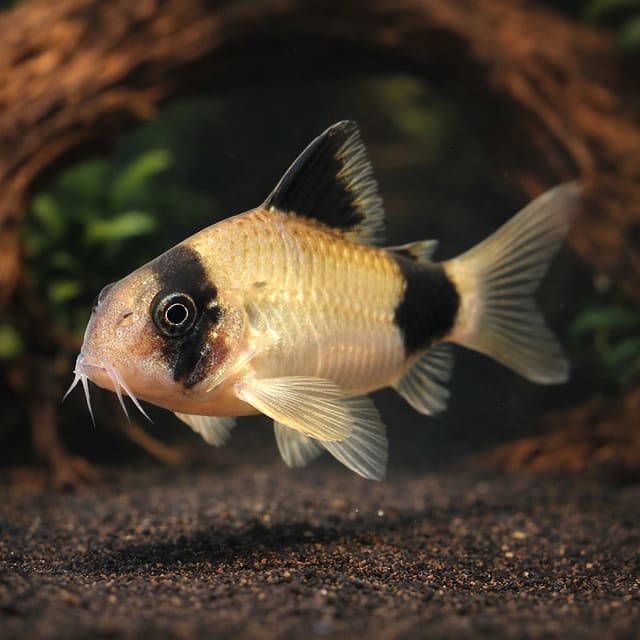
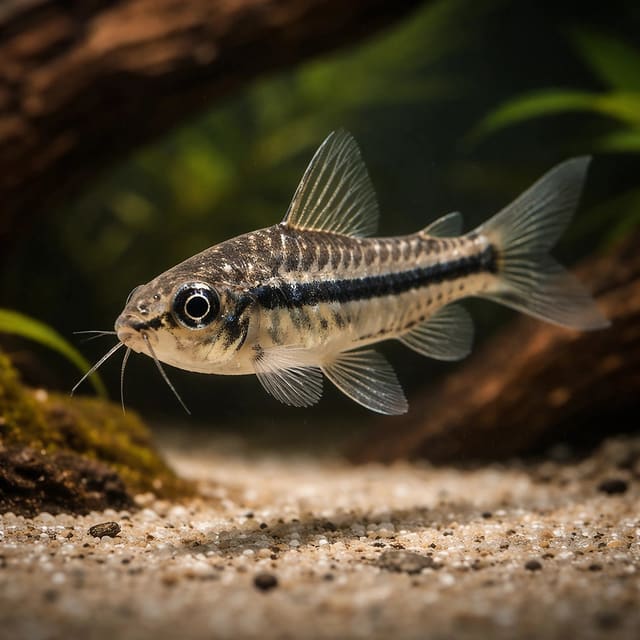
A panda cory (Corydoras panda) — one of our most-recommended bottom-dwelling companions for a lambchop shoal. They potter along the substrate while the lambchops own the mid-water, and they share the same peaceful temperament. Photo: Tropical Fish Co.
Lambchops aren't demanding, but a few choices make the difference between a pale, skittish group and a glowing, confident one:
Most of England — and almost all of the south-east — runs hard, alkaline tap water [5]. Lambchops will live happily in it, but they're at their copper best in soft, slightly acidic blackwater. If you're in a hard-water area and want that glow, a leaf-litter tank plus a partial RO blend gets you there without chasing extreme pH. Don't crash your pH to do it — stability matters more to the fish than a perfect number.
Lambchops are unfussy omnivores — they'll take ordinary prepared foods without complaint [1] — but a varied diet is what turns a healthy fish into a genuinely glowing one. A simple weekly rhythm I'd suggest:
Over-feeding is the single most common nano-tank killer — uneaten food fouls a small volume fast. If there's anything left on the substrate after a couple of minutes, you've given too much.
New keepers often blame their fish when a fresh group looks pale, but the three real culprits are almost always environmental: too small a group, too bright a tank with no cover, or hard, clear water instead of the soft, tannin-stained blackwater lambchops evolved in. Fix the school size, add floating plants or leaf litter, and give them a fortnight to settle — the colour follows. A pale lambchop is usually a comment on its tank, not its health [2].
Lambchops are small, hardy shippers, but their preference for soft, acidic water means a gentle, unhurried acclimation pays off — a sudden jump in pH or hardness is the one thing that stresses them. Our routine:
Live arrival guarantee: photograph the unopened bag within two hours of delivery if any fish are DOA, and we'll refund or replace.
A 3 cm lambchop has a low metabolic rate and produces very little ammonia per hour in transit compared with a large-bodied fish. That's a big part of why small, schooling cyprinids like lambchops have such high first-week survival rates — the shipping physiology is on their side, provided you acclimate them gently and add the whole group at once so the school is intact from day one.
For the full deep-dive on the lambchop's famous cousin — same genus, same leaf-spawning quirk, broader marking — the harlequin rasbora care guide is the natural next read. If you're building a warm-toned planted community, the ember tetra care guide covers the smaller orange schooler that pairs so well with lambchops.
Comparing schools side by side? The Ember tetra care guide and the cardinal tetra buying guide are useful companions to this page — one covers the smaller orange option and its specific footprint and water checks, while the other covers the soft-water showstopper.
Shopping by type? Browse our rasboras & danios hub for every peaceful schooler in stock, or the planted-tank fish hub for the wider community shortlist.
Visual route into the rest of our UK live-fish range.
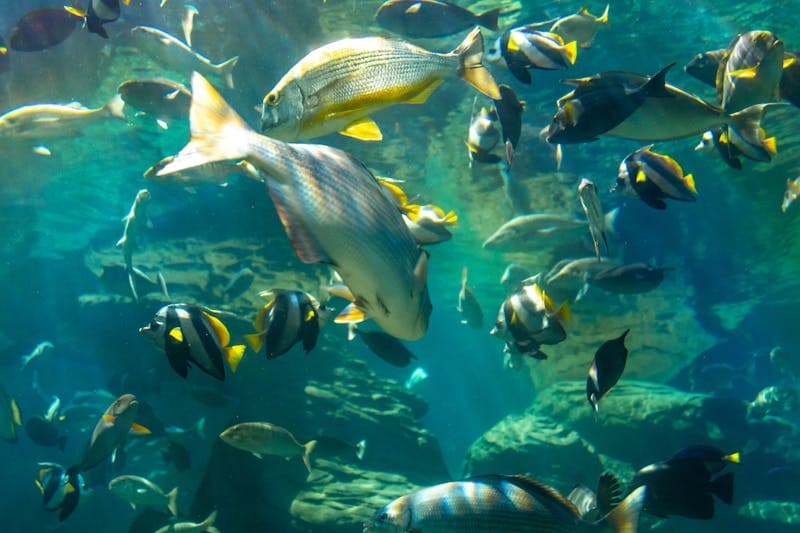
Explore rasboras, danios and White Clouds for sale. Compare named species, supplied sizes and sale units, then check adult needs for your aquarium.
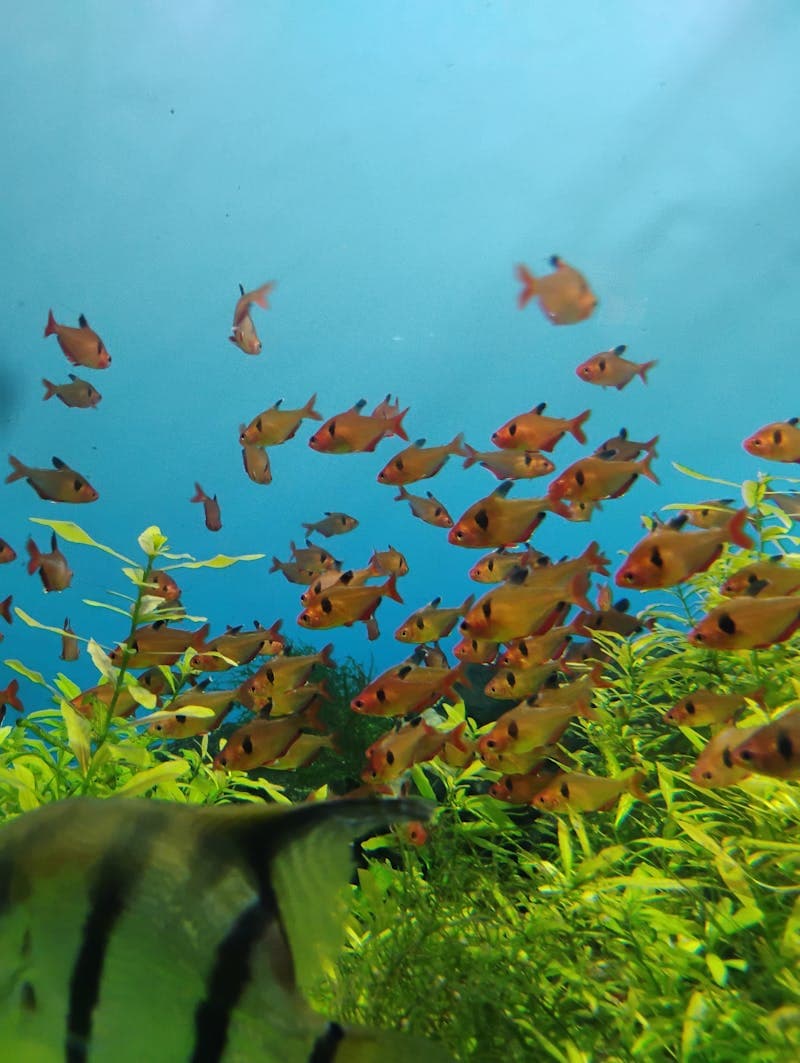
Premium Tetras for sale UK — Cardinal, Ember, Black Neon, Rummy Nose, Serpae, Diamond, Glowlight and more. Peaceful community schoolers.
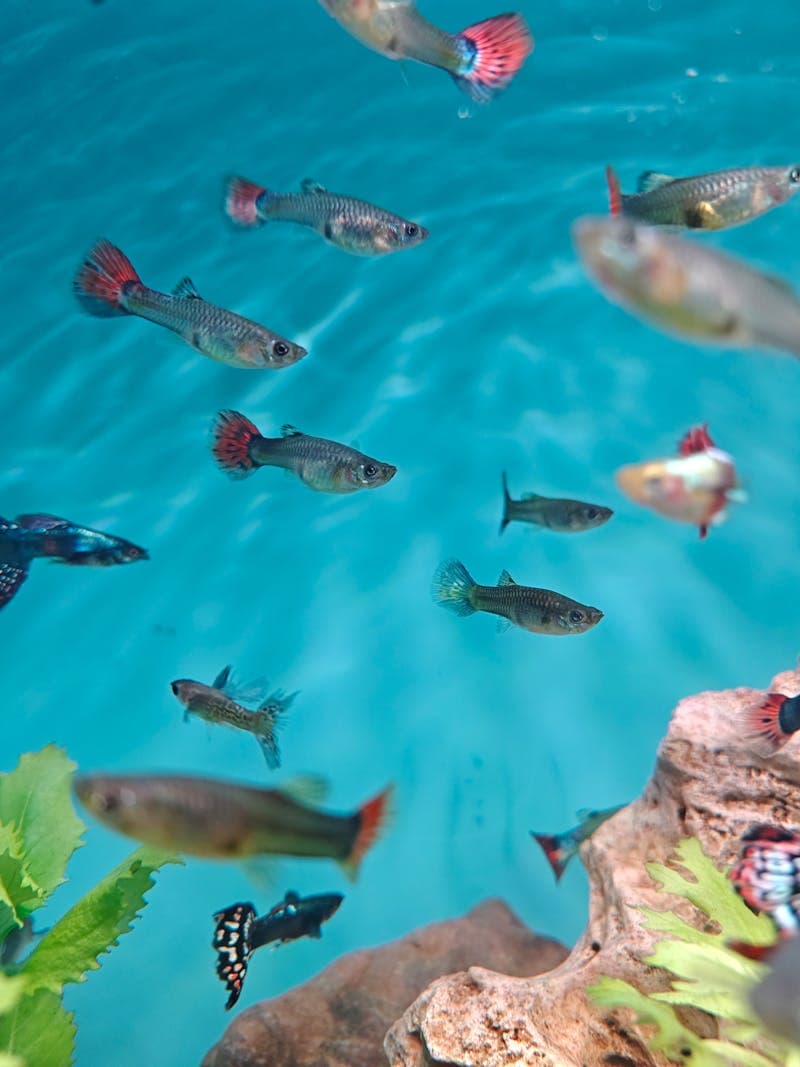
Planted-tank fish for sale UK — peaceful, plant-safe species that showcase aquascaped layouts. Tetras, rasboras, dwarf cichlids, shrimps.
Material factual claims cite the sources below; store policy and cautious inference are labelled in the article. Sources are grouped by type so you can judge their weight at a glance.
The paper that erected the genus Trigonostigma, separating the harlequin group from Rasbora on size, colour pattern, reduced lateral line and spawning behaviour — cited on the naming-history fact. (No DOI assigned; full bibliographic detail given.)
Source for max standard length (2.5 cm SL), temperature 23–28 °C, distribution across Thailand and Cambodia, and the 'lambchop-shaped black blotch on the caudal peduncle' diagnosis.
IUCN assessed the species as Least Concern (27 March 2011) — referenced in the wild-vs-farmed fact.
Independent cross-check on the 8–10 minimum group size, the copper colour vs the harlequin's pinkish hue, and the leaf-spawning behaviour.
UK hobbyist authority — cross-checked for nano-tank stocking and the soft-water-deepens-colour guidance.
Dedicated lambchop care video (published 11 Jan 2021) — referenced in the group-size and acclimation sections.
UK tap-water reference — most of the south-east supplies hard water (250–320 mg/L CaCO₃), which lambchops tolerate even though softer water shows their colour best.
Fishkeeping moves fast and we want every guide spot-on. If you think something here is wrong, out of date, or could be clearer, tell us — our team reads every message and updates the page.
Suggest an editExplore rasboras, danios and White Clouds for sale. Compare named species, supplied sizes and sale units, then check adult needs for your aquarium.
Premium Tetras for sale UK — Cardinal, Ember, Black Neon, Rummy Nose, Serpae, Diamond, Glowlight and more. Peaceful community schoolers.
Planted-tank fish for sale UK — peaceful, plant-safe species that showcase aquascaped layouts. Tetras, rasboras, dwarf cichlids, shrimps.
Harlequin rasbora care for UK aquariums: check 60 cm tank length, group size, 5 cm adult size, water, tank mates and lookalike species before buying.
Evidence-checked Ember tetra care for UK tanks: adult size, group needs, tank footprint, temperature, feeding, tank mates and current availability.
Keep cardinal tetras thriving in UK water: check tank size, group size, tank mates, temperature and cardinal vs neon differences before you buy.
Planted-Tank Photographer & Writer · 10+ years in the hobby
Hannah is a Cambridge-based aquarium photographer and writer whose planted-tank work has appeared in Practical Fishkeeping and the ADA Aqua Journal digital edition. She writes Tropical Fish Co's deep species guides on schooling tetras and planted-tank communities — always accompanied by her own photography, never stock imagery.