Easy
Silver Platinum Three-Spot Gourami
22–28°C · pH 6–8 · 120L
From £4.99Some sizes on sale

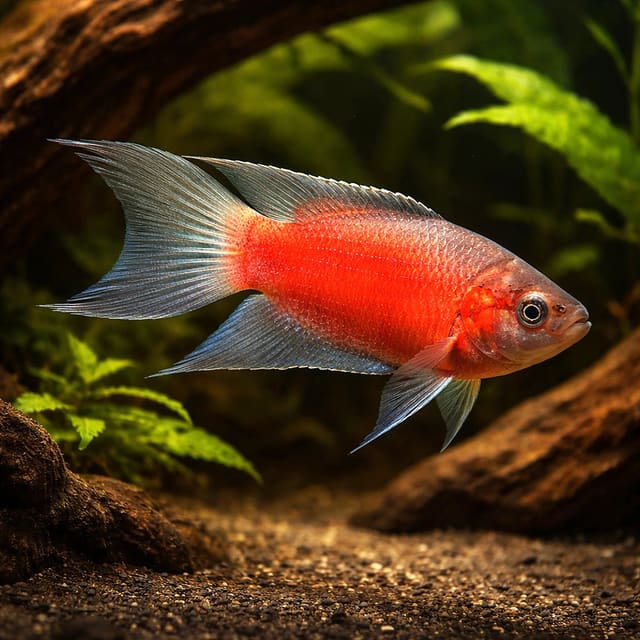
Brown Spiketail Paradisefish (Pseudosphromenus dayi) is a peaceful small labyrinth fish for calm, shaded planted aquariums with gentle flow.
Adult size is the maximum length this species reaches at full maturity (scientific sources). The livestock you receive will be younger and smaller. Product-photo provenance and any image-specific limitations are stated on the listing.
Pseudosphromenus dayi
Save when buying multiple fish. Each quantity is one fish; sex and pair formation are not guaranteed unless the selected variant explicitly states them.
Confirm your email, then we’ll send an availability message for this exact item if it returns within 180 days.
This request is only for this product—no newsletter or other promotions. A mail-provider retry may very rarely duplicate the same availability message. Unconfirmed addresses are removed after 48 hours. See our privacy policy.
Brown Spiketail Paradisefish (Pseudosphromenus dayi) is a peaceful small labyrinth fish for calm, shaded planted aquariums with gentle flow.
Adult size is the maximum length this species reaches at full maturity (scientific sources). The livestock you receive will be younger and smaller. Product-photo provenance and any image-specific limitations are stated on the listing.
Maintain these water conditions for optimal health and vibrant colors
Brown Spiketail Paradisefish (Pseudosphromenus dayi) is a small, peaceful labyrinth fish from Kerala in southern India. It suits calm planted aquariums where the water is warm, the flow is gentle and there are shaded places under plants, roots or leaves. It is not a loud show fish in the way a large cichlid can be; its appeal is quieter: warm brown body colour, red-brown edging to the fins, delicate blue highlights and interesting bubble-nesting behaviour once settled.
This listing is for aquarists who want a natural-looking labyrinth fish with more character than a standard community centrepiece. Give it cover, small foods and calm tank mates, and it becomes a rewarding species for a mature aquarium. Orders are covered by our live-fish dispatch process, Live Arrival Guarantee and the WELCOME10 first-order discount where the code terms apply.
| Scientific name | Pseudosphromenus dayi |
|---|---|
| Common names | Brown Spiketail Paradisefish, Indian Spiketail Paradise Fish, Brown Spike-tailed Paradise Fish |
| Family | Osphronemidae; a labyrinth-fish relative of gouramis and bettas |
| Natural range | Kerala, India; associated with still or slow water habitats |
| Adult size | Up to about 7.5 cm total length |
| Temperature | 25-28C |
| pH / hardness | pH 6.5-7.5; 4-15 dGH |
| Minimum aquarium | 60 litres for a calm pair or small carefully planned group |
| Temperament | Peaceful and shy; territorial around breeding sites |
| Best for | Mature planted aquariums with gentle filtration and quiet tank mates |
Brown Spiketail Paradisefish is a facultative air-breathing fish, so it uses the surface as part of normal behaviour. Leave clear access to the top of the aquarium and avoid forcing the surface into heavy turbulence. In the right tank it will patrol plant edges, shaded roots and quiet corners rather than constantly rushing in open water.
The species is known for bubble-nesting. During breeding the male prepares a foam nest, often under a leaf, cave edge or shaded overhang. The parents may collect fallen eggs and return them to the nest. This makes cover and calm water more than decoration; the layout directly supports natural behaviour.
Use a planted aquarium with broken sight lines. Java fern, Anubias, Cryptocoryne, floating plants, Indian almond leaves, botanicals, root tangles and coconut-shell caves all help this fish feel secure. A bare, bright tank can make it look nervous and washed out; a shaded aquascape brings out the behaviour and colours much better.
Choose gentle filtration. A mature sponge filter, baffled internal filter or soft outflow is better than strong current. The natural habitat is lentic or slow-moving water, so the aim is clean stable water without pushing the fish around. Keep the aquarium covered because labyrinth fish can jump, especially if startled.
| Parameter | Target | Practical note |
|---|---|---|
| Temperature | 25-28C | Keep stable; avoid cold draughts above the water surface. |
| pH | 6.5-7.5 | Slightly acidic to neutral water is ideal. |
| Hardness | 4-15 dGH | Soft to medium-hard water works if changes are gradual. |
| Flow | Gentle | Calm surface areas help natural labyrinth-fish behaviour. |
| Lighting | Subdued to moderate | Floating plants and shaded cover make the fish bolder. |
Feed small foods. A quality micro pellet or fine granule can be the staple once the fish is settled, but variety matters. Offer frozen or live daphnia, brine shrimp, mosquito larvae and similar small foods to support condition. Because this species can be shy, make sure fast tank mates do not clear the food before it reaches the shaded areas.
| Food type | How to use it |
|---|---|
| Micro pellets or fine granules | Use as a measured daily staple after the fish is feeding confidently. |
| Frozen daphnia or brine shrimp | Good for variety and conditioning without overloading the aquarium. |
| Live foods | Useful for shy new arrivals and breeding condition when available. |
| Large hard foods | Avoid; this is a small fish with a small mouth. |
This is a peaceful species, but it is not the best choice for a noisy mixed community. It can be outcompeted by fast danios, larger barbs, aggressive gouramis or busy cichlids. Choose calm companions that enjoy warm planted aquariums and will not nip fins or dominate feeding time.
| Good choices | Use caution | Avoid |
|---|---|---|
| Small peaceful rasboras, tiny calm barbs, peaceful Corydoras, small loaches, snails | Other labyrinth fish, very small shrimp, boisterous livebearers | Large cichlids, fin-nippers, predatory catfish, aggressive gouramis, crowded male groups |
A pair can work well in a planted 60 litre aquarium. A small group can also work in a larger, heavily planted tank, but provide several visual barriers and more than one sheltered nesting area. Males may become territorial around a bubble nest, so do not judge compatibility only by the fish's small size.
If you want to observe breeding behaviour, offer shaded cover near the surface and a cave-like structure or broad leaf. Keep water stable, feed varied small foods and avoid disruptive tank mates. Any breeding setup should be calm enough that the male can tend the nest without constant disturbance.
On arrival, keep the room calm and dim the aquarium lights. Float and acclimate carefully, then release into a prepared tank with cover already in place. Expect the fish to hide at first; that is normal for a shy labyrinth fish. Offer a small meal only once it has had time to settle, and use small foods that do not pollute the tank if uneaten.
| First-week check | What to do |
|---|---|
| Hiding | Normal at first; add cover and avoid repeated disturbance. |
| Surface access | Keep open calm surface patches because the fish can breathe air. |
| Feeding | Start with tiny portions; frozen/live foods can help shy fish begin feeding. |
| Water quality | Keep ammonia and nitrite at zero and avoid sudden temperature swings. |
This page uses the names aquarists naturally search for: Brown Spiketail Paradisefish, Pseudosphromenus dayi, Indian Spiketail Paradise Fish and labyrinth fish. The wording is intentionally written for real fishkeepers first, with the scientific name and care details included where they help the buyer choose correctly.
Yes, but only in a calm community. It does best with small peaceful fish that will not chase it, nip fins or outcompete it at feeding time.
Floating plants are strongly recommended. They shade the surface, reduce stress and help create the quiet cover this species prefers.
FishBase records a maximum length of about 7.5 cm, so plan the aquarium around an adult small labyrinth fish rather than a tiny juvenile.
Use small foods: micro pellets or fine granules plus frozen or live daphnia, brine shrimp, mosquito larvae and similar items.
Yes. The male builds a bubble nest, often under cover, and parental care around the nest is part of the species' natural behaviour.
No reviews for this item yet. Bought one? Honest reviews only, good or bad.
What customers say about ordering from us
I have a small group of long finned mountain minnows. So was delighted to be able to order ten of this variety to increase the genetics in my tank . The ones I recieved are healthy but it’s to early to give a verdict on wether they are of a long finned type since they are small currently.
Gordon Walker · 23 Sept 2026
100% success travel and "installation". Pleased with quality of purchase. The Siamese fighter a bit "shy" so have not yet seen him at his best yet but looking good. Happy customer. GG
George E Garratt · 21 Sept 2026
Reviews of our shop, collected by Judge.me, an independent third-party review collector. Newest first.