Moderate
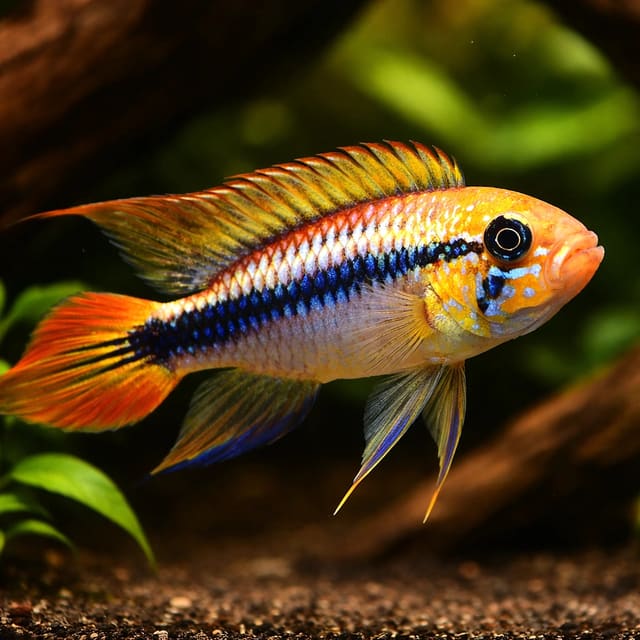
Gold Red Agassiz’s Dwarf Cichlid (Apistogramma agassizii)
22–27°C · pH 6–7 · 54L
£15.99

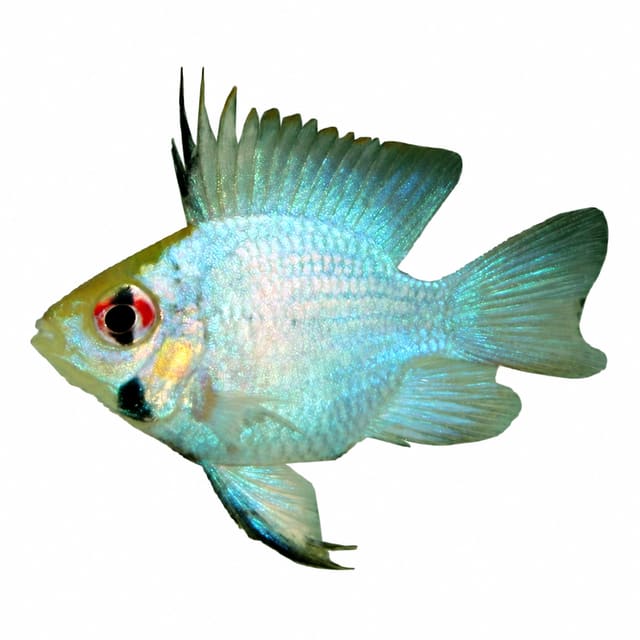
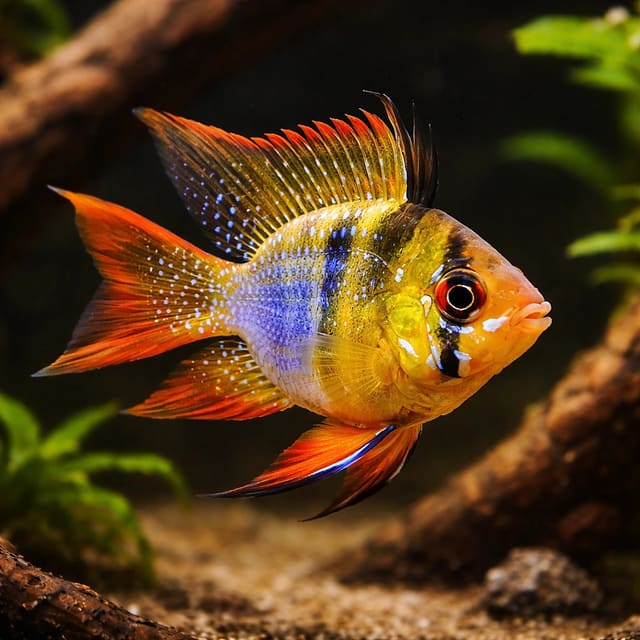
Blue Gold Ramirezi Cichlid (Mikrogeophagus ramirezi) is a warm-water dwarf cichlid for mature planted aquariums with soft, stable water and peaceful tank mates.
Adult size is the maximum length this species reaches at full maturity (scientific sources). The livestock you receive will be younger and smaller. Product-photo provenance and any image-specific limitations are stated on the listing.
Mikrogeophagus ramirezi
Save when buying multiple fish. Each quantity is one fish; sex and pair formation are not guaranteed unless the selected variant explicitly states them.
Confirm your email, then we’ll send an availability message for this exact item if it returns within 180 days.
This request is only for this product—no newsletter or other promotions. A mail-provider retry may very rarely duplicate the same availability message. Unconfirmed addresses are removed after 48 hours. See our privacy policy.
Blue Gold Ramirezi Cichlid (Mikrogeophagus ramirezi) is a warm-water dwarf cichlid for mature planted aquariums with soft, stable water and peaceful tank mates.
Adult size is the maximum length this species reaches at full maturity (scientific sources). The livestock you receive will be younger and smaller. Product-photo provenance and any image-specific limitations are stated on the listing.
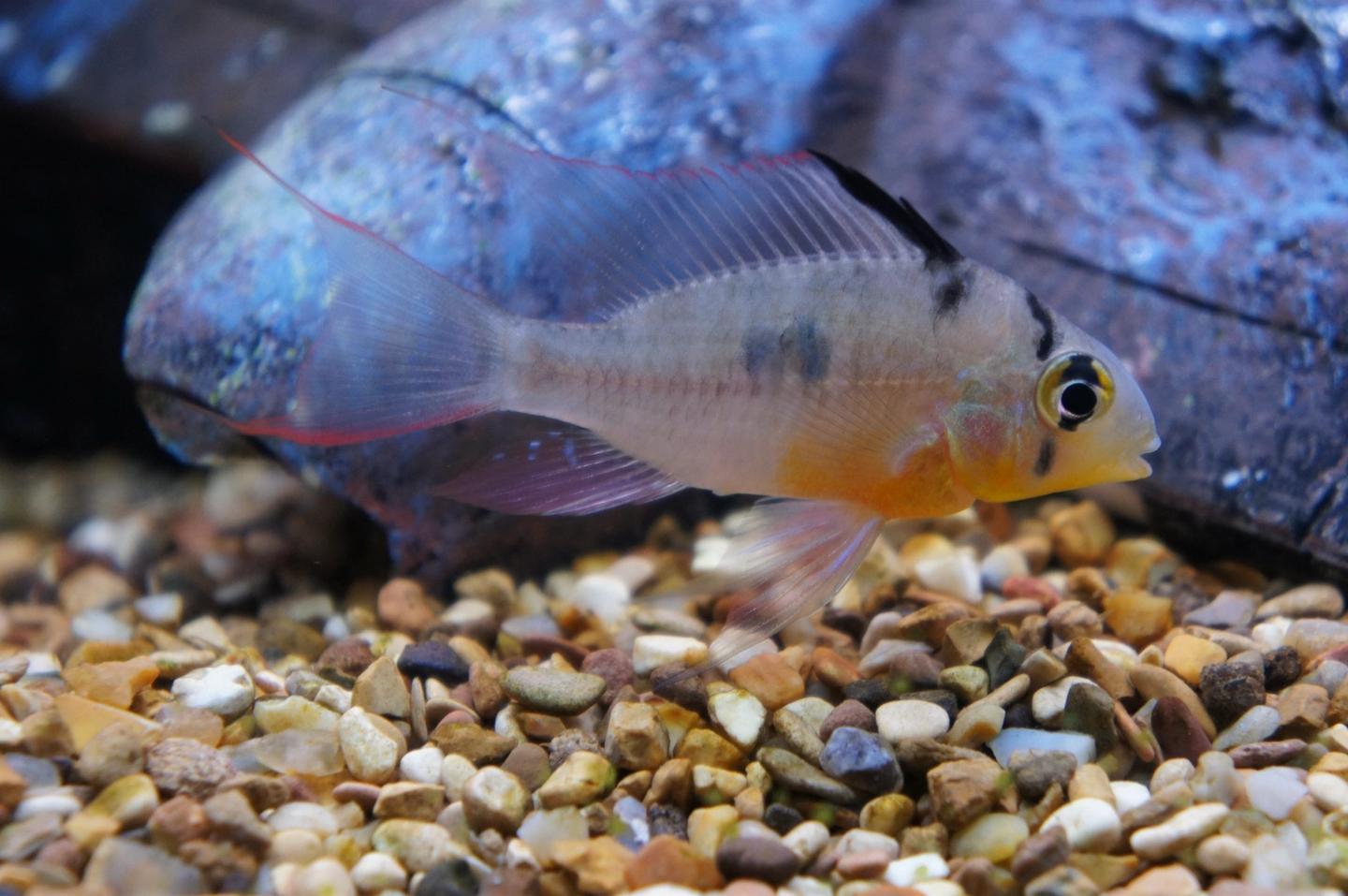
Cichlids are a family of roughly 1,800 accepted species, not one care type. Before buying, identify the exact species and source, then compare adult measurement, usable tank dimensions, social system, territory, tested water, diet and an exit plan. No family-wide minimum tank, water range or tank-mate list is safe.
Maintain these water conditions for optimal health and vibrant colors
Blue Gold Ramirezi Cichlid (Mikrogeophagus ramirezi) is a line-bred ram cichlid for aquarists who want intense colour and real dwarf-cichlid behaviour in a carefully run planted aquarium. our stock records list this fish under the older trade style Papiliochromis ramirezi blue golden; the accepted customer-facing species anchor is Mikrogeophagus ramirezi.
This is not a cool-water community filler. Rams are small and usually peaceful, but they are sensitive to stale water, low temperatures and rough tank mates. In the right aquarium they reward you with metallic blue spangling, warm gold body colour, red facial tones, pair behaviour and classic open-spawning cichlid care. In the wrong aquarium they can fade quickly. The goal of this listing is to help you decide honestly whether your tank is ready.
| Common names | Blue Gold Ramirezi, Blue Gold Ram, Ram Cichlid, Ramirez Dwarf Cichlid |
|---|---|
| Scientific name | Mikrogeophagus ramirezi; supplier/trade wording may still use Papiliochromis ramirezi |
| Origin of species | Orinoco drainage and llanos waters of Venezuela and Colombia; this colour form is aquarium-bred |
| Adult size | Usually around 5-7 cm, depending on sex, age and strain |
| Care level | Moderate to demanding; easy only when warmth, maturity and water quality are right |
| Minimum aquarium | 60 litres for a settled pair; 75-90 litres gives more stability and territory |
| Temperature | 27-30 C, with many keepers doing best around 28-29 C |
| pH and hardness | Soft to moderately soft, acidic to neutral water; stability is more important than chasing numbers every day |
| Temperament | Peaceful for a cichlid, mildly territorial when pairing or breeding |
| Diet | Small quality pellets, fine cichlid granules, frozen foods, live foods and varied micropredator-style meals |
Mikrogeophagus ramirezi has moved through several hobby names, including Ram Cichlid, German Ram, Butterfly Cichlid and older Papiliochromis wording. Our stock records entry for SKU KK44 is `Papiliochromis / ramirezi blue golden`, which is why older local data mixed the old genus with the colour label. For customers, the clean name is Blue Gold Ramirezi Cichlid.
The blue-gold label describes a selectively bred colour form, not a separate species with different basic care. Treat it as a ram cichlid first: warm, clean, soft-water leaning, substrate-picking, peaceful but not weak, and very responsive to tank conditions.
The wild species is associated with warm, slow or gentle waters in the Orinoco region of Venezuela and Colombia. Reliable references describe soft, acidic conditions and high temperatures compared with many standard community aquariums. That explains why rams often fail when they are kept like ordinary mixed tropical fish at 24-25 C with busy tank mates and rising nitrate.
Set the aquarium up around warmth, cleanliness and calm. Fine sand or smooth small gravel lets the fish inspect the lower levels naturally. Plants, roots, leaf-litter effects, shaded corners and a few flat stones create a more settled environment. The tank should look quiet and mature rather than bright, bare and newly filled.
A 60 litre aquarium can work for a pair when the tank is mature and the keeper is attentive, but extra footprint makes this fish easier. In 75-90 litres you can give the pair a feeding area, a resting area and a potential spawning site without every movement becoming territorial. Rams spend much of their time in the lower and middle areas, so floor space matters as much as litres.
Use a heater that holds steady temperature, a gentle but reliable filter, and regular water changes. Avoid strong blasting flow. These fish appreciate oxygenated clean water, but they do not want to fight current all day. If your tap water is hard, focus on stability and gradual adjustment rather than sudden swings. For breeding, softer and more acidic water is usually more important than for simple display keeping.
Plant choices should tolerate warm water. Java fern, Anubias, many Cryptocoryne, floating plants and hardy stems can work well. Leave a little open sand or low foreground space so the fish can forage and display. Add flat stones, small pieces of wood or open sheltered areas for pair behaviour.
Blue Gold Ramirezi Cichlids are small micropredators and omnivores in aquarium practice. They do best on small foods that can be eaten cleanly: fine cichlid granules, quality micro pellets, frozen brineshrimp, daphnia, bloodworm, cyclops and occasional live foods. Feed modest portions once or twice daily and watch that both fish get food without overloading the tank.
Colour is strongest when the fish are warm, unstressed and fed a varied diet. A food with carotenoid-rich ingredients can support reds and golds, while small frozen foods encourage natural picking and courtship behaviour. Avoid large pellets, oily overfeeding and heavy meals that leave waste in the substrate.
Choose peaceful companions that also tolerate the warmer water. Good matches can include small warm-water tetras, pencilfish, hatchetfish and gentle Corydoras only where the temperature requirements overlap. Avoid fin-nippers, boisterous livebearers, large cichlids, aggressive bottom dwellers and fish that outcompete rams at feeding time.
Rams are often compared with Apistogramma and Bolivian Rams. That comparison is useful, but the care is not identical. A Bolivian Ram is generally more forgiving and cooler-tolerant. Many Apistogramma prefer caves and may behave more territorially around structure. Blue Gold Ramirezi are open-spawning dwarf cichlids that need warm, clean, stable water and calm tank mates.
Shrimp are risky with adult rams. Large Amano Shrimp may be ignored in a planted tank, but small dwarf shrimp and shrimplets can be hunted. Snails are usually safe, though eggs or very tiny individuals may be picked at.
This SKU is priced as a pair, which suits the way many keepers want to keep ram cichlids. A settled pair may clean a flat stone, broad leaf or open patch of substrate before spawning. Both fish may guard the area, fan eggs and herd fry, although captive strains vary and some young pairs need several attempts before they become reliable parents.
Breeding success depends on warm, very clean water, low disturbance, small live or frozen foods and a quiet aquarium. A pair in a busy community may still display, but fry survival is unlikely. If raising young is the goal, use a dedicated setup with gentle filtration and very small first foods ready before the eggs hatch.
Prepare the aquarium before dispatch day: heater stable, lights dimmed, filter mature, and no major maintenance just before arrival. Float the bag to equalise temperature, then acclimate gradually according to the instructions supplied with your order. Keep the lights low for the first few hours and offer food only once the fish are settled and exploring.
Because this is a warm-water dwarf cichlid, temperature control during transport and after arrival is especially important. Tropical Fish Co uses a UK live-animal courier and packs livestock with seasonal support. The Live Arrival Guarantee and WELCOME10 first-order discount can be used naturally at checkout without forcing old search phrases into the product copy.
Blue Gold Ramirezi colour is strongly influenced by age, condition and lighting. A settled fish can show a warm yellow-gold body with blue reflective spotting and red facial tones, but newly arrived rams may look paler for the first day or two. That is normal. Judge health by posture, breathing, feeding response and alertness as much as by instant colour.
Males are often a little larger and may develop longer extensions on the dorsal and anal fins. Females can be smaller and may show a fuller belly, especially when mature. Sexing young rams is not always exact, and line-bred colour forms can blur the usual cues. If you are buying a pair, give them time to settle and do not force breeding expectations in the first week.
Rams are unforgiving of unstable biology. Test ammonia and nitrite before adding them, and keep both at zero. Nitrate should be kept low through sensible feeding, plant growth, filter maintenance and regular water changes. A weekly 20-30 percent water change is a good baseline for a lightly stocked planted aquarium, but the correct rhythm depends on your stocking level and test results.
Do not clean the filter and substrate aggressively on the same day unless there is an emergency. These fish need mature biological filtration, so maintenance should be steady rather than dramatic. Rinse filter media in old tank water, avoid sudden temperature changes during water changes, and match new water carefully. Small mistakes matter more with this species than with many hardier community fish.
If the fish hide, clamp fins, breathe fast or stop feeding, check temperature, ammonia, nitrite and nitrate first. Then look at aggression, flow, oxygen and recent changes. Medication should not be the first response unless a clear disease is present; many ram problems begin as water-quality or stress problems.
A warm planted layout can make this fish look exceptional. Use taller plants or wood at the back and sides, open sand near the front, and one or two flat stones or smooth surfaces where a pair can display. Floating plants help soften the light, which often makes rams bolder. Keep enough open viewing space that you can watch breathing, feeding and behaviour every day.
A blackwater-inspired look can work well, but do not let decorative leaf litter become trapped waste. If you use botanicals, replace them gradually and keep the filter running strongly enough to maintain water quality. The aquarium should feel sheltered, not dirty.
The care principles are similar across common ram forms: original or German Blue, gold, electric blue, longfin and balloon strains all come back to the same species foundation. The differences are mainly colour, body shape and line-bred resilience. Gold and electric-blue styles can be more sensitive if poorly bred, so source quality and acclimation matter.
Compared with an Electric Blue Ram, this Blue Gold form gives a warmer look and may suit aquascapes with red plants, dark wood and subdued lighting. Compared with a classic Ram Cichlid, the colour is more ornamental and less wild-type. Compared with a Bolivian Ram, it is usually smaller, warmer-water, more delicate and less tolerant of general community conditions.
Before dispatch, we look for active posture, normal breathing and a feeding response. Rams should not be rushed from a stressed state into shipping. If a batch does not look right, it is better to delay than to send weak fish. This is especially true for warm-water dwarf cichlids because a poor start can be hard to recover from after transport.
When your parcel arrives, open it calmly and check the fish before turning on bright aquarium lights. Do not chase them around the bag or pour transport water into the aquarium. A quiet, prepared tank is the best welcome you can give them.
Choose the Blue Gold Ramirezi if you have a mature warm planted aquarium, enjoy observing pair behaviour, and can keep water clean and stable. It is an excellent choice for a calm South American-style display with small peaceful companions. Choose a more forgiving dwarf cichlid if your aquarium runs cooler, is newly set up, or has assertive tank mates.
When kept properly, Mikrogeophagus ramirezi gives you far more than colour. It brings display, courtship, territory, feeding response and delicate cichlid character in a small package.
No reviews for this item yet. Bought one? Honest reviews only, good or bad.
What customers say about ordering from us
I have a small group of long finned mountain minnows. So was delighted to be able to order ten of this variety to increase the genetics in my tank . The ones I recieved are healthy but it’s to early to give a verdict on wether they are of a long finned type since they are small currently.
Gordon Walker · 23 Sept 2026
100% success travel and "installation". Pleased with quality of purchase. The Siamese fighter a bit "shy" so have not yet seen him at his best yet but looking good. Happy customer. GG
George E Garratt · 21 Sept 2026
Reviews of our shop, collected by Judge.me, an independent third-party review collector. Newest first.