Advanced
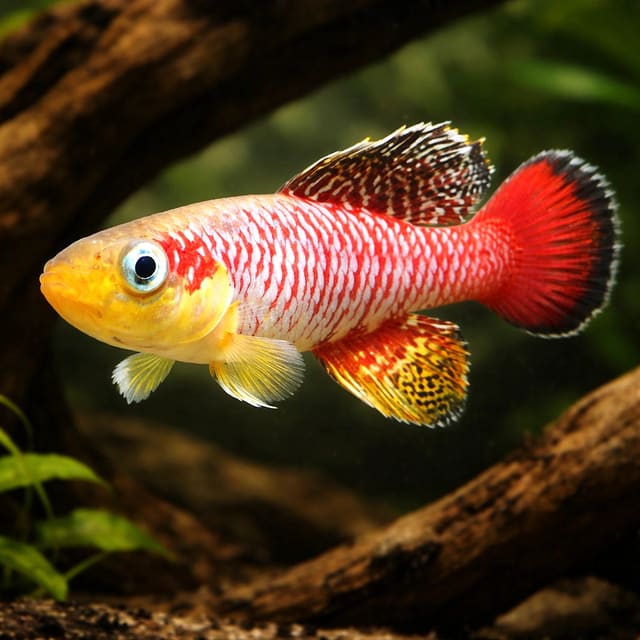
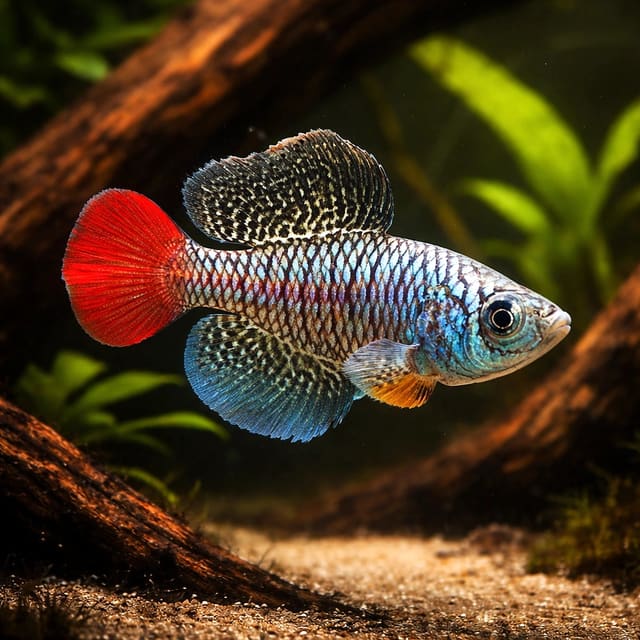
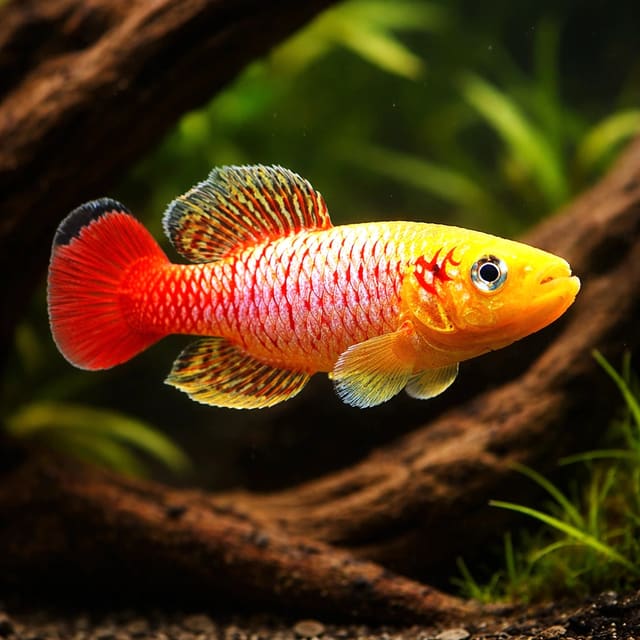
Gunther's Zanzibar Gold Nothobranch (Nothobranchius guentheri)
22–25°C · pH 6–7
£10.99

Playfair's Panchax, a colourful Seychelles surface killifish supplied at about 4-5 cm. Best in a covered planted aquarium with similar-sized fish.
Adult size is the maximum length this species reaches at full maturity (scientific sources). The livestock you receive will be younger and smaller. Product-photo provenance and any image-specific limitations are stated on the listing.
Pachypanchax playfairii
Save when buying multiple fish. Each quantity is one fish; sex and pair formation are not guaranteed unless the selected variant explicitly states them.
Confirm your email, then we’ll send an availability message for this exact item if it returns within 180 days.
This request is only for this product—no newsletter or other promotions. A mail-provider retry may very rarely duplicate the same availability message. Unconfirmed addresses are removed after 48 hours. See our privacy policy.
Playfair's Panchax, a colourful Seychelles surface killifish supplied at about 4-5 cm. Best in a covered planted aquarium with similar-sized fish.
Adult size is the maximum length this species reaches at full maturity (scientific sources). The livestock you receive will be younger and smaller. Product-photo provenance and any image-specific limitations are stated on the listing.
Maintain these water conditions for optimal health and vibrant colors
The Seychelles Panchax (Pachypanchax playfairii) is the classic Playfair's Panchax, also known as the Golden Panchax or roughbacked killie. It is a colourful, surface-patrolling killifish from the Seychelles, with enough size and confidence to suit a well-planned specialist or robust community aquarium. Our current fish are supplied at about 4-5 cm; adults are often around 7 cm in aquaria, with larger sizes reported in the literature, so plan the tank for mature fish rather than only the arrival size.
This is a better choice for keepers who enjoy active surface fish than for tiny nano communities. It is hardy by killifish standards, but it is assertive, predatory toward very small animals and extremely capable of jumping. Give it space, floating cover, a tight lid and similar-sized tank mates, and it becomes a distinctive island-origin centrepiece.
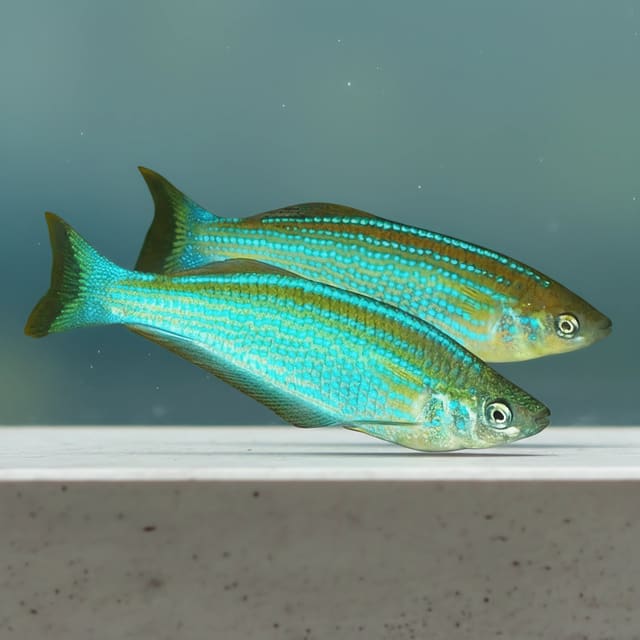
The original reference photo shows a slender fish with a red-orange face, bright blue-green scale sheen, dark vertical side markings, yellowish lower fins and a blue-green tail. It is not just a plain golden fish. In a planted aquarium, the metallic body colour looks strongest with darker background tones, broken surface light and floating plants. The roughbacked nickname also matters: specialist sources describe slightly raised-looking scales along the back as a normal feature of the species, not automatically a disease sign.
Pachypanchax playfairii is the Seychelles member of a genus otherwise associated mainly with Madagascar. FishBase records it from small fresh and brackish streams, with ponds also used. The Journal of the American Killifish Association distribution paper treats the Seychelles as the native centre for the species and records small streams and other small water bodies, some brackish, on granitic islands including Mahe, Praslin and Silhouette. Older Zanzibar records are best understood as introduced populations rather than the natural range.
For aquarium care, that background points to a fish that appreciates clean, oxygenated water, plant cover and a little surface movement, while tolerating a wider mineral range than many soft-water killifish. It is not a seasonal annual killifish. Do not manage it like a short-lived peat-spawning annual; it is a plant/mop spawner that can live for several years when kept well.
Use an aquarium of at least 80 litres for a pair or small group, with more room if keeping multiple males. The lid must be secure, including small gaps around cables, because panchax-style killifish are powerful jumpers. Add open surface space for feeding and display, then break the light with floating plants such as Salvinia, Pistia or floating stems. Rooted plants, driftwood and darker areas help females and subordinate fish avoid constant attention.
Filtration should be steady rather than fierce. A sponge filter or gentle internal filter works well, especially if you want to raise young. The fish will use the upper water most of the time, so leave room above the plants for patrol routes. Avoid cramped tanks packed with tiny tetras or delicate long-finned fish; that is exactly the sort of setup where this species can become too quarrelsome.
A practical range is 22-26 C, pH 6.5-8.0 and stable, clean water from moderately soft through hard. Aquarium Glaser notes that the species is undemanding about water values and naturally can enter brackish water, but that should not be read as a reason to let maintenance slip. Keep ammonia and nitrite at zero, keep nitrate controlled with regular water changes, and avoid sudden swings.
If your tap water is moderately hard, this species is often easier than delicate rainforest killifish. If your water is very soft, add minerals carefully and monitor stability. The important part is consistency: a covered, planted, well-maintained aquarium suits it better than constant parameter chasing.
FishBase records a diet of worms, crustaceans, insects and fish. In the aquarium, feed a varied carnivorous diet: mosquito larvae, daphnia, brine shrimp, small bloodworm, whiteworm, chopped earthworm where appropriate and good frozen foods. Quality floating or slow-sinking granules can be used as support, but live and frozen foods bring out better condition and behaviour.
Feed small amounts once or twice daily and watch the surface. This fish is quick and confident, so timid tank mates can be outcompeted. Remove uneaten food promptly, especially in a covered tank with floating plants where debris can hide near the surface.
Seychelles Panchax are alert, bold surface fish. Rival males may spar, and Aquarium Glaser specifically warns that the species can be quarrelsome in small aquariums. They are also predators, so very small fish, fry and tiny shrimp are not safe tank mates. The best companions are similar-sized, robust but not aggressive fish that use the middle or lower water, plus bottom dwellers too large to be swallowed.
Avoid tiny nano fish, delicate long-finned fish, slow timid species, small shrimp and aggressive cichlids. For the best display, keep one male with females or use a larger planted tank with clear line-of-sight breaks. If you want breeding, a species-first setup is much easier to manage.
Pachypanchax playfairii is a non-annual egg-scatterer. FishBase notes that it lays 50-200 eggs, and killifish keepers commonly use spawning mops or dense floating/submerged plants. Adults may eat eggs and fry, so remove mops or raise fry separately if you want reliable numbers. Fry are small and do best with tiny live foods at first, moving on to newly hatched brine shrimp, daphnia and other suitably sized foods as they grow.
This is one of the reasons the species is rewarding: it combines visible surface behaviour with a breeding method that is practical for a careful hobbyist. It is not an instant project, but it is far less seasonal and fragile than true annual killifish.
Your Seychelles Panchax is packed for live-fish courier delivery with oxygen, insulation and weather-aware dispatch timing. The product page uses the original reference photo as a reference image, with the existing gallery kept for additional aquarium context. First-time customers can use WELCOME10 at checkout, and eligible livestock orders are covered by our Live Arrival Guarantee.
If you are choosing between this fish and smaller annual killifish, pick the Seychelles Panchax when you want a longer-lived, bolder surface fish for a secure covered aquarium. Pick a smaller Nothobranchius species when you want a dedicated annual-killifish breeding project.
No reviews for this item yet. Bought one? Honest reviews only, good or bad.
What customers say about ordering from us
I have a small group of long finned mountain minnows. So was delighted to be able to order ten of this variety to increase the genetics in my tank . The ones I recieved are healthy but it’s to early to give a verdict on wether they are of a long finned type since they are small currently.
Gordon Walker · 23 Sept 2026
100% success travel and "installation". Pleased with quality of purchase. The Siamese fighter a bit "shy" so have not yet seen him at his best yet but looking good. Happy customer. GG
George E Garratt · 21 Sept 2026
Reviews of our shop, collected by Judge.me, an independent third-party review collector. Newest first.