Gunther's Nothobranch (Nothobranchius guentheri)
22–25°C · pH 6–7
£11.99

A shimmering African lampeye for mature, well-oxygenated planted aquariums. Best kept in a calm group with excellent water quality, steady flow and a tight lid.
Adult size is the maximum length this species reaches at full maturity (scientific sources). The livestock you receive will be younger and smaller. Product-photo provenance and any image-specific limitations are stated on the listing.
Procatopus gracilis (trade name; junior synonym of Procatopus aberrans)
Shoaling fish: kept in a group they feel safer, stay calmer and show their best colour.
Confirm your email, then we’ll send an availability message for this exact item if it returns within 180 days.
This request is only for this product—no newsletter or other promotions. A mail-provider retry may very rarely duplicate the same availability message. Unconfirmed addresses are removed after 48 hours. See our privacy policy.
A shimmering African lampeye for mature, well-oxygenated planted aquariums. Best kept in a calm group with excellent water quality, steady flow and a tight lid.
Adult size is the maximum length this species reaches at full maturity (scientific sources). The livestock you receive will be younger and smaller. Product-photo provenance and any image-specific limitations are stated on the listing.
Maintain these water conditions for optimal health and vibrant colors
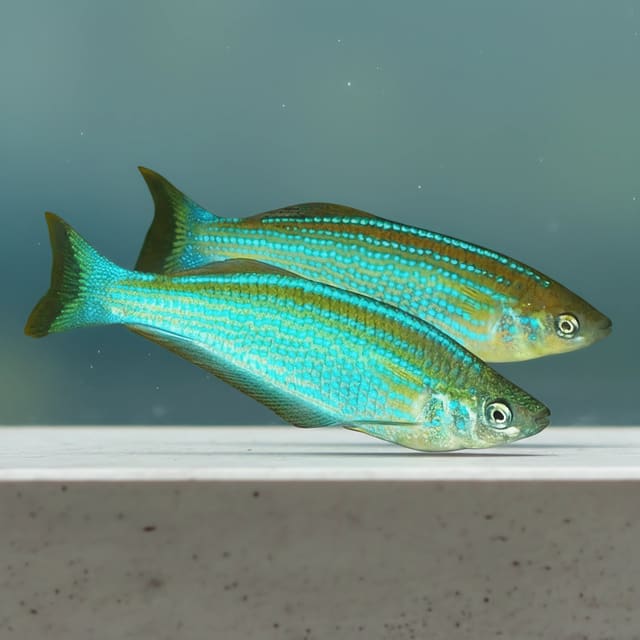
Powder-Blue Lampeye (Procatopus gracilis) is a small African lampeye with a bright blue sheen, clear reflective eyes and fast, elegant movement near the upper levels of the aquarium. It is best chosen by keepers who enjoy specialist shoaling fish rather than by anyone looking for a hardy beginner species. The fish offered here are normally supplied at around 3.5-4 cm, already large enough to show the powder-blue body colour that makes this form so attractive in a planted aquarium.
The name Procatopus gracilis is still widely used in the aquarium trade, including by suppliers, so we keep it in the product title for customers searching for this fish. Current taxonomic references treat Procatopus gracilis as a junior synonym of Procatopus aberrans, so the husbandry below follows the more demanding Procatopus aberrans care profile rather than treating this as an easy community filler.
This listing now includes the original reference photo for SKU 5250, alongside the existing aquarium-scene images. The source photo is useful because Powder-Blue Lampeyes can look different under different lighting: in a bright tank they show an icy blue to blue-green flash across the body, while in shaded planted areas the fins and reflective eye become more noticeable.
Expect a slender, streamlined lampeye shape with a semi-transparent body, reflective blue sides and a noticeable glowing eye. Mature males usually show stronger colour, more fin display and a livelier posture when kept with females, while females tend to be softer in colour. Good lighting makes the blue reflection stand out, but the fish still appreciate planted cover, darker background areas and shaded breaks so they can settle without feeling exposed.
The accepted species complex is associated with small rivers, brooks and creeks in Nigeria and Cameroon, often in forest or forest-savannah settings. These are not stagnant puddle fish. They are stream-oriented lampeyes that do best in clean, oxygen-rich water with gentle to moderate flow and stable chemistry. In the aquarium this means mature filtration, regular maintenance, careful acclimation and a tank that has been running long enough to avoid ammonia or nitrite swings.
A mature planted aquarium suits this species best. Use a dark substrate or darker background to show the blue colour, add fine-leaved plants, Anubias, mosses, floating cover and open upper-water swimming space. Filtration should be strong enough to keep the water polished and oxygenated, but not so turbulent that the fish are constantly pushed around. A small powerhead or directed filter return can help create a stream-like area if the tank layout also gives quieter planted edges.
A tight lid is essential. Lampeyes are quick surface fish and can jump when startled, especially during maintenance, netting or new introductions. Keep nitrate low, avoid sudden temperature or pH swings, and acclimate slowly. This is not a fish to add to a brand-new aquarium or a tank with inconsistent maintenance.
Powder-Blue Lampeyes take small foods from the water column and surface. Offer a varied diet of fine quality flakes or micro granules supported with frozen or live daphnia, baby brine shrimp, cyclops, mosquito larvae and other small foods. They have small mouths, so avoid large pellets that sink quickly past them. Feed modest portions and keep water quality high; overfeeding is one of the easiest ways to spoil the stable conditions these fish need.
Keep them in a group, ideally six or more, because the colour, confidence and movement are much better when they have company of their own kind. Males may display, but the species is peaceful and should not be kept with aggressive, predatory or boisterous tank mates. Suitable companions are small peaceful fish that like similar clean, oxygen-rich water and will not outcompete them at feeding time. Avoid fin nippers, large cichlids, fast surface bullies and any fish big enough to view them as food.
Procatopus breeding is possible but should be treated as a specialist project. Condition adults with small live and frozen foods, provide fine spawning media or dense plants, and protect eggs and fry from adults. The fry are tiny and need very small first foods. Because water quality matters so much, breeding attempts are more successful in a stable, mature species setup than in a busy mixed community tank.
This is a beautiful choice for an experienced keeper who wants a rare-looking African lampeye and is willing to maintain clean, oxygen-rich water. It is not the best first fish for a new aquarium. Choose it if you can provide a covered planted tank, steady maintenance, careful acclimation and a peaceful group environment.
For best results, add the group to a stable aquarium rather than buying one or two individuals as a token top-dweller. A settled group spreads display behaviour, reduces nervous darting and gives the males a reason to colour up. Keep transport lights low, float and acclimate patiently, then release into a tank with plants close to the surface so the fish can pause and orient themselves. During the first week, feed lightly, watch breathing and posture, and avoid large maintenance changes unless water testing shows a real problem.
Powder-Blue Lampeyes are packed carefully for UK live-animal courier delivery. Use code WELCOME10 for 10% off a first order where eligible, and order with our Live Arrival Guarantee. As with all delicate small fish, have the aquarium ready before dispatch day, dim the lights during introduction and acclimate slowly so the group can settle with minimal stress.
Care guidance for this listing was checked against our stock records, FishBase, Eschmeyer's Catalog of Fishes, GBIF-linked taxonomy context and specialist aquarium references for Procatopus. The page keeps the supplier/trade name Procatopus gracilis visible while explaining the accepted-name relationship naturally for customers who research the fish before buying.
| Care point | Best target | Why it matters |
|---|---|---|
| Group size | 6 minimum, 8-10+ preferred | A larger group gives confidence and makes male display behaviour more natural. |
| Aquarium maturity | Mature, stable and well filtered | This fish is demanding of water quality and should not be used to test a new setup. |
| Flow and oxygen | Gentle to moderate current with surface movement | The accepted species profile is associated with flowing creek and brook habitats. |
| Cover | Secure lid, plants and shaded breaks | Lampeyes are quick upper-water fish and can jump through small gaps. |
| Difficulty | Advanced / difficult | Small foods, calm tank mates and stable chemistry matter more than with hardy community fish. |
| Item | Recommended approach | Practical note |
|---|---|---|
| Temperature | 24-26C | Match water-change temperature carefully and avoid sudden drops. |
| pH | About 6.5-7.5 | Stable neutral to mildly acidic water suits the stream-fish setup. |
| Hardness | Soft to moderate, around 5-15 dGH | Avoid forcing this fish into hard alkaline cichlid-style water. |
| Prepared foods | Fine flake or micro granule if accepted | Crush food small enough for the mouth size. |
| Frozen/live foods | Daphnia, cyclops, baby brine shrimp, mosquito larvae | Small foods support condition, colour and feeding confidence. |
| Tank mate type | Suitability | Reason |
|---|---|---|
| Small peaceful rasboras or tetras | Good with matching water | Calm species are less likely to bully the lampeye group away from food. |
| Other peaceful lampeyes / killifish | Good with planning | Match water needs and avoid overcrowding the surface zone. |
| Dwarf Corydoras and calm bottom fish | Usually suitable | They use different areas of the tank and do not compete hard at the surface. |
| Large predators or aggressive cichlids | Avoid | Powder-Blue Lampeyes are small and easily stressed or eaten. |
| Fin nippers and rough feeders | Avoid | They damage confidence and stop the group feeding properly. |
| Images | This SKU has five preserved Shopify images, including the original reference photo added in the earlier cleanup. |
|---|---|
| Arrival cover | Eligible livestock orders are covered by our Live Arrival Guarantee. |
| First order | New customers can use WELCOME10 for 10% off their first order while the code is active. |
| Before ordering | Prepare a mature, covered, well-oxygenated aquarium and a calm shoal plan. |
No reviews for this item yet. Bought one? Honest reviews only, good or bad.
What customers say about ordering from us
I have a small group of long finned mountain minnows. So was delighted to be able to order ten of this variety to increase the genetics in my tank . The ones I recieved are healthy but it’s to early to give a verdict on wether they are of a long finned type since they are small currently.
Gordon Walker · 23 Sept 2026
100% success travel and "installation". Pleased with quality of purchase. The Siamese fighter a bit "shy" so have not yet seen him at his best yet but looking good. Happy customer. GG
George E Garratt · 21 Sept 2026
Reviews of our shop, collected by Judge.me, an independent third-party review collector. Newest first.