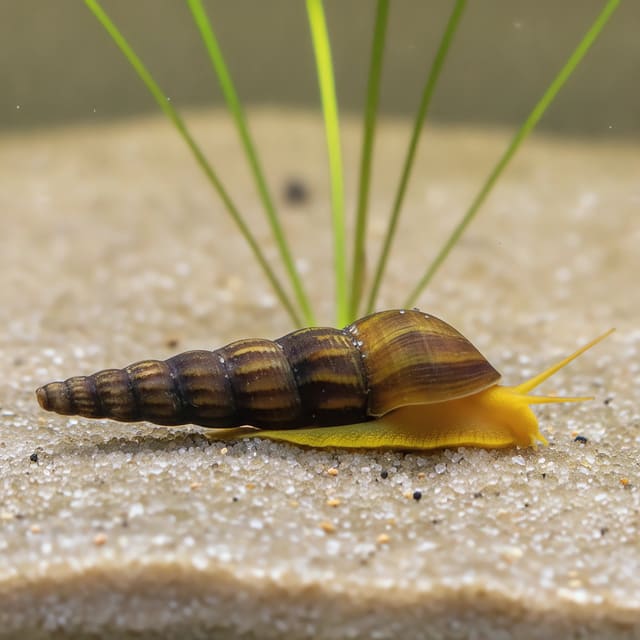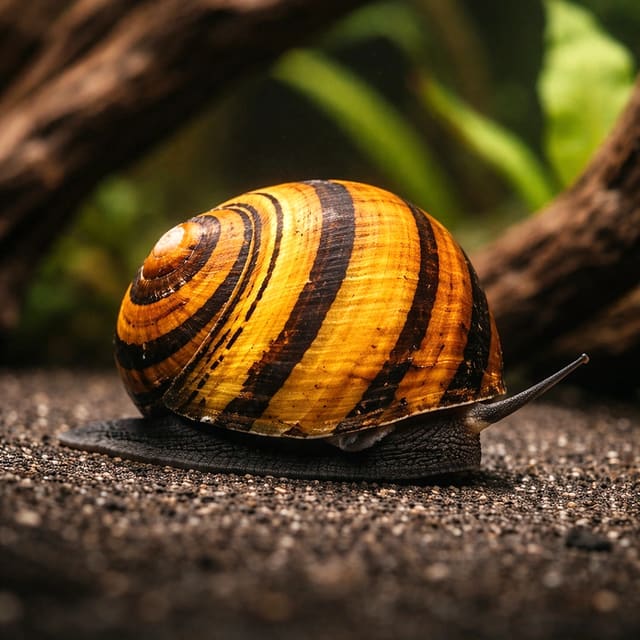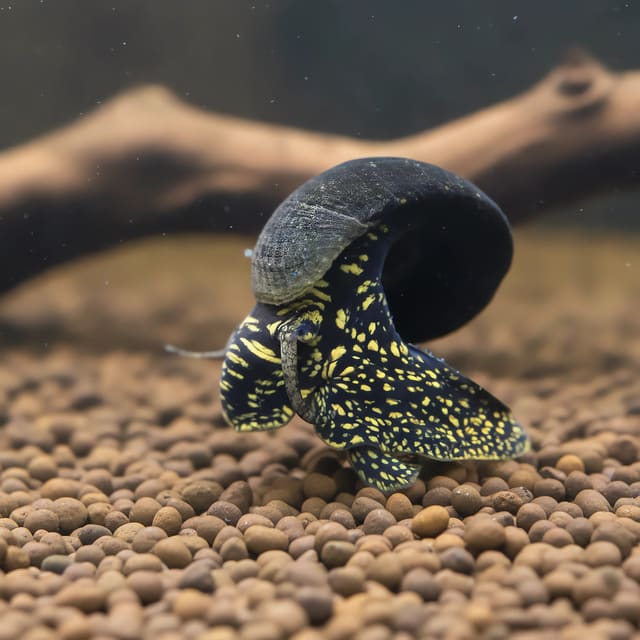
Yellow Spotted Rabbit Snail (Tylomelania sp.)
17–27°C · pH 6.5–8
£18.99

Freshwater Clam (Corbicula javanicus), a peaceful burrowing filter feeder for mature, invertebrate-safe freshwater aquariums.
Corbicula javanicus
Lives in groups: kept together they stay settled, active and show their best colour.
Confirm your email, then we’ll send an availability message for this exact item if it returns within 180 days.
This request is only for this product—no newsletter or other promotions. A mail-provider retry may very rarely duplicate the same availability message. Unconfirmed addresses are removed after 48 hours. See our privacy policy.
Freshwater Clam (Corbicula javanicus), a peaceful burrowing filter feeder for mature, invertebrate-safe freshwater aquariums.
Maintain these water conditions for optimal health and vibrant colors
The Freshwater Clam (Corbicula javanicus) is a peaceful burrowing bivalve for mature freshwater aquariums. It is sold as a small 1-2 cm clam and spends most of its time partly buried in soft substrate, extending its siphons to filter fine suspended food from the water column. In the right tank it adds subtle natural behaviour rather than bright movement: the interest is in watching where it settles, how it positions itself in the flow and how it becomes part of the aquarium filtration ecology.
This is not a drop-and-forget algae eater. A clam can be useful and fascinating in the right aquarium, but it needs stable water, fine substrate, gentle movement and a regular supply of microscopic food. The best homes are mature planted or invertebrate-friendly aquariums where the keeper understands filter feeders.
| Care point | Recommendation | Why it matters |
|---|---|---|
| Adult size | Usually around 2-3 cm in aquarium trade | Small body, but still needs stable mature water. |
| Aquarium size | 75 litres or larger preferred | More water volume supports stable chemistry and suspended food. |
| Temperature | 20-28 C | Stable tropical freshwater conditions suit the species. |
| pH | 7.0-8.0 preferred, avoid acidic swings | Shell health is better in neutral to slightly alkaline water. |
| Diet | Obligate filter feeder | Needs fine suspended foods, not ordinary bottom wafers alone. |
Choose this clam for a mature aquarium with a soft sand area, steady gentle flow and an experienced keeper who will feed it deliberately. It is especially interesting in peaceful shrimp, snail and planted aquariums where copper-free care is already standard.
A brand-new, spotless or heavily mechanical-polished aquarium is a poor fit. In very clean tanks, clams can slowly starve because there is not enough suspended food passing their siphons.
Corbicula javanicus is a compact freshwater bivalve with a rounded shell, visible growth ridges and warm gold, tan or olive colouring. Once settled, it may move to a preferred spot and bury itself so that only part of the shell or siphon area is visible.
Movement is slow and easy to miss. A healthy clam should close when disturbed. A clam that remains gaping open, smells bad or does not react should be removed quickly, because a dead bivalve can foul aquarium water fast.
| Setup area | Best practice | Avoid |
|---|---|---|
| Substrate | Fine sand or very smooth small gravel | Sharp gravel, bare-bottom tanks or deep compacted dirt |
| Water movement | Gentle to moderate flow carrying suspended food | Dead spots with no food movement or blasting direct flow |
| Tank maturity | Established biofilm, stable filter and steady water chemistry | Uncycled or newly reset aquariums |
| Medication safety | Use only invertebrate-safe treatments | Copper-based medicines, algaecides or unknown treatments |
Place the clam on the substrate and let it choose its position. If it buries itself in a sensible area, leave it there. Constantly moving a clam prevents it from settling and feeding normally.
Freshwater clams feed by filtering phytoplankton, micro-particles, suspended detritus and fine prepared foods from the water. In many home aquariums, natural suspended food is not enough by itself, especially if the tank is heavily filtered and very clean.
Use tiny amounts of powdered invertebrate food, phytoplankton-style food or a suitable fine suspension feed. Feed lightly and observe water quality. The goal is to keep edible particles available without polluting the aquarium.
| Sign | Likely meaning | Action |
|---|---|---|
| Buried with siphon area exposed | Normal settled feeding behaviour | Leave it undisturbed and maintain gentle flow. |
| Moving repeatedly around the tank | Searching for a better food/flow position | Check flow, substrate and feeding routine. |
| Shell gaping and no closing response | Possible dead or dying clam | Remove and check water quality immediately. |
| Tank stays ultra-clean with no fine food | Starvation risk | Introduce careful target feeding with fine invertebrate food. |
This clam is peaceful with community fish, shrimp and snails that will not dig it up or eat it. It is a poor match for puffers, large loaches, crayfish, large cichlids, goldfish and any fish likely to pick at bivalves or disturb the substrate.
| Usually suitable | Use caution | Avoid |
|---|---|---|
| Peaceful shrimp, snails and small community fish | Busy bottom feeders that constantly dig | Puffers, loaches, crayfish and large cichlids |
| Mature planted aquariums with invertebrate-safe care | Very clean high-polish tanks with little suspended food | Copper-treated aquariums or tanks with unknown medication history |
The biggest mistake with freshwater clams is treating them like a decorative snail. They do not graze glass, eat leftover pellets in the usual way or clean a tank by themselves. They feed from the water column, so their success depends on food passing over them at the right particle size.
The second mistake is adding them to new aquariums. A new filter may process ammonia, but the tank often lacks the biofilm, suspended micro-life and stable routine that filter feeders need. Wait until the aquarium is genuinely mature and predictable.
| Mistake | Why it causes trouble | Better approach |
|---|---|---|
| Using the clam to fix cloudy water | Unstable water can kill the clam and worsen pollution if it dies | Fix filtration and water quality first, then add livestock |
| Keeping it in a spotless tank | No suspended food means slow starvation | Feed carefully with fine invertebrate foods |
| Using copper medication | Copper is dangerous to clams, shrimp and snails | Move fish to a hospital tank or use invert-safe treatment |
| Ignoring a gaping shell | A dead clam can pollute water quickly | Check response and remove any dead specimen promptly |
Acclimate slowly, especially if your water hardness or pH differs from the transport water. Place the clam on the substrate rather than burying it deeply by hand. It will usually work itself into the sand if the position suits it.
Check it during normal maintenance without disturbing it every day. Look for normal partial burial, occasional repositioning and a closing response when gently disturbed. Keep substrate cleaning gentle around the clam so its feeding position is not repeatedly disrupted.
Order Freshwater Clams only for a prepared, mature aquarium. They should not be used to cycle tanks or solve cloudy water problems in unstable systems.
Use code WELCOME10 for 10% off your first order where eligible. Live invertebrate orders are packed for overnight livestock delivery, and our Live Arrival Guarantee applies when the delivery and acclimation conditions are followed. Have the aquarium ready before dispatch, with the substrate prepared and copper-free water confirmed.
Care details were cross-checked against Quality Marine notes on Corbicula javanicus, AquariumBreeder freshwater clam care guidance, and the existing our stock records for SKU K608.
No reviews for this item yet. Bought one? Honest reviews only, good or bad.
What customers say about ordering from us
I have a small group of long finned mountain minnows. So was delighted to be able to order ten of this variety to increase the genetics in my tank . The ones I recieved are healthy but it’s to early to give a verdict on wether they are of a long finned type since they are small currently.
Gordon Walker · 23 Sept 2026
100% success travel and "installation". Pleased with quality of purchase. The Siamese fighter a bit "shy" so have not yet seen him at his best yet but looking good. Happy customer. GG
George E Garratt · 21 Sept 2026
Reviews of our shop, collected by Judge.me, an independent third-party review collector. Newest first.