Advanced
Gunther's Zanzibar Gold Nothobranch (Nothobranchius guentheri)
22–25°C · pH 6–7
£10.99

A shimmering West African lampeye for mature, well-oxygenated planted aquariums with steady flow, clean water, a secure lid and a proper group.
Adult size is the maximum length this species reaches at full maturity (scientific sources). The livestock you receive will be younger and smaller. Product-photo provenance and any image-specific limitations are stated on the listing.
Procatopus aberrans
Shoaling fish: kept in a group they feel safer, stay calmer and show their best colour.
Confirm your email, then we’ll send an availability message for this exact item if it returns within 180 days.
This request is only for this product—no newsletter or other promotions. A mail-provider retry may very rarely duplicate the same availability message. Unconfirmed addresses are removed after 48 hours. See our privacy policy.
A shimmering West African lampeye for mature, well-oxygenated planted aquariums with steady flow, clean water, a secure lid and a proper group.
Adult size is the maximum length this species reaches at full maturity (scientific sources). The livestock you receive will be younger and smaller. Product-photo provenance and any image-specific limitations are stated on the listing.
Maintain these water conditions for optimal health and vibrant colors
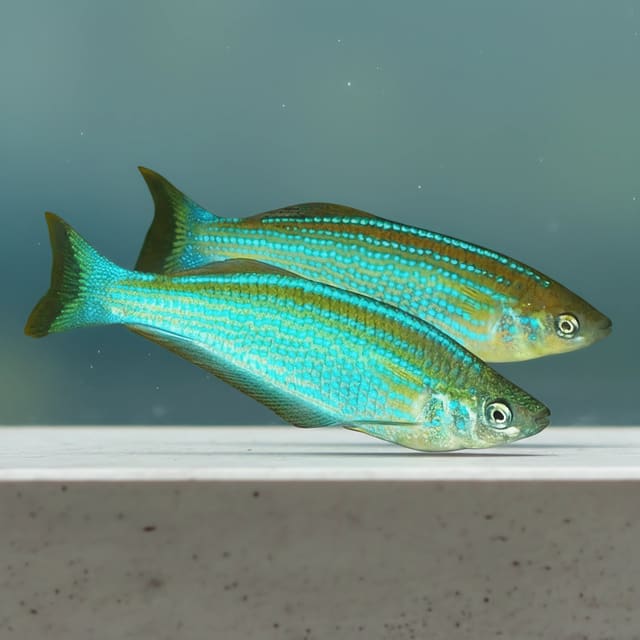
The Bluegreen Lampeye, Procatopus aberrans, is a small, sleek West African lampeye that flashes an electric blue-green sheen along its flanks whenever the light catches it. Though often shelved among the killifish, it belongs to the lampeye group and behaves nothing like the annual killies of seasonal pools; this is a rheophilic stream fish from flowing forest creeks, and it brings those demands with it: clean, oxygen-rich, moving water and the security of its own shoal. It is a peaceful, upper-water species that rewards the experienced keeper rather than the beginner, and it looks its absolute best kept as a proper group in a mature, planted aquarium where the males can display against green cover. Older supplier lists have carried the name under misspellings such as 'Procathopus aberans', but the accepted spelling is Procatopus aberrans. Supplied in prime condition, it is a jewel for a carefully prepared soft-water community and a genuinely rewarding fish for anyone ready to meet its needs.
Slim, elegant and streamlined, the Bluegreen Lampeye grows to around 5.5 cm. The body is semi-translucent and overlaid with a shimmering blue-green lateral flash that shifts and glows with the angle of light and the fish's mood, and the upper part of the eye carries the reflective spot that gives every lampeye its common name. Males are clearly the showier sex, larger and more colourful, often developing intensified colour and delicate extensions or coloured margins on the unpaired fins, which they spread in display; females are noticeably paler, plainer and more transparent. Colour is heavily condition-dependent, so freshly imported fish can look washed-out and grey after the stress of travel. Given a settled shoal, clean flowing water and good food, the blue-green side flash deepens dramatically and the males begin to show their full finnage, transforming an unremarkable new arrival into a living jewel.
Recreate a forest stream. Use a mature, well-planted aquarium of 60 litres or more, and 90 litres or more is better for a proper shoal, with gentle to moderate current, brisk oxygenation and pristine water throughout. A spray bar, small powerhead or angled filter return supplies the moving water these fish expect without pinning them into one corner, and the surface agitation it creates keeps dissolved oxygen high, which this stream species genuinely relies on. Furnish the tank with a darker substrate, generous planting, roots or bogwood and some floating cover, and keep temperature at 24-26°C, pH around 6.5-7.5 and hardness near 5-15 dGH. Above all, keep nitrogen waste very low: this is a species for an established, biologically mature aquarium and never a freshly cycled one, and disciplined, regular water changes matter far more to its long-term health than any clever aquascaping. A tight-fitting lid is not optional but essential.
Bluegreen Lampeyes are quick, surface-oriented fish that jump readily when startled or during feeding, and they can slip through the smallest gap. A tight-fitting lid or full cover glass with no openings is essential to prevent losses. Just as importantly, never add this species to a new or unstable tank; it is highly sensitive to poor water quality and low oxygen, and will fade fast in marginal conditions.
This is a gentle shoaling fish, not a scrappy, territorial killifish. Males display to one another and to females with spread fins and quivering runs, but serious aggression is rare when the group is large enough and the tank has room to spread out. Keep a shoal of six or more, and ideally eight or more, to bring out their natural confidence and the full range of male display behaviour; kept singly or in twos they turn shy, colourless and reclusive. The fish spend most of their time in the upper and middle water, patrolling the flow, so leave open swimming lanes near the surface. Choose their companions with care, keeping them only with calm, similarly sized species that share their need for clean, cool, well-oxygenated water and will not bully them or strip the food from the surface first.
| Great tank mates | Best avoided |
|---|---|
| Small peaceful tetras such as ember or green neon | Large or predatory fish |
| Small rasboras (e.g. chili, harlequin) | Boisterous or fin-nipping species |
| Pygmy Corydoras and other small, gentle bottom-dwellers | Aggressive cichlids |
| Other peaceful African lampeyes and killifish | Fast, greedy surface feeders that out-compete them |
| Adult dwarf shrimp in planted tanks | Anything needing hard, alkaline water |
Bluegreen Lampeyes are micro-predators built for small foods, and matching the food size to the fish is the whole secret to feeding them well. Offer finely sized frozen and live items such as daphnia, cyclops, baby brine shrimp, mosquito larvae and finely chopped bloodworm as the core of the diet, and use a fine flake or micro pellet only where it is taken willingly rather than relying on it. They feed actively in the upper and middle water, so deliver food where the shoal can reach it near the surface before heavier or faster tank mates strip the meal. Feed little and often, in small amounts the group clears quickly, and never let uneaten food sit and foul a tank this sensitive to water quality. Varied, small, frequent feeding on live and frozen foods does more for their colour and condition than any single prepared food.
Procatopus aberrans has been bred in aquaria, though it is a project for the committed rather than a casual first spawn. In the wild and the tank these lampeyes are crevice-spawners: breeders report eggs pushed into tight cracks in wood or rock, or into fine spawning mops positioned near the flow, laid a few at a time over an extended period rather than in a single event. The eggs and, especially, the tiny fry demand immaculate, well-oxygenated water, and the fry need very small first foods such as infusoria and microworm before they are large enough to progress onto baby brine shrimp. If breeding is the goal, begin with a well-conditioned shoal, mature and stable water, plenty of small live foods and a dedicated spawning and rearing setup. For most keepers, the first and best objective is simply keeping the adult group stable, active, colourful and well fed.
Buy this fish as a group, never as a single specimen. The blue-green shimmer, the confidence and the whole repertoire of male display only emerge once a proper shoal of eight or more has settled into clean, cool, moving water; a lone Bluegreen Lampeye in a still tank will never show you what the species can really do.
Every Bluegreen Lampeye is hand-selected and quarantined before sale, then packed in oxygenated bags with insulation and heat packs when needed and sent by tracked, live-animal courier. Your order is covered by our Live Arrival Guarantee, so it reaches you safely anywhere in the UK.
| Care point | Best target | Why it matters |
|---|---|---|
| Group size | 6 minimum, 8+ preferred | A shoal gives confidence, better display and more natural upper-water movement. |
| Aquarium maturity | Mature, stable filter | This stream fish is sensitive to poor water quality and unsettled tanks. |
| Water movement | Gentle to moderate current | Moving, oxygen-rich water reflects the small river and brook habitat. |
| Cover | Tight lid plus plants | Lampeyes can jump when startled, especially near the surface. |
| Feeding style | Small foods, small portions | Small mouths and clean-water needs make heavy feeding risky. |
| Item | Recommended approach | Practical note |
|---|---|---|
| Temperature | 24-26C | Keep stable through water changes and acclimation. |
| pH | About 6.5-7.5 | Avoid sudden swings; stability matters more than chasing a single number. |
| Hardness | Soft to moderate, around 5-15 dGH | Do not force this into a hard alkaline Malawi-style setup. |
| Prepared food | Fine flake or micro pellet | Crush if needed so the fish can swallow it easily. |
| Frozen/live food | Daphnia, cyclops, baby brine shrimp, mosquito larvae | Use variety for condition, colour and feeding response. |
| Tank mate type | Suitability | Reason |
|---|---|---|
| Small peaceful tetras or rasboras | Good with matching water | They are calm enough not to harass the lampeye shoal. |
| Other peaceful lampeyes / killifish | Good with planning | Match water needs and avoid overcrowding the upper-water zone. |
| Corydoras and calm bottom dwellers | Usually suitable | They use a different level of the aquarium and do not compete hard at the surface. |
| Large predators or aggressive cichlids | Avoid | Bluegreen Lampeyes are small and easily stressed or eaten. |
| Fin nippers or rough feeders | Avoid | They damage confidence and stop the group feeding properly. |
| Images | This SKU has five preserved Shopify images, including the original reference photo already attached to the product. |
|---|---|
| Arrival cover | Eligible livestock orders are covered by our Live Arrival Guarantee. |
| First order | New customers can use WELCOME10 for 10% off their first order while the code is active. |
| Before ordering | Prepare a mature, covered, well-oxygenated aquarium with a calm shoal plan. |
No reviews for this item yet. Bought one? Honest reviews only, good or bad.
What customers say about ordering from us
I have a small group of long finned mountain minnows. So was delighted to be able to order ten of this variety to increase the genetics in my tank . The ones I recieved are healthy but it’s to early to give a verdict on wether they are of a long finned type since they are small currently.
Gordon Walker · 23 Sept 2026
100% success travel and "installation". Pleased with quality of purchase. The Siamese fighter a bit "shy" so have not yet seen him at his best yet but looking good. Happy customer. GG
George E Garratt · 21 Sept 2026
Reviews of our shop, collected by Judge.me, an independent third-party review collector. Newest first.