Moderate
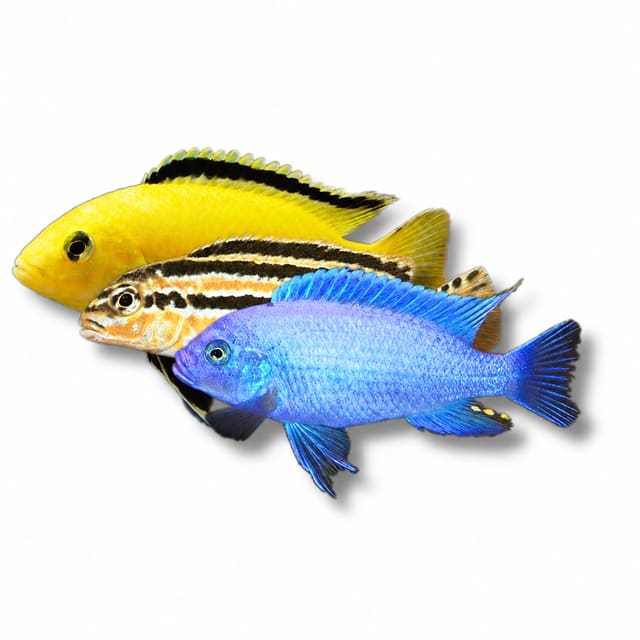
Assorted Lake Malawi Cichlids, Medium (Malawi cichlid mixed)
24–27°C · pH 8–8.5
£6.99

Burton's Mouthbreeder (Astatotilapia burtoni) is an assertive East African cichlid sold as one animal in a selected 4–9 cm size option. Provide a mature, well-filtered hard-water aquarium with generous space, structured refuges and carefully screened companions.
Astatotilapia burtoni
Save when buying multiple fish. Each quantity is one fish; sex and pair formation are not guaranteed unless the selected variant explicitly states them.
Burton's Mouthbreeder (Astatotilapia burtoni) is an assertive East African cichlid sold as one animal in a selected 4–9 cm size option. Provide a mature, well-filtered hard-water aquarium with generous space, structured refuges and carefully screened companions.
Cichlids are a family of roughly 1,800 accepted species, not one care type. Before buying, identify the exact species and source, then compare adult measurement, usable tank dimensions, social system, territory, tested water, diet and an exit plan. No family-wide minimum tank, water range or tank-mate list is safe.
Burton's Mouthbreeder (Astatotilapia burtoni) is a hard-water East African cichlid also traded as Burton's Nigerian Mouthbreeder. FishBase places the species in Lake Tanganyika and associated rivers and records a maximum length of 15 cm standard length for male or unsexed fish. Plan around that recorded maximum rather than the dispatch measurement when assessing swimming room, territory and companions.
This is an assertive, territorial fish for a deliberately planned cichlid aquarium. It needs generous space, a mature biological filter, vigorous aeration, structured refuges and companions able to share the same water and cope with cichlid activity. It is not a peaceful community choice for a small mixed aquarium. Our store suitability assessment is intermediate because successful care depends on water stability, social planning and early action when aggression develops.
OATA recommends at least 200 litres for a reasonable Malawi-style cichlid community and advises choosing as large an aquarium as practical. This is a Malawi-community planning benchmark rather than a minimum established for Astatotilapia burtoni. The final footprint must accommodate the recorded maximum size, every intended occupant and enough separate areas for pressured fish to leave an aggressor's path.
Measure your aquarium water before deciding. The water matcher helps compare those readings with the stated guidance without relying on appearance or a general hard-water label.
This listing has three recurring dispatch-size choices: 4–5 cm, 5–7 cm and 7–9 cm. Use the live selector to see which options can be chosen. One purchase quantity supplies one animal of the selected option; the three grades are choices of dispatch size rather than a pack of three fish.
The size you select is the size supplied, not the adult size. A smaller dispatch measurement gives no reliable life-stage or sex information. Use the FishBase maximum of 15 cm standard length as the long-term size reference, then allow additional room for territorial spacing, filtration capacity and the rest of the planned community.
Sex is guaranteed only when the selected option explicitly states male or female. This Burton's Mouthbreeder listing has no sex-guaranteed option.
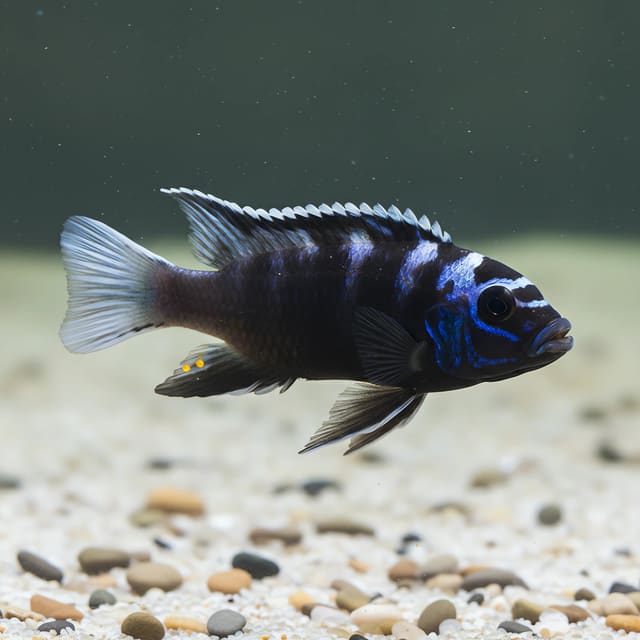
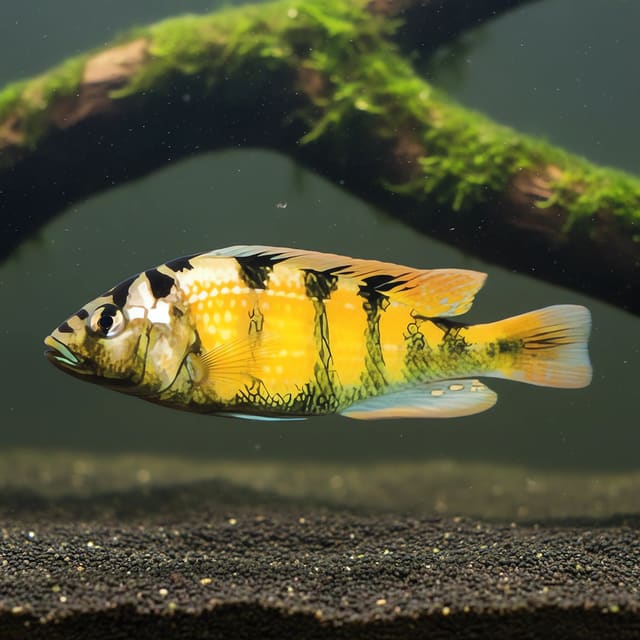
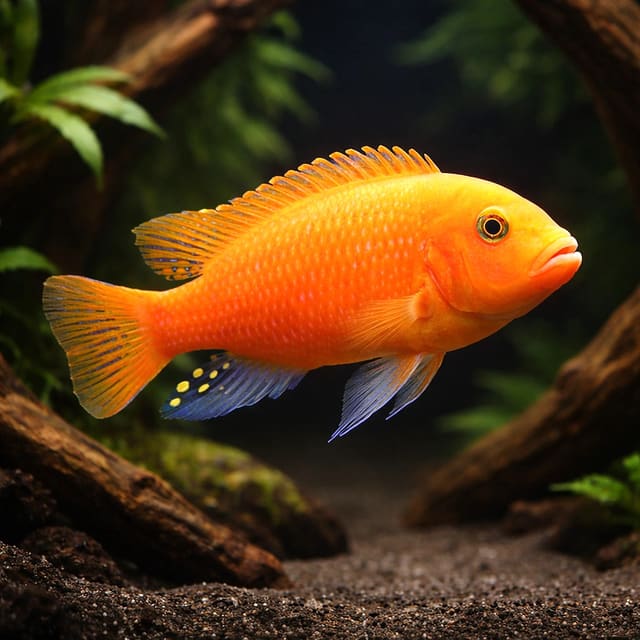
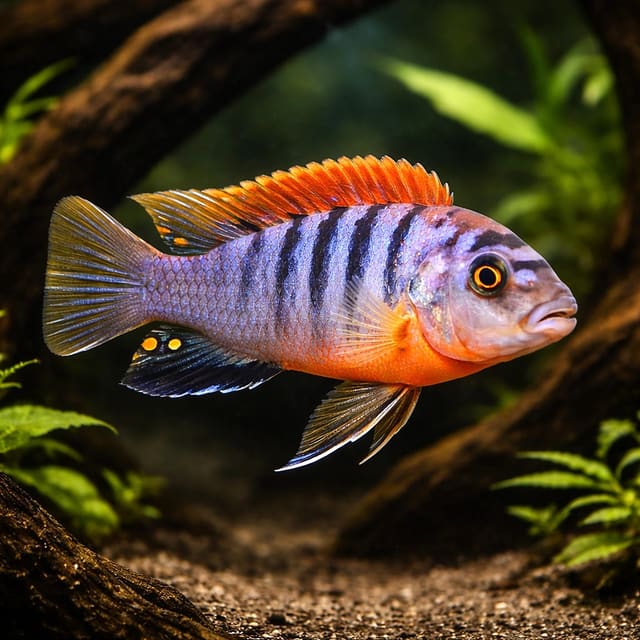
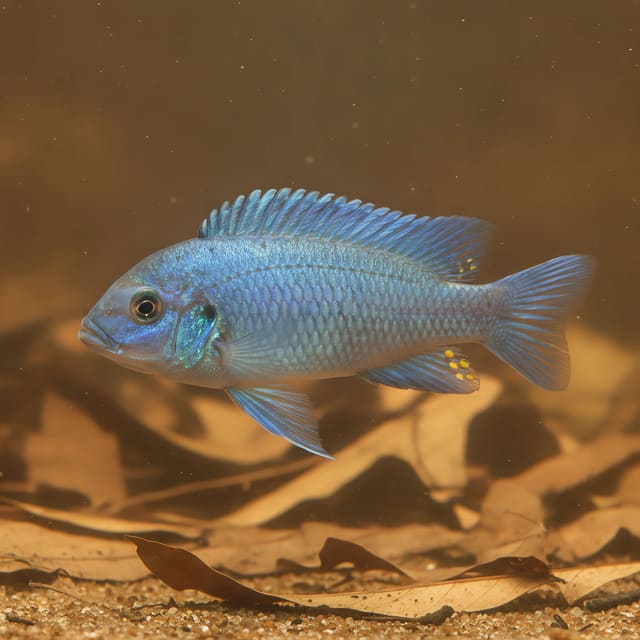
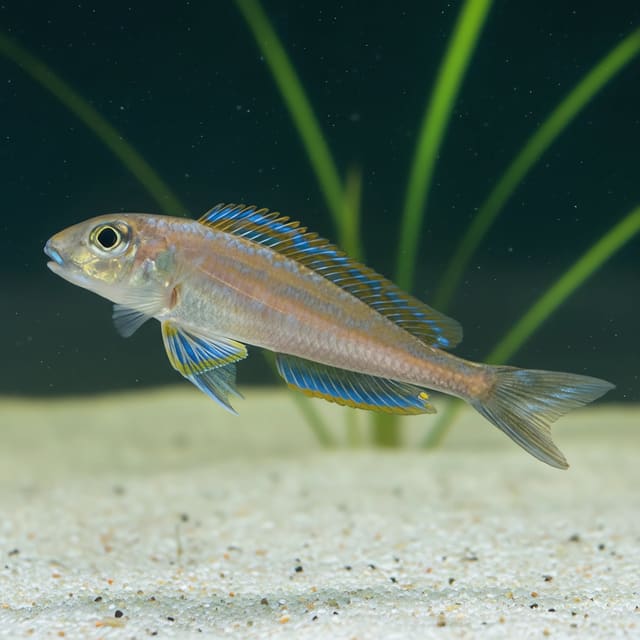
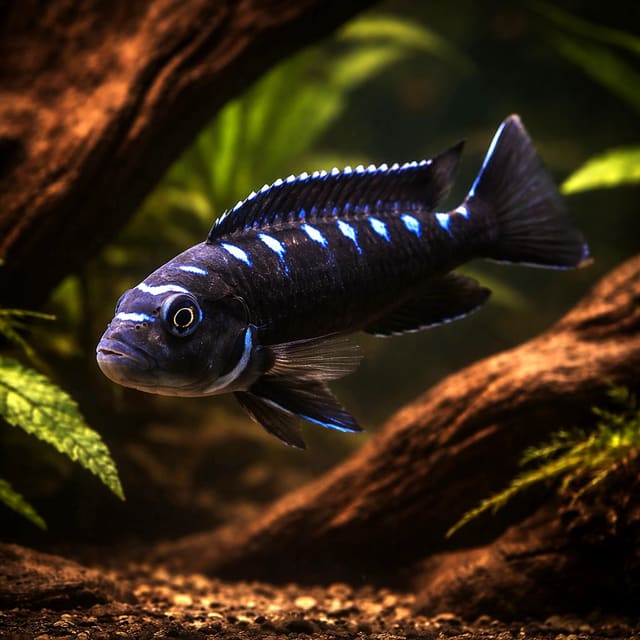
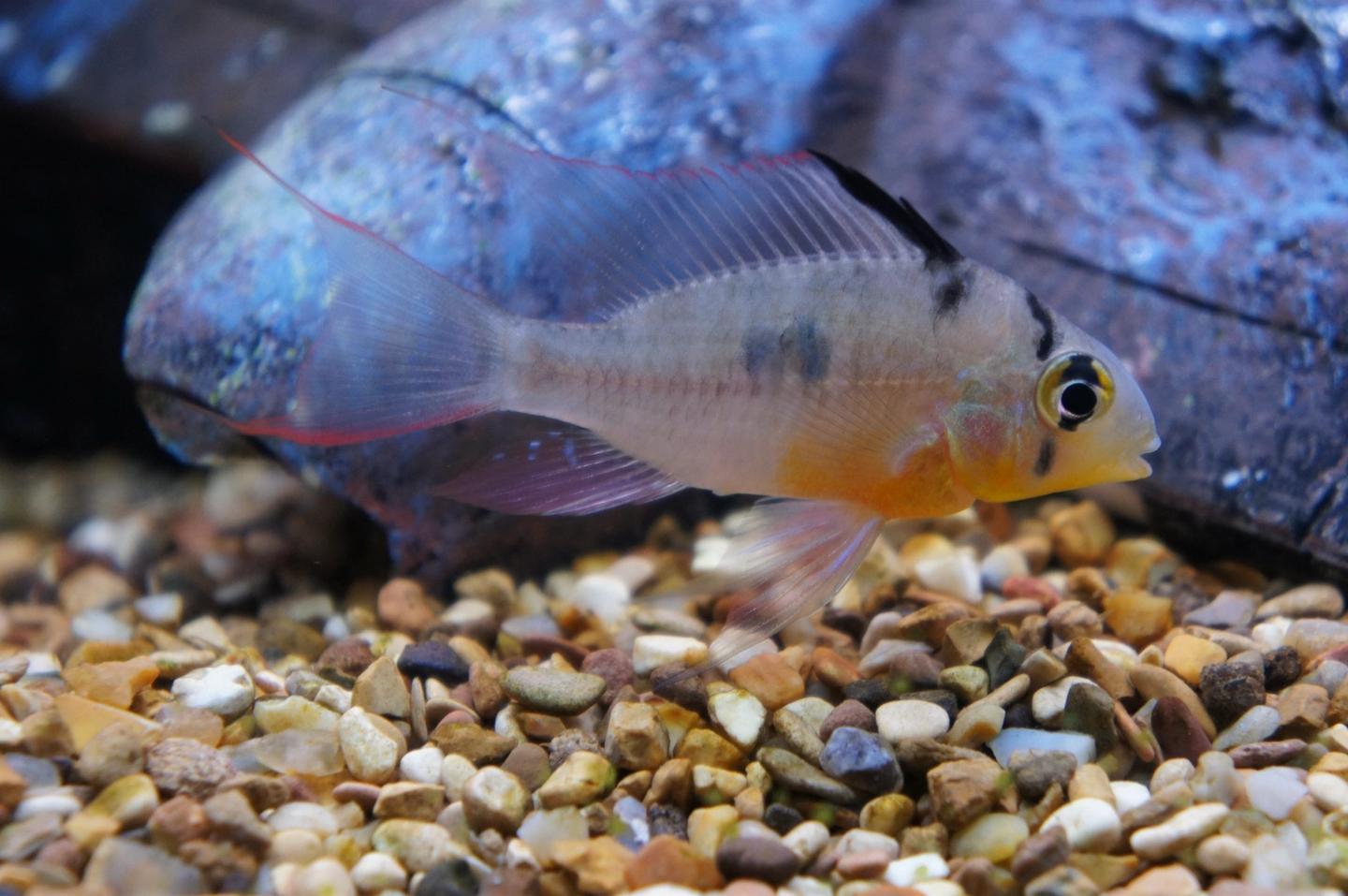
OATA notes that many cichlids in its Malawi group show visible sex differences only as adults, so juvenile colour or markings should not be used as a sex guarantee. Egg spots, bars or stronger colour in an illustration or photograph describe what is visible; they do not change the terms of the selected offer.
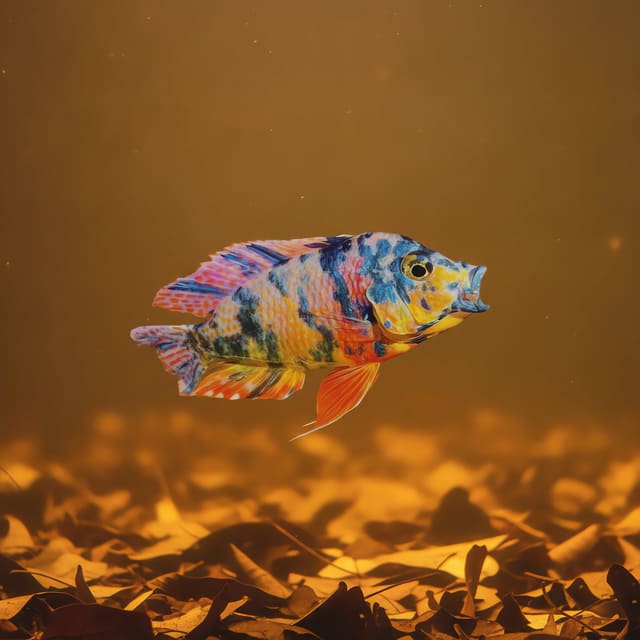
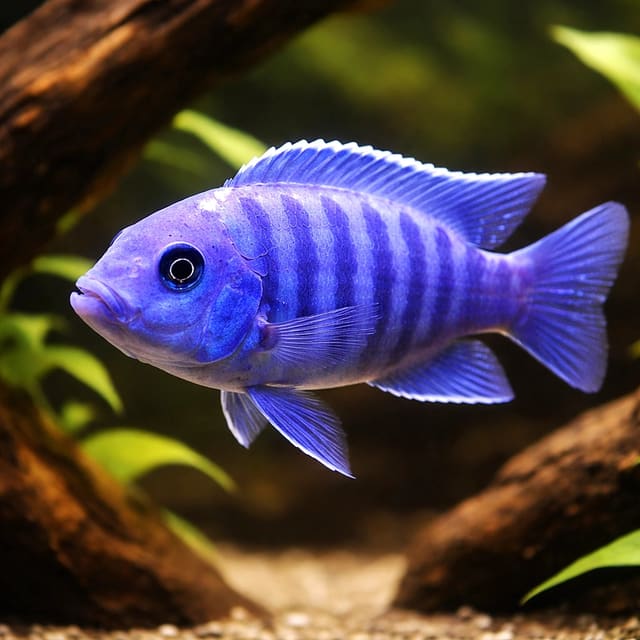
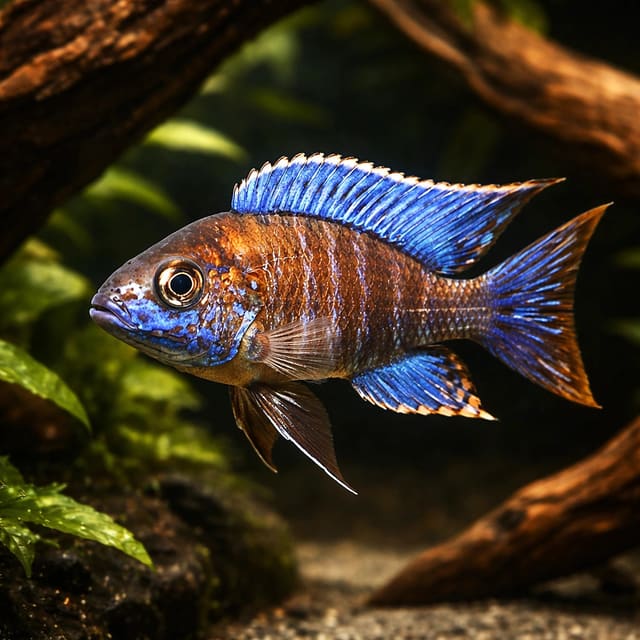
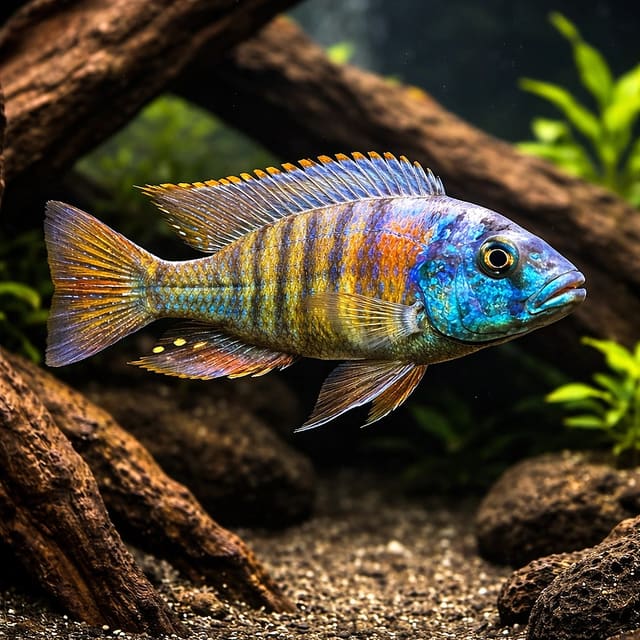
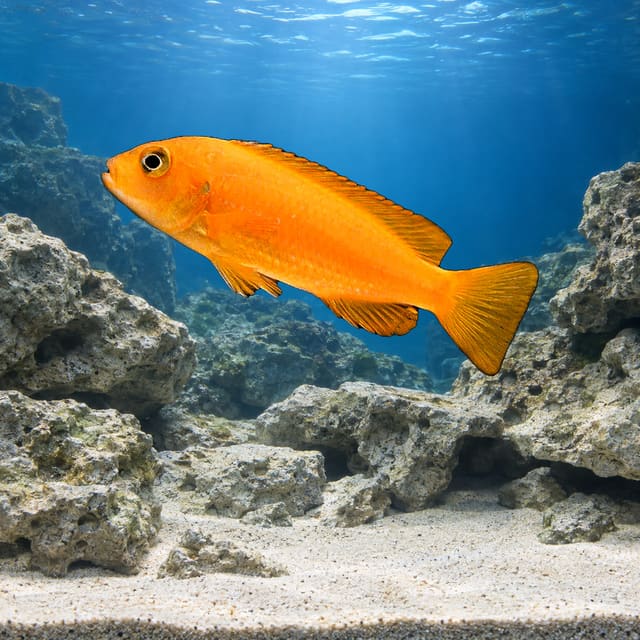
The gallery contains four representative illustrations and one unchanged source photograph. Some gallery images are representative, based on reference photographs of this species and the remaining photo is an unedited supplier photograph, so colours can look slightly different from the live animal.
Prepare the aquarium before arranging delivery. Read the delivery and Live Arrival Guarantee policy for the applicable dispatch schedule, delivery-day preparation and claim conditions.
The accepted scientific name is Astatotilapia burtoni. Common names include Burton's Mouthbreeder and Burton's Nigerian Mouthbreeder. FishBase identifies it as a freshwater member of Cichlidae, the cichlid family, and describes it as benthopelagic. Expect it to use the lower part of the water column as well as swimming through the aquarium rather than remaining at the surface.
Its recorded African distribution centres on Lake Tanganyika and associated rivers. FishBase names the Lukuga, Malagarazi and Rusizi systems and also notes an Akagera population that may have been introduced. This Tanganyika identity matters when planning companions: a shared label such as “African cichlid” never replaces comparison of water, adult size, activity and aggression.
FishBase records wild-environment values of 20–25°C, pH 8.5–9.0 and 12–16°dH for Astatotilapia burtoni. These figures describe its recorded natural environment, not a species-specific aquarium prescription. Use them with that boundary when comparing this fish with measured aquarium conditions.
FishBase lists the species as Least Concern on the IUCN assessment shown in its record. That conservation category concerns extinction risk; the individual fish still needs suitable space, stable water quality and a carefully screened community.
Choose a generous footprint that gives fish room to establish separate areas and leave an aggressor's path. Total volume matters, but usable horizontal territory, escape routes and the adult sizes of all intended occupants determine whether the aquarium can handle an assertive cichlid community.
Use structured décor to break long lines of sight and create several usable refuges. Pressured fish need more than one route away from a dominant individual, and a single cave can become another defended territory. Arrange separate gaps and sheltered areas across the footprint so retreating fish do not have to pass through the same narrow entrance.
OATA advises groups of at least 15 for Malawi cichlid communities and notes that slight, carefully filtered overcrowding can spread aggression, while small groups often fight. That stocking model belongs to Malawi communities; do not treat 15 as a prescribed group size for Burton's Mouthbreeder. It also requires a large system, an oversized filter and deliberate compatibility planning. Buying one animal per purchase does not establish a solitary-care option.
Where the group is reliably sexed, keep more females than males to reduce the chance of one female receiving persistent harassment. This offer has no sex-guaranteed option, so do not build a promised sex ratio from colour, markings, photographs or dispatch size. Monitor the actual social pattern and provide calm refuges for any fish repeatedly chased or excluded from food.
OATA's Malawi-cichlid group guidance gives 23–27°C, pH 8.0–8.6, 12–18°dH, 10–15°dKH, zero ammonia and nitrite, and nitrate no more than 20 mg/l above tap-water levels. These figures apply to the Malawi group covered by that care sheet and are not an aquarium target for Astatotilapia burtoni.
FishBase separately records wild-environment values of 20–25°C, pH 8.5–9.0 and 12–16°dH for this species. They describe recorded natural conditions rather than a captive optimum. Neither publication supplies a species-specific aquarium range, so compare measured conditions with the scope of each source before deciding whether the setup is suitable.
Keep temperature and pH steady rather than making abrupt adjustments to chase a single reading. A larger aquarium normally changes more slowly than a small one, giving the filter and fish more stable conditions. Test the source water as well as the aquarium because the OATA nitrate limit is measured relative to the normal tap-water level.
Use coral sand or a similar substrate where buffering is appropriate for the setup. Test after any change so the resulting pH and hardness are known rather than assumed. If the source water already follows a stable hard, alkaline pattern, maintain that stability; if it differs markedly from the recorded contexts, resolve the mismatch before choosing the fish.
The water chemistry guide explains what each test measures and why the result matters before you compare the aquarium with the stated source ranges.
Use a well-matured biological filter before adding Burton's Mouthbreeder. RSPCA aquarium guidance explains that beneficial bacteria convert toxic ammonia to nitrite and then to the safer nitrate. This nitrogen-cycle guidance covers aquarium fish generally, while OATA adds information about the heavier filtration and oxygen demands of busy cichlid communities.
A mature filter contains the bacterial population needed to process routine waste. A newly operating unit may move water without yet processing the waste from fish and food. Test the aquarium before adding livestock and proceed only when water quality is suitable and biological filtration is established.
Increase fish numbers slowly. Every added fish and every rise in feeding increases the biological load, so the bacterial population needs time to adjust. Adding too many fish too quickly can cause new tank syndrome, when insufficient nitrifying bacteria allow toxic ammonia and nitrite to accumulate.
Use an oversized filter for a crowded Malawi-style cichlid community because OATA associates that stocking approach with a heavier biological load. Provide vigorous aeration and strong surface movement so the busy aquarium maintains enough dissolved oxygen. Filtration processes waste; aeration supports the oxygen demand of fish and the biological system.
Use our first aquarium guide to plan and mature a new setup before livestock is introduced. Burton's Mouthbreeder should enter an established system rather than becoming the test of whether a new filter is ready.
OATA recommends changing 25% of the water at least once each week and testing the aquarium at least weekly so ammonia or nitrite accumulation is detected early. Use this maintenance rhythm for the planned cichlid aquarium and investigate promptly if readings or fish behaviour change.
Use a siphon during the partial change to remove solid waste trapped in the substrate. Concentrate on areas where food and debris settle, while leaving the buffering substrate and territories usable. Removing accumulated solids reduces the material available to break down between maintenance sessions.
Treat replacement tap water with a suitable conditioner before it enters the aquarium so harmful chlorine or chloramine is removed. Match the replacement water closely enough to preserve the stable temperature and chemistry maintained in the main system. Test rather than relying on visual clarity, because clear water can still contain harmful nitrogen compounds.
Check the filter regularly for blockages. Reduced flow can weaken waste processing and oxygen distribution even while the unit continues to run. When media needs cleaning, rinse it lightly in aquarium water removed during the partial change rather than under the tap; this limits exposure of beneficial bacteria to chlorine or chloramine.
Detectable ammonia or nitrite, a rising nitrate trend or reduced filter flow calls for immediate investigation of feeding, stocking, blockages and biological capacity. Correct the underlying load or flow problem rather than allowing waste to continue accumulating.
African cichlids do not all share one diet. OATA's group guidance says dietary requirements vary, so choose a suitable cichlid formulation according to the known dietary needs of the fish being fed rather than assuming that every African cichlid should receive the same rich mixture.
Feed only what the fish can finish within a few minutes, twice daily. Watch the entire group during those minutes because a dominant fish may reach most of the food while a quieter animal remains at the edge. Distribute suitable food so each fish has a realistic feeding opportunity without increasing the total portion beyond what the group can finish.
More herbivorous Malawi cichlids in a carefully planned mixed setup may receive algae-rich cichlid foods and fresh vegetables. More predatory cichlids may take animal-rich pellets and small portions of frozen brine shrimp, prawns or cockles. These are examples for the dietary categories covered by the OATA sheet, so select the formulation appropriate to each intended species.
Uneaten food breaks down and adds toxic waste, increasing the burden on the filter. Reduce excess food and strengthen maintenance when water quality starts to deteriorate. Removing leftovers is useful, but correcting the next portion prevents the same accumulation from recurring.
A female or subordinate fish persistently excluded from meals needs a social solution as well as food. Provide calm refuges and reassess the territory layout so the fish can approach feeding areas without repeatedly crossing the dominant individual's defended route.
Learn each fish's ordinary swimming, colour, breathing, body condition, feeding response and place within the social group. A change from that normal pattern is more useful than waiting for severe damage. If behaviour, breathing, appearance, condition or feeding changes, test the water promptly and investigate both the aquarium and social balance.
A healthy fish should have clear, bright eyes, undamaged fins, intact scales and no ulcers or unusual bumps. Check each individual rather than judging the aquarium from the most dominant, visible fish. Subordinate animals may spend more time near refuges, making fin damage or loss of condition easier to miss.
When health or behaviour changes, test water quality first because even small amounts of ammonia can stress cichlids. A zero result for ammonia and nitrite lets you continue checking social pressure, filter flow, feeding access and other visible changes without overlooking an immediate water-quality hazard.
Correct a failed water result, restore compromised filter flow or change the territory layout when one fish is continually targeted. Early intervention protects the pressured animal before repeated chasing becomes severe fin damage, weight loss or complete exclusion from food.
Plan companions conservatively. Burton's Mouthbreeder comes from the Tanganyika system, so every proposed companion must be checked for adult size, aggression, water requirements, feeding ability and available territory. OATA's companion examples apply to Malawi cichlids; its reference to certain Synodontis belongs to that Malawi-group guidance and is not a recommendation for Astatotilapia burtoni.
Only consider robust African cichlids after checking those factors across the whole planned community. Shared geographical wording or membership of Cichlidae is insufficient by itself because species differ in adult size, behaviour and dietary needs. Browse the African cichlid collection to compare identity, adult planning size, water needs and temperament before combining fish.
Do not treat small community fish or ornamental shrimp as automatically safe companions for an aggressive African cichlid. Avoid peaceful fish that cannot cope with the activity and aggression of the planned community. If the needs or likely behaviour of a proposed combination remain unclear, choose a more conservative stocking plan.
A compatibility plan must also work after the fish reach adult size. Reassess available territory, feeding access and filtration whenever the community changes; a combination that functions in a large structured aquarium may fail in a smaller or differently arranged setup.
Test the aquarium before adding fish and proceed only when the biological filter is established, ammonia and nitrite are zero and the remaining values suit the planned community. Increase numbers slowly so beneficial bacteria can adjust as waste production and feeding rise.
Introduce compatible cichlids in groups where practical so one newcomer is less likely to receive all the aggression while settling. The aquarium must have enough volume, filtration and territory for the added group before the fish are introduced.
When building a compatible cichlid community, add more peaceful species before more aggressive ones. This gives less forceful occupants an opportunity to find refuges and feeding routes before a more territorial fish begins defending space. It does not make a fundamentally unsuitable combination safe.
Rearrange aquarium décor when introducing fish if aggression is a concern. Changing established boundaries prompts residents to establish new territories, reducing the advantage held by a fish defending the exact same arrangement. Preserve multiple refuges and clear escape routes while making the change.
A short chase during territory establishment and persistent exclusion require different responses. Act when one fish continually controls another's access to open water, shelter or food. Adjust the layout or stocking plan before the targeted fish loses condition or suffers repeated physical damage.
Burton's Mouthbreeder is Astatotilapia burtoni, a freshwater East African cichlid from Lake Tanganyika and associated rivers. It is an assertive, territorial member of Cichlidae.
One purchase supplies one Astatotilapia burtoni from the selected size option. The retail unit is one animal rather than a pair, group or supplier box.
Burton's Mouthbreeder has recurring 4–5 cm, 5–7 cm and 7–9 cm options. Use the live selector to choose a displayed dispatch size; the selected size is not the adult size.
Provide Burton's Mouthbreeder with a mature, well-filtered and vigorously aerated hard-water aquarium, generous territory and several refuges. OATA gives at least 200 litres for a reasonable Malawi-style community, but this is a broad community benchmark rather than a species minimum.
Do not buy Astatotilapia burtoni on the assumption that solitary keeping is suitable. Plan the complete cichlid community deliberately; the available care information supplies no species-specific solitary or group number.
FishBase records wild-environment values of 20–25°C, pH 8.5–9.0 and 12–16°dH for Burton's Mouthbreeder. The available publications do not give a species-specific aquarium target.
Feed Astatotilapia burtoni an appropriate cichlid formulation selected for its known dietary needs. Offer only what is finished within a few minutes, twice daily, and confirm that quieter fish reach food.
Assess every companion to Astatotilapia burtoni for adult size, hard-water requirements, aggression, feeding ability and available territory. No named fish is an automatic tank mate.
Commercial records cover the offered identity, recurring dispatch grades and one-animal retail unit. They do not supply aquarium care parameters.
No reviews for this item yet. Bought one? Honest reviews only, good or bad.
What customers say about ordering from us
I have a small group of long finned mountain minnows. So was delighted to be able to order ten of this variety to increase the genetics in my tank . The ones I recieved are healthy but it’s to early to give a verdict on wether they are of a long finned type since they are small currently.
Gordon Walker · 23 Sept 2026
100% success travel and "installation". Pleased with quality of purchase. The Siamese fighter a bit "shy" so have not yet seen him at his best yet but looking good. Happy customer. GG
George E Garratt · 21 Sept 2026
Reviews of our shop, collected by Judge.me, an independent third-party review collector. Newest first.