Moderate
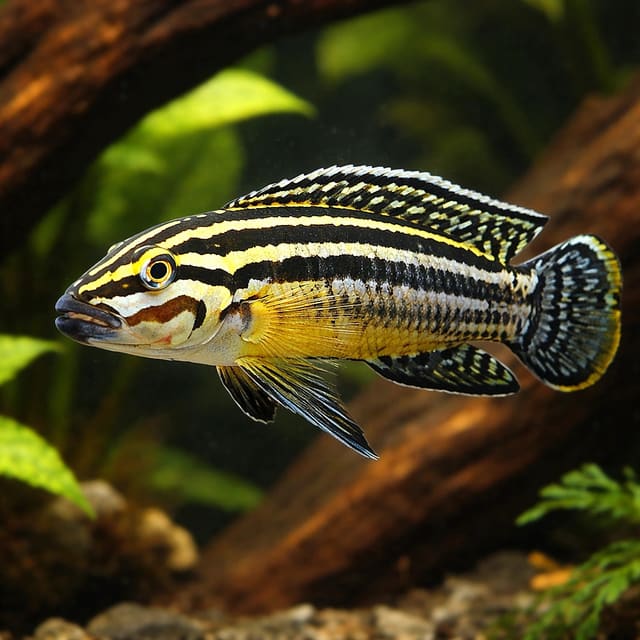
Meeli Shelldweller (Lamprologus meeli)
23–25°C · pH 8–8.6
£12.99

A striking Tanganyikan cichlid with shimmering blue coloration and elegant gold-tipped fins, ideal for a hard-water African cichlid aquarium. Moderate care, semi-aggressive. 24-28C, pH 7.8-9.0.
Adult size is the maximum length this species reaches at full maturity (scientific sources). The livestock you receive will be younger and smaller — pick a size above for the actual shipping size. Product-photo provenance and any image-specific limitations are stated on the listing.
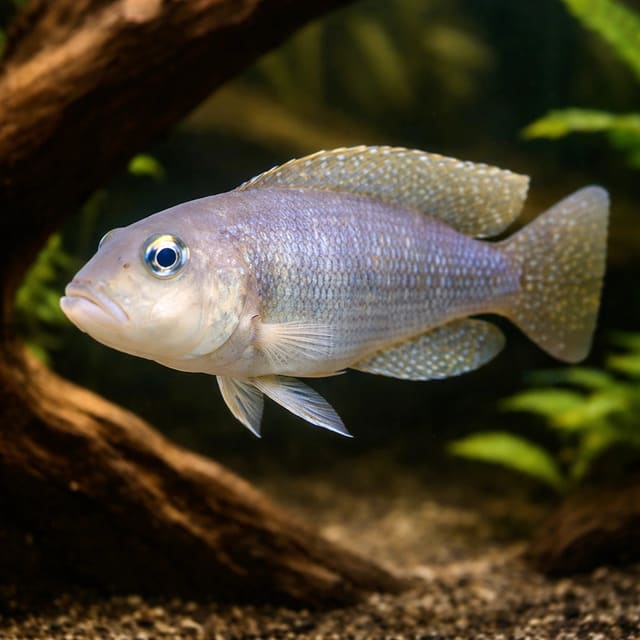
Ophthalmotilapia ventralis
Save when buying multiple fish. Each quantity is one fish; sex and pair formation are not guaranteed unless the selected variant explicitly states them.
Confirm your email, then we’ll send an availability message for this exact item if it returns within 180 days.
This request is only for this product—no newsletter or other promotions. A mail-provider retry may very rarely duplicate the same availability message. Unconfirmed addresses are removed after 48 hours. See our privacy policy.
A striking Tanganyikan cichlid with shimmering blue coloration and elegant gold-tipped fins, ideal for a hard-water African cichlid aquarium. Moderate care, semi-aggressive. 24-28C, pH 7.8-9.0.
Adult size is the maximum length this species reaches at full maturity (scientific sources). The livestock you receive will be younger and smaller — pick a size above for the actual shipping size. Product-photo provenance and any image-specific limitations are stated on the listing.
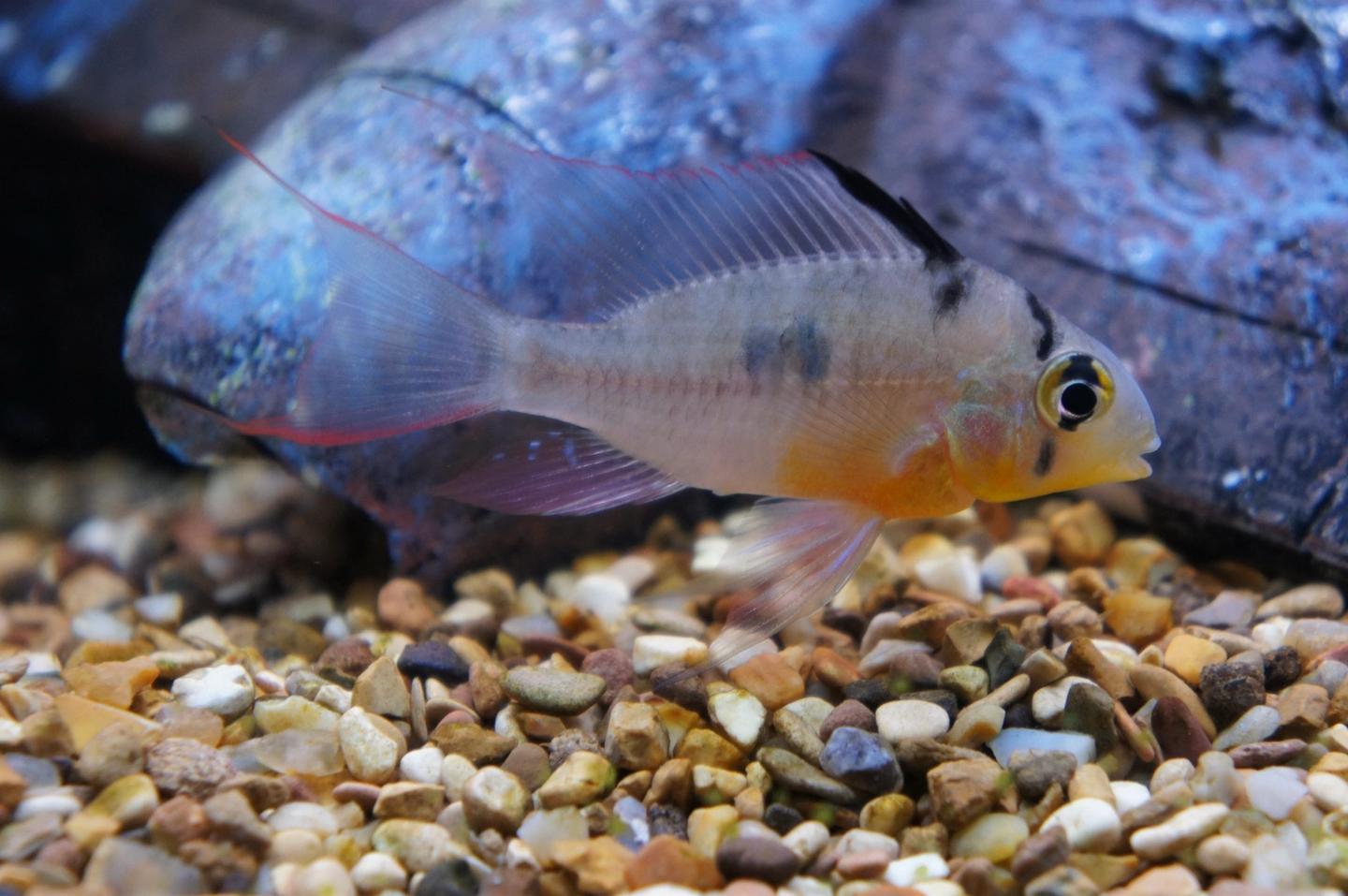
Cichlids are a family of roughly 1,800 accepted species, not one care type. Before buying, identify the exact species and source, then compare adult measurement, usable tank dimensions, social system, territory, tested water, diet and an exit plan. No family-wide minimum tank, water range or tank-mate list is safe.
Maintain these water conditions for optimal health and vibrant colors
The Blue Gold-Tip Cichlid is a Lake Tanganyika featherfin cichlid best listed as Ophthalmotilapia ventralis Chimba. The Chimba name is useful because this species has many regional colour forms, and serious Tanganyika keepers often want locality names kept clear. Males are the showpiece: a blue to blue-green body, long ventral fins and pale gold to yellow fin tips that catch the light when the fish displays over sand. Females and younger fish are usually quieter in colour, so the strongest visual effect comes from a settled group with enough room for males to display naturally.
This is not a beginner community fish, but it should not be made to sound difficult through vague marketing language either. Its needs are specific: hard, alkaline, very clean water; open sand; rockwork arranged as visual breaks; and tank mates chosen from peaceful or moderately assertive Lake Tanganyika species. In the right aquarium it becomes an elegant mid-water and sand-edge cichlid with movement, colour and courtship behaviour that a standard mixed community cannot offer.
This product group covers several Blue Gold-Tip Cichlid size options, including 4-5 cm, 4,5-5 cm, 5,5-7 cm, 6-8 cm and 8-10 cm variants. Smaller fish are usually easier to introduce into an existing Tanganyika group because they can grow into the hierarchy. Larger fish give a quicker display but need more careful introduction, more space and a layout with clear broken sight lines. All variants remain the same species group, so choose size around your aquarium, current stock and long-term plan rather than treating each size as a separate care type.
The name Blue Gold-Tip is not just decorative. Mature males can show a metallic blue body, darker edging through the fins and golden tips or lappets on the long ventral fins. Those trailing ventral fins are part of the display behaviour and help make the fish look more graceful than many heavier rock-dwelling cichlids. The body is built for active swimming, so the fish looks best when it has open water and sand in front of the rocks rather than being forced into a cramped cave layout.
Colour depends heavily on maturity, social structure, water quality and stress level. A lone or intimidated male may never show what the species can do. A small group in a spacious aquarium, with females outnumbering males and no aggressive tank mates suppressing display, gives the best chance of seeing the blue sheen, fin extension and courtship movement that make this fish special.
Ophthalmotilapia ventralis is endemic to Lake Tanganyika. FishBase records it from the southern end of the lake and notes that it can occur away from the slope, either singly or in aggregations, feeding on microorganisms drifting in plankton clouds. Aquarium sources describe ventralis featherfins as sand and rock associated cichlids that use open areas close to structure. The practical takeaway is simple: give them open swimming room, oxygen-rich water, sand and rockwork that creates territories without closing the aquarium down.
The Chimba label should be treated respectfully. Regional colour forms of Ophthalmotilapia ventralis can hybridise, so avoid mixing different locality forms if you care about maintaining a clean breeding group. For a display-only aquarium this is still useful information, because it explains why fish from different ventralis lines may not look identical.
Use fine sand as the main substrate and build rockwork towards the back and sides. Leave a broad open area at the front or centre so males can display and the group can move without constant conflict. Coral sand, aragonite, limestone or other buffering materials can help maintain hard, alkaline water, but stability matters more than chasing a number. Strong filtration, good surface movement and regular maintenance are essential because ammonia and nitrite are especially dangerous in alkaline water.
For a small species group, 300 litres is the minimum planning point I would be comfortable presenting to customers. A longer 5 ft aquarium, or a larger volume where the fish can hold territories without trapping each other, is better. Broad Tanganyika communities need even more room because every added species brings its own territory and feeding pressure. Keep the layout bright, clean and uncluttered: open sand, rock outcrops, visual breaks and reliable flow.
Keep this fish in hard, alkaline Tanganyika-style water. A stable pH around 8.0-9.0, moderate to high carbonate hardness and clean, oxygenated water are more important than sudden chemical adjustments. FishBase gives a natural pH range around 7.5-8.0 and 23-25 C, while specialist aquarium references commonly keep ventralis in harder, more alkaline Tanganyika conditions around pH 8.0-9.0. For home care, aim for stability, buffering and consistent maintenance rather than dramatic corrections.
Do not add this fish to soft, acidic community water. It is also a poor match for tanks where nitrate is allowed to climb. Fishipedia notes the importance of keeping nitrate below 50 mg/L for the species, and frequent smaller water changes are safer than rare large swings. Match new water for temperature and hardness before it reaches the aquarium.
In nature, Ophthalmotilapia ventralis feeds on tiny drifting organisms and similar planktonic material. In the aquarium it does well on quality cichlid flakes, small pellets and granules with a green or spirulina component, supported by modest frozen foods such as cyclops, daphnia, brine shrimp or mysis. Vegetable matter such as nori or suitable greens can be used as part of the rotation.
Avoid pushing heavy, fatty or protein-rich foods too often. This is a graceful, active Tanganyika cichlid, not a predator that should be fed large meaty meals. Small portions, eaten quickly, keep the fish in better condition and protect water quality. Colour and fin condition usually improve when the diet is varied but clean.
The Blue Gold-Tip Cichlid is usually much more refined than aggressive mbuna-style cichlids, but males still compete. The safest structure is a roomy group with females outnumbering males, or a single male with several females where tank size allows. More than one male can improve display in very spacious tanks, but it also increases the need for broken sight lines and careful observation.
Good companions are peaceful or moderately assertive Lake Tanganyika species that appreciate similar water: Cyprichromis, Paracyprichromis, calm Julidochromis, selected Neolamprologus and Tanganyikan Synodontis can work when space is adequate. Avoid soft-water fish, fin nippers, very timid species and belligerent cichlids that stop ventralis feeding or displaying. Do not mix different Ophthalmotilapia ventralis locality forms in a breeding group.
This species is a maternal mouthbrooder. Males display over sand, intensify colour and use the long ventral fins during courtship. Specialist accounts describe males building or defending sand display areas, while females collect eggs and carry the brood in the mouth for roughly three to four weeks. During this time the female may feed little or not at all, so she needs calm surroundings and should not be harassed.
Breeding is possible for informed Tanganyika keepers, but the social setup matters. A harem arrangement helps spread male attention, and fry should be raised with clean water and small foods such as newly hatched brine shrimp or finely crushed quality foods. If your aim is breeding, keep the Chimba line separate from other regional ventralis forms.
Choose this fish if you already run, or are deliberately building, a hard-water Lake Tanganyika aquarium. It is a poor impulse purchase for a mixed tropical community, but an excellent candidate for a planned sand-and-rock Tanganyika display. Check tank length, pH, KH, filtration and current tank mates before adding it. If the product is currently out of stock, use this page as the care plan and compare the related Tanganyika species while waiting for availability.
When this livestock item is in stock and eligible for dispatch, Tropical Fish Co ships live fish with livestock packing appropriate to the weather and route. Our Live Arrival Guarantee applies when the published delivery and acclimation steps are followed. First-time customers can use code WELCOME10 for 10% off eligible first orders. The guarantee and discount are helpful, but the real success factor with this species is choosing it for the right aquarium.
If you are building a Lake Tanganyika display, compare this fish with Long-Nosed Gold-Tip Cichlid, Elongate Lamprologus, Meeli Shelldweller, Striped Julie, Callipterus Cichlid and Temporalis Cichlid. Match by temperament, tank zone and adult size rather than by colour alone.
Max adult size is the length this species reaches at full maturity (from scientific sources). The livestock you receive will be younger and smaller — pick a size on the buy box for the actual shipping size. Product-photo provenance and any image-specific limitations are stated on the listing.
Can become territorial.
Always research specific species before adding them to your tank. Consider:
No reviews for this item yet. Bought one? Honest reviews only, good or bad.
What customers say about ordering from us
I have a small group of long finned mountain minnows. So was delighted to be able to order ten of this variety to increase the genetics in my tank . The ones I recieved are healthy but it’s to early to give a verdict on wether they are of a long finned type since they are small currently.
Gordon Walker · 23 Sept 2026
100% success travel and "installation". Pleased with quality of purchase. The Siamese fighter a bit "shy" so have not yet seen him at his best yet but looking good. Happy customer. GG
George E Garratt · 21 Sept 2026
Reviews of our shop, collected by Judge.me, an independent third-party review collector. Newest first.