Moderate
Ocellated Shell-Dweller (Neolamprologus kungweensis)
24–26°C · pH 7.5–8.5 · 60L
£21.99

A specialist Lake Tanganyika shell-bed cichlid for experienced keepers. Plan a 300L+ hard alkaline aquarium with fine sand, many shells, strong filtration and careful group management.
Lamprologus callipterus
Save when buying multiple fish. Each quantity is one fish; sex and pair formation are not guaranteed unless the selected variant explicitly states them.
Confirm your email, then we’ll send an availability message for this exact item if it returns within 180 days.
This request is only for this product—no newsletter or other promotions. A mail-provider retry may very rarely duplicate the same availability message. Unconfirmed addresses are removed after 48 hours. See our privacy policy.
A specialist Lake Tanganyika shell-bed cichlid for experienced keepers. Plan a 300L+ hard alkaline aquarium with fine sand, many shells, strong filtration and careful group management.
Cichlids are a family of roughly 1,800 accepted species, not one care type. Before buying, identify the exact species and source, then compare adult measurement, usable tank dimensions, social system, territory, tested water, diet and an exit plan. No family-wide minimum tank, water range or tank-mate list is safe.
Maintain these water conditions for optimal health and vibrant colors
Callipterus Cichlid (Lamprologus callipterus) is one of the most unusual Lake Tanganyika cichlids we list. It is a shell-bed specialist, but it is not a small casual shell-dweller. Mature males can become large, powerful and very territorial, while females stay much smaller so they can spawn inside empty snail shells. That difference in adult size is the key to understanding the species: plan the aquarium around the adult male, the shell field and the breeding territory, not just the juvenile sale size.
This listing is best for experienced Tanganyika keepers who want natural behaviour, not a simple mixed community fish. Given a broad sand floor, hard alkaline water and a generous number of shells, Callipterus can show fascinating behaviour: moving shells, defending a shell bed, courting females and controlling the lower part of the aquarium. In the wrong setup, the same behaviour can become stress and aggression. Treat this as a specialist cichlid for a planned Tanganyika aquarium.
The supplier listing uses Lamprologus callipterus. You may also see the species written as Neolamprologus callipterus in aquarium literature and older hobby references. Both names point keepers toward the same distinctive Tanganyika shell-bed fish. We use the supplier-search name in the product title, then explain the synonym here so shoppers and search engines can connect the listing with the wider care literature without forcing keywords into every paragraph.
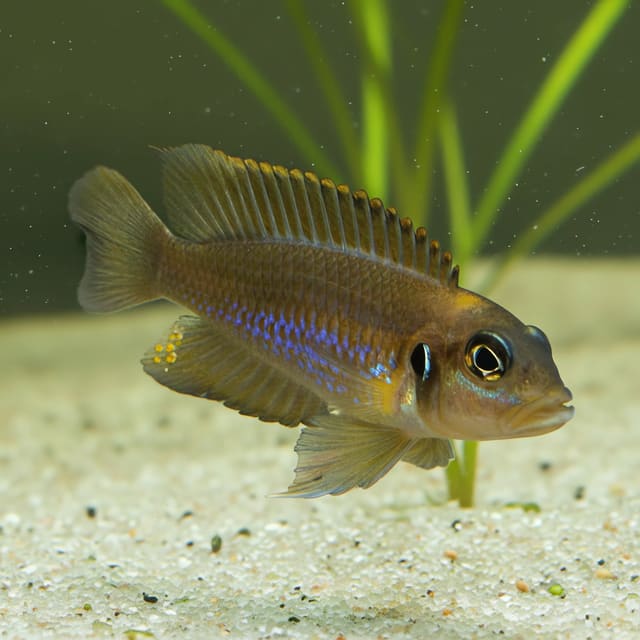
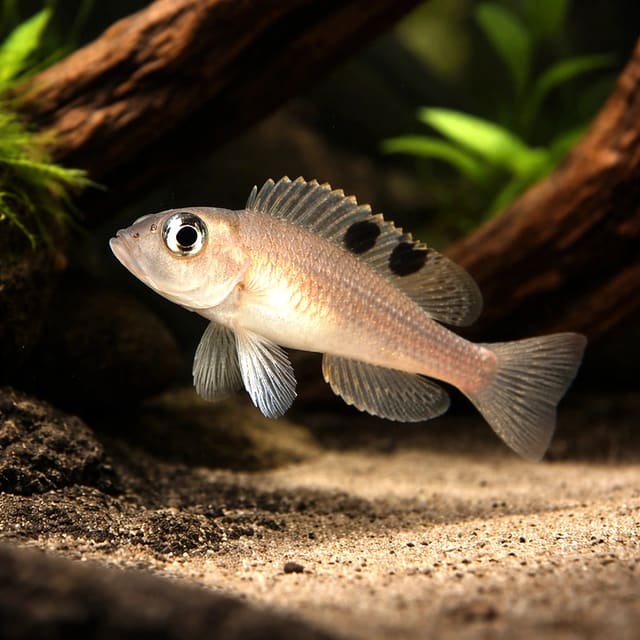
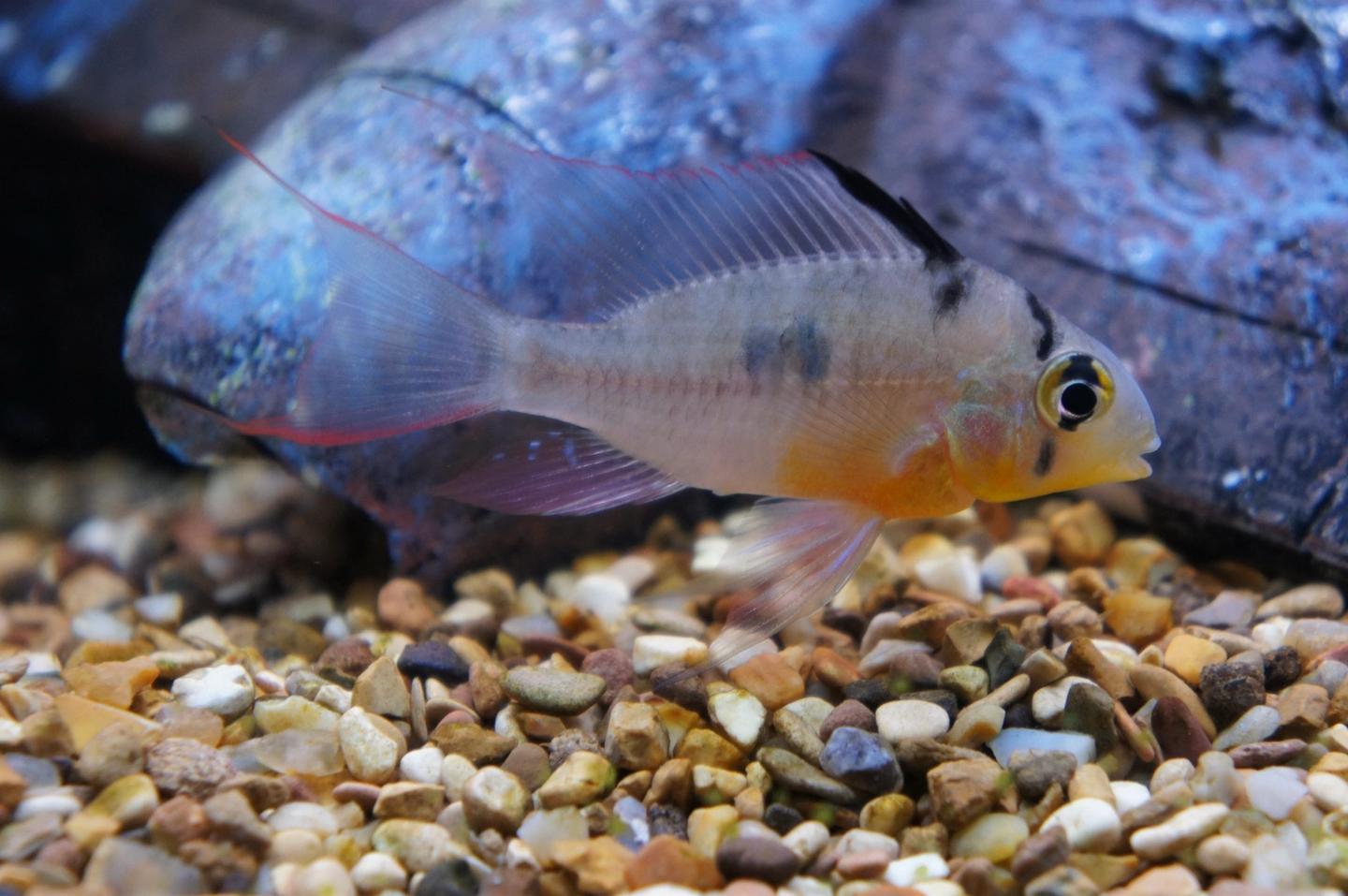
Callipterus has a practical, predatory Tanganyika look rather than a bright ornamental colour pattern. Expect an olive, grey or yellow-grey body tone, subtle darker bars, a pale underside and a strong head profile as males mature. The supplier source photograph for this SKU shows the characteristic elongated body and muted yellow-grey colour, while the gallery views are retained as supporting visual context for shell-bed aquarium planning.
The most important visual feature is the size difference between the sexes. Females stay small enough to enter snail shells, while adult males can become several times heavier and visibly more robust. This is why a young 4-5 cm fish should not be treated like a nano shell-dweller long term. If you are choosing this species, assume the aquarium will eventually need to cope with a dominant adult male.
Lamprologus callipterus is endemic to Lake Tanganyika in East Africa. It is associated with sandy and muddy areas where empty snail shells collect. In nature, males gather shells into breeding territories and defend them, while females use the shells for spawning and fry care. This shell-collecting behaviour is not decoration; it is central to the species. A bare cichlid tank with a few token shells will not let Callipterus behave naturally.
Lake Tanganyika is hard, mineral-rich and alkaline. The aquarium should reflect that stability. Soft acidic water, unstable pH, weak filtration or small crowded layouts are all poor matches. Good husbandry for this species means clean hard water, oxygenation, space, shell cover and enough visual breaks for fish to avoid constant pressure from the dominant male.
Use a spacious aquarium of at least 300 litres, with a long footprint preferred over a tall narrow tank. A 120 cm or longer frontage gives the fish room to form territories and gives the keeper more control over line-of-sight. If you want more than one male, or if you want to combine Callipterus with other Tanganyika cichlids, go larger. Mature males do not reliably tolerate each other in cramped quarters.
Start with fine sand so the fish can dig and move shells without damaging their mouths. Add a large open shell field using clean escargot-style shells or other suitable aquarium-safe shells. For a display centred on one male and several females, 20-30 shells is a sensible minimum, but more shells are better because natural territories can involve many more. Add rockwork carefully at the edges or rear, making sure it is stable before adding sand or digging fish.
Aim for Tanganyika-style water rather than general tropical conditions. A practical target range is 23-28 C, pH around 7.8-8.8 and hard mineral water around 10-20 dGH. The exact number matters less than stability, but the water must stay clearly on the hard alkaline side. Use a reliable heater, strong biological filtration and regular partial water changes to keep ammonia and nitrite at zero and nitrate controlled.
If your tap water is naturally soft, plan the mineral side before ordering. Crushed coral, Tanganyika mineral mixes and buffering media can help, but they should be used consistently and tested. Sudden pH swings are more dangerous than a slightly imperfect but stable reading. This is an expert-level species because the tank needs to be designed around the fish rather than adjusted afterwards.
Callipterus is a carnivorous-leaning micro-predator and scavenger in the wild. Offer small, protein-rich foods such as quality cichlid pellets or granules, frozen mysis, brine shrimp, cyclops, daphnia, krill pieces and insect-larvae type foods. A varied diet helps maintain condition without relying on one heavy food. Feed modest portions, especially in shell-bed tanks where uneaten food can disappear into shells and decay out of sight.
Young fish usually feed confidently once settled, but dominant individuals may outcompete smaller fish. Spread food across the shell field and observe whether females and subordinate fish get enough. In a breeding group, the smallest fish can spend long periods close to shells, so they may need food placed nearer to their territory.
This is the section that matters most. Callipterus can be spectacular in the right aquarium and difficult in the wrong one. A dominant male collects and defends shells, courts several females and may challenge rivals aggressively. Females are smaller, more secretive and strongly tied to shell retreats. The usual plan is one male with several females in a large shell field, not a random group in a small cichlid tank.
Watch behaviour after introduction. Normal settling includes cautious exploration, shell inspection and territorial display. Warning signs include one fish being pinned in a corner, torn fins, constant surface hiding, refusal to feed or repeated attacks away from the shell zone. If aggression escalates, you may need to remove a rival, add visual barriers or rethink stocking. This is why we recommend this species for experienced keepers who can respond quickly.
The safest route is a species-focused Tanganyika shell-bed setup. In a larger aquarium, carefully chosen Tanganyikan companions may work if they use different zones and can handle the same hard alkaline water. Rock-associated species, open-water species or robust bottom-aware fish can sometimes be considered, but the final decision depends on tank size, layout and individual temperament.
Avoid soft-water community fish, tiny peaceful fish, delicate long-finned species, small shrimp, slow bottom dwellers and any fish that cannot cope with Tanganyika water. Also avoid mixing several similar shell-dwelling species in a small footprint. Even if water values match, territory overlap can cause constant pressure. The goal is a calm, structured Tanganyika aquarium, not a busy mixed tank.
Callipterus is famous for shell-based breeding. The male collects shells and defends the area, while females enter shells to lay and guard eggs. Females tend the brood inside the shells and may fan eggs and larvae, while the male guards the wider territory. Fry care is rewarding but should not be attempted casually, because breeding behaviour can increase territorial aggression.
If you are planning to breed them, use a mature aquarium with excellent water quality, many shells, a controlled group ratio and a plan for fry. Tiny fry need appropriate first foods such as newly hatched brine shrimp or similarly sized foods. Do not rely on a community tank to raise fry safely.
Check that your aquarium is mature, cycled and already running hard alkaline water before ordering. Make sure you have enough shells, a suitable sand area, stable rockwork, a heater, test kits and appropriate foods ready. The sale sizes on this product are useful starting sizes, but this species must be planned around adult behaviour and adult male size.
Eligible livestock orders are packed for a licensed live-animal courier and supported by the Tropical Fish Co Live Arrival Guarantee when the delivery and acclimation conditions are followed. Prepare the aquarium before dispatch day, acclimate slowly and keep the lights low while the fish settle. For a specialist cichlid like this, the first few hours should be calm, planned and free from disturbance.
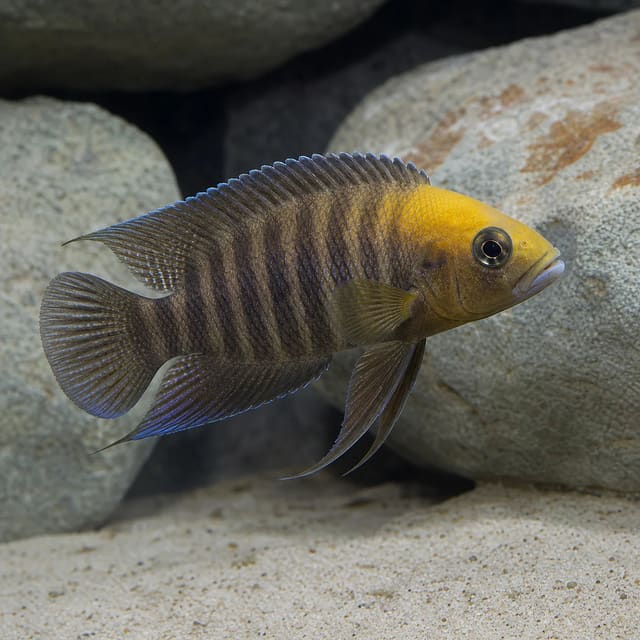
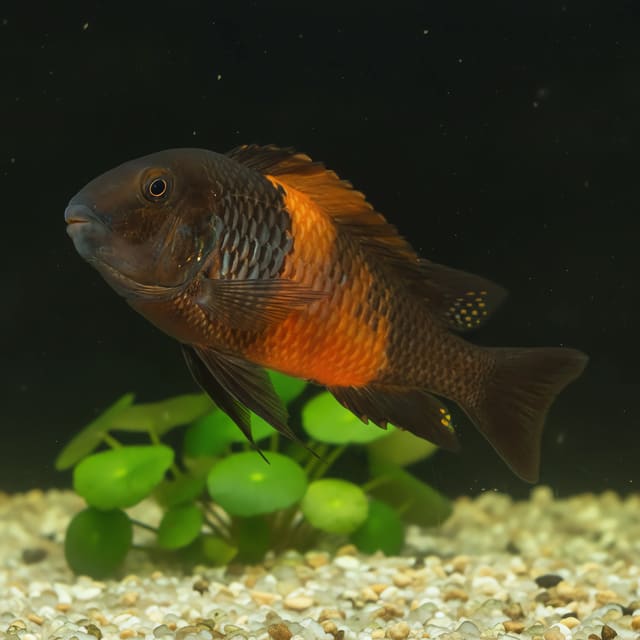
If you are comparing Tanganyika cichlids, review Ocellated Shell-Dweller, Blue Ocellated Shell-Dweller, Gold Head Compressiceps, Gold Compressiceps and Orange Blunthead Tropheus. Choose by adult size, territory style, diet and water values, not just colour or current sale size.
Choose Callipterus if you want a serious Tanganyika shell-bed project with unusual natural behaviour. Give it space, sand, many shells, hard alkaline water and strong filtration. Keep the wording simple: this is a specialist Lake Tanganyika cichlid for experienced keepers, not a beginner community fish. In the right hands, that honesty is exactly what makes the listing more useful for shoppers and search engines systems.
Plan by adult male territory and shell-bed behaviour, not juvenile sale size.
Always research specific species before adding them to your tank. Consider:
No reviews for this item yet. Bought one? Honest reviews only, good or bad.
What customers say about ordering from us
I have a small group of long finned mountain minnows. So was delighted to be able to order ten of this variety to increase the genetics in my tank . The ones I recieved are healthy but it’s to early to give a verdict on wether they are of a long finned type since they are small currently.
Gordon Walker · 23 Sept 2026
100% success travel and "installation". Pleased with quality of purchase. The Siamese fighter a bit "shy" so have not yet seen him at his best yet but looking good. Happy customer. GG
George E Garratt · 21 Sept 2026
Reviews of our shop, collected by Judge.me, an independent third-party review collector. Newest first.