Moderate
Meeli Shelldweller (Lamprologus meeli)
23–25°C · pH 8–8.6
£12.99

A characterful Lake Tanganyika rock/cave cichlid sold at 4-5 cm. Plan for the regular 10-12 cm adult form, hard alkaline water and a structured 120L+ aquarium.
Adult size is the maximum length this species reaches at full maturity (scientific sources). The livestock you receive will be younger and smaller — pick a size variant above for the actual shipping size. Product-photo provenance and any image-specific limitations are stated on the listing.
Telmatochromis temporalis
Save when buying multiple fish. Each quantity is one fish; sex and pair formation are not guaranteed unless the selected variant explicitly states them.
Confirm your email, then we’ll send an availability message for this exact item if it returns within 180 days.
This request is only for this product—no newsletter or other promotions. A mail-provider retry may very rarely duplicate the same availability message. Unconfirmed addresses are removed after 48 hours. See our privacy policy.
A characterful Lake Tanganyika rock/cave cichlid sold at 4-5 cm. Plan for the regular 10-12 cm adult form, hard alkaline water and a structured 120L+ aquarium.
Adult size is the maximum length this species reaches at full maturity (scientific sources). The livestock you receive will be younger and smaller — pick a size variant above for the actual shipping size. Product-photo provenance and any image-specific limitations are stated on the listing.
Cichlids are a family of roughly 1,800 accepted species, not one care type. Before buying, identify the exact species and source, then compare adult measurement, usable tank dimensions, social system, territory, tested water, diet and an exit plan. No family-wide minimum tank, water range or tank-mate list is safe.
Maintain these water conditions for optimal health and vibrant colors
Temporalis Cichlid (Telmatochromis temporalis) is a Lake Tanganyika lamprologine cichlid for keepers who enjoy intelligent, territorial rock-dwelling fish rather than bright display colours alone. This listing is for the 4-5 cm sale size, so the fish you receive is still young; the adult plan should be built for a robust Tanganyikan cichlid, not for a tiny nano fish. FishBase records the species to about 10.2 cm total length, and our stock records give a maximum size around 12 cm, while aquarium-trade sources also discuss a smaller shell-associated form. Because this product is sold across larger sister sizes as well, plan conservatively around the regular 10-12 cm fish unless you are deliberately working with a confirmed dwarf/shell form.
The strongest search fit is natural and simple: a Telmatochromis temporalis / Temporalis Cichlid for a hard-water Lake Tanganyika aquarium. It suits experienced community planning, a species pair, or a carefully chosen Tanganyikan rock setup with enough caves and visual breaks. It is not a soft-water community fish and it should not be sold in the copy as an easy small-tank cichlid just because the current stock size is 4-5 cm.
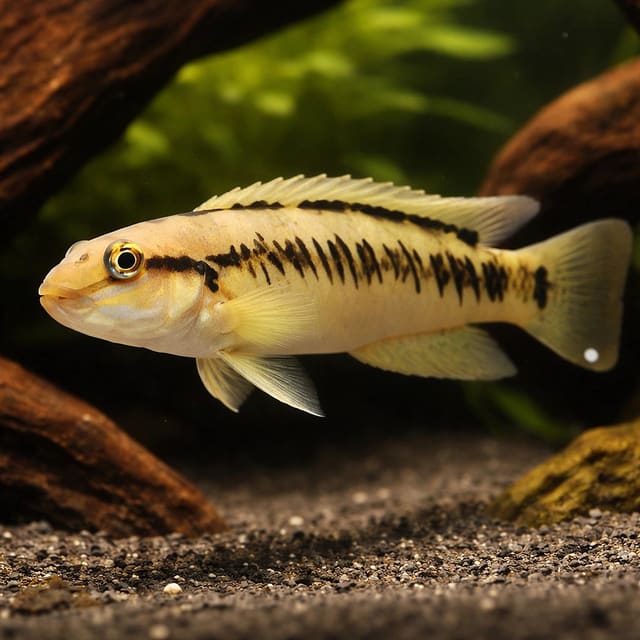
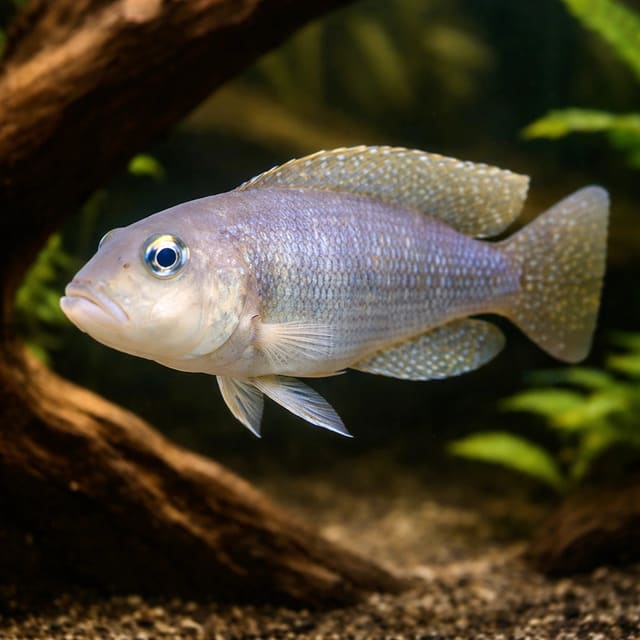
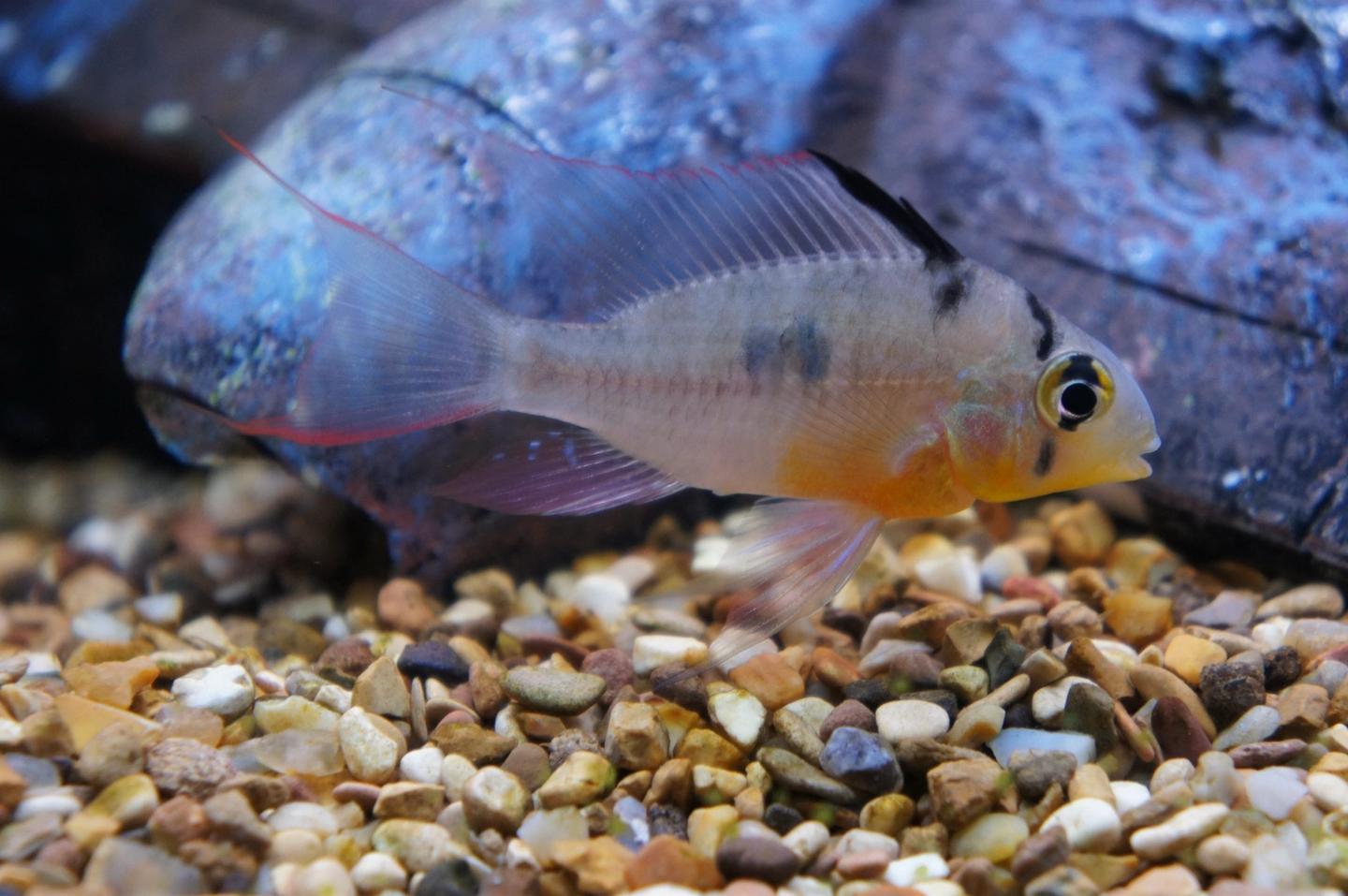
This is not a neon-coloured cichlid, and that is part of its appeal. Temporalis Cichlids usually show a beige, olive, grey-brown or yellowish body with darker speckling and a confident, thick-headed profile. The fins can show subtle blue-green edging, and the tail often carries an eyespot-like mark. The overall look is earthy and functional: a fish shaped for rockwork, caves and close-range territorial behaviour.
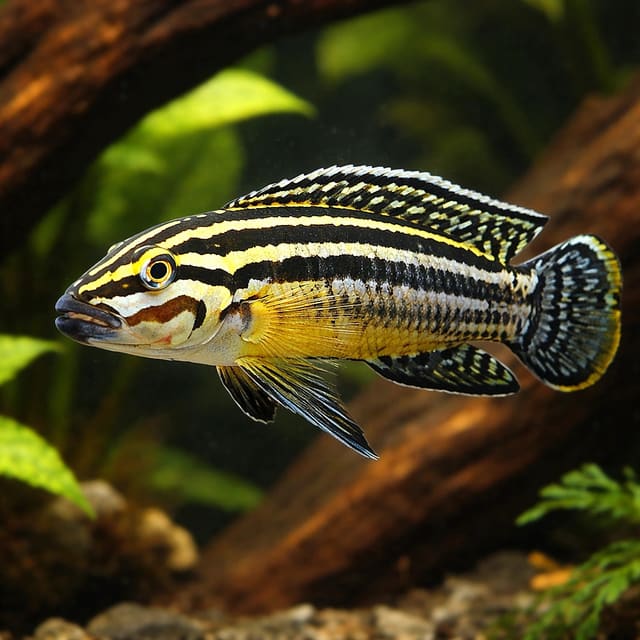
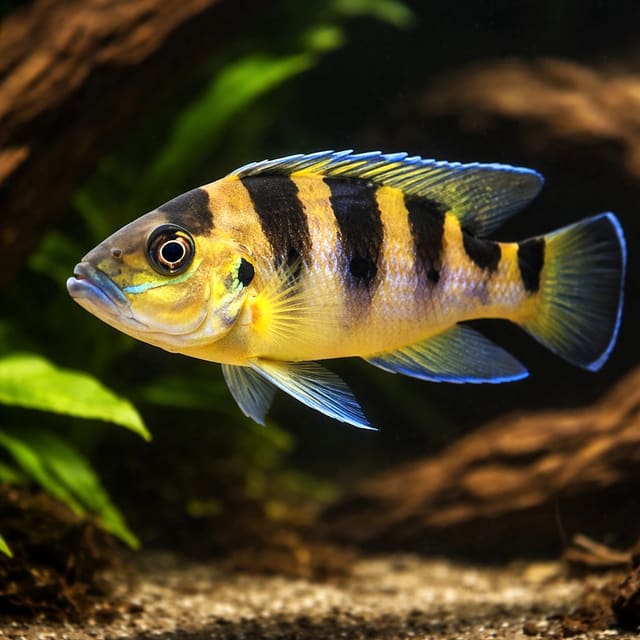
The existing gallery images show the fish clearly from several angles, and the original reference image has been checked as product-specific media for this SKU. The gallery is being preserved because it gives shoppers a stronger view of body shape, fin extension and aquarium context, while the exact source photo gives a supplier trace back to the fish being sold.
Telmatochromis temporalis is endemic to Lake Tanganyika. FishBase places it in freshwater, demersal habitats with hard alkaline water, and notes that it is found over rock substrates, often at depths around 5-10 metres and sometimes deeper. The Cichlid Room Companion summarises the species as a small lamprologine associated with sediment-free rocky lake habitats, while Aquarium Glaser describes the normal form as a stronger, medium-sized cave-brooding cichlid and explains that a dwarf shell-associated form is also known in the trade.
That matters for aquarium care because the fish is built around territory. It needs rock piles, cracks, cave entrances and line-of-sight breaks. A bare tank makes the aggression feel worse; a well-structured tank lets the fish choose a cave, patrol a boundary and retreat when challenged.
For this SKU, use a conservative adult setup rather than the old small-tank wording. A 120-litre aquarium with a good footprint can work for a bonded adult pair or carefully managed species setup. For mixed Tanganyikan communities, use a larger aquarium, ideally 180 litres or more, because the extra footprint matters more than the headline litre number. Build the layout before the fish arrive: place rockwork directly on the base or on a stable support, then add sand around it so digging cannot topple the structure.
Create several cave entrances and separate territories. Use limestone, ocean rock, slate or other aquarium-safe rock that suits hard-water conditions. Leave some open sand at the front for feeding and observation. Shells can be useful if you are keeping a shell-associated form or mixing with shell dwellers, but this product should be treated primarily as a rock/cave Tanganyikan unless the exact strain is confirmed as the dwarf shell form.
Lake Tanganyika fish do best when the water is stable, clean and mineral-rich. Aim for pH 8.0-9.0, hard water around 12-20 dGH or higher if your Tanganyika system is already stable, and a steady temperature around 24-28C. Our stock range is wider at 23-30C, but day-to-day aquarium care should favour stability rather than chasing the edges of the range.
Use mature biological filtration and strong oxygenation. Tanganyikan cichlids often react badly to neglected water even when they look tough, so keep ammonia and nitrite at zero and manage nitrate with regular partial water changes. Avoid big sudden swings in pH, temperature or hardness. If your tap water is soft, remineralised RO water or Tanganyika buffer may be safer than trying to force the tank with random additives.
FishBase records the species as omnivorous, feeding on microorganisms and small fish, and also notes aufwuchs feeding. In the aquarium, the safest diet is varied rather than heavy and meaty every day. Use small quality cichlid pellets or granules as the staple, with algae/spirulina content included regularly. Add frozen foods such as brine shrimp, mysis, daphnia or cyclops in sensible portions.
Feed small amounts once or twice daily and remove leftovers. This is especially important in rocky tanks where food can disappear into crevices and rot. A clean feeding routine supports colour, breeding condition and digestion without turning the aquarium into a nitrate factory.
Temporalis Cichlids are confident and territorial. They can be rewarding because they watch the room, learn routines, guard chosen caves and show clear pair behaviour, but that same confidence makes them poor candidates for soft, peaceful community aquariums. Do not mix them with small tetras, delicate livebearers, shrimp, long-finned fish or species that need soft acidic water.
In larger Tanganyikan setups, possible companions include carefully selected Julidochromis, Neolamprologus, shell dwellers, Altolamprologus or other fish that occupy different spaces and can cope with hard alkaline water. Add tank mates with a plan, not just because they share the word cichlid. Avoid overcrowding the same cave zone and give each species a way to hold territory without constant face-to-face conflict.
The regular form is best treated as a substrate cave spawner with parental care. FishBase notes cave spawning and temporary pair bonds, with the male defending territory while the female tends offspring. Practical Fishkeeping discusses the shell-associated dwarf form as a shell brooder that can use separate residences inside the pair's territory. This difference is exactly why the listing should be honest: the trade name may cover forms with different adult size and breeding-site preference.
For practical fishkeeping, provide tight caves, shell options and quiet areas. A settled pair may defend fry strongly, so give the parents space and avoid adding delicate tank mates once breeding starts. Fry need very clean water and tiny foods such as newly hatched brine shrimp or fine prepared fry food.
Choose this fish if you want a characterful Tanganyikan cichlid and are happy to build the aquarium around hard water, rock structure and territorial behaviour. It is a good fit for keepers who like watching natural cichlid interactions and who understand that a sale-size juvenile still needs an adult plan. It is a poor fit if you want a peaceful mixed community, a soft-water planted aquascape or a small decorative fish with no attitude.
The current 4-5 cm size is convenient for settling into a planned Tanganyika aquarium, but the page should not promise miniature adult care. Buy it for the long-term behaviour and the specialised habitat, not just the juvenile size on arrival.
Tropical Fish Co supplies this Temporalis Cichlid as part of a specialist freshwater range with clear SKU tracking, source-image preservation and live-animal fulfilment standards.
Live fish orders are packed for animal welfare, dispatched by a suitable live-animal courier service and covered by our Live Arrival Guarantee.
Max adult size is the length this species reaches at full maturity (from scientific sources). The livestock you receive will be younger and smaller — pick a size variant on the buy box for the actual shipping size. Product-photo provenance and any image-specific limitations are stated on the listing.
Territorial around caves and breeding sites. Build the rockwork first and leave enough footprint for each fish to hold space.
Always research specific species before adding them to your tank. Consider:
No reviews for this item yet. Bought one? Honest reviews only, good or bad.
What customers say about ordering from us
I have a small group of long finned mountain minnows. So was delighted to be able to order ten of this variety to increase the genetics in my tank . The ones I recieved are healthy but it’s to early to give a verdict on wether they are of a long finned type since they are small currently.
Gordon Walker · 23 Sept 2026
100% success travel and "installation". Pleased with quality of purchase. The Siamese fighter a bit "shy" so have not yet seen him at his best yet but looking good. Happy customer. GG
George E Garratt · 21 Sept 2026
Reviews of our shop, collected by Judge.me, an independent third-party review collector. Newest first.