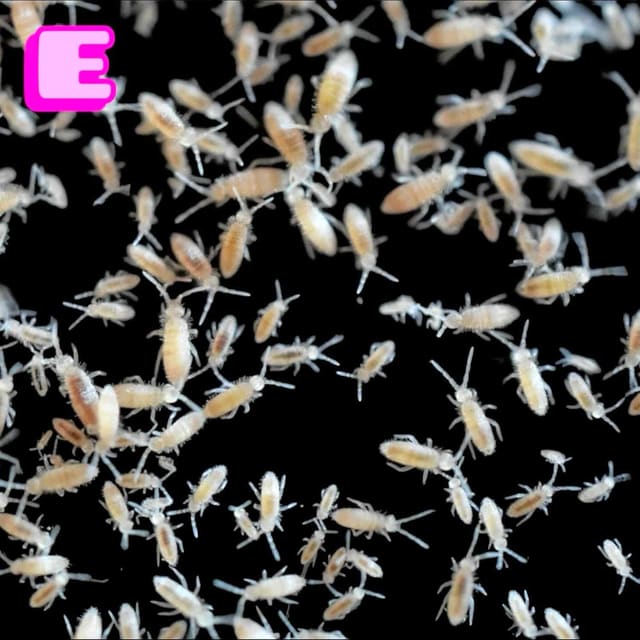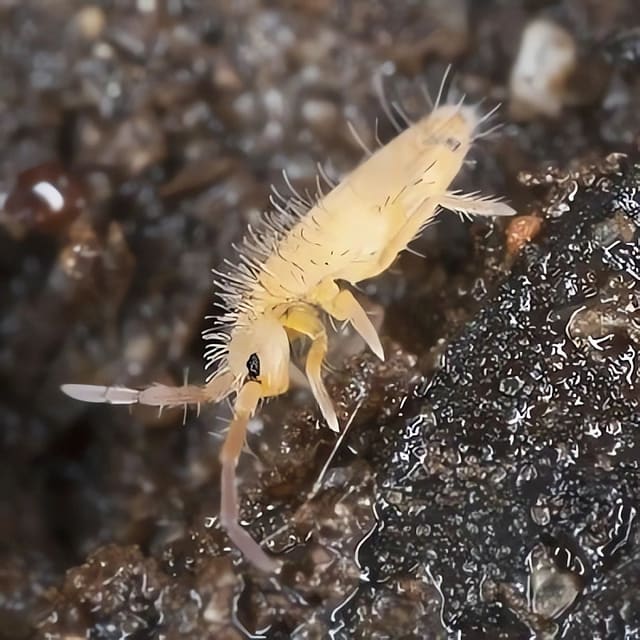
Collembola Springtails Bioactive Culture
£22.99

Live Dwarf White Isopods (Trichorhina tomentosa) culture for humid bioactive vivariums, terrariums and dart frog setups.
Trichorhina tomentosa
Live Dwarf White Isopods (Trichorhina tomentosa) culture for humid bioactive vivariums, terrariums and dart frog setups.
Dwarf White Isopods (Trichorhina tomentosa) are a live bioactive culture for humid vivariums, terrariums and dart frog setups. These small pale isopods live in damp substrate and leaf litter, where they help break down leftover food, shed skin and other organic debris.
Add the culture to a settled enclosure with damp substrate, leaf litter, cork bark or similar hides. Keep part of the substrate consistently moist and avoid chemical sprays, pesticides or dry conditions around the colony.
This is not aquarium fish food and it is not aquatic livestock. It is a terrestrial live culture for suitable humid enclosures. Dwarf whites often stay hidden, so expect a background clean-up crew rather than a display animal.
Use the care, feeding and storage notes above to decide whether this format fits your setup before adding it to your routine.
Let me tell you about Dwarf White Isopods, Trichorhina tomentosa. If you’re building a bioactive setup, these little workers are a brilliant choice. They’re also known as dwarf tropical woodlice, and they’ve earned their place in so many isopods collections for good reason. They stay tiny, they breed well, and they get into the places bigger clean-up crew animals simply can’t reach. If you’ve been looking for dwarf white isopods available, this is one of those species that just makes sense. Quiet, useful, and very easy to live with.
What I love about this species is how naturally it fits into a planted enclosure. In the wild, Trichorhina tomentosa are associated with tropical and subtropical regions worldwide. That gives you a big clue about what they want in captivity. Think warm, humid leaf litter. Think damp soil. Think decaying wood and sheltered little pockets where the microclimate stays stable. They’re not out in the open all the time. They spend their lives tucked under bark, in compost-rich ground, and around rotting plant material. That’s exactly why they’re so effective as bioactive isopods.
They’re always working in the background, breaking things down where you can’t see them. And that’s really the charm of dwarf tropical woodlice. They’re tiny. We’re talking just point one to one centimetre. So, don’t expect a big showy animal. Instead, expect a busy little colony that quietly gets on with the job. Their pale cream body colour is lovely to see up close, especially when you catch a cluster of them moving through the substrate. They’ve got a soft, understated look, and that suits them perfectly.
They’re not flashy. They’re practical. The kind of species you only notice when you kneel down and really look. Then you realise just how active they are. Now, because they’re so small, tank setup matters. A minimum of five litres is given for a tiny enclosure, but ten litres is the recommended tank size. Honestly, if you can give them ten litres, that’s the better long-term choice. It gives the colony more room to establish and keeps things more stable. They work best in warm, humid terrariums, so you’ll want a moist substrate and plenty of organic matter.
Leaf litter is essential. So is moss. Decaying hardwood is useful too. These are the sorts of materials they graze on and hide beneath. You’re basically recreating their natural home as closely as you can. One thing worth mentioning is that they work deep in the substrate. That’s a real advantage. Larger clean-up crew species often stay on the surface. These little dwarf white isopods go where the waste builds up below, helping to keep the enclosure cleaner overall. If you’re setting up a dart frog vivarium, a tropical paludarium, or any other bioactive build, they’re a strong fit.
They’re especially useful in setups where you want a living substrate that keeps recycling organic waste naturally. Keep the enclosure ventilated, but don’t let it dry out. Their background tells you everything you need to know. Warm, moist, and full of decaying plant matter. That’s the sweet spot. As for temperature, keep the dwarf white isopods temperature range between twenty and twenty-eight degrees Celsius. The ideal temperature is twenty-four degrees. That’s the number to aim for if you want steady colony activity. Humidity is just as important, because they need consistently moist substrate and high ambient humidity.
They’re not aquatic, so don’t treat them like freshwater species. They belong in terrestrial bioactive systems, not waterlogged setups. If you keep those basics right, they’re wonderfully straightforward. Easy care really does fit them well. Feeding is simple, which is one of the reasons people like them so much. They’re detritivores, so they feed on decaying plant matter, fungal films, and softened organic waste. In practice, that means a healthy layer of leaf litter goes a long way. They’ll graze on that naturally. The substrate itself should also contain organic material they can break down over time.
Because they’re part of a clean-up crew, they’re not a species you’re feeding for show. You’re supporting a tiny ecosystem. That’s the beauty of it. A good bioactive setup gives them a constant supply of things to process. The more natural the enclosure, the better they tend to do. If you’re new to isopods keepers often start with this species because they’re easy to keep and reliable. They’re a good introduction to tropical woodlice culture, and they fit neatly into beginner bioactive builds. You don’t need to overcomplicate things.
Give them moisture, leaf litter, shelter, and stable warmth. Then let them do what they do best. If you’ve ever watched a colony settle in, you’ll know the satisfaction of seeing them gradually appear in more and more corners of the tank. Behaviour-wise, they’re peaceful and low-key. That’s exactly what you want from a clean-up crew. They’re not the sort of animals that demand attention. They’re more the sort that reward patience. You’ll notice them moving through the substrate, especially in the warmer, more humid parts of the enclosure.
They stay small, and they often remain hidden, which is part of their appeal. The first time you see a colony really establishing itself, it feels like the tank has come alive in a new way. They’re always doing something, even if it’s subtle. Compatibility is one of their biggest strengths. They’re safe for all reptiles, amphibians, and invertebrates. That makes them a very flexible choice for bioactive isopods in mixed setups. They work best alongside springtails, which gives you a more complete clean-up crew.
That pairing makes a lot of sense. Springtails handle one layer of the job, and dwarf tropical woodlice handle another. Together, they support a healthier, more stable enclosure. If you’re building a vivarium or paludarium, that combination is hard to beat. As tank mates go, they’re best with animals that suit warm, humid, bioactive environments. The product information specifically highlights their use in dart frog vivarium setups, and that tells you a lot about the kind of environment they belong in. They’re also a good fit for other reptile, amphibian, and invertebrate enclosures where the conditions stay moist and tropical.
What you want to avoid is any setup that’s too dry, or any situation where the substrate becomes waterlogged. They’re terrestrial, not aquatic. So, if you’re tempted to think of them as something you’d keep in a wet or flooded arrangement, don’t. That’s not their world. Breeding is one of the reasons they’re so popular. They’re known for fast colony growth, and that’s a big plus if you want a reliable clean-up crew. A small starter group can establish itself quickly, especially in a ten-litre vivarium or larger.
That means once the conditions are right, the colony can get going without much fuss. They’re also a good choice if you’re looking for a species that reproduces reliably in a bioactive system. You don’t need to micromanage them. Give them the right environment and they’ll get on with it. That’s why so many keepers see them as a smart, low-maintenance option. In terms of lifespan, they live around six to twelve months, with up to one year being the guide here. That’s another reason colony stability matters.
You want the environment to support ongoing breeding and healthy numbers. If you’re starting a new vivarium, beginning with a small colony is sensible. It gives them time to settle and build up. And because they’re so small, they can live deep in the substrate and keep working even when you don’t see them every day. Health-wise, the main thing is keeping conditions stable. Moist substrate, high humidity, and the right temperature range all matter. If things dry out too much, they won’t thrive. If the enclosure is too wet, that’s not right either.
Balance is the key. Watch for a colony that seems inactive or hidden away more than usual. Often, that points back to the environment. Prevention is always easier than fixing problems later, especially with a species this small. Keep the habitat natural, warm, and humid, and you’re giving them the best chance. One of the reasons people come to Tropical Fish Co for isopods stock is that they want healthy animals for a proper bioactive build. Whether you’re after a starter colony, a dependable clean-up crew, or you’re comparing options in an isopod shop, dwarf white isopods are a solid pick.
They’re practical, they’re easy to keep, and they fit beautifully into modern terrarium keeping. If you’re after wholesale isopods style colony building for a bigger project, or just a small group to get a vivarium going, these are a species worth serious consideration.
No reviews for this item yet. Bought one? Honest reviews only, good or bad.
What customers say about ordering from us
I have a small group of long finned mountain minnows. So was delighted to be able to order ten of this variety to increase the genetics in my tank . The ones I recieved are healthy but it’s to early to give a verdict on wether they are of a long finned type since they are small currently.
Gordon Walker · 23 Sept 2026
100% success travel and "installation". Pleased with quality of purchase. The Siamese fighter a bit "shy" so have not yet seen him at his best yet but looking good. Happy customer. GG
George E Garratt · 21 Sept 2026
Reviews of our shop, collected by Judge.me, an independent third-party review collector. Newest first.

22–28°C · pH 7–8 · 41L

21–25°C · pH 5–7
24–29°C

24–27°C · pH 6.5–6.5

22–27°C · pH 6–8 · 72L

23–27°C · pH 5.5–7 · 60L

22–27°C · pH 6–8

22–26°C · pH 6–7.8 · 75L