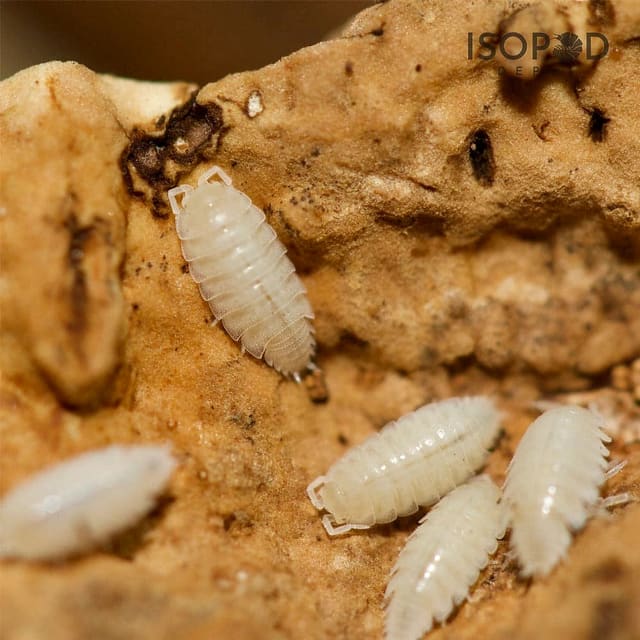
Dwarf White Isopods Trichorhina tomentosa Culture
£23.99

Live Collembola springtail culture for humid bioactive terrariums and vivariums, used as clean-up crew support for mould and soft organic waste.
Live Collembola springtail culture for humid bioactive terrariums and vivariums, used as clean-up crew support for mould and soft organic waste.
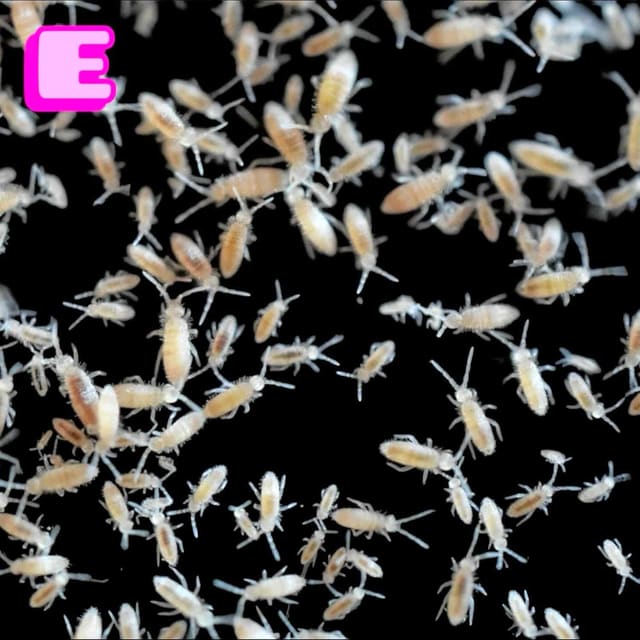
Collembola Springtails Bioactive Culture is a live springtail culture for humid bioactive terrariums, vivariums and paludariums. These tiny Collembola move through damp substrate and leaf litter, grazing mould, fungi and soft decaying organic matter before it builds up.
| Product type | Live springtail culture |
|---|---|
| Best for | Humid bioactive terrariums, vivariums and paludariums |
| Main use | Clean-up crew support for mould, fungi and soft organic waste |
| Group | Collembola |
| Conditions | Damp substrate, leaf litter and gentle ventilation |
| Not for | Dry arid enclosures or outdoor release |
In a suitable humid enclosure, springtails feed in the substrate and leaf litter layer where mould and organic waste usually appear first. They are often used alongside isopods as part of a bioactive clean-up crew.
Add part of the culture to damp substrate or leaf litter, then keep a small backup culture if you manage more than one enclosure. Avoid drying the substrate out, overheating the culture or using chemical sprays in the enclosure.
This is a live microfauna culture for terrarium and vivarium use, not aquarium fish food and not a fix for poor enclosure hygiene. Keep the setup damp rather than waterlogged, provide organic material and do not release the culture outdoors.
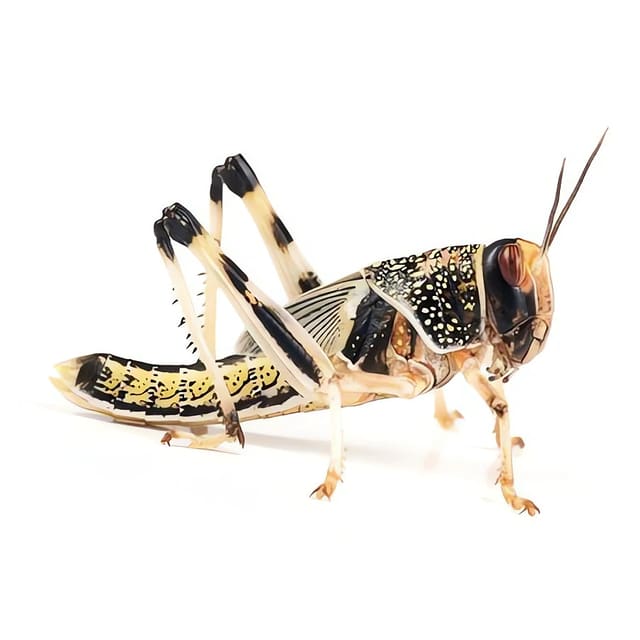
For a broader bioactive setup, compare dwarf white isopods. For reptile feeding rotation rather than clean-up crew work, compare Dubia roaches or desert locusts.
Let me tell you about Collembola Springtails. These tiny little helpers, often just called springtail bugs, are one of those things you don’t fully appreciate until you’ve used them. Then you wonder how you ever managed without them. If you’re building a natural terrarium, a planted tropical jar, or a bioactive setup, Terrarium Springtails can make a real difference. They’re peaceful, easy to keep, and they work quietly in the background. No fuss. No drama. Just constant clean-up work where it matters most. Now here’s the thing.
In the wild, Collembola springtails live in all sorts of damp places. That’s really the key to understanding them. They’re associated with moist, humid environments, where decaying organic matter, mould, and fungi are part of the natural cycle. In a terrarium, they do the same job they do outside. They move through the substrate surface, leaf litter, and damp corners, feeding on waste before it becomes a problem. That makes them a brilliant choice for anyone putting together a bioactive enclosure. They fit right into the sort of setup where you want nature doing the tidying for you.
If you’ve ever looked at a humid enclosure and thought, “I wish this could stay a bit cleaner on its own,” this is exactly the sort of culture you want in there. What I love about these is how unassuming they are. They’re tiny. Really tiny. Generally around zero point one to one centimetre, depending on species and age. Most of the time, you’ll be looking for pale to off-white little specks moving through the moist media. That’s what the cultured springtail bugs look like, and the product photos show that fine, light appearance very clearly.
They’re not showy in the usual sense. You won’t be buying them for colour or pattern. You’re buying them because they’re useful. And honestly, in a terrarium, useful is beautiful. They stay small, they stay peaceful, and they keep working. That’s the whole appeal. For tank setup, or really enclosure setup, the main thing is moisture. Collembola Springtails do best in consistently damp, humid conditions. A moist substrate is essential. Leaf litter is a big help too, because that gives them food and cover. If you’re starting a culture, five litres is the minimum enclosure volume, but ten litres is recommended for a more stable colony.
That’s a really good rule of thumb if you’re planning to use them as part of a springtails for bioactive vivarium setup. In a one-gallon terrarium, they can work, but only as a starter culture. For established bioactive use, a larger space is better. A ten-gallon setup is ideal, especially if you’re building a humid planted enclosure. Keep the surface damp, keep the corners from drying out, and give them places where mould and decaying leaf matter naturally collect. That’s where they’ll thrive. One thing worth mentioning is that these are not just “live food” in the usual sense.
They’re a practical Bioactive Cleanup Crew. That’s the real value here. They work alongside isopods as part of a complete clean-up system, and they’re safe for all reptiles, amphibians, and invertebrates. So if you’re already looking at springtails and isopods available, this is the sort of culture that fits neatly into that wider bioactive plan. They’re especially useful in planted tropical jars, dart frog vivariums, and humid gecko setups. If you’re following a bioactive cleanup crew setup guide, springtails are often one of the first microfauna people add.
And for good reason. They establish quickly and start doing their job straight away. As for water and climate, think warm and damp. The temperature range is twenty to twenty-eight degrees Celsius. That’s the springtail temperature range you want to work within. A ten-gallon bioactive terrarium at around twenty-four degrees is a very comfortable environment for them. Humidity is just as important. These are not dry-enclosure animals. Their springtail humidity requirements are simple: keep them in consistently humid, moist conditions. If the substrate dries out completely, they won’t do well.
So steady moisture is the goal. Not swampy. Just reliably damp. That’s the sweet spot. Feeding is straightforward, which is another reason people like them. In a healthy enclosure, they feed on mould, fungi, decaying plant matter, and organic waste. That’s their natural diet. They’re detritivores, so they’re constantly turning waste into something less troublesome. In practical terms, that means they help with mould control and keep soft organic material from building up. If you’re maintaining a bioactive terrarium, that’s exactly what you want from a cleanup crew.
They’re not fussy. They don’t need complicated feeding routines. They just need the right environment and enough organic material to work through. Keep the substrate moist, keep leaf litter in place, and they’ll keep going. That’s why they’re so popular in terrarium supplies UK searches. They’re one of those small additions that quietly improve the whole system. Behaviour-wise, they’re about as peaceful as it gets. You won’t see them bothering anything. They’re not active in a disruptive way, and they’re certainly not aggressive. What you will notice, if you watch closely, is movement in the damp parts of the enclosure.
First thing in the morning, or after a misting, you may spot them darting about on the surface or disappearing into the leaf litter. That’s normal. That’s them doing their job. They’re tiny, but they’re always busy. And because they reproduce readily, you can end up with a steady colony over time, as long as conditions stay right. They’re one of those species groups that just quietly settle in and get on with it. Compatibility is where they really shine. They’re safe for all reptiles, amphibians, and invertebrates, so they slot into a wide range of enclosures.
They’re especially useful with dart frogs, and they work very well alongside isopods. That combination is a classic bioactive setup for a reason. The springtails handle mould and finer waste, while the isopods deal with larger bits of decaying material. Together, they make a strong cleanup team. If you’ve got a humid gecko setup, a planted tropical jar, or a dart frog vivarium, they’re a very natural fit. They’re also a good choice for propagation boxes and tropical plant cabinets where mould can spread quickly.
What you want to avoid is any setup that stays too dry. These aren’t for arid enclosures. They’re built for moisture, leaf litter, and stable humidity. So if your enclosure is dry, they’re not the right match. But in the right environment, they’re excellent. Breeding is one of the easiest parts of keeping them. They reproduce readily, and in suitable substrate they breed continuously. That’s why a small starter culture can become a stable colony over time. You don’t need to manage them in a complicated way.
If the conditions are right, they’ll keep turning over naturally. That continuous colony turnover is part of what makes them so useful in bioactive systems. You’re not just adding a temporary helper. You’re establishing a living clean-up presence that can persist in the enclosure. For many keepers, that’s the appeal. It’s simple, effective, and very much in step with how a naturalistic enclosure should function. Health-wise, the main thing to watch is the environment itself. If the enclosure dries out, they won’t thrive. If there isn’t enough damp substrate or leaf litter, they won’t have the conditions they need.
So prevention is mostly about keeping things consistently humid and providing the right organic material. In a healthy setup, they’re easy to keep. In the wrong setup, they’ll struggle. That’s really the whole story. Keep them moist, keep them warm within range, and let them do what they do best. At Tropical Fish Co, we love products like this because they make a real difference without making life complicated. Collembola Springtails are one of those terrarium supplies UK keepers come back to again and again, because they just work.
They’re practical, peaceful, and genuinely useful in a bioactive enclosure. If you’re building a cleaner, healthier setup, they’re a smart choice.
No reviews for this item yet. Bought one? Honest reviews only, good or bad.
What customers say about ordering from us
I have a small group of long finned mountain minnows. So was delighted to be able to order ten of this variety to increase the genetics in my tank . The ones I recieved are healthy but it’s to early to give a verdict on wether they are of a long finned type since they are small currently.
Gordon Walker · 23 Sept 2026
100% success travel and "installation". Pleased with quality of purchase. The Siamese fighter a bit "shy" so have not yet seen him at his best yet but looking good. Happy customer. GG
George E Garratt · 21 Sept 2026
Reviews of our shop, collected by Judge.me, an independent third-party review collector. Newest first.

22–28°C · pH 7–8 · 41L

21–25°C · pH 5–7
24–29°C

24–27°C · pH 6.5–6.5

22–27°C · pH 6–8 · 72L

23–27°C · pH 5.5–7 · 60L

22–27°C · pH 6–8

22–26°C · pH 6–7.8 · 75L