Advanced
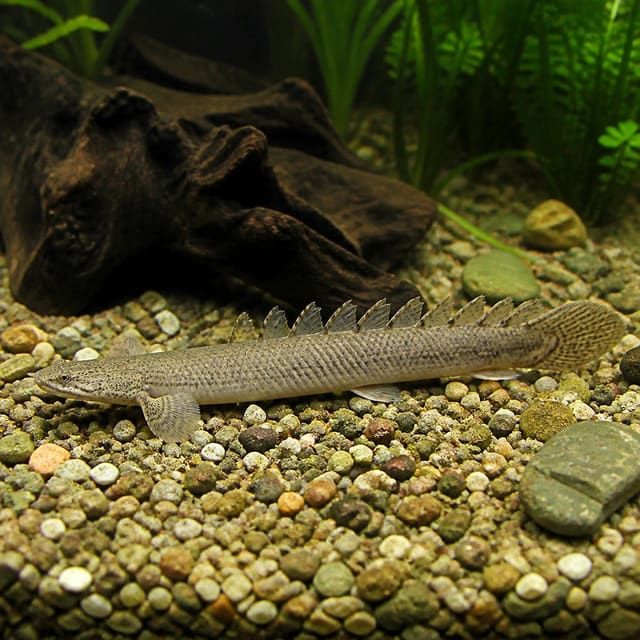
Lapradei Bichir (Polypterus bichir 'Lapradei')
23–28°C · pH 6.5–7.5
£47.99
A rare, impressive African oddball with a prehistoric look. Best for very large aquariums and experienced keepers.
Adult size is the maximum length this species reaches at full maturity (scientific sources). The livestock you receive will be younger and smaller — pick a size above for the actual shipping size. Product-photo provenance and any image-specific limitations are stated on the listing.
Heterotis niloticus
Confirm your email, then we’ll send an availability message for this exact item if it returns within 180 days.
This request is only for this product—no newsletter or other promotions. A mail-provider retry may very rarely duplicate the same availability message. Unconfirmed addresses are removed after 48 hours. See our privacy policy.
A rare, impressive African oddball with a prehistoric look. Best for very large aquariums and experienced keepers.
Adult size is the maximum length this species reaches at full maturity (scientific sources). The livestock you receive will be younger and smaller — pick a size above for the actual shipping size. Product-photo provenance and any image-specific limitations are stated on the listing.
Maintain these water conditions for optimal health and vibrant colors
The African bonytongue (Heterotis niloticus) is a truly impressive freshwater fish with a distinctive, ancient appearance and a fascinating way of feeding. Native to Africa, this species is sometimes compared to an arowana in shape and movement, but it has its own unique biology and behaviour. At 30-40 cm, this is already a substantial fish, and it will continue to grow into a very large adult that needs serious space, excellent filtration, and a keeper prepared for long-term commitment.
This is a species best suited to experienced aquarists with large indoor ponds or very large aquariums. It is not a community fish in the usual sense, but it can be rewarding for those who enjoy unusual, powerful, and characterful species. African bonytongues are generally peaceful towards similarly sized tankmates, but they are opportunistic feeders and may eat smaller fish. They are also active, intelligent, and best kept in a calm environment with plenty of open swimming room.
We supply healthy live fish with a live arrival guarantee and fast UK delivery, so your new fish arrives in the best possible condition. Please note that this species is only suitable for aquarists who can provide the correct long-term setup.
| Care Level | Expert |
|---|---|
| Temperament | Peaceful to semi-aggressive, predatory towards small fish |
| Adult Size | Up to around 100 cm+ |
| Minimum Tank Size | 2,000 litres+ for long-term care |
| Temperature | 24-28°C |
| pH | 6.5-7.8 |
| Diet | Omnivore; accepts sinking foods, pellets, frozen and live foods, plus plant matter |
| Tank Region | Middle to bottom, with frequent surface feeding |
Heterotis niloticus is native to freshwater systems across much of tropical Africa, including large rivers, floodplains, lakes, swamps, and slow-moving channels. In the wild it is often found in warm, shallow, vegetated waters where it can browse, forage, and feed on a wide range of natural foods. Seasonal flooding plays an important role in its life cycle, providing access to rich feeding grounds and breeding areas.
This species is adapted to warm, oxygen-variable habitats and has evolved a specialised swim bladder that helps it breathe air when needed. That adaptation makes it a hardy fish in the right conditions, but it does not remove the need for excellent water quality in captivity. In the aquarium, it should be treated as a large, active fish that needs room to cruise and a stable, well-maintained environment.
For a juvenile of 30-40 cm, a very large aquarium may be used temporarily, but this species should be planned for as an adult from day one. A tank of 2,000 litres or more is strongly recommended for long-term housing, with a long footprint, strong cover, and powerful filtration. Large indoor ponds are often a better option than standard aquariums.
Use a secure lid or canopy, as large fish can jump or startle. Provide open swimming space with robust décor such as large driftwood, smooth rocks, and hardy plants only if they can withstand browsing. Substrate can be sand or fine gravel. Avoid sharp decorations that could damage the fish’s body or fins.
Filtration should be oversized and capable of handling a heavy bioload. Regular large water changes are essential, along with careful monitoring of ammonia, nitrite, nitrate, and dissolved waste. Stable water chemistry is more important than chasing exact numbers, but the species does best in warm, slightly acidic to neutral water with good oxygenation and gentle to moderate flow.
Recommended parameters:
Because this fish is large and powerful, aquascaping should prioritise swimming space over dense planting. Dimmer lighting and a calm layout can help reduce stress.
The African bonytongue is an omnivore with a broad diet. In nature it feeds on a mixture of plant material, insects, small aquatic animals, detritus, and other available foods. In captivity, a varied diet is essential for health, growth, and long-term condition.
Offer a base of quality sinking carnivore/omnivore pellets or large floating pellets if the fish is comfortable taking food from the surface. Supplement with frozen foods such as prawns, mussel, earthworms, krill, and chopped fish foods suitable for large species. Vegetable matter should also be included, such as blanched spinach, peas, lettuce, or algae-based foods where accepted.
Feed juveniles more frequently in smaller portions, while adults should be fed once or twice daily depending on size and water quality. Avoid overfeeding, as this species can produce a significant amount of waste. Remove uneaten food promptly to keep the tank clean.
A varied feeding routine helps prevent nutritional deficiencies and encourages natural behaviour. If kept with other fish, ensure the bonytongue is getting enough food, as it may be outcompeted by faster tankmates.
Choose tankmates with care. African bonytongues are generally peaceful with fish too large to be eaten, but they are not suitable for small community fish. Any tankmate must be robust, calm, and able to cope with warm water and a large, active companion.
Good options may include other very large, peaceful species that can share similar water conditions, provided the aquarium is enormous and the fish are compatible in size and temperament. In many cases, species-only housing is the safest and most practical choice.
Avoid small fish, shrimp, fry, and anything that could fit into the mouth of the bonytongue. Also avoid aggressive fin-nippers or highly territorial species that may stress or injure it. Because this fish grows large and can be opportunistic, mixed-species setups should be planned conservatively.
Always introduce tankmates cautiously and monitor feeding time closely. Plenty of space and clear sight lines reduce conflict and help maintain a stable environment.
At Tropical Fish Co, we specialise in healthy, carefully selected live fish for aquarists who want something special. Our African bonytongues are sourced and handled with attention to welfare, then packed for fast UK delivery to help ensure a smooth journey to your home.
We understand that buying a large live fish online requires confidence, which is why we offer a live arrival guarantee and clear support for customers before and after purchase. Whether you are planning a large display aquarium or a dedicated indoor pond, we aim to provide reliable stock, honest advice, and excellent service.
If you are ready for a spectacular, unusual species with real presence, Heterotis niloticus is a remarkable choice. With the right setup, it can become the centrepiece of a truly impressive aquatic collection.
No reviews for this item yet. Bought one? Honest reviews only, good or bad.
What customers say about ordering from us
Easy website plenty of info on fish your buying great to pick a time slot
TRACEY DURRANT · 7 Oct 2026
Got some lovely fish thank you
Kevin Mackie · 7 Oct 2026
Reviews of our shop, collected by Judge.me, an independent third-party review collector. Newest first.