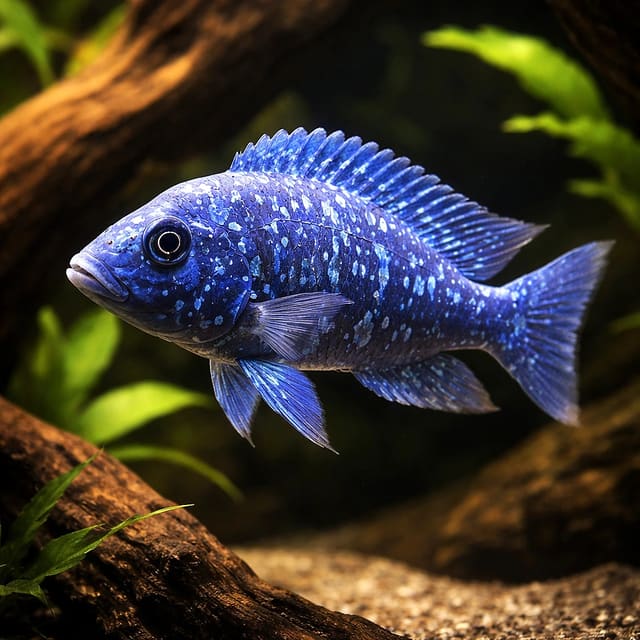
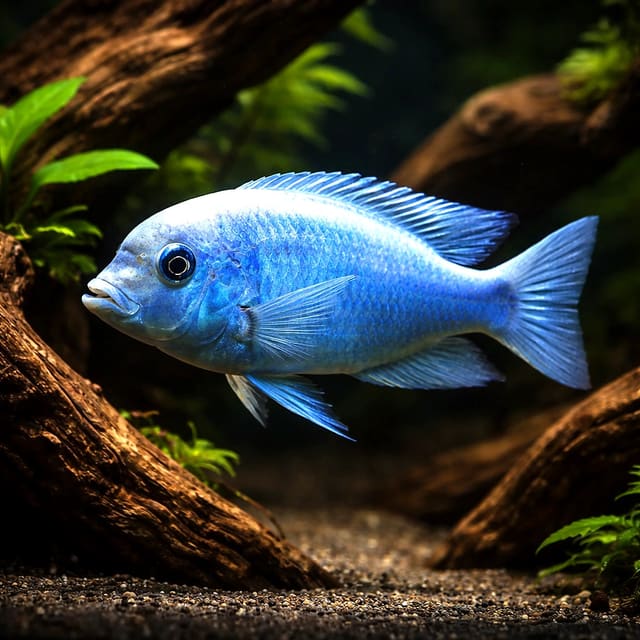
Azureus Cichlid (Copadichromis azureus)
26–27°C · pH 8–8.5 · 304L
£9.99

Open-water Lake Malawi hap for large hard-water cichlid aquariums; current size variants are out of stock.
Adult size is the maximum length this species reaches at full maturity (scientific sources). The livestock you receive will be younger and smaller — pick a size variant above for the actual shipping size. Product-photo provenance and any image-specific limitations are stated on the listing.
Copadichromis trimaculatus
Save when buying multiple fish. Each quantity is one fish; sex and pair formation are not guaranteed unless the selected variant explicitly states them.
Confirm your email, then we’ll send an availability message for this exact item if it returns within 180 days.
This request is only for this product—no newsletter or other promotions. A mail-provider retry may very rarely duplicate the same availability message. Unconfirmed addresses are removed after 48 hours. See our privacy policy.
Open-water Lake Malawi hap for large hard-water cichlid aquariums; current size variants are out of stock.
Adult size is the maximum length this species reaches at full maturity (scientific sources). The livestock you receive will be younger and smaller — pick a size variant above for the actual shipping size. Product-photo provenance and any image-specific limitations are stated on the listing.
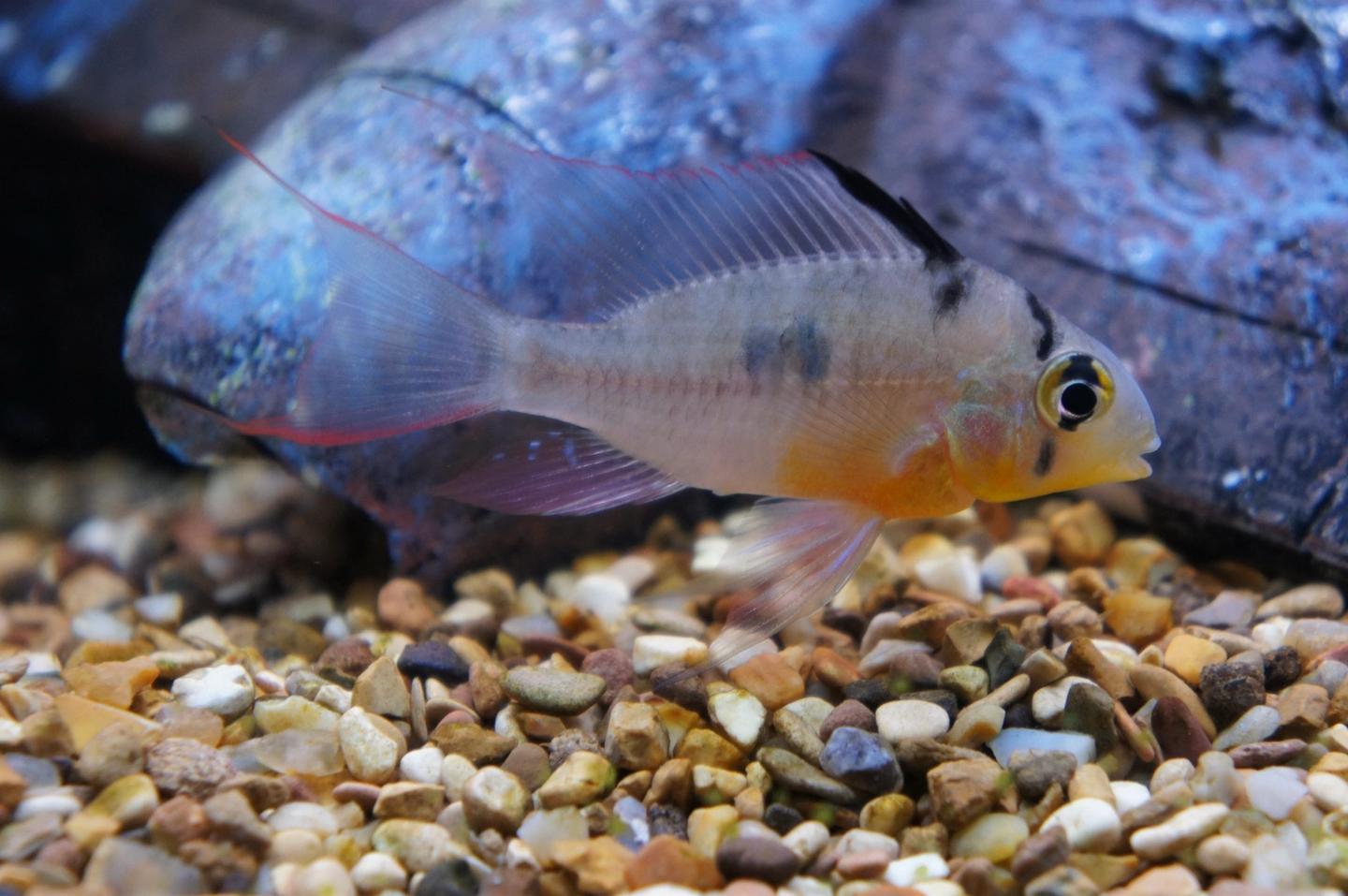
Cichlids are a family of roughly 1,800 accepted species, not one care type. Before buying, identify the exact species and source, then compare adult measurement, usable tank dimensions, social system, territory, tested water, diet and an exit plan. No family-wide minimum tank, water range or tank-mate list is safe.
Maintain these water conditions for optimal health and vibrant colors
Verduya's Hap (Copadichromis trimaculatus) is an open-water Lake Malawi hap for experienced aquarists planning a large, calm Malawi cichlid aquarium. It may still appear in supplier or older hobby wording as Haplochromis trimaculatus, so this listing keeps that synonym visible while using the current Copadichromis identity for care and SEO.
This is not a small community fish and it is not a rock-fighting mbuna. It is a graceful, shoaling hap that needs swimming room, hard alkaline water and carefully chosen companions. The current Shopify variants are the sale sizes when stock returns: 4-5 cm, 6-7 cm, 7-9 cm and XL. Those are purchase sizes, not the adult planning size.
| Scientific name | Copadichromis trimaculatus |
|---|---|
| Common / trade name | Verduya's Hap; older supplier wording may use Haplochromis trimaculatus |
| Natural range | Endemic to Lake Malawi |
| Adult planning size | Plan around 20 cm; some adult male references approach 23 cm |
| Best aquarium type | Large Lake Malawi hap display with open middle-water swimming space |
| Adult group planning | 700-800 litres+ is the safer long-term target for a proper group |
| Temperature | 24-28 C |
| pH and hardness | Hard alkaline Malawi water, about pH 7.5-8.6 |
| Temperament | Generally peaceful for a Malawi hap, but males can display and claim spawning areas |
| Diet | Small quality cichlid foods, plankton-style feeds, daphnia, mysis and brine shrimp |
Verduya's Hap is best listed as Copadichromis trimaculatus. The older Haplochromis trimaculatus wording is useful because customers and supplier files may still search for it, but it should not be repeated unnaturally through the description. This page uses the old name only where it helps customers understand that they are looking at the same fish.
The species belongs with the more open-water Malawi haps rather than the rougher rock-dwelling mbuna. That distinction changes how the aquarium should be built. Instead of a compact rock pile full of territorial disputes, the best display gives this fish long lanes, open water, reliable filtration and enough structure around the sides to break lines of sight.
Copadichromis trimaculatus is recorded from Lake Malawi and is associated with open-water and rocky-littoral zones. FishBase lists the species as a freshwater Lake Malawi cichlid, while specialist Malawi references describe it as a fish that can gather in groups and feed in the water column. In aquarium terms, that means it should be treated as an active swimming hap, not as a cave-bound cichlid.
The three-spot pattern is part of the fish's identity, and mature males can become more colourful than females or juveniles. Expect colour to depend on sex, age, hierarchy, mood and settling time. A newly arrived or young fish may look modest compared with a mature display male. That is normal, and it is one reason the listing does not overpromise colour from a single photo.
Because the species is naturally social, a group is preferable when stock, space and budget allow. A single fish can survive in the right conditions, but the best behaviour comes from a planned group in a tank large enough to let males display without constantly pressing weaker fish into corners.
Plan a long, mature Lake Malawi aquarium with open swimming space through the centre and rockwork arranged around the edges or rear. The aim is balance: enough rock to create security and boundaries, but not so much that an open-water hap has no room to move. A sand substrate suits the Malawi look and makes maintenance easier.
The old short listing used a lower tank-size figure. After preservation review, that is not the standard I want this page to imply. For adult group planning, use 700-800 litres+ as the safer long-term target, especially if you want a natural group with compatible haps or peacocks. A smaller grow-out aquarium can be used only by keepers who already have the adult setup planned and who understand that it is temporary.
Use strong biological filtration, good oxygenation and regular water changes. Malawi cichlid tanks often carry a heavy feeding and waste load, and open-water fish show stress quickly when oxygen or water quality slips. Keep the layout simple enough that you can remove trapped food and clean around rocks without dismantling the whole aquarium each week.
A practical aquarium range is 24-28 C, pH 7.5-8.6 and moderate to high hardness. The exact numbers matter less than stability within a proper Malawi range. Avoid soft, acidic water and avoid sudden changes during maintenance. If your tap water is naturally soft, plan the mineral management before the fish arrives rather than trying to correct the aquarium after stress appears.
Test ammonia, nitrite, nitrate, pH and hardness. Ammonia and nitrite should stay at zero. Nitrate should be controlled with regular water changes, sensible feeding and stocking that matches the filter capacity. Large cichlid systems reward routine more than last-minute rescue work.
Verduya's Hap is best fed as a plankton-picking hap and micro-predator rather than as a heavy predator. Use small, high-quality cichlid pellets, granules or flakes as the staple, then rotate frozen daphnia, mysis, brine shrimp and similar small foods. A spirulina or Malawi cichlid formula can be useful in the routine, especially when keeping the fish with other haps and peacocks.
Feed modest portions that are cleared quickly. The fish should look active and conditioned, not bloated. Avoid feeder fish, mammal meat and oversized predator foods. Those choices are unnecessary and can harm water quality. Several smaller feeds are often cleaner than one heavy dump of food in a stocked Malawi aquarium.
This is a peaceful-to-moderate Malawi hap when housed correctly. It is not harmless in the way a small tetra is harmless, but it is usually much easier to plan around than aggressive mbuna or large predatory haps. The safest companions are similarly sized, calm Lake Malawi haps, selected Aulonocara peacocks, suitable Placidochromis species and robust Synodontis catfish that enjoy similar water.
Avoid highly aggressive mbuna, fin nippers, very large predators and tiny fish that may be swallowed or bullied. Also avoid mixing it into soft-water community layouts just because the fish looks elegant. The water chemistry, adult size and social behaviour all point toward a dedicated Malawi setup.
When keeping males and females, spread attention across the group and provide enough room. Mature males can display strongly and defend a spawning area, especially when females are ready. If the aquarium is too small, that natural behaviour can become constant pressure.
Like many Malawi cichlids, Copadichromis trimaculatus is treated as a maternal mouthbrooder in the hobby. A displaying male will try to attract females to a selected spawning area, and the female carries eggs and fry in her mouth during incubation. Breeding is interesting, but it should be planned only in a large, stable aquarium or a dedicated breeding setup.
If breeding occurs, do not rush the female or repeatedly disturb the tank. Stress can cause holding females to spit or swallow eggs. Fry need small foods, clean water and protection from adults and other tank mates. For most customers, the more important point is not breeding production, but giving the group enough space that normal display behaviour does not become a welfare problem.
Most problems with this fish come from the wrong environment: soft water, immature filtration, poor oxygen, overcrowding or incompatible tank mates. A healthy Verduya's Hap should settle into the middle water, feed confidently and move with the group once it has had time to acclimate. New fish may be pale or cautious at first, especially after transport.
When this livestock is available, orders from Tropical Fish Co are packed for live-fish transit and sent by licensed live-animal courier. The Live Arrival Guarantee applies when the receiving and acclimation instructions are followed. Prepare the aquarium before ordering, keep the lights subdued on arrival, acclimate slowly and avoid heavy feeding on day one.
The important search terms are still here naturally: Verduya's Hap, Copadichromis trimaculatus, Lake Malawi hap, Malawi cichlid and hard alkaline water. The care copy is written to protect customers from a wrong purchase and to help Google and shoppers understand exactly what the fish is.
We keep the exact source image on the listing and restore the older SKU-specific gallery images so customers can see both an evidence photo and richer visual context.
Yes. The current name used for this listing is Copadichromis trimaculatus. Older supplier and hobby wording may still use Haplochromis trimaculatus.
The page remains available so customers can compare care needs and prepare for restock.
For adult group planning, use a large Lake Malawi aquarium of around 700-800 litres or more. A smaller grow-out tank should be temporary only.
It is usually better with calmer Malawi haps and peacocks. Highly aggressive mbuna can stress it and are not the best match.
Use small quality cichlid foods with daphnia, mysis, brine shrimp and similar plankton-style foods. Avoid feeder fish and heavy predator diets.
When this livestock is available and shipped by our live-animal courier, the Live Arrival Guarantee applies when the receiving and acclimation instructions are followed.
Max adult size is the length this species reaches at full maturity (from scientific sources). The livestock you receive will be younger and smaller — pick a size variant on the buy box for the actual shipping size. Product-photo provenance and any image-specific limitations are stated on the listing.
Best in a dedicated large Lake Malawi hap community with open swimming space and stable hard alkaline water.
Always research specific species before adding them to your tank. Consider:
No reviews for this item yet. Bought one? Honest reviews only, good or bad.
What customers say about ordering from us
I have a small group of long finned mountain minnows. So was delighted to be able to order ten of this variety to increase the genetics in my tank . The ones I recieved are healthy but it’s to early to give a verdict on wether they are of a long finned type since they are small currently.
Gordon Walker · 23 Sept 2026
100% success travel and "installation". Pleased with quality of purchase. The Siamese fighter a bit "shy" so have not yet seen him at his best yet but looking good. Happy customer. GG
George E Garratt · 21 Sept 2026
Reviews of our shop, collected by Judge.me, an independent third-party review collector. Newest first.