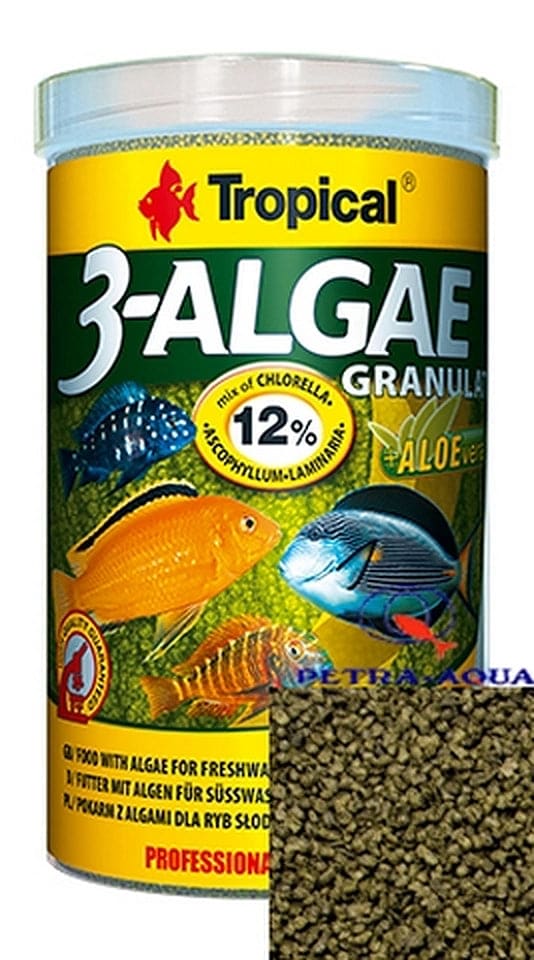
Tropical 3-Algae Granulat - fish food UK
£12.99

Tropical Malawi Chips are slowly sinking mbuna cichlid food for herbivorous cichlids, with pea, spirulina, nettle, spinach, kelp and krill meal. Choose 250ml/130g or 1000ml/520g.
Tropical Malawi Chips are slowly sinking mbuna cichlid food for herbivorous cichlids, with pea, spirulina, nettle, spinach, kelp and krill meal. Choose 250ml/130g or 1000ml/520g.
Tropical Malawi Chips are small, slowly sinking cichlid food chips made for mbuna and other herbivorous cichlids. Their mixed plant-and-aquatic recipe includes pea meal, oat flour, spirulina, nettle, spinach, kelp and krill meal, while the chip format lets fish feed below the surface as the pieces descend.
This page offers two selectable tubs: 250ml / 130g and 1000ml / 520g. Choose the size in the product options beside the current price and availability. Because Malawi cichlids do not all share one diet, check the species you keep before treating any food as a universal Lake Malawi staple.
| Brand and range | Tropical Premium Line |
|---|---|
| Food format | Small, slowly sinking chips |
| Manufacturer's intended fish | Mbuna and other herbivorous cichlids |
| Declared protein | 43% |
| Notable declared ingredients | Pea, oat, nettle, spinach, wheat germ, spirulina, kelp and krill meal |
| Current choices | 250ml / 130g or 1000ml / 520g |
| Feeding direction | Small portions eaten within 2-3 minutes |
Malawi Chips are a multi-ingredient prepared aquarium food rather than a single-ingredient treat. Tropical describes them as small chips that sink slowly and are sized for the mouth shape of mbuna. That format can make a ration easier to observe than food that immediately disappears: you can watch where the chips travel, whether timid fish gain access, and whether pieces remain uneaten.
The word chips describes the food's flat pieces; it does not mean human snack food. The product is for ornamental fish only. It is also different from Tropical Malawi Flakes, even though the two foods have a related intended audience. The physical format affects how food moves through the aquarium and how fish approach it, so the best choice is the one your fish can take comfortably and clear without waste.
The manufacturer's stated audience is mbuna and other herbivorous cichlids. Mbuna are the rock-associated Lake Malawi cichlids commonly kept in specialist African cichlid aquariums. The Ornamental Aquatic Trade Association also notes that smaller mbuna species tend to be more herbivorous and can appreciate specialist Malawi feeds with a high algae content.
That does not make this the right complete answer for every fish sold as a Malawi cichlid. Diet varies across the group. OATA notes that some larger open-water Malawi cichlids are more predatory and may require food with a greater animal component. Mixed aquariums can also contain species with different mouth sizes, feeding positions and nutritional needs. Identify the fish in the tank and follow species-specific guidance rather than choosing only from the lake name.
| Situation | How Malawi Chips Fit | What To Check |
|---|---|---|
| Mbuna or another herbivorous cichlid | Matches the manufacturer's intended dietary group | Species identity, mouth size and normal feeding response |
| Mixed Lake Malawi aquarium | May suit part of the stock | Whether all species share similar dietary needs |
| Predatory or strongly carnivorous cichlid | Not automatically an appropriate sole food | Use species-specific feeding advice |
| Small community fish, fry or invertebrate-only tank | The chip size and formula may be unsuitable | Choose a food designed for that animal and life stage |
Slow sinking changes access compared with a surface flake or a fast-dropping pellet. Pieces remain available through part of the water column, which can spread feeding activity away from one surface point. In an assertive cichlid group, distributing a small ration across more than one area may help you see whether dominant fish are monopolising the food.
The format is not a guarantee that every fish will eat evenly. Flow, stocking, fish size and individual behaviour all affect where pieces travel. Observe the first feeds closely. If chips are too large for a fish, do not assume that crushing them makes the underlying formula suitable; first confirm that the product matches that species' diet. Remove persistent leftovers instead of allowing them to break down behind rocks or decor.
The table below transcribes the principal ingredients and minimum percentages published by Tropical. A minimum percentage is a label declaration, not the full recipe percentage, and an ingredient without a percentage should not be assumed to be present at any particular level.
| Ingredient Group | Declared Detail | Minimum Where Published |
|---|---|---|
| Vegetable protein extracts | Category declared by the manufacturer | Not individually stated |
| Fish and fish derivatives | Animal-derived aquatic ingredients | Not individually stated |
| Plant derivatives | Pea meal | 10% |
| Plant derivatives | Nettle meal | 4% |
| Plant derivatives | Wheat germ | 3.2% |
| Plant derivatives | Spinach meal | 2.6% |
| Cereals | Oat flour | 10% |
| Algae | Spirulina platensis | 3.4% |
| Algae | Ascophyllum nodosum (kelp) | 2% |
| Molluscs and crustaceans | Krill meal | 2.2% |
| Other declared groups | Yeasts, oils and fats | Not individually stated |
| Mineral feed material | Zeolite | 1% |
The presence of fish derivatives, molluscs and crustaceans is important when comparing this product with foods described casually as "vegetable" or "plant based". Malawi Chips contain prominent plant ingredients, but the published composition is not animal-free.
Analytical constituents describe broad nutrient groups measured in the finished food. They are useful for comparing labels, but they do not by themselves prove digestibility, feeding suitability or a particular health outcome for every species.
| Declared Analysis | Amount | How To Read It |
|---|---|---|
| Crude protein | 43% | Total crude protein measurement; it does not identify every protein source |
| Crude oils and fats | 9% | Declared lipid fraction in the finished food |
| Crude fibre | 2% | Labelled crude fibre measurement, not the whole plant-content percentage |
| Moisture | 10% | Declared water content of the food |
Tropical publishes the following additive quantities per kilogram of food. These are formulation facts, not instructions to supplement the aquarium separately. Avoid adding extra vitamins or trace elements on the assumption that more is automatically better.
| Additive Per Kilogram | Declared Amount |
|---|---|
| Vitamin A | 32,000 IU |
| Vitamin D3 | 1,900 IU |
| Vitamin E | 120mg |
| Vitamin C | 440mg |
| L-carnitine | 250mg |
| Iron (E1) | 48.6mg |
| Zinc (E6) | 13.5mg |
| Manganese (E5) | 10.1mg |
| Copper (E4) | 2.4mg |
| Iodine (E2) | 0.3mg |
| Selenium (E8) | 0.3mg |
| Molybdenum (E7) | 0.06mg |
| Other declared additives | Colourants and antioxidants; quantities not stated on the page |
Tropical associates ingredients such as pea and spirulina with digestible plant protein, wheat germ with unsaturated fatty acids, and L-carnitine with fat metabolism. It also markets the varied recipe in relation to condition, colour and digestive function. Those are manufacturer claims about the formula; they should not be read as a promise that this food will cure disease, prevent all digestive problems, trigger breeding or create a guaranteed colour change.
Real outcomes depend on the fish, the wider diet, portion size, water quality and husbandry. A detailed ingredient list helps you make an informed comparison, but it cannot replace correct species identification or veterinary advice. If fish stop eating, lose condition, swell, pass abnormal faeces or show another persistent change, test the water and seek advice from an experienced aquatic retailer or aquatic veterinary professional.
The manufacturer directs keepers to feed several times during the day in small portions that the animals eat within 2-3 minutes. OATA's broader Malawi cichlid guidance recommends only what fish can consume within a few minutes and warns against overfeeding. Use those time limits as observation guides, not as permission to keep adding food for the full period.
There is no reliable universal number of chips per fish on the published product page. Fish size, group size, age, water temperature, other foods and individual condition all change the appropriate ration. Avoid making abrupt large changes to an established diet. When introducing a new food, use a modest amount and monitor acceptance, waste and normal behaviour.
A reduced feeding response can be associated with stress, aggression, unsuitable water, illness or a mismatch between food and species. Check ammonia, nitrite, nitrate, temperature and the fish's behaviour before repeatedly offering more food.
Uneaten dry food does not become harmless when it disappears from view. It can soften behind rocks, enter the filter or break down on the substrate. OATA warns that overfeeding can create a build-up of waste that releases harmful substances into the water. The most useful feeding routine therefore leaves little or no residual food and is supported by regular water testing and maintenance.
If waste increases after changing foods, first review the amount and distribution rather than assuming the aquarium needs a chemical remedy. Check that the intended fish can eat the chips comfortably and that current flow is not carrying the entire ration into inaccessible areas. Food choice is only one part of water-quality management; filtration, stocking and water changes still matter.
The two options contain the same named food in different quantities. The larger tub is not a different strength or recipe. Choose according to the number of suitable fish you feed and the rate at which you can use the food while it remains in good condition, rather than assuming that the largest pack is always the most practical.
| Selectable Pack | Best Practical Fit | Consider Before Choosing |
|---|---|---|
| 250ml / 130g | Smaller collections, first-time trials or lower consumption | Whether the fish accept the format and how often it will be used |
| 1000ml / 520g | Larger suitable groups or regular repeat feeding | Dry storage, turnover and avoiding long-open containers |
The product selector and basket show the current price for each option. Prices and availability can change, so the live option panel is the correct source rather than a figure written permanently into this description.
No format is automatically superior in every aquarium. Chips offer visible pieces and a slow descent. Flakes spread across the surface and can be broken into finer fragments. Pellets vary widely in diameter, density and sinking speed. The relevant question is whether the food's recipe and physical form match the fish you actually keep.
| Format | Typical Behaviour | Useful When | Possible Limitation |
|---|---|---|---|
| Slowly sinking chips | Move gradually below the surface | You want visible pieces available through part of the water column | May be too large or too targeted for some fish |
| Flakes | Start at the surface and break apart readily | Fish take thin food near the top or need smaller fragments | Can disperse quickly and become hard to monitor |
| Pellets or granules | Behaviour depends on size and density | A precise diameter and floating or sinking profile suits the species | An unsuitable size or recipe can limit access |
For another plant-forward format, see Tropical Spirulina Granulat. Vitality & Color Flakes are a different general-purpose flake recipe, while Tanganyika Chips Special are formulated for a different cichlid context. These are comparisons, not interchangeable recommendations.
The published composition includes fish and fish derivatives, molluscs and crustaceans, including krill meal. That matters for handling and ingredient review. The listing does not claim the product is vegetarian, vegan, allergen-free or suitable for human consumption.
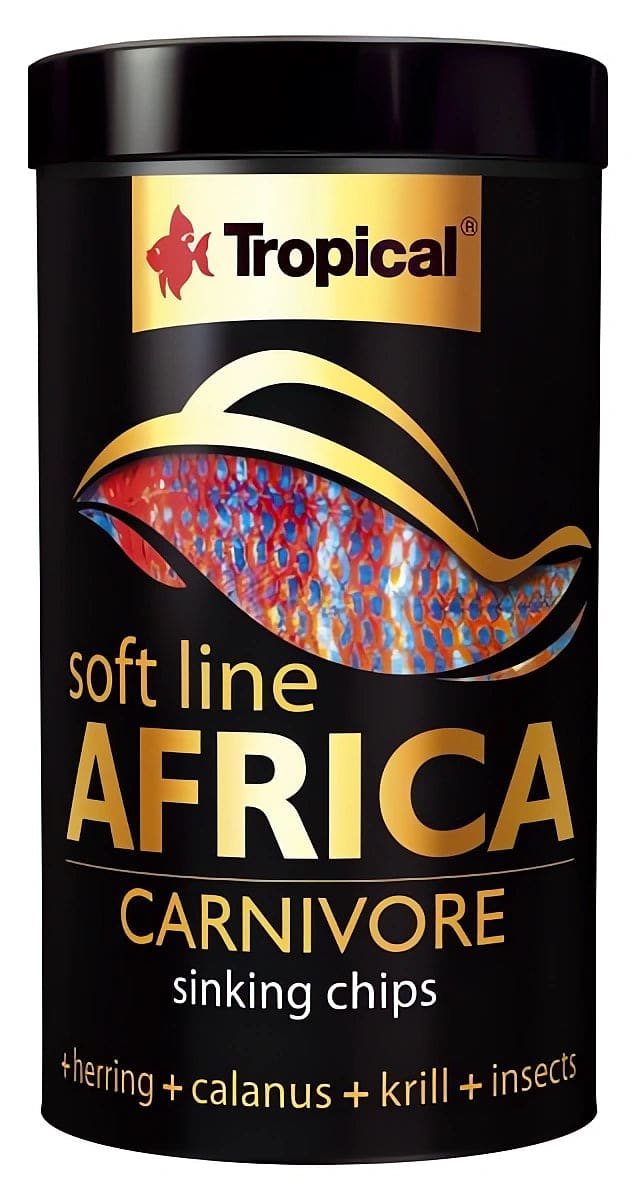
The current gallery image shows the branded Tropical Malawi Chips tub and a close view of the red and green food pieces. It is a representative product image and helps identify the range and format. Packaging artwork can change, and the visible front of a tub does not independently prove the selected pack weight, current formula or expiry date. Confirm the chosen size in the option selector and read the physical label when the order arrives.
Select the required tub size before adding the food to your basket. This is a dry-goods product, not livestock, so the Live Arrival Guarantee does not apply. Current delivery choices and thresholds are explained on our delivery information page, and the returns page explains the applicable dry-goods process.
New customers can enter WELCOME10 at checkout for 10% off an eligible first order, subject to the promotion's current terms. See special offers for the latest details. For wider feeding and husbandry context, use our cichlid care guide and browse the Tropical dried-food category.
Composition, analysis, additives, pack sizes and the 2-3 minute feeding direction were checked against the Tropical manufacturer product page. The distinction between more herbivorous mbuna and more predatory Malawi cichlids, together with the general overfeeding warning, was checked against the OATA African Malawi cichlid care sheet.
Manufacturer benefit statements are identified as such rather than presented as independent guarantees. Current selectable sizes, price and availability come from this live product record. Where the physical pack differs from online text, retain the packaging and contact us through the help and FAQ page before continuing to feed it.
No reviews for this item yet. Bought one? Honest reviews only, good or bad.
What customers say about ordering from us
I have a small group of long finned mountain minnows. So was delighted to be able to order ten of this variety to increase the genetics in my tank . The ones I recieved are healthy but it’s to early to give a verdict on wether they are of a long finned type since they are small currently.
Gordon Walker · 23 Sept 2026
100% success travel and "installation". Pleased with quality of purchase. The Siamese fighter a bit "shy" so have not yet seen him at his best yet but looking good. Happy customer. GG
George E Garratt · 21 Sept 2026
Reviews of our shop, collected by Judge.me, an independent third-party review collector. Newest first.