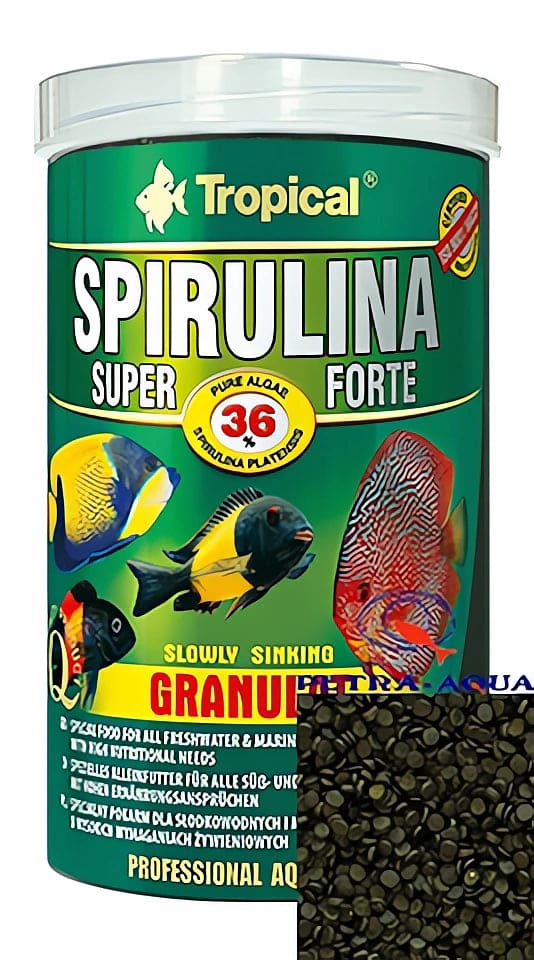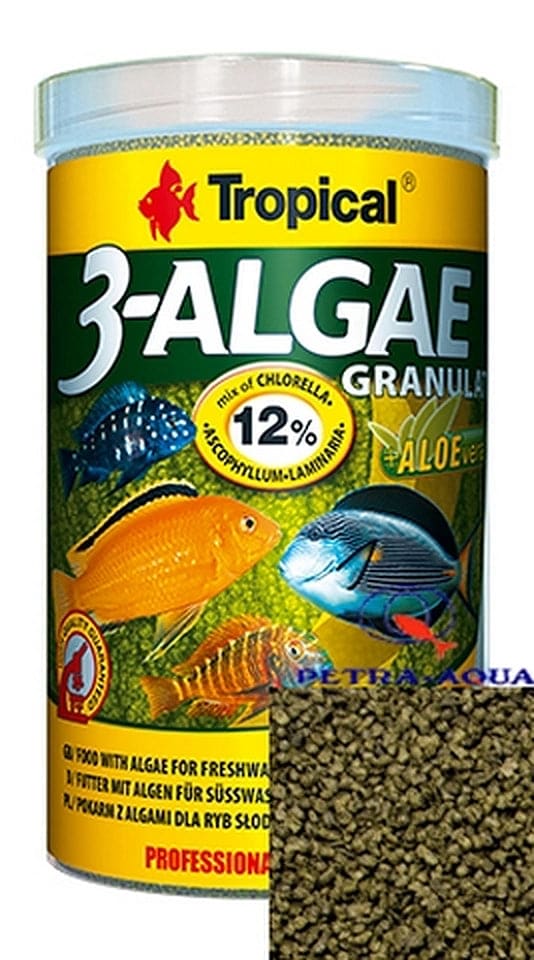

Spirulina Granulat is a slow-sinking, plant-rich granular fish food for tropical community aquariums. Spirulina-enriched granules suit herbivores, livebearers, plecs and algae grazers, sinking gradually so fish at every level feed naturally. An easy-to-portion daily staple with fast UK delivery.
Spirulina Granulat is a slow-sinking, plant-rich granular fish food built around spirulina, a nutrient-dense blue-green algae long valued in the aquarium hobby. It is designed as a practical everyday staple for keepers who want cleaner feeding, reliable nutrition and less waste than many flake foods produce. If you are looking for fish food UK aquarists can use across a wide range of tropical setups, this granulated formula sinks gradually so shy mid-water and bottom-feeding fish get a fair share. It works especially well as a spirulina sinking food for aquarium fish, which makes it useful in mixed aquariums where surface-only foods often leave timid fish underfed. As a versatile aquarium food UK option, Spirulina Granulat for aquarium setups supports herbivorous and omnivorous species that benefit from plant-rich nutrition and steady daily feeding.
Keepers comparing dry fish food UK options often ask whether granules are better than flakes. In practice, quality spirulina granules for aquarium use are easier to portion, hold together longer in the water column, and tend to create less mess when fed correctly. The green granules are sized for small to medium tropical fish, which helps with common questions about how to feed spirulina granules, sensible spirulina granules portion size, and whether this is suitable as a tropical fish food UK aquarists can use every day. For keepers wanting dependable fish food online UK with a strong plant component, it is a sound choice for community tanks, livebearers, plecs, rainbowfish, many cichlids and algae-grazing species.
In the aquarium hobby, spirulina-based foods sit between general community diets and specialist herbivore formulas. They are valued for digestive balance, broad acceptance, and their usefulness in mixed tanks where some fish need more vegetable matter than standard flake blends provide.
One reason this product stands out in the fish food UK market is flexibility. It can be used as a spirulina granulat for daily feeding in community aquariums, as a spirulina granulat for herbivore fish that need more plant matter, or as a supplement alongside protein-rich foods for omnivores. If you keep mollies, platies, swordtails, rainbowfish, many barbs or loricariids, the plant content helps round out the diet without forcing fish to rely on algae alone.
It also helps answer a common question: the best tropical fish food UK choice depends on the species you keep. No single food suits every fish, but a spirulina-based granule is one of the most useful options because it fits so many feeding styles. Compared with broad flake mixes, Spirulina Granulat fish food offers a more targeted approach for fish that browse, peck or feed below the surface. Customers who rotate foods often pair it with a colour-focused flake for top-water feeders or an insect-based granule when they want a more protein-led profile.
The biggest difference is feeding behaviour. Flakes tend to stay at the surface first, then break apart. Granules like this sink more gradually, so fish at different levels can feed naturally. That makes spirulina granules vs standard fish food a worthwhile comparison for aquarists with mixed communities. In tanks with tetras, rasboras, corydoras, plecs and livebearers together, a sinking granule often gives better distribution and less frantic surface competition.
Another advantage is control. Spirulina granules feeding frequency is easy to manage because the food is compact and measurable, which helps reduce overfeeding. That matters because the spirulina granules water quality impact stays low only when portions are sensible. Feed too much of any dry food and nitrate and phosphate will rise; feed the right amount and granules are one of the cleanest ways to offer a plant-rich staple.
In mixed aquariums, feed a small pinch of Spirulina Granulat on one side of the tank and a second tiny pinch on the other. This spreads fish out, reduces bullying at feeding time and helps slower fish eat in peace.
This food is especially useful as a spirulina granulat for community tank setup containing omnivores and herbivores. It suits livebearers, many tetras, rainbowfish, peaceful barbs, gouramis that accept sinking foods, corydoras as part of a varied diet, and algae-grazing catfish. It is also a strong option as spirulina granules for herbivore fish and among the spirulina granules for pleco feeding choices, though larger plecs usually do best when granules are combined with wafers and fresh vegetables.
For cichlid keepers, it works well with mbuna and other species that benefit from a greener menu. Bettas are more carnivorous, so while they may sample it, a more protein-led staple suits them better.
| Fish Type | Suitable? | Notes |
|---|---|---|
| Livebearers, rainbowfish, barbs | ✅ Yes | Excellent staple or rotation food |
| Plecs, algae grazers, herbivorous cichlids | ✅ Yes | Very useful as plant-rich daily support |
| Strict carnivores (e.g. bettas) | ⚠️ Limited | Use as occasional supplement, not main diet |
If you have wondered how to feed spirulina granules, the rule is simple: feed only what your fish can finish in around one to two minutes. Start small. Granules expand slightly after wetting, so beginners often add too much. A good spirulina granulat feeding guide is to offer one modest pinch for a lightly stocked 60-litre tank, then adjust based on how quickly the food disappears and whether any falls into dead spots.
Prepared foods should remain the foundation of the diet because they are balanced and consistent. Extras such as blanched courgette, shelled peas or spinach can add variety for herbivores, but they should not replace a complete staple, and any uneaten vegetable matter should be removed before it fouls the water.
| Time | Food | Amount |
|---|---|---|
| Morning | Spirulina Granulat | Small pinch, eaten in about 1 minute |
| Evening | Spirulina Granulat or mixed-diet rotation | Small pinch, adjust to stock level |
Too much dry food causes ammonia spikes, cloudy water and excess waste in the substrate. If granules are still visible after two minutes, reduce the next feed. Stable water quality matters more than feeding heavily.
Yes. For many species it works well as a spirulina granulat for daily feeding. That said, the best long-term results come from variety. A plant-rich staple is excellent, but omnivores and insect-eaters also benefit from rotation. Many aquarists use this as their weekday base and add other foods through the week, such as an insect-protein granule or a broad multivitamin tablet, to keep the diet varied.
The most useful spirulina granules benefits for fish are digestive support, broad acceptance, and a better fit for species that naturally graze or browse. Spirulina is valued in the hobby because it provides plant-derived nutrients and can support condition and natural colour when used as part of a balanced feeding plan. For many community fish it helps bridge the gap between generic flake foods and specialist herbivore diets.
This is why many hobbyists consider it among the best spirulina granules for freshwater fish, and a strong candidate for the best spirulina sinking food for tropical fish when they want one food that covers many species. In tanks with livebearers and rainbowfish, keepers often notice a stronger feeding response and more even body condition; in plecs and plant-leaning cichlids it can serve as a useful daily base.
All foods influence water quality, but the goal is to choose one that is easy to control. The spirulina granules water quality impact is generally low when the food is fed in small portions matched to stock size. Because granules hold together better than some flakes, they tend to create less fine debris, which can mean cleaner filters, less surface scum and reduced waste under decor.
For the cleanest results, combine careful feeding with routine maintenance: weekly water changes of around 25 to 40 percent, gravel cleaning where waste settles, and regular filter upkeep. In heavily stocked tanks or with messy cichlids, use this food in measured portions rather than free-pouring. Keepers looking for a premium spirulina sinking food UK often choose granules for exactly this reason: they are neat, practical and easier to ration than many loose flakes.
When comparing fish food UK choices, it helps to think about fish behaviour first. Flakes suit surface feeders. Tablets suit bottom grazers. Granules are the middle ground, which is why they are so useful in mixed aquariums. If you are deciding between this food and a broad community flake, choose spirulina granules when your stock includes herbivores, algae grazers or fish that feed away from the surface.
| Feature | Spirulina Granulat | Standard Community Flakes |
|---|---|---|
| Feeding Zone | Slow-sinking | Mainly surface first |
| Best For | Herbivores, omnivores, mixed tanks | General top-feeding community fish |
| Waste Control | Easy to portion | Can crumble more easily |
| Plant Content Focus | Higher spirulina emphasis | Usually more generalised |
| Ideal Use | Daily staple or rotation food | General all-round feeding |
Yes. This product is particularly strong as a spirulina granulat for community tank because it feeds multiple layers of the aquarium. Mid-water fish take granules as they sink, while bottom-oriented fish can take what reaches lower levels. It is also a dependable choice as a spirulina granulat for herbivore fish, especially when used alongside fresh vegetables and the occasional specialist wafer where needed.
For plecs, the answer depends on species and size. Small omnivorous plecs and juvenile algae grazers often do well with this as part of a varied menu, which makes it a practical option among spirulina granules for pleco feeding choices. Large wood-eating plecs, by contrast, still need fibre, vegetables and species-appropriate extras.
Use Spirulina Granulat as the base food 5-6 days per week, then add one or two protein-focused feeds during the week. This keeps herbivores in better balance while still supporting omnivorous species.
Good spirulina granules storage tips are simple but important. Keep the container tightly closed and away from sunlight, humidity and heat. Do not store fish food above a warm aquarium hood where condensation can enter the tub. Moisture is the main enemy because it degrades texture and shortens shelf life.
If you buy several foods at once, open only the one you are currently using most. For larger fish rooms, splitting food into smaller airtight containers helps preserve freshness. This matters because even the best spirulina granules for freshwater fish lose value if they become stale. Fresh-smelling granules with a dry, even texture are far more likely to be accepted quickly by fish.
When hobbyists shop for fish food online UK they usually want three things: the right formula, clear product guidance, and confidence the food will suit their tank. Spirulina Granulat for aquarium use is a strong choice for buyers comparing spirulina granulat fish food buy UK options because it fits so many common setups: community tanks, livebearer aquariums, plec grow-out tanks and herbivore-leaning cichlid systems. Matched to the species, feeding level and digestive needs of your stock, it is one of the safest and most versatile starting points for tropical community fish.


18–26°C · pH 6.5–8 · 30L

23–27°C · pH 7.4–8.4 · 500L

20–27°C · pH 6–7 · 54L

23–27°C · pH 7.4–8.4 · 150L

24–28°C · pH 6.5–7.8 · 300L

20–24°C · pH 7–8 · 45L

24–28°C · pH 6.5–7.5 · 2000L

24–28°C · pH 7.5–8.5 · 200L