−22%
Expert
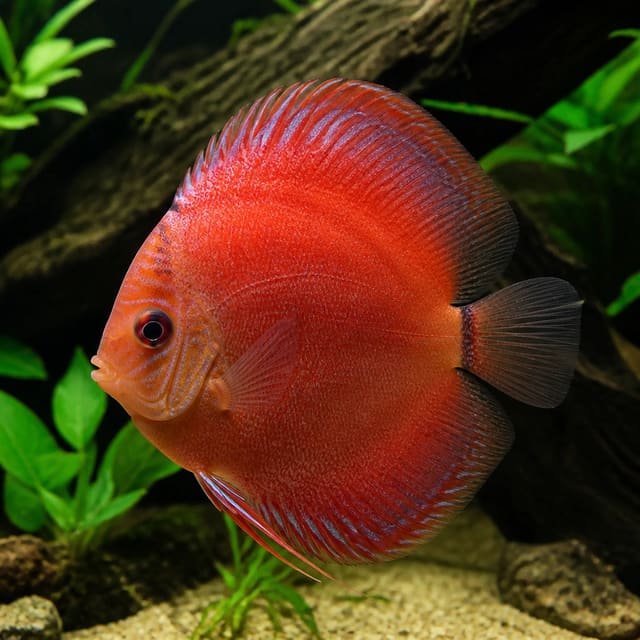
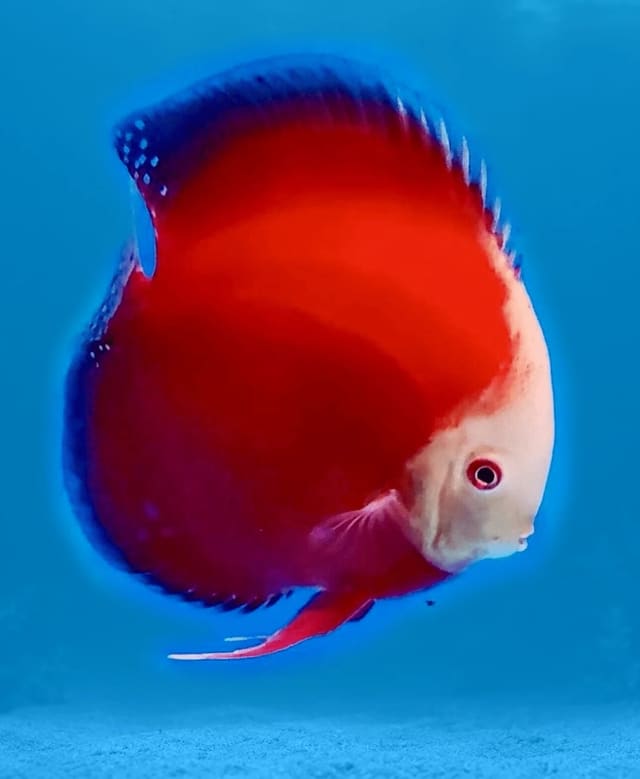
Super Red Melon Discus (Symphysodon spp.)
26–30°C · pH 6–7 · 300L
£72.99£93.99
A striking, peaceful discus variety with a vivid red body and yellow face, prized for its beauty and elegant swimming style. Expert care, peaceful. 26-30C, pH 5.0-7.0.
Adult size is the maximum length this species reaches at full maturity (scientific sources). The livestock you receive will be younger and smaller — pick a size above for the actual shipping size. Product-photo provenance and any image-specific limitations are stated on the listing.
Symphysodon spp.
Save when buying multiple fish. Each quantity is one fish; sex and pair formation are not guaranteed unless the selected variant explicitly states them.
Confirm your email, then we’ll send an availability message for this exact item if it returns within 180 days.
This request is only for this product—no newsletter or other promotions. A mail-provider retry may very rarely duplicate the same availability message. Unconfirmed addresses are removed after 48 hours. See our privacy policy.
A striking, peaceful discus variety with a vivid red body and yellow face, prized for its beauty and elegant swimming style. Expert care, peaceful. 26-30C, pH 5.0-7.0.
Adult size is the maximum length this species reaches at full maturity (scientific sources). The livestock you receive will be younger and smaller — pick a size above for the actual shipping size. Product-photo provenance and any image-specific limitations are stated on the listing.
Discus are social Amazonian cichlids with specialised aquarium needs. OATA advises at least five fish, except an established breeding pair, and about 50 litres per adult—roughly 300 litres for six adults. Use that as a planning floor, then check usable dimensions, filtration, source water and the actual fish.
Maintain these water conditions for optimal health and vibrant colors
The Blue Discus from the Symphysodon species complex represents the pinnacle of freshwater aquarium fishkeeping, combining breathtaking beauty with demanding care requirements that challenge even experienced aquarists. These discus fish originate from the vast Amazon River basin throughout South America, where they inhabit warm, soft, acidic blackwater environments. The blue variety showcases stunning turquoise to deep blue coloration developed through selective breeding programs that have enhanced the naturally occurring blue pigmentation found in wild populations.
Reaching approximately 18cm at maturity, blue discus fish exhibit the characteristic disc-shaped body profile and graceful swimming behavior that has captivated hobbyists for generations. Their peaceful temperament makes them suitable for carefully planned community setups with compatible warm water aquarium fish, though they require expert-level commitment to water quality, stable parameters, and specialized feeding. When housed in groups of five or more in spacious, well-maintained aquariums, few species can match the visual impact of healthy blue discus.
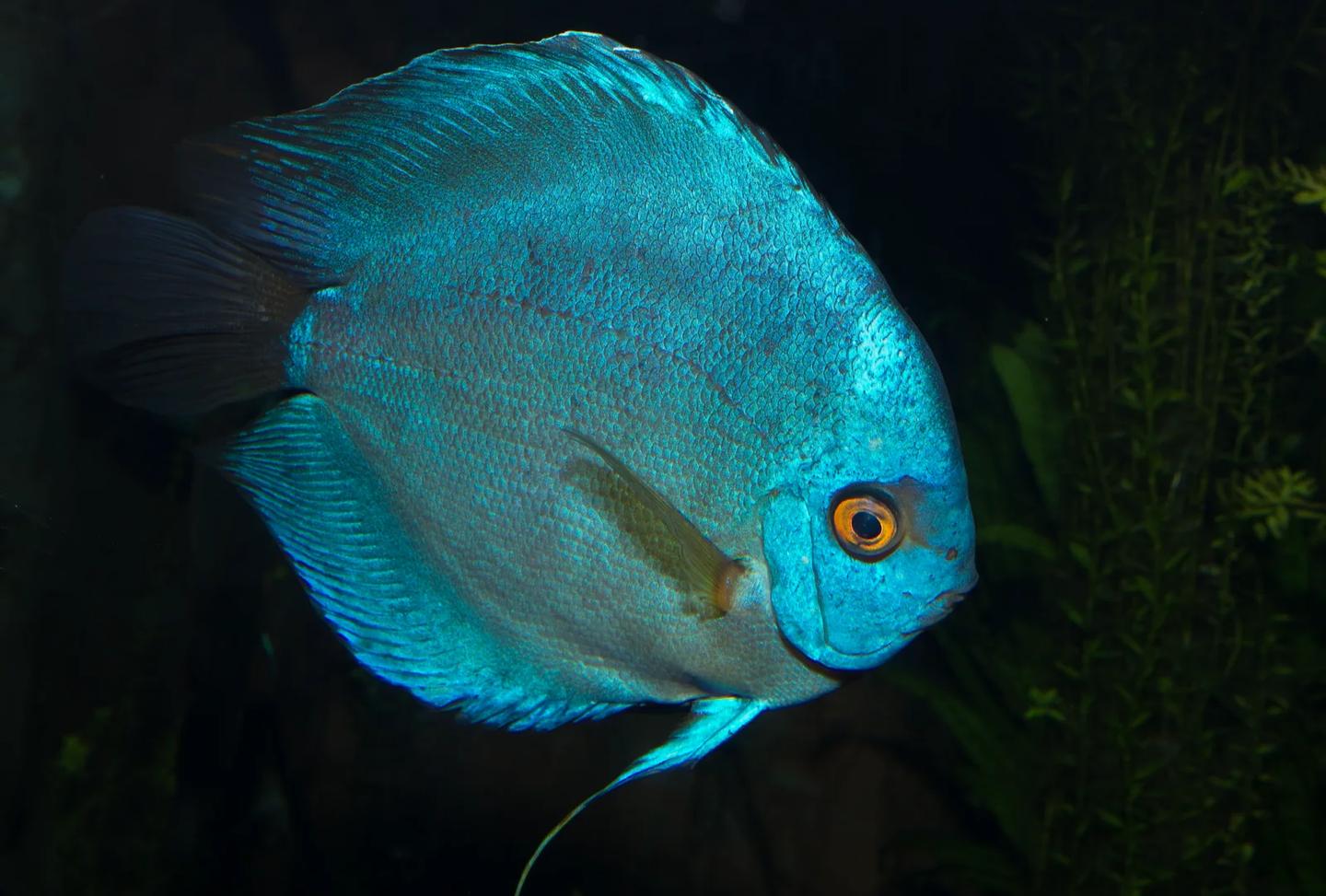
Blue Discus display vibrant azure to deep cobalt coloration across their extremely compressed, circular body profile. The intensity of blue pigmentation varies between individuals and strains, with some showing bright electric blue while others exhibit richer, darker tones. The base color often features subtle vertical striping patterns inherited from wild ancestors, adding depth and visual interest without detracting from the overall blue appearance.
Their laterally compressed shape creates the iconic discus silhouette, with rounded dorsal and anal fins extending along most of the body length to form an almost perfect circle when viewed from the side. Eyes are relatively large and expressive, often showing red or orange rings that create striking contrast with the blue body. Mature specimens develop fuller body depth, with breeding-condition fish appearing particularly robust. Coloration intensifies under proper care, with stressed fish showing faded, darkened, or blotchy patterns.
Wild Symphysodon species inhabit the warm, soft, acidic waters of the Amazon Basin, favoring slow-moving tributaries, floodplain lakes, and backwater areas throughout Brazil, Peru, Colombia, and adjacent regions. They shelter among submerged root systems, fallen trees, and aquatic vegetation that provides protection from predators and current. These blackwater environments feature water heavily stained with tannins from decaying organic matter, resulting in dark brown coloration and pH values often below 6.0.
Water temperatures remain consistently elevated in these tropical habitats, typically between 28-31°C year-round. The still or very slow-moving water contains relatively low dissolved oxygen compared to flowing rivers, though discus have adapted to these conditions through behavioral and physiological mechanisms. Dense forest canopy blocks much direct sunlight, creating dim lighting conditions. The substrate consists primarily of decomposing leaf litter and fine sediments, supporting the biofilm and microorganism populations that wild discus feed upon.
A minimum aquarium volume of 250 litres provides adequate space for a small group of blue discus, though larger tanks offer superior parameter stability and more natural social dynamics. The aquarium should prioritize open swimming space with strategically positioned driftwood and live plants creating visual interest without cluttering central areas. Amazon swords, Java fern, and Anubias species work particularly well as they tolerate the warm water and contribute to biological filtration while enhancing aesthetics.
Many symphysodon specialists prefer bare-bottom tanks for easier maintenance and immediate visual detection of waste accumulation, though fine sand substrate works well when diligent maintenance is maintained. Powerful filtration capable of processing at least four times the tank volume per hour maintains the pristine water quality essential for these sensitive cichlids. Multiple heaters ensure stable temperatures without cold spots. Subdued lighting reduces stress, with floating plants helping diffuse bright fixtures when necessary.
An omnivorous diet with strong emphasis on high-quality protein maintains the health and coloration of blue discus. Specialized discus pellets or granules formulated specifically for these cichlids should form the nutritional foundation, supplemented generously with frozen foods like bloodworms, brine shrimp, mysis shrimp, and daphnia. Small, frequent feedings prevent water quality deterioration while mimicking natural feeding patterns and supporting steady growth.
Quality discus foods incorporate color-enhancing ingredients including spirulina, krill, and astaxanthin that intensify blue pigmentation. Occasional vegetable-based foods provide fiber and nutritional variety. Many dedicated discus keepers prepare homemade food blends containing beef heart, fish, shellfish, vegetables, and vitamin supplements, though excellent commercial alternatives eliminate this labor-intensive approach while providing balanced nutrition. Feed juveniles 3-4 times daily to support rapid development, reducing to twice daily for adults.
Blue discus exhibit peaceful, highly social behavior that should be appreciated in groups of at least five individuals. They establish subtle hierarchies through body language and spatial positioning rather than aggressive confrontations, with dominant individuals claiming preferred locations while subordinates maintain respectful distances. In properly maintained conditions, they occupy mid-water zones and move in loosely coordinated groups that create mesmerizing displays.
These intelligent cichlids recognize their keeper and learn to anticipate feeding times, often coming to the front glass when approached. Stress manifests through darkened coloration, vertical stress bars, clamped fins, and nervous darting behavior. Relaxed fish display full color intensity, smooth swimming movements, and confident behavior. Breeding pairs form naturally from groups, with bonded pairs staying close together and cooperatively preparing spawning sites when conditions trigger reproductive behavior.
Selecting compatible what fish can live with discus requires careful consideration of both water parameter requirements and behavioral compatibility. Cardinal tetras represent the ideal companion species, as they share identical preferences for warm, soft, acidic water while their small size and peaceful schooling behavior poses no threat. Rummy-nose tetras work equally well, adding color and gentle movement to upper water levels.
Corydoras catfish make excellent bottom-dwelling companions, actively foraging for leftover food while remaining peaceful and unobtrusive. Otocinclus help control algae without bothering discus. Completely avoid aggressive cichlids that stress discus through territorial behavior, fin-nippers like certain barb species that damage finnage, and fast, boisterous fish whose constant activity creates stress. Coldwater species cannot tolerate the elevated temperatures discus require, while large predatory fish may view even adult discus as potential prey.
Successful discus breeding represents a significant achievement requiring exceptional dedication to water quality and optimal conditions. Pairs form naturally from groups maintained together over time, becoming obvious through constant proximity and synchronized movements. They spawn on carefully cleaned vertical surfaces including broad plant leaves, flat stones, driftwood, or purpose-placed spawning cones, with the female depositing neat rows of adhesive eggs while the male follows immediately behind to fertilize them.
Both parents cooperatively guard and fan the developing eggs, which hatch in approximately 60 hours at 29°C. The tiny larvae remain attached to the spawning surface initially through adhesive head glands, then transfer to the parents' sides where they feed on specialized mucus secretions produced on the adults' skin. This remarkable parental care behavior continues for 5-7 days until fry become free-swimming and accept fine prepared fry foods or infusoria cultures. Breeding success requires very clean, soft, acidic water with stable warm temperatures and a calm environment completely free from disturbances.
Tropical Fish Co specializes in providing exceptional discus fish for sale uk to dedicated aquarists prepared to meet the demanding requirements these magnificent cichlids deserve. Every blue discus undergoes comprehensive health screening and careful quarantine protocols before becoming available for purchase, ensuring you receive specimens free from parasites, disease, and stress-related issues. Our tropical fish for sale uk selection includes multiple size options from 3cm juveniles perfect for growing out to 15cm show-quality breeding adults.
When you purchase freshwater fish uk from our blue discus collection, you receive detailed care documentation and ongoing support to help you succeed with these challenging yet incredibly rewarding fish. We understand the substantial investment discus represent both financially and in terms of ongoing maintenance commitment. Our discus fish uk inventory comes exclusively from reputable breeding programs that prioritize health, body conformation, and intense coloration. With secure packaging designed specifically for sensitive cichlids and reliable delivery partnerships throughout the UK, your new blue discus arrive in peak condition. Competitive discus fish for sale online uk pricing combined with our quality guarantee makes Tropical Fish Co the trusted choice for aquarists seeking premium Symphysodon specimens that will become the stunning centerpiece of your warm water aquarium for many years ahead.
No reviews for this item yet. Bought one? Honest reviews only, good or bad.
What customers say about ordering from us
Easy website plenty of info on fish your buying great to pick a time slot
TRACEY DURRANT · 7 Oct 2026
Got some lovely fish thank you
Kevin Mackie · 7 Oct 2026
Reviews of our shop, collected by Judge.me, an independent third-party review collector. Newest first.