Advanced
Red Jewel Cichlid (Rubricatochromis bimaculatus)
22–27°C · pH 6–7.8 · 108L
£15.99

A vivid West African jewel cichlid, now treated as Rubricatochromis paynei and often sold as Hemichromis paynei. Best for experienced keepers with space, structure and a plan for territorial behaviour.
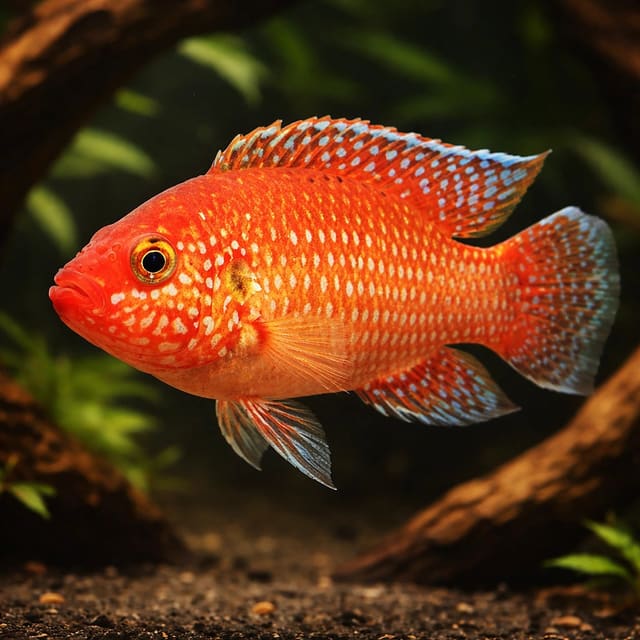
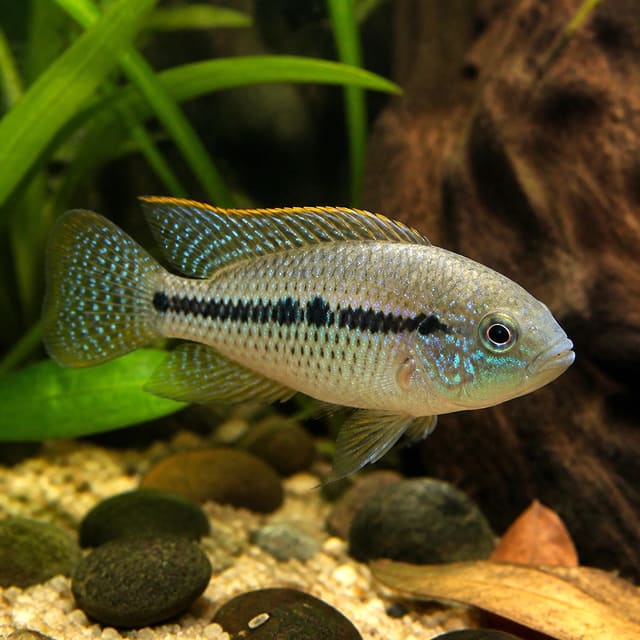
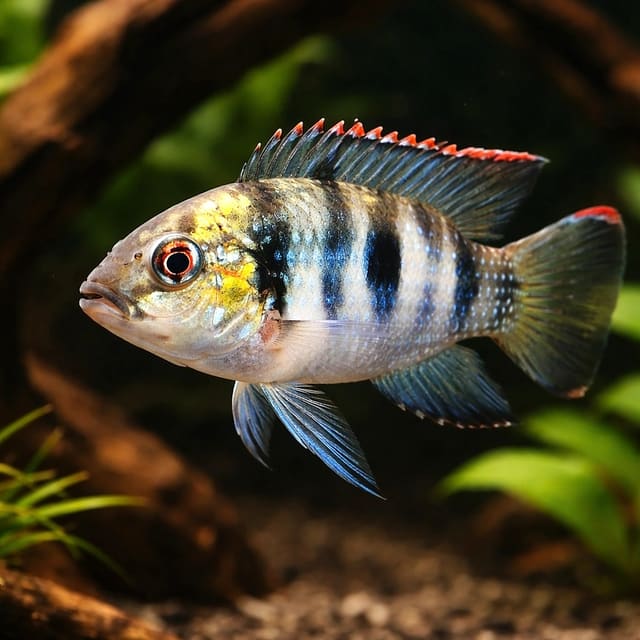
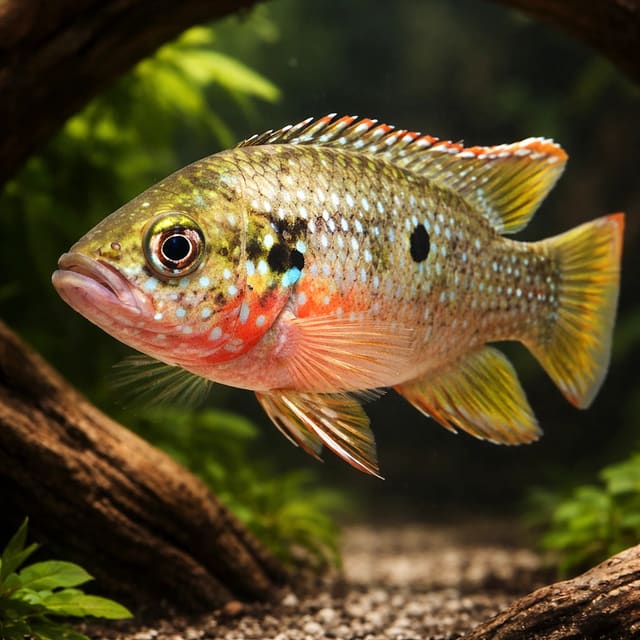
Adult size is the maximum length this species reaches at full maturity (scientific sources). The livestock you receive will be younger and smaller — pick a size variant above for the actual shipping size. Product-photo provenance and any image-specific limitations are stated on the listing.
Rubricatochromis paynei
Save when buying multiple fish. Each quantity is one fish; sex and pair formation are not guaranteed unless the selected variant explicitly states them.
Confirm your email, then we’ll send an availability message for this exact item if it returns within 180 days.
This request is only for this product—no newsletter or other promotions. A mail-provider retry may very rarely duplicate the same availability message. Unconfirmed addresses are removed after 48 hours. See our privacy policy.
A vivid West African jewel cichlid, now treated as Rubricatochromis paynei and often sold as Hemichromis paynei. Best for experienced keepers with space, structure and a plan for territorial behaviour.
Adult size is the maximum length this species reaches at full maturity (scientific sources). The livestock you receive will be younger and smaller — pick a size variant above for the actual shipping size. Product-photo provenance and any image-specific limitations are stated on the listing.

Cichlids are a family of roughly 1,800 accepted species, not one care type. Before buying, identify the exact species and source, then compare adult measurement, usable tank dimensions, social system, territory, tested water, diet and an exit plan. No family-wide minimum tank, water range or tank-mate list is safe.
Maintain these water conditions for optimal health and vibrant colors
| Care area | Best target for this listing | Why it matters |
|---|---|---|
| Tank style | Structured West African cichlid aquarium | Caves, roots and broken sight lines reduce constant territorial pressure. |
| Adult planning size | Up to about 12 cm standard length | The 4-5 cm and 5-7 cm variants are juveniles, so plan for adult behaviour now. |
| Keeper level | Experienced / confident intermediate | This is a rewarding cichlid, but not a peaceful community fish. |
| Best visual result | Warm, clean, stable water with secure cover | Colour and posture improve when the fish can hold territory without constant stress. |
Payne's Jewel Cichlid, Fade is a compact but forceful West African jewel cichlid with the colour, confidence and territorial drive that make this group so memorable. The fish is listed by the supplier as Hemichromis paynei, while current FishBase taxonomy places it as Rubricatochromis paynei. Keeping both names visible helps aquarists connect older trade names with the current scientific record.
This is not a soft community fish. It is a vivid, intelligent cichlid for keepers who enjoy behaviour as much as colour: boundary patrols, cave ownership, confident feeding and strong pair defence if breeding begins. The young fish offered here may arrive at 4-5 cm or 5-7 cm depending on variant, but the species should be planned as a fish that can reach around 12 cm standard length. Give it enough room early and the colour, posture and confidence have far more chance to develop cleanly.
The appeal is visual first: red-orange jewel-cichlid colour, blue spangling over the head and flanks, a dark lateral spot and a strong cichlid body shape. FishBase describes the species as having extensive blue spangling and a round black lateral spot above the midline. In aquarium lighting this gives the fish a bright, speckled look rather than a plain block of red. The supplier's "Fade" wording is treated here as the trade/variant name, not as a separate scientifically fixed form.
Good colour depends on more than lighting. Stable warm water, clean filtration, a varied diet and a layout that lets the fish feel secure all matter. If the fish spends every day fighting reflections, chasing unsuitable tank mates or living in a bare tank, the display will suffer. If it has caves, sight breaks and a clear territory, the same fish can look far more composed.
Reliable species-level information for this fish is more limited than for common jewel cichlids, so the listing should be honest about what is known. FishBase records Rubricatochromis paynei from coastal basins in southeastern Guinea, Sierra Leone and Liberia, with freshwater and brackish benthopelagic habitat noted. It is mainly a coastal-area species, not a Lake Malawi or Lake Tanganyika cichlid.
There is also a useful caution for older hobby information: FishBase notes that specimens called Hemichromis paynei in aquarist publications before 2004 were misidentified. That is why this page avoids borrowing exact care claims from older, unrelated jewel-cichlid writeups and instead combines the verified identity facts with conservative, practical cichlid husbandry.
Build the tank around territory. Use caves, rock piles, driftwood roots and hardy planting or artificial cover to break the line of sight. A single open space with one cave often creates one defended hotspot; several broken areas let the fish patrol without feeling that the whole aquarium is one battleground. Sand or fine gravel suits natural digging and makes maintenance easier.
A 100 litre aquarium is a sensible practical starting point for a single juvenile growing on. Larger tanks are strongly preferred if you want to try a pair or carefully selected companions. Secure heavy decor before the fish starts digging, and leave open swimming lanes at the front so the colour can still be enjoyed. Strong biological filtration and weekly water changes are important because cichlids feed eagerly and produce real waste.
| Parameter | Target range | Practical note |
|---|---|---|
| Temperature | 24-28°C | Keep warm and stable; avoid sudden drops during acclimation. |
| pH | 6.0-7.5 | Stability matters more than chasing an exact number. |
| Hardness | Soft to moderately hard, around 5-15 dGH | A mature, well-filtered aquarium inside this range is preferred. |
| Layout | Middle/lower territories around cover | Use several caves or broken areas rather than one single defended hotspot. |
Do not chase numbers with sudden chemical swings. A stable mature aquarium inside the range is safer than repeated corrections. Acclimate new arrivals carefully and keep the first week quiet: dimmer light, no immediate tankmate reshuffles and no overfeeding while the fish settles.
Feed as an omnivorous cichlid with a strong appetite for protein-rich foods. A quality cichlid pellet or granule can be the staple, supported by frozen foods such as bloodworm, brine shrimp, mysis and chopped seafood. Occasional spirulina or vegetable-based foods keep the diet rounded. Small, confident meals are better than heavy dumps of food; territorial fish often feed hard, and overfeeding quickly works against water quality.
Expect territorial behaviour, especially as the fish matures or pairs. The safest recommendation is a species-focused setup, either a single specimen or a carefully watched pair in enough space. In a larger aquarium, robust, fast tank mates may be possible, but they must be chosen for similar water needs and enough toughness to avoid being bullied. Small tetras, shrimp, ornamental snails, slow long-finned fish and peaceful community species are poor choices.
| Tank mate type | Suitability | Reason |
|---|---|---|
| Single-species setup | Best choice | Lets the fish show colour and behaviour without constant conflict. |
| Carefully watched pair | Possible in enough space | Pairs may become very defensive once breeding behaviour starts. |
| Robust, fast fish in a larger aquarium | Conditional | Only with similar water needs, escape room and a backup plan. |
| Shrimp, small tetras, slow long-finned fish | Avoid | Too vulnerable for a territorial jewel cichlid. |
If aggression rises, look at the layout before blaming only the fish. Extra caves, blocked sight lines and a wider spread of territories can reduce constant confrontation. If breeding behaviour begins, be ready to separate tank mates. Jewel cichlid pairs can become extremely protective around eggs and fry.
Plan for typical jewel-cichlid substrate spawning: a pair chooses a flat stone, cave surface or defended patch, then protects the site closely. Parents may guard eggs and fry with real intensity. A separate breeding aquarium is usually the cleaner choice if you want to raise fry rather than manage a defensive pair in a mixed display. Keep water quality high, keep disturbance low and remove incompatible fish before the pair is forced to defend against them.
Every live fish order from Tropical Fish Co is packed for animal welfare first, with livestock courier handling, clear acclimation guidance and our Live Arrival Guarantee. For this species, the most important buying decision is not just colour; it is whether your tank can handle a territorial West African cichlid as it grows. If you are unsure about tank size, pairing or compatibility, ask before ordering so the fish goes into a setup built for success.
Max adult size is the length this species reaches at full maturity (from scientific sources). The livestock you receive will be younger and smaller — pick a size variant on the buy box for the actual shipping size. Product-photo provenance and any image-specific limitations are stated on the listing.
Territory and breeding behaviour are the main compatibility risks. Use caves, sight breaks and enough floor space; separate fish if a pair begins defending eggs or fry.
Always research specific species before adding them to your tank. Consider:
No reviews for this item yet. Bought one? Honest reviews only, good or bad.
What customers say about ordering from us
I have a small group of long finned mountain minnows. So was delighted to be able to order ten of this variety to increase the genetics in my tank . The ones I recieved are healthy but it’s to early to give a verdict on wether they are of a long finned type since they are small currently.
Gordon Walker · 23 Sept 2026
100% success travel and "installation". Pleased with quality of purchase. The Siamese fighter a bit "shy" so have not yet seen him at his best yet but looking good. Happy customer. GG
George E Garratt · 21 Sept 2026
Reviews of our shop, collected by Judge.me, an independent third-party review collector. Newest first.