Moderate
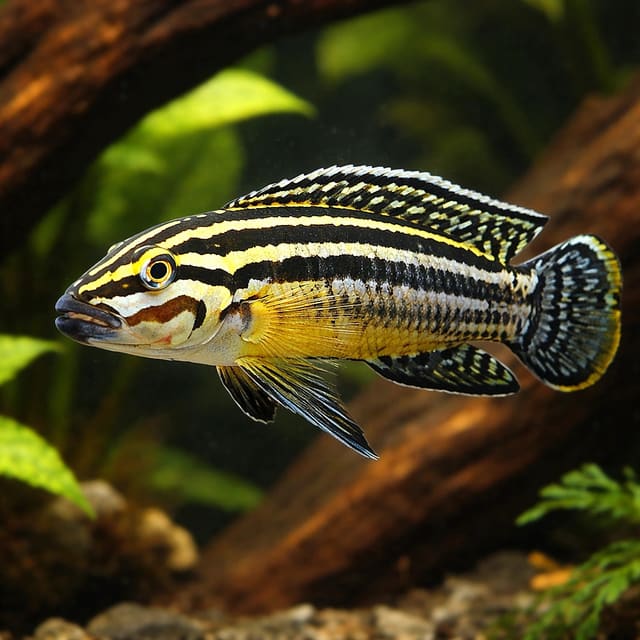
Striped Julie (Julidochromis regani)
24–27°C · pH 7.8–9 · 75L
£8.99

A striking Tanganyikan cichlid with bold barring and fascinating territorial behavior, ideal for hard, alkaline African cichlid setups. Moderate care, semi-aggressive. 24-26C, pH 7.5-8.5.
Adult size is the maximum length this species reaches at full maturity (scientific sources). The livestock you receive will be younger and smaller — pick a size above for the actual shipping size. Product-photo provenance and any image-specific limitations are stated on the listing.
Lamprologus fasciatus
Save when buying multiple fish. Each quantity is one fish; sex and pair formation are not guaranteed unless the selected variant explicitly states them.
Confirm your email, then we’ll send an availability message for this exact item if it returns within 180 days.
This request is only for this product—no newsletter or other promotions. A mail-provider retry may very rarely duplicate the same availability message. Unconfirmed addresses are removed after 48 hours. See our privacy policy.
A striking Tanganyikan cichlid with bold barring and fascinating territorial behavior, ideal for hard, alkaline African cichlid setups. Moderate care, semi-aggressive. 24-26C, pH 7.5-8.5.
Adult size is the maximum length this species reaches at full maturity (scientific sources). The livestock you receive will be younger and smaller — pick a size above for the actual shipping size. Product-photo provenance and any image-specific limitations are stated on the listing.
Cichlids are a family of roughly 1,800 accepted species, not one care type. Before buying, identify the exact species and source, then compare adult measurement, usable tank dimensions, social system, territory, tested water, diet and an exit plan. No family-wide minimum tank, water range or tank-mate list is safe.
Maintain these water conditions for optimal health and vibrant colors
The Barred Lamprologus, best treated in customer-facing care as Neolamprologus fasciatus, is a slender Lake Tanganyika cichlid with a bold barred pattern and a much bigger personality than its juvenile sale size suggests. It is sometimes traded under the older or supplier-facing name Lamprologus fasciatus, and some hobby references discuss its relationship with Altolamprologus. For aquarium planning, the important point is simple: this is a specialist Tanganyika predator, not a tiny community fish. Adults need hard, alkaline water, clean filtration, rockwork, sand and space to manage territory.
Current sizes on the product page are juvenile or subadult purchase sizes, not the size you should use when planning the aquarium. FishBase records the species from Lake Tanganyika and gives a maximum length around 15 cm, while specialist Tanganyika sources note that males can be notably larger than females. That makes this a rewarding cichlid for the right setup, but not a casual 60 litre choice.
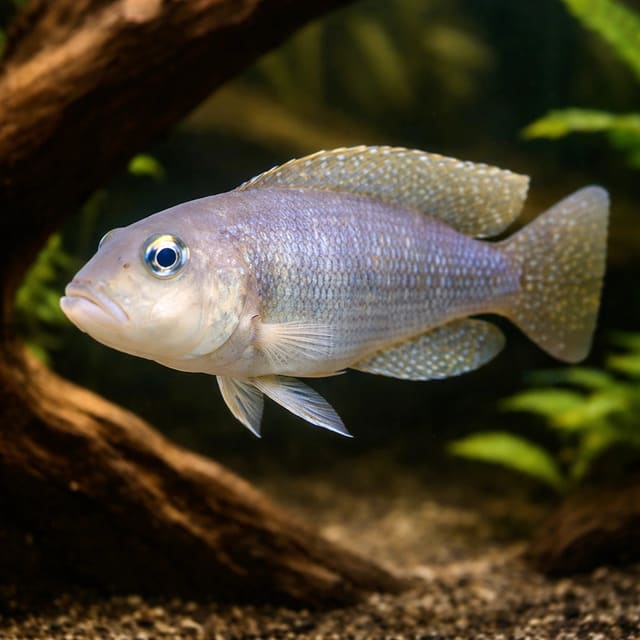
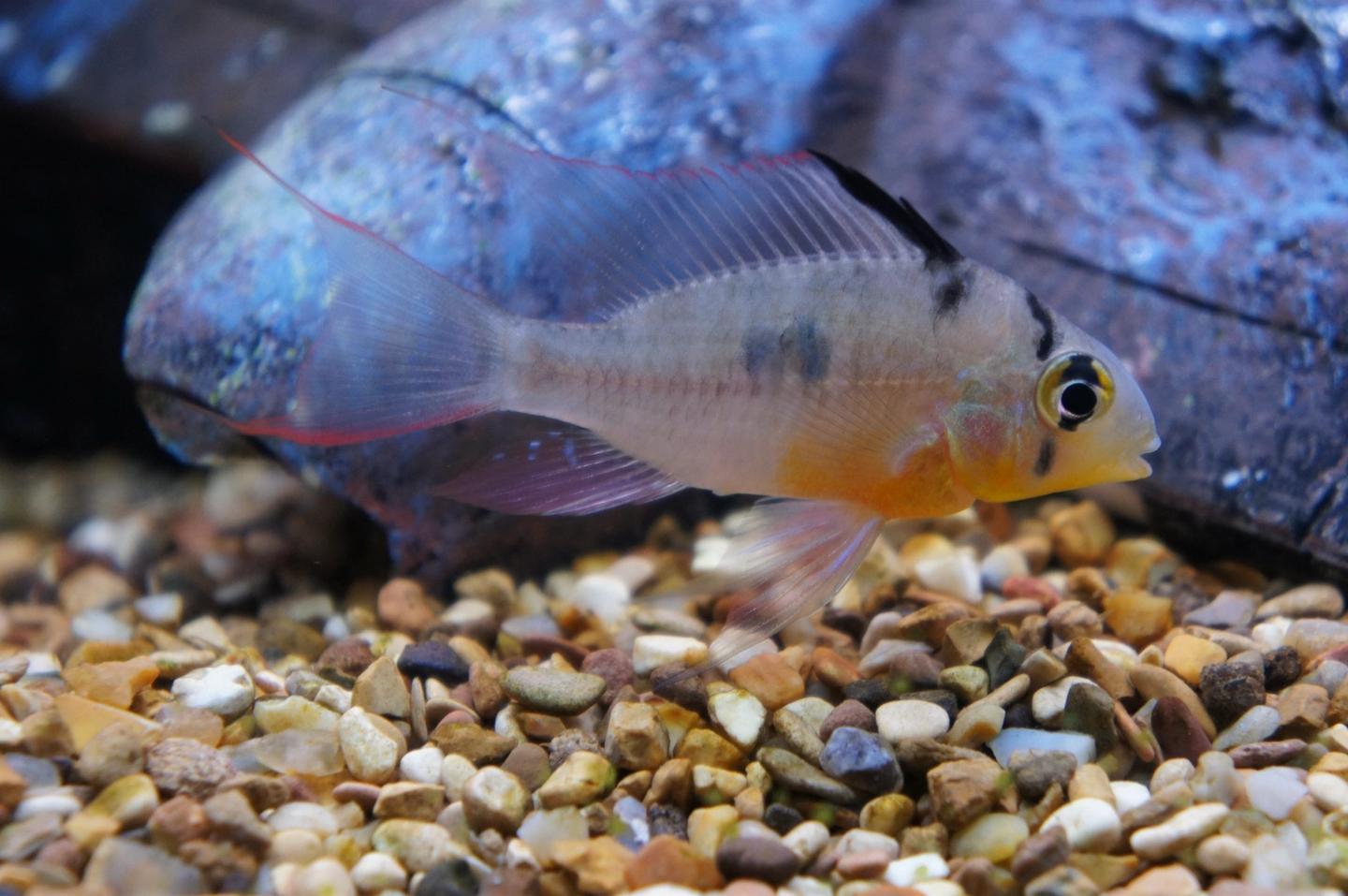
Barred Lamprologus has a long, compressed cichlid shape with a pale silver to pinkish body crossed by dark vertical bars. The pattern is clean and graphic rather than flashy, which makes it look excellent against a natural Tanganyika layout of pale sand, darker stone and open water. The fins can show a blue-green cast in good light, and the face often has a sharper, predatory look than the more rounded shell-dwelling species.
The reference photo for this SKU shows the key features clearly: elongated body, strong barring, pale base colour and cool-toned fins.
Many aquarists will know this fish as Barred Lamprologus or Lamprologus fasciatus because those names remain common in supplier lists and hobby conversation. The accepted scientific placement used by FishBase is Neolamprologus fasciatus. Some specialist sources also discuss the name Altolamprologus fasciatus, reflecting the fish's compressed, predatory look and the long-running taxonomic discussion around Tanganyika lamprologines.
For a product listing, that means we should use the clean accepted name in the title and care facts, while retaining the supplier name as source context. We should not invent a collection locality. Our stock records identifies the species and size variants, but does not state a locality form, so the page describes the fish as a Lake Tanganyika species and avoids adding a made-up regional strain.
Neolamprologus fasciatus is endemic to Lake Tanganyika in East Africa. It is associated with hard, alkaline water and rocky or mixed rocky-sandy shoreline habitats. FishBase notes that it is freshwater, benthopelagic and tropical, and records it as a substrate spawner that may use empty snail shells on the sand floor. Specialist Tanganyika notes describe it around rocky shores and crevices, where it can move through structure and use narrow spaces as shelter or breeding sites.
This habitat explains the aquarium design. A flat, bare tank leaves the fish exposed and makes aggression harder to manage. A proper layout gives each fish choices: a cave, a narrow crack, a shaded rock face, a sand area and room to retreat. The more intelligent the hardscape, the calmer the fish tends to look.
Use fine sand as the base, then build rockwork that is stable from the glass bottom upward. Do not balance heavy rocks on loose sand where digging could undermine them. Create several caves and narrow gaps rather than one central pile, because broken sight lines reduce constant staring and chasing. If keeping a pair, provide more shelters than the pair appears to need. If attempting a group or mixed Tanganyika community, move into a larger aquarium and create separate territories from the start.
A carefully planned pair can be considered from around 200 litres, but that is the lower planning line, not an excuse to squeeze the fish. A larger 300-400 litre aquarium is the better choice for long-term stability, territorial space and compatibility with other Tanganyika cichlids. The old 60-75 litre guidance has been removed because it is too small for adult planning and would encourage stress as the fish mature.
Keep the water hard, alkaline and stable. Aim for 24-28°C, with 25-26°C as a sensible daily target. Keep pH around 8.0-8.5 and avoid sudden swings. Hardness should be mineral-rich, commonly around 9-19 dGH or higher if the system is stable and appropriate for the rest of the tank. Strong biological filtration, good oxygenation and regular water changes are more important than chasing a perfect number each week.
Do not mix this fish into soft-water community conditions. Acidic water, low mineral content and unstable chemistry are poor matches for Lake Tanganyika cichlids. If your tap water is soft, plan the mineral strategy before ordering the fish, not after it arrives.
Barred Lamprologus is a carnivorous predator. FishBase notes shrimp in gut contents and records that the species has been known to ambush young cichlids. In the aquarium, feed a varied diet built around quality cichlid pellets or granules, then add small frozen foods such as mysis, cyclops, krill, daphnia and enriched brine shrimp. Use portions that are eaten cleanly.
Avoid heavy overfeeding, mammal meat and messy foods that foul the water. This fish does well when kept lean, active and alert. If housed with faster tank mates, watch feeding carefully so the Barred Lamprologus is not outcompeted and so food is not left rotting inside rockwork.
This is a territorial cichlid with a predatory mouth and a strong sense of space. Males can be aggressive toward other males or similar fish, and breeding pairs may defend a cave or shell area firmly. Toward different species it can be more manageable, but only when the aquarium is large enough and the tank mates are chosen with care.
Good candidates are other Tanganyika cichlids that enjoy similar hard-water conditions and are not small enough to be viewed as food. Clean related pages to compare include Striped Julie, Meeli Shelldweller, Callipterus Cichlid, Mottled Lamprologus, Elongate Lamprologus, Nigriventris Cichlid and the larger featherfin cichlids such as Blue Gold-Tip Cichlid or Long-Nosed Gold-Tip Cichlid. Avoid delicate community fish, soft-water species, shrimp, very small fry-sized fish and hyper-aggressive cichlids that will turn the aquarium into a constant contest.
Specialist Tanganyika sources describe males as larger than females, with pairs forming around spawning rather than always behaving like a peaceful bonded pair. Females may guard eggs in a narrow cave, crevice or shell-like shelter while the male patrols nearby. Fry can become free swimming after the early guarded stage, but survival depends on tank mates, cover and the keeper's plan for rearing young fish.
If your goal is breeding, keep the setup simple and avoid mixing very similar lamprologine forms where identity could become confused. If your goal is display, focus on stable water, a spacious rockscape and compatible species. Either way, expect territorial behaviour and design the tank around it.
This product is currently out of stock, so the page should help you decide whether the fish suits your aquarium before the next restock. When Barred Lamprologus is available, check the listed size options and choose based on your existing stock, not only on price. Smaller juveniles can settle well but need grow-out planning; larger fish may be more confident but need more territory immediately.
When livestock is available to order, first-time customers can use the WELCOME10 code where eligible, and qualifying fish orders are covered by the Tropical Fish Co Live Arrival Guarantee. We pack livestock for specialist courier transport and monitor weather and route conditions because the fish arriving healthy matters more than forcing a shipment on the wrong day.
This listing was checked against FishBase for accepted naming, Lake Tanganyika distribution, adult size, temperature and feeding/spawning notes; Fishipedia for aquarium size, water and behaviour guidance; Tanganyika specialist notes for sex-size differences, rockwork, pair behaviour and compatibility; and our stock records for the exact trade label, SKU variants and source image.
Max adult size is the length this species reaches at full maturity (from scientific sources). The livestock you receive will be younger and smaller — pick a size on the buy box for the actual shipping size. Product-photo provenance and any image-specific limitations are stated on the listing.
Can become territorial when breeding.
Always research specific species before adding them to your tank. Consider:
No reviews for this item yet. Bought one? Honest reviews only, good or bad.
What customers say about ordering from us
I have a small group of long finned mountain minnows. So was delighted to be able to order ten of this variety to increase the genetics in my tank . The ones I recieved are healthy but it’s to early to give a verdict on wether they are of a long finned type since they are small currently.
Gordon Walker · 23 Sept 2026
100% success travel and "installation". Pleased with quality of purchase. The Siamese fighter a bit "shy" so have not yet seen him at his best yet but looking good. Happy customer. GG
George E Garratt · 21 Sept 2026
Reviews of our shop, collected by Judge.me, an independent third-party review collector. Newest first.