Easy
X Ray Tetra (Pristella maxillaris)
22–28°C · pH 6–7.5 · 54L
£2.99

Peaceful golden X-Ray Tetra for planted community aquariums. Best kept in a shoal, easy to feed, adaptable and covered by our Live Arrival Guarantee.
Adult size is the maximum length this species reaches at full maturity (scientific sources). The livestock you receive will be younger and smaller. Product-photo provenance and any image-specific limitations are stated on the listing.
Pristella maxillaris
Shoaling fish: kept in a group they feel safer, stay calmer and show their best colour.
Confirm your email, then we’ll send an availability message for this exact item if it returns within 180 days.
This request is only for this product—no newsletter or other promotions. A mail-provider retry may very rarely duplicate the same availability message. Unconfirmed addresses are removed after 48 hours. See our privacy policy.
Peaceful golden X-Ray Tetra for planted community aquariums. Best kept in a shoal, easy to feed, adaptable and covered by our Live Arrival Guarantee.
Adult size is the maximum length this species reaches at full maturity (scientific sources). The livestock you receive will be younger and smaller. Product-photo provenance and any image-specific limitations are stated on the listing.
Maintain these water conditions for optimal health and vibrant colors
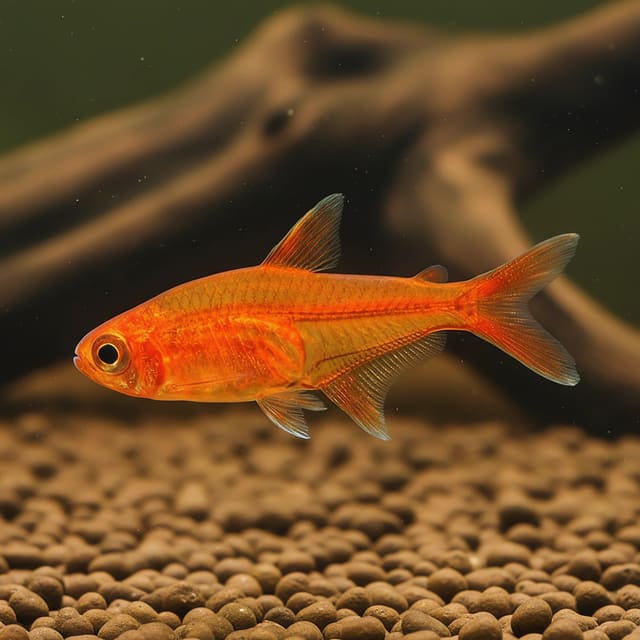
Albino Pristella / Golden X-Ray Tetra (Pristella maxillaris) is the golden-albino aquarium form of the classic X-Ray Tetra. It keeps the same peaceful shoaling nature and hardy community-fish character, but with a warm gold body, translucent sheen and crisp black, white and yellow fin markings.
The supplied size on this SKU is 2.5-3 cm, but that is the trade size on arrival, not the final adult planning size. FishBase records Pristella maxillaris to 4.5 cm total length, and UK aquarium references commonly plan around 5 cm, so the safer advice is to treat Albino Pristella as a small but active shoaling tetra that deserves horizontal swimming room.
It is one of the better beginner-friendly tetras when the aquarium is mature and the fish is kept in a proper group. It is peaceful, adaptable, easy to feed and visually bright without being aggressive or oversized. The best results come from buying it as a shoal, giving it plants and open water, and keeping water quality stable rather than constantly chasing exact numbers.
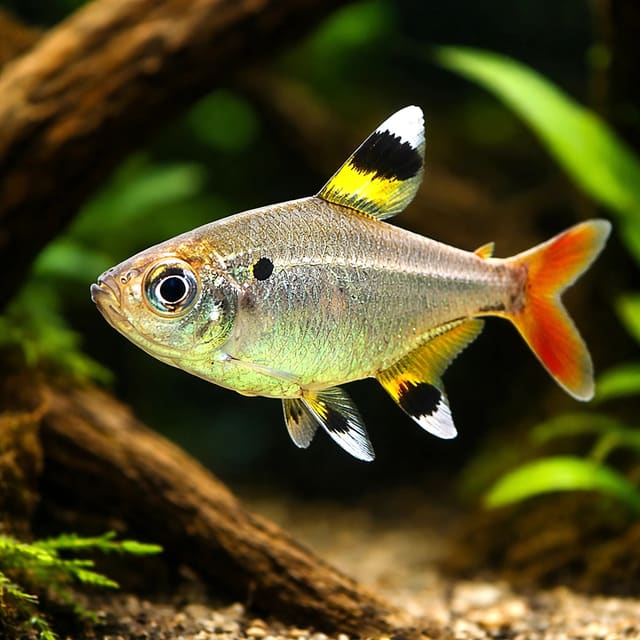
The name X-Ray Tetra comes from the naturally translucent body of Pristella maxillaris. In the standard form the internal line and silver-gold body can look almost see-through under aquarium light. The albino or golden strain is a selectively bred aquarium form, so the wild distribution belongs to the natural species while the golden colour is a captive-bred trait.
FishBase describes the species as gregarious and non-aggressive, associated with calm coastal waters and densely vegetated swamps, feeding on worms, small crustaceans and insects. Those points translate neatly into aquarium care: keep it in a group, avoid rough tank mates, provide plant cover and offer small varied foods.
Some supplier wording uses the abbreviated form Pristella max. riddlei gold. That wording is useful as a trade clue, but the customer-facing scientific name should be Pristella maxillaris. Keeping the correct name helps search engines and aquarists connect the listing with reliable care information.
Albino Pristella is subtle rather than neon-bright. The body is golden and semi-translucent, the tail often shows orange warmth, and the dorsal and anal fins carry the familiar X-Ray Tetra pattern of black with yellow and white edging. Under soft light the fish has a warm glow that works especially well against green plants, driftwood and a darker substrate.
Because the colour is refined, not loud, this fish can disappear visually in a bare, bright tank. Give it contrast and security and it becomes much more attractive. A shoal moving together through planted cover gives a better effect than one or two isolated fish trying to settle in open water.
Females are usually fuller-bodied when mature, while males tend to look slimmer. Colour and confidence improve after settling, so do not judge the fish only from its transport bag. Clean water, calm tank mates and a steady feeding routine bring out the best appearance.
A 60 cm aquarium is a sensible minimum length for a small group, but a 75 litre or larger planted aquarium is the better recommendation if you want a proper shoal. Leave open swimming space through the centre or front of the tank, then use plants, wood and roots around the edges so the group has cover without losing movement room.
Dark substrate, floating plants, driftwood, leaf litter or botanicals can all suit this species. Tannins are optional, not compulsory, but a lightly shaded layout helps the gold colour and fin markings stand out. Strong flow is unnecessary; use reliable filtration with gentle to moderate movement and enough oxygen for an active shoal.
Keep a secure lid. Small characins can jump when startled during maintenance, netting or first introduction. This is especially important in open-top aquascapes where the fish may react quickly to sudden light changes or movement above the tank.
Plan for stable warm water around 24-28 C. A pH around 6.0-7.5 is ideal, though X-Ray Tetras are known for adapting to a fairly wide range when changes are gradual and water quality is high. If your tap water is moderately hard, stability matters more than sudden chemical adjustment.
As with all small tetras, ammonia and nitrite should be zero. Keep nitrate controlled with regular partial water changes, sensible feeding and good plant or filter maintenance. A mature aquarium is strongly recommended; hardy does not mean suitable for an uncycled tank.
If moving the fish into softer or more acidic water than your tap supply, make changes slowly. Sudden swings are more stressful than a steady reading slightly outside the textbook ideal. This is one reason Pristella Tetras are popular community fish: they reward simple, consistent husbandry.
Albino Pristella is easy to feed but still benefits from variety. Use fine flakes, micro granules or small soft pellets as the staple, then rotate small frozen or live foods such as daphnia, brine shrimp, cyclops, mosquito larvae and finely chopped bloodworm. The mouth is small, so choose foods that the shoal can swallow easily.
Feed modest portions once or twice daily. If food falls past the shoal and collects in the substrate, reduce the portion or use a slower-feeding routine. A little variety supports condition, colour and breeding readiness, but overfeeding quickly spoils water quality in small community tanks.
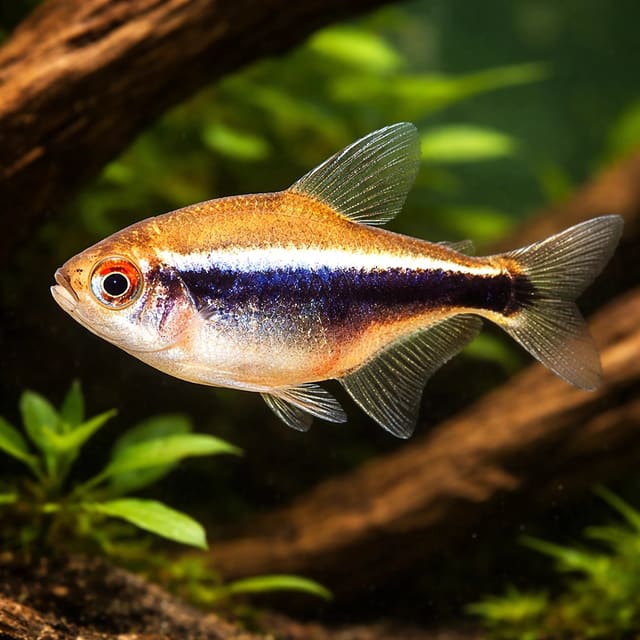
This is a peaceful community tetra. Keep it with other small, calm fish that enjoy similar warm freshwater: Neon Tetras, Black Neon Tetras, Ember Tetras, Lemon Tetras, small rasboras, pencilfish, hatchetfish, Corydoras, Otocinclus, small peaceful livebearers and carefully chosen dwarf cichlids can all work in the right layout.
Avoid large predators, aggressive cichlids, very boisterous barbs, fin nippers and anything large enough to treat a small tetra as food. Adult Amano or Neocaridina shrimp can work in planted community tanks, but tiny shrimp fry may be eaten, so use moss and dense planting if shrimp breeding matters to you.
The group size is important. A lonely Albino Pristella can become shy or unsettled, while a proper group spreads attention between individuals and makes the fish more confident. For the best visual effect, buy a group and let them behave as a shoal.
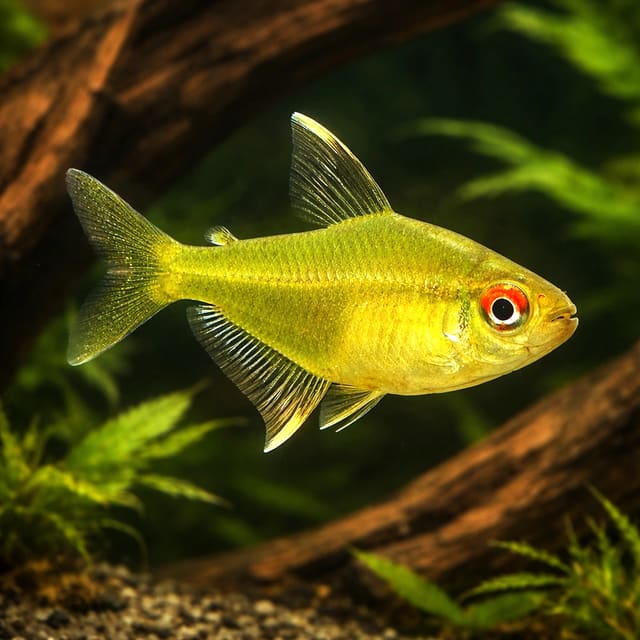
Compared with Neon Tetras, Albino Pristella is less electric in colour but usually more adaptable. Compared with Lemon Tetras, it has a more translucent body and stronger black-and-yellow fin contrast. Compared with standard X-Ray Tetras, the golden strain gives a warmer, brighter look while keeping the same general care pattern.
That makes it a good choice for aquarists who want a hardy, peaceful tetra that still feels a little different. It suits planted community aquariums, beginner fishkeepers with a cycled tank, and experienced keepers who want a bright but calm shoaling fish.
Pristella Tetras are egg scatterers. Breeding is possible in a separate spawning tank with soft, slightly acidic water, fine-leaved plants or spawning mops, and well-conditioned adults. The adults may eat eggs, so they should be removed after spawning if you are deliberately trying to raise fry.
The fry are small and need very fine first foods before moving on to newly hatched brine shrimp. For most customers, breeding notes are background knowledge rather than the main reason to keep the fish. The everyday priority is a healthy shoal in a stable planted aquarium.
Before the fish arrives, check temperature, filtration and water quality. On arrival, keep lights low, float the sealed bag to equalise temperature, then gradually mix small amounts of aquarium water over 30-45 minutes before release. Let the shoal settle quietly and offer food only once they are swimming normally.
Albino Pristella is suitable for a peaceful mature community tank, especially where you want movement, warm colour and easy feeding without choosing a large or aggressive species. Orders are supported by the Tropical Fish Co Live Arrival Guarantee when the stated delivery and acclimation terms are followed.
This listing was checked against FishBase for size, distribution, behaviour, diet and aquarium group guidance; Maidenhead Aquatics/Fishkeeper and Fishkeeping.co.uk for practical UK aquarium care ranges; Seriously Fish and Aquatic Arts for golden X-Ray Tetra strain context.
Max adult size is the length this species reaches at full maturity (from scientific sources). The livestock you receive will be younger and smaller. Product-photo provenance and any image-specific limitations are stated on the listing.
Keep as a shoal of at least six. Adult shrimp can work in planted tanks, but tiny shrimp fry may be eaten.
Always research specific species before adding them to your tank. Consider:
No reviews for this item yet. Bought one? Honest reviews only, good or bad.
What customers say about ordering from us
I have a small group of long finned mountain minnows. So was delighted to be able to order ten of this variety to increase the genetics in my tank . The ones I recieved are healthy but it’s to early to give a verdict on wether they are of a long finned type since they are small currently.
Gordon Walker · 23 Sept 2026
100% success travel and "installation". Pleased with quality of purchase. The Siamese fighter a bit "shy" so have not yet seen him at his best yet but looking good. Happy customer. GG
George E Garratt · 21 Sept 2026
Reviews of our shop, collected by Judge.me, an independent third-party review collector. Newest first.