Corydoras UK: The Substrate Community Fish Every Tank Should Have

Corydoras are small South American catfish — the substrate specialists of the community tank. 100+ species in the genus, 10 routinely available in UK trade. MUST be kept in groups of 6+. Substrate choice affects welfare: sharp gravel damages their barbels.
Why corydoras deserve better than "bronze cory in the community tank"
The UK aquarium hobby has a habit of treating corydoras as a single generic "bottom-dweller" category. Ask someone what they keep and the answer is "tetras, guppies, a few cories." Which cories? "Just cories." Usually bronze — Corydoras aeneus — because that's what the nearest pet shop had.
The genus actually contains over 100 described species plus many more CW-numbered undescribed varieties [?]. Adult sizes range from 1.5 cm (pygmy cory) to 10 cm (emerald cory). Preferred temperatures range from 18 °C (peppered) to 28 °C (sterbai). Social behaviour differs measurably between species. You can't substitute one for another and expect the same outcome.

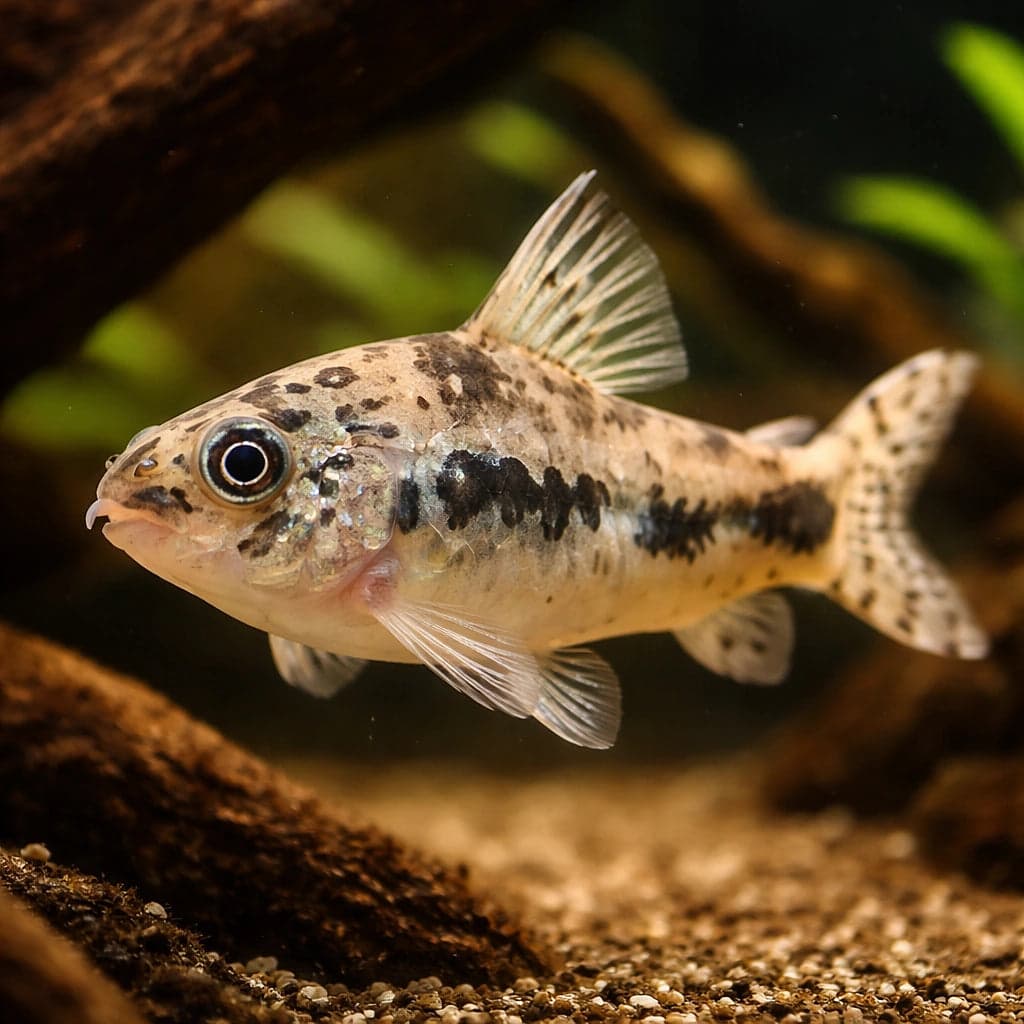
A Tailspot Pygmy Catfish (Corydoras hastatus) at adult size — 1.5–2 cm, smaller than a standard 60 L tetra. The pygmy species group is a genuinely different management problem from the standard 5 cm bronze cory. Photo: Tropical Fish Co warehouse.
I'm Tom Whitfield, the site's nano-tank and beginner writer. Corydoras have been in my tanks since my first 60 L back in 2020, and the three mistakes I see repeated on my YouTube channel — wrong substrate, wrong group size, wrong species — are the three things this guide exists to fix.
The substrate welfare issue
This is the welfare point the UK hobby doesn't discuss enough.
Corydoras have barbels — modified whisker-like sensory appendages around the mouth. They use them continuously to sift substrate for food particles, biofilm, and small organisms. Barbels are living, innervated tissue. They're not decoration.

A Salt and Pepper Corydoras (C. habrosus) showing the sensory barbels clearly. Notice how they point forward and down — the fish sifts substrate continuously by touch. Damaged barbels lose this function. Photo: Tropical Fish Co warehouse.
Sharp-edged gravel abrades barbels with every feeding motion. Over weeks to months:
- Barbel tips become frayed and worn
- Abrasions allow bacterial infection (often Aeromonas)
- Barbels become short, stubby, eventually disappear
- The fish can't find food efficiently
- Slow decline: reduced feeding → weight loss → secondary infection → death [?]
UK welfare guidance on substrate appropriateness for bottom-dwelling species is explicit: substrate must support normal foraging behaviour without causing injury [?]. For corydoras, this means sand or smooth rounded gravel.
What substrate actually works for corydoras
Recommended:
- Pool filter sand — the gold standard for corydoras tanks. Grain size 0.4–0.8 mm, rounded particles, neutral chemistry.
- Silver sand from builders merchants (pre-washed). Same principle, much cheaper than aquarium-branded sand.
- Aquarium-branded sand — slightly more expensive but colour-variety options for planted tanks.
- Smooth rounded aquarium gravel at <3 mm particle size. Acceptable if sand isn't available.
Avoid:
- Sharp crushed quartz — the single most common UK pet- shop substrate, and the one that damages barbels fastest.
- Coarse gravel at 5+ mm. Grips food particles below the sift-able depth.
- Lava rock substrate or other porous sharp material. Damages barbels and clogs biofilter rapidly.
Group size — the peer-reviewed evidence
The "keep corydoras in groups of six" rule isn't folk wisdom. Japanese researchers Kohda and Hori (2000) measured cortisol stress markers across group sizes in Corydoras aeneus and found:
- Groups of 1–3: sustained cortisol elevation indicating chronic stress; feeding behaviour significantly reduced
- Groups of 4–5: intermediate cortisol; occasional schooling behaviour but periods of isolation
- Groups of 6+: cortisol at baseline; normal schooling behaviour throughout the day [?]
The welfare implication: below six, corydoras are stressed chronically. They feed less. They grow less. They live shorter lives. The tank looks fine — cories in small groups don't obviously die young — but the welfare-adjusted lifespan is reduced significantly.
The species that actually matter in UK trade
| Species | Common name | Adult size | Temp range | Tank min | UK price |
|---|---|---|---|---|---|
| C. aeneus | Bronze cory | 5–7 cm | 20–26 °C | 60 L | £2–£4 |
| C. paleatus | Peppered cory | 5–7 cm | 18–25 °C | 60 L | £3–£5 |
| C. panda | Panda cory | 4–5 cm | 20–24 °C | 60 L | £5–£8 |
| C. pygmaeus | Pygmy cory | 2–3 cm | 22–26 °C | 40 L | £3–£5 |
| C. hastatus | Tailspot pygmy | 1.5–2 cm | 22–26 °C | 30 L | £3–£4 |
| C. habrosus | Salt & pepper | 2–3 cm | 22–26 °C | 30 L | £4–£6 |
| C. sterbai | Sterbai / Leopard | 5–7 cm | 24–28 °C | 90 L | £8–£15 |
| C. elegans | Elegant cory | 5 cm | 22–26 °C | 60 L | £5–£8 |
| C. nanus | Mini / Light-spot | 3–4 cm | 22–26 °C | 40 L | £4–£6 |
| C. melanistius | Black sail / Spot | 5–6 cm | 22–26 °C | 60 L | £6–£8 |
Which species for which tank
- 60 L community tank (standard first tank) — Bronze, peppered, or panda. Group of 6.
- 30–40 L nano planted tank — Pygmy, habrosus, or hastatus. Group of 6+ (pygmies take less space per fish).
- 90 L+ planted community with warm-water species — Sterbai (handles 25 °C+ better than most).
- Coolwater / unheated — Peppered cory only (tolerates 18 °C). Bronze can work at 20 °C.
Tank setup specifically for corydoras
- Sand substrate (see above)
- 60 L minimum tank for standard species; 30 L for pygmy species
- Gentle filter intake — canister, HOB, or sponge. Bare intakes suck in pygmy cory fry.
- Open central area for swimming + foraging. Corydoras use the entire tank floor, not hiding.
- Broad-leaved plants (amazon sword, anubias on hardscape, java fern) for midwater cover if they startle
- Driftwood or smooth rocks for occasional shelter, not dominating the layout
Watch: a cory school foraging in a planted tank
Community compatibility
Corydoras are peaceful with almost everything. The concerns are reversed — what might harass the cories.
Excellent tank mates:
- Tetras (cardinals, embers, harlequins, neons) — completely ignore cories
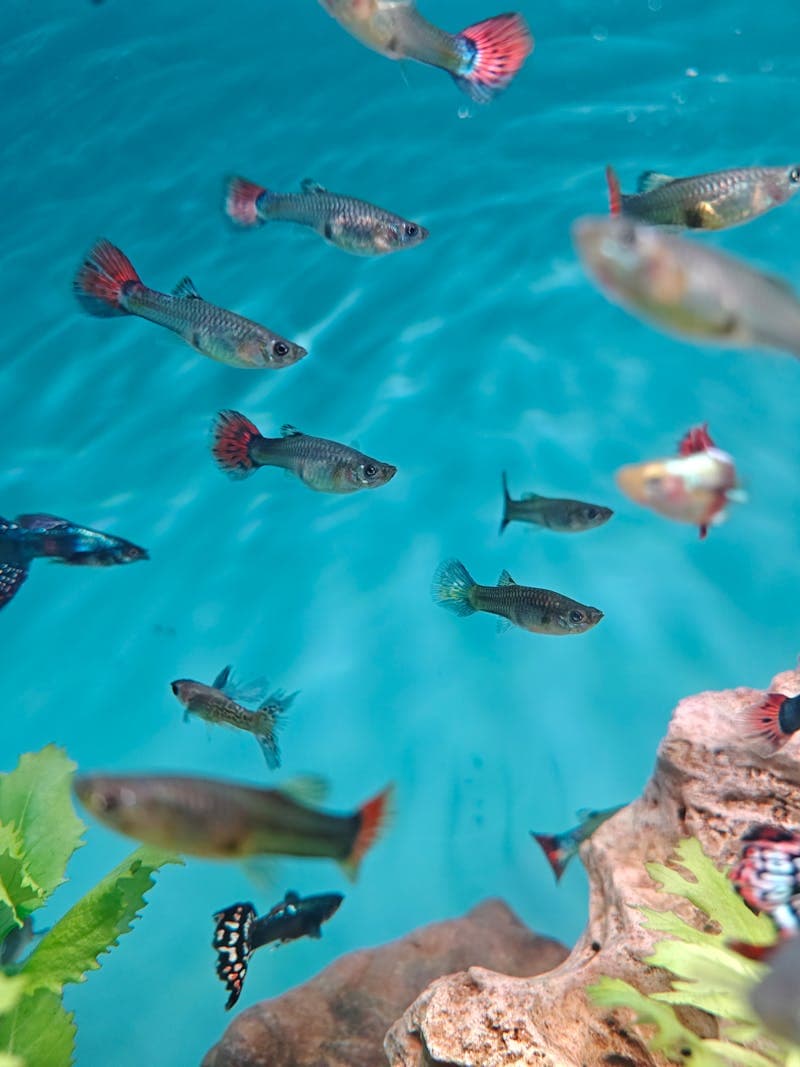
- Livebearers (guppies, platies, mollies) — safe
- Honey gouramis + other small labyrinth fish — compatible
- Small rasboras (harlequins, chilli) — safe
- Shrimp (adult cherry, amano) — safe
- Apistogramma and small rams — compatible in 90 L+
Avoid:
- Large cichlids (angelfish adults, larger South American cichlids) — will harass or eat pygmy cory species
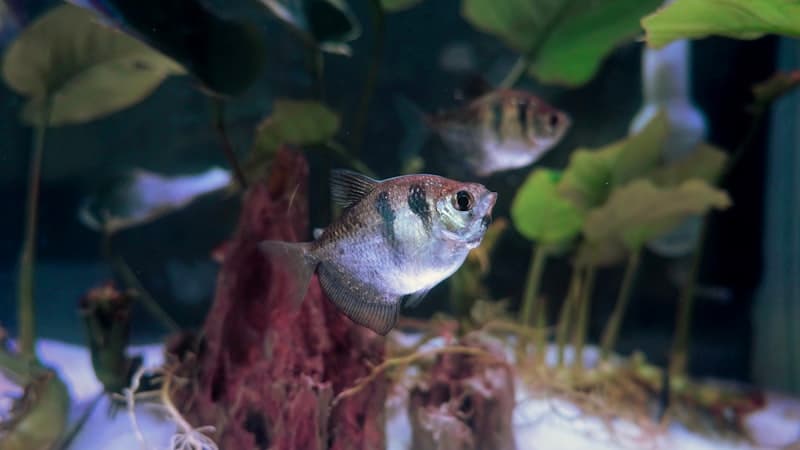
- Aggressive tetras (serpae, larger black skirt in small groups) — can nip at cories during feeding
- Loaches that compete for substrate — clown loach + kuhli loach both overlap corydoras' feeding zone
Species-by-species substrate + flow preferences
Not every corydoras species thrives in the same setup. Match your tank layout to the species:
| Species | Natural substrate | Flow preference | Tank layout fit |
|---|---|---|---|
| C. aeneus (Bronze) | Sandy riverbed | Moderate | Standard community |
| C. paleatus (Peppered) | Sand + leaf litter | Gentle–moderate | Cool planted community |
| C. panda | Sand + driftwood | Gentle | Nano to standard planted |
| C. pygmaeus | Fine sand, overhanging vegetation | Very gentle | Nano planted + schooling |
| C. hastatus | Fine sand, mid-water hovering | Very gentle | Nano with open water |
| C. habrosus (Salt & pepper) | Fine sand + leaf litter | Very gentle | Nano planted |
| C. sterbai | Sand + driftwood (warmer) | Gentle | Warmer community (24–28 °C) |
| C. elegans | Sand + driftwood | Gentle | Standard planted |
| C. nanus (Light-spot) | Sand + submerged wood | Gentle | Nano to standard |
| C. melanistius (Black sail) | Sand + plant cover | Moderate | Standard community |
Pygmy species (pygmaeus, hastatus, habrosus) actually swim in the water column in groups — not exclusively bottom-dwellers like standard cories. Plan tank layout with this in mind.
Disease quick-reference table
Corydoras are hardy but ship with predictable issues. Spot them early:
| Symptom | Likely cause | Action |
|---|---|---|
| Gasping at surface | Low O₂ or gill issue | Add airstone, check stocking |
| Barbels short/missing | Substrate damage | Change to sand immediately |
| White cotton-like patches | Fungal infection (from abrasion) | Antifungal + substrate fix |
| Erratic darting | Nitrite spike | Test water, 50% change |
| Bloating + sitting still | Internal parasite | Quarantine + metronidazole |
| Red streaks on fins | Ammonia burn | Test water, full change if needed |
| Pale colour + listless | Chronic stress | Check group size + substrate |
Most corydoras deaths in UK tanks come from (1) undersized groups → chronic stress → immune suppression, or (2) sharp substrate → barbel damage → secondary infection. Fix both before reaching for medications [5].
Our welfare-first live-fish shipping
Corydoras are moderate shippers — hardier than tetras because of body size, but sensitive to dissolved oxygen loss during transit.
- APHA-compliant live-animal carrier (a licensed live-animal courier)
- Oxygen-charged double bags with extra headspace for multi-cory groups
- Insulated polystyrene with temperature-matched packs
- Minimum 7-day species-isolated quarantine before shipping
- Drip-acclimation protocol included with every shipment
The welfare rule we follow in-shop: never ship fewer than 3 corydoras together. Solo cories arrive stressed and often don't recover. Our minimum order unit for corydoras is 3, and we recommend 6 minimum for the welfare reasons above.
UK corydoras community
- British Cichlid Association — has a Corydoras interest section
- Planet Catfish — international species ID database with UK-active forum [?]
- Facebook "UK Catfish Keepers" — breeder swaps + species ID
- FBAS — regional clubs with catfish breeders
- Practical Fishkeeping — regular corydoras features
Ready for more?
Our corydoras care guide covers species-by-species care, breeding setups, and disease diagnosis for the genus.
Compatible species: the cardinal tetra buying guide covers the water-column companion; the best beginner tropical fish list positions cories alongside other community essentials.
Full range: catfish & plecos hub and the bottom dwellers hub cover every substrate-dwelling species in stock.
Frequently asked questions
Related guides
Amano Shrimp UK: Algae-Eating Specialist Every Planted Tank Needs
Amano shrimp (Caridina multidentata) — the algae crew every UK planted tank needs. Why they can't breed in freshwater, what they actually eat, welfare-first delivery.
Ancistrus Pleco UK: The Complete 2026 Bristlenose Guide
Everything UK aquarists need to buy and keep bristlenose plecos — size, tank mates, colour morphs (albino, longfin, super red, L-number). The only pleco that fits a 90 L tank.
Angelfish UK: Species Biology, Welfare & The Colour Strains In Stock
Angelfish (Pterophyllum scalare) — South American cichlid biology, pairing behaviour, strain genetics, UK welfare requirements, and the 10 colour strains we ship.