

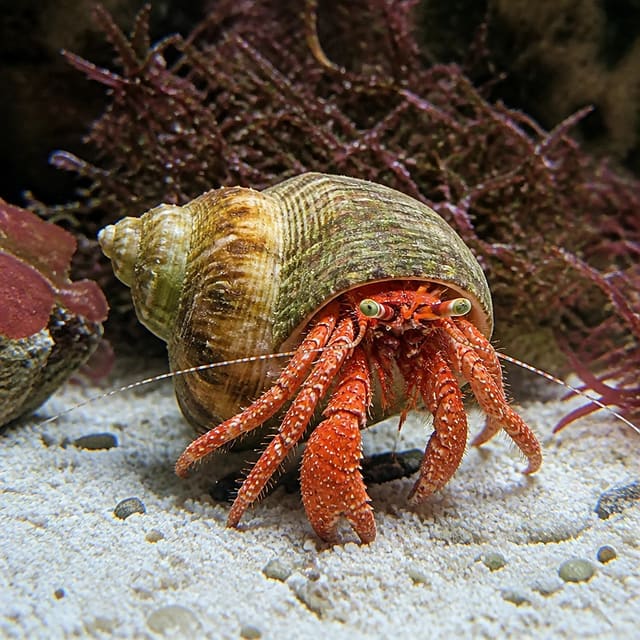
Easy
Clibanarius rutilus - Marine Aquarium Livestock UK
22–27°C · pH 8.1–8.4 · 60L
£14.99
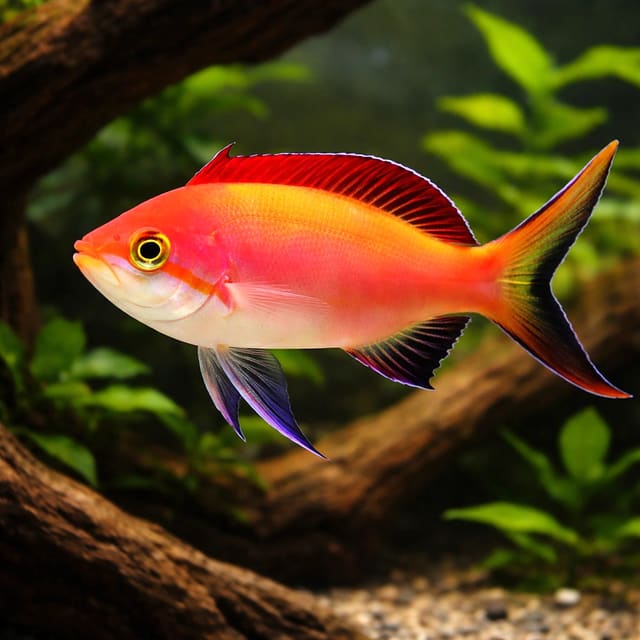
One unsexed supplier-grade M Dispar Anthias per quantity. Nemanthias dispar (supplier synonym Pseudanthias dispar) is an active marine planktivore for mature 300-litre-plus aquariums with frequent small feeds, open swimming room and stable reef water.
Nemanthias dispar
Delivered on Thursday or Friday
Orders close every Friday at 5pm (UK time). We confirm the day in your tracking email.
One unsexed supplier-grade M Dispar Anthias per quantity. Nemanthias dispar (supplier synonym Pseudanthias dispar) is an active marine planktivore for mature 300-litre-plus aquariums with frequent small feeds, open swimming room and stable reef water.
Dispar Anthias is the higher-demand aquarium name for the marine fish currently accepted as Nemanthias dispar. The supplier lists the same species under the established older combination Pseudanthias dispar and the common name Peach Fairy Basslet. All three names are retained here so customers, search engines and future care records can resolve one animal without pretending that every scientific database has adopted the revision at the same speed.
Each quantity adds one unsexed fish at supplier grade M. The supplier has not supplied a dependable centimetre band, sex, age, collection locality, source method or exact-specimen photograph. Grade M is a trade size label, not an adult-size promise. FishBase records a maximum published length of about 9.5 cm total length, and the aquarium must be planned around adult activity, feeding load and social behaviour.
This is an active open-water planktivore for an established marine aquarium, not a fish to add casually to a new system. It needs stable salinity, strong gas exchange, clean water, reef structure for retreat and several small feeds through the day. A once-daily feeding routine, aggressive tank mates or a cramped display can leave a shy newcomer underfed even when food is entering the aquarium.
FishBase records the species around upper outer reef slopes with moderate currents, usually at 1-15 m, where large mixed-sex aggregations feed in water moving across the reef. A home aquarium cannot reproduce a wild aggregation, but it should preserve the important choices: open mid-water swimming room, varied circulation, high oxygen, shaded rockwork and more than one feeding path.
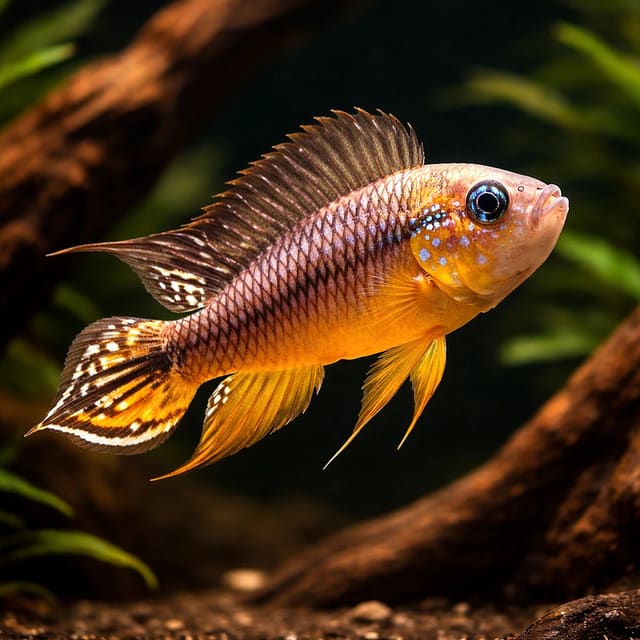
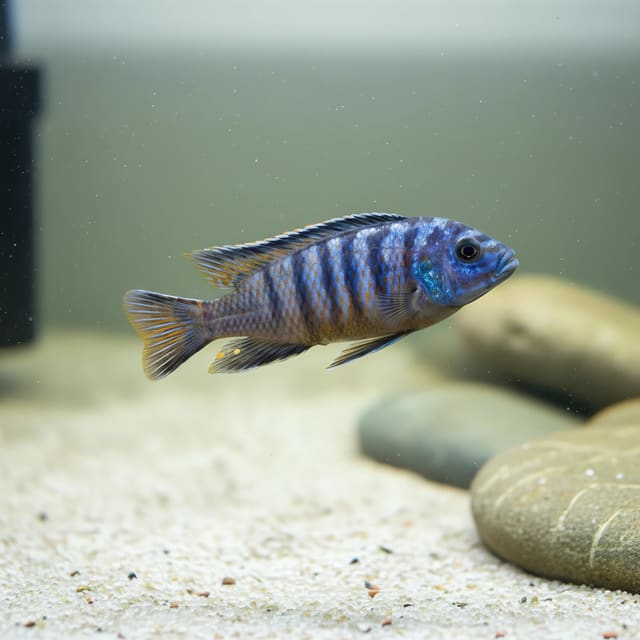
Four are illustrative aquarium scenes and one is a supplier reference image. Some illustrative scenes contain freshwater-style plants or driftwood and do not depict the natural marine habitat. None shows the exact fish that will be dispatched, proves sex, promises a pair, or verifies locality or source method.
| Care point | Working recommendation | Why it matters |
|---|---|---|
| Adult size | Up to about 9.5 cm total length | Supplier grade M is temporary and cannot be used for lifetime planning |
| Aquarium | 300 L+ with a long footprint | Provides swimming distance, stable marine water and room to feed without constant competition |
| Planned group | 450 L+ and additional assessment | Wild aggregation does not make a random trio of unsexed fish automatically safe |
| Temperature | 24-27°C fish-only; 24-26°C in most reef systems | Use the range shared safely by every inhabitant and avoid rapid changes |
| Salinity | 1.023-1.026 SG for a reef-compatible plan | Stability and matching source water are more important than chasing one number rapidly |
| pH | 8.0-8.3 | Stable marine alkalinity supports fish health and makes ammonia control especially important |
| Water quality | 0 ammonia; 0 nitrite | Both are toxic, and ammonia is more dangerous at marine pH |
| Flow and oxygen | Moderate varied flow with strong gas exchange | Supports active mid-water swimming without removing sheltered resting areas |
| Diet | Small marine meaty and plankton-like foods | The fish is adapted to taking small prey from the water column |
| Feeding frequency | Usually 3-4 small feeds daily after settling | Several measured feeds are safer for body condition than one oversized meal |
| Tank region | Open mid-water beside and above reef structure | Balance unobstructed swimming with nearby retreat cover |
These are home-aquarium planning targets, not instructions to change a new arrival abruptly. Measure the destination aquarium and ask for dispatch-water information when needed. Salinity, temperature and pH must be compared before transfer, and any correction should be gradual.
The fish was originally described as Mirolabrichthys dispar by Herre in 1955 and was later widely listed as Pseudanthias dispar. Anthony Gill's 2022 revision moved it to Nemanthias. The July 2026 online Catalog of Fishes records Nemanthias dispar as the current valid combination, and FishBase follows that treatment.
Not every database has changed. WoRMS and NCBI still display Pseudanthias dispar. That disagreement does not mean two different fish are being sold. It means the page should keep the accepted name, the established synonym and the supplier record connected. Removing the older name would lose useful search and traceability; presenting it as the only current answer would ignore the revision.
Dispar Anthias has the clearest species-level UK search demand. Peach Fairy Basslet and Peach Anthias are legitimate secondary common names, while Redfin Anthias also appears in trade. "Basslet" can describe unrelated small reef fishes, so the scientific name is the safest identity anchor when checking compatibility or comparing stock.
The listing follows Petra Aqua product 3038, recorded as Peach fairy basslet, Pseudanthias / dispar, grade M. Tropical Fish Co has not examined the dispatched specimen's diagnostic anatomy or collection documents. The identity is therefore supplier-declared, not an independent specimen determination. Customers maintaining a breeding, research or locality collection should request documentary confirmation before ordering.
FishBase places this species from Christmas Island in the eastern Indian Ocean east to the Line Islands, north to the Yaeyama Islands and south to the Great Barrier Reef, Fiji and Samoa. It is replaced farther west in the Indian Ocean by the similar Nemanthias ignitus, historically listed as Pseudanthias ignitus. A generic "Indo-Pacific" label is therefore less precise than the documented range.
The recorded depth is 0-18 m, usually 1-15 m. FishBase describes upper edges of steep outer reef slopes, moderate current and large mixed-sex feeding aggregations in current sweeping the reef. In the aquarium this points to open water, movement, oxygen and nearby rockwork, not a densely blocked aquascape or a static low-flow corner.
FishBase reports a broad 22-28°C environmental range. That is not a reason to swing a home aquarium between those extremes. OATA's practical home-marine guidance is narrower: 24-27°C for fish-only systems and 24-26°C for reef systems. Select a stable point that suits the whole community, then manage seasonal heat before it becomes an emergency.
FishBase reports Least Concern from an IUCN assessment dated 2015. Conservation category does not prove that a particular shipment is sustainable, captive-bred or traceable. The supplier has not stated wild-caught versus captive-bred origin for this product, so this page records source method as unknown rather than borrowing a claim from another seller.
FishBase describes males with a bright red dorsal fin and greatly extended pelvic fins. Females are described as orange, with a yellowish tail and a pink line running from the snout through the lower part of the eye. Colour intensity can change with sex, maturity, hierarchy, stress, diet, lighting and camera processing, so a retail image cannot guarantee the exact shade that arrives.
This product is sold unsexed. The presence of a redder fin or peach body in an image is not a sex-selection service, and one quantity does not promise a male, female or compatible partner. The supplier grade also does not establish maturity.
The first four preserved images are illustrative aquarium scenes, not photographs of the exact supplier stock. Their plants and driftwood are not a natural marine-biotope reference. The fifth image is a supplier reference and is also not an exact-specimen promise. Use the gallery for general appearance only; rely on the written supplier identity and ask before ordering if sex, size, locality or source method is essential.
The image descriptions are being made truthful so Google Images and customers can distinguish an illustration from supplier reference media without losing the established gallery.
A conservative working floor is 300 litres with a long horizontal footprint for one Dispar Anthias joining a suitable established marine community. This is deliberately a little above the 70-US-gallon baseline commonly used in specialist trade care. The fish is small, but it is an active open-water feeder, and the system also needs enough volume to remain stable under frequent feeding.
For a deliberately structured group, begin planning at 450 litres or more, increase the footprint and reassess the whole stock list. Group capacity cannot be decided by litres alone. Swimming length, rock placement, sex ratio, feeding access, filtration, oxygen, existing fish and escape routes all matter.
Build rockwork with caves, ledges and shaded gaps, but keep a broad open lane above and in front of it. A newcomer needs somewhere to withdraw without disappearing behind a solid wall where food never reaches. Multiple openings let a subordinate fish leave without passing the same dominant tank mate repeatedly.
Secure every rock before livestock is added. Avoid narrow traps and unstable stacks. Sand or another marine-appropriate substrate can be used, provided maintenance can remove trapped waste from the higher feeding schedule.
Use moderate, varied circulation that carries small foods through the water column without pinning the fish against one side. Surface movement, a correctly sized return, clean pumps and dependable filtration all contribute to gas exchange. Strong pump ratings do not prove that every part of the aquarium is oxygenated.
Create flow choices. One open route can carry more movement, while rock faces provide calmer pauses. If the fish remains pressed into shelter, breathes rapidly or never enters open water, check oxygen, harassment, lighting, water quality and current pattern rather than assuming it is merely shy.
Ordinary marine or reef lighting is suitable when shaded retreats are available. Dim the display during introduction and bring the normal cycle back gradually. Use a close-fitting lid or mesh cover around cables and overflows. An anthias startled during arrival or social conflict can leave an uncovered aquarium.
OATA distinguishes fish-only and reef systems because invertebrates usually require narrower salinity and nitrate control. For a Dispar Anthias that may live with corals and invertebrates, a stable reef-compatible plan of 1.023-1.026 specific gravity, 24-26°C and pH 8.0-8.3 is practical. A fish-only system may be managed differently, but source and destination water must still be matched carefully.
| Parameter | Working range | Routine |
|---|---|---|
| Temperature | 24-27°C fish-only; 24-26°C reef | Check daily and plan for summer heat and heater failure |
| Specific gravity | 1.023-1.026 for a reef-compatible system | Use a calibrated refractometer and top up evaporation with fresh RO water |
| pH | 8.0-8.3 | Record the daily pattern and correct causes slowly |
| Carbonate hardness | 8-12 dKH in a reef-style system | Test consistently and avoid sudden dosing corrections |
| Ammonia | 0 mg/l | Any detection requires immediate investigation |
| Nitrite | 0 mg/l | Do not add livestock to an uncycled aquarium |
| Nitrate | Below 20 mg/l fish-only; usually 5-10 mg/l or lower for reef stock | Use the strictest safe target required by the inhabitants |
Test at least weekly and whenever appetite, breathing, colour or swimming changes. OATA notes that rapid parameter chasing can do more harm than a stable value within the correct range. The tank volume calculator can confirm actual water volume after rock and equipment displacement, but it does not replace water testing.
Evaporation removes water and leaves salt behind, so salinity rises. Replace evaporated water with suitable fresh RO water, not saltwater, and use mixed saltwater for scheduled water changes. Automatic top-off equipment can improve stability but still needs calibration, a safe reservoir and regular checking.
Several small feeds produce repeated nutrient input. Use mature biological filtration, remove persistent leftovers, service mechanical media and monitor nitrate and phosphate. A protein skimmer may help export dissolved waste, but it cannot compensate for overstocking or food that misses the fish.
This species feeds in moving water over reef slopes. In the aquarium, offer small marine meaty and plankton-like foods that remain available in the water column long enough to be taken. Suitable options include enriched brine shrimp, copepods, calanus, finely sized mysis, chopped marine foods and quality marine micro-pellets once accepted.
A settled fish will usually do better on three or four small feeds a day than on one large feed. The aim is not continuous uncontrolled feeding. Each portion should be small enough to observe, distributed through the swimming zone and adjusted to body condition and water quality.
Ask what food the fish is currently taking before dispatch when possible. After arrival, start with a familiar small frozen or live food in gentle current and low competition. Once the fish feeds reliably, introduce other foods gradually. Do not assume that a pellet disappearing into rockwork was eaten.
Watch the individual take food. Fast wrasses, damsels or tangs may clear the first cloud before a new anthias leaves cover. Split the feed between two flow paths, use a feeding tube or temporarily reduce pump intensity if necessary, then restore normal circulation. More food is not the only answer; better placement can reduce waste.
Look for a smooth body profile behind the head and along the abdomen. A hollowing fish, pinched belly, repeated missed strikes or declining interest needs prompt investigation. Check harassment, particle size, disease, oxygen, salinity and transport stress rather than masking a problem with larger portions.
| Food | Use | Caution |
|---|---|---|
| Enriched brine shrimp or copepods | Useful settling and variety food | Confirm particle size and nutritional enrichment |
| Calanus or finely sized mysis | Marine animal-protein rotation | Large pieces may be ignored or wasted |
| Quality marine micro-pellets | Measured staple after acceptance | Do not starve a new fish while waiting for pellet conversion |
| Finely chopped marine mix | Dietary variety | Rinse or portion carefully where excess liquid adds nutrients |
| One large daily meal | Not recommended as the default routine | Can leave an active planktivore underfed between meals |
In the wild, the species occurs in large mixed-sex feeding aggregations. In captivity, the correct lesson is that social context matters, not that every customer should buy an arbitrary number. Anthias can establish a hierarchy, and confined or wrongly composed groups can produce chasing, exclusion and food loss.
Experienced keepers commonly plan one male with several females in a sufficiently large aquarium. This product cannot be sex-selected, so that arrangement cannot be guaranteed. Do not buy two or three unsexed fish and assume the word "group" has solved compatibility.
A single fish may settle in a peaceful established community with frequent feeding and suitable cover, but that is not evidence that solitary keeping reproduces natural social life. Where a group is planned, use a larger aquarium, add appropriate fish with specialist advice and prepare a separation option. Welfare must be judged from feeding, body condition, open-water use and social stress, not head count alone.
Protogynous sex change is widely reported across anthias husbandry, but this listing does not promise that an individual fish will change sex, follow a timetable or develop a photographed colour. Supplier sex is unknown, and visual colour alone is not enough for a retail guarantee.
Brief displays or displacement can occur. Persistent chasing, a fish confined behind equipment, torn fins, reduced feeding, rapid breathing or weight loss is not acceptable. Increase visual barriers and feeding access, reassess group composition and be ready to separate fish rather than waiting for hierarchy to fix itself.
Dispar Anthias is generally peaceful toward unlike, suitably sized marine fish and is commonly kept in reef aquariums. "Reef safe" should still be used carefully. The species is not known as a coral eater, but any hungry fish may investigate tiny mobile foods, and a peaceful label does not prevent it from being bullied or outcompeted.
| Possible match | Assessment | Check first |
|---|---|---|
| Peaceful clownfish, gobies, blennies and cardinalfish | Often suitable | Adult temperament, territory and food competition |
| Fairy or flasher wrasses | Conditional | Aquarium size, lid, feeding speed and individual behaviour |
| Corals and established reef invertebrates | Generally compatible | Water range, feeding load and sensitivity of tiny mobile invertebrates |
| Other anthias | Specialist assessment | Species, sex, group structure, aquarium length and feeding access |
| Large dottybacks, hawkfish or territorial damsels | High caution | Harassment and competition during introduction |
| Large aggressive predators | Avoid | Predation and chronic stress |
Browse the wider marine fish range and the Anthias Coral Fish category for stock comparison, but make the final choice from exact adult behaviour, water requirements and feeding method. Category membership alone is not compatibility evidence.
Prepare the aquarium before dispatch: confirm zero ammonia and nitrite, stable temperature and salinity, a secure lid, a low-light retreat and foods of the correct size. Do not order first and plan the social group after the box arrives. Read the current livestock delivery and Live Arrival Guarantee guidance before choosing a date.
On arrival, inspect the sealed bag as required by the guarantee terms and compare bag and aquarium conditions. Follow the current instructions supplied with the order. The acclimation timer can organise the steps, but it cannot decide the method without actual water measurements.
Transport water chemistry changes after a bag is opened. The safest procedure depends on journey time, temperature, salinity difference and the instructions supplied. Avoid a fixed internet ritual that keeps a stressed fish in opened transport water for an hour regardless of conditions. When in doubt, contact the team before transfer.
A separate mature marine quarantine system can help observe appetite, parasites and treatment response without exposing the display. It must have suitable salinity, temperature, oxygen, cover and biological capacity. Quarantine is not an empty bucket and should not deprive an active feeder of several small meals.
The most preventable risk is gradual weight loss hidden by a bright colour and busy aquarium. Anthias can appear active while receiving too few successful mouthfuls. Weekly photographs from the same angle can help reveal a changing abdomen or back profile that is hard to notice day to day.
Rapid breathing can reflect low oxygen, ammonia, temperature, gill irritation, disease or social stress. Test water immediately and review recent changes. Do not diagnose from one symptom or medicate the display without identifying whether the treatment is safe for corals and invertebrates.
Loss of appetite after transport deserves prompt attention. Check food size and movement, reduce competition, provide cover and seek experienced marine or aquatic-veterinary advice where the fish declines. Repeatedly adding richer food without removing waste can turn a feeding problem into a water-quality problem.
This listing makes no exact lifespan promise. Captive lifespan depends on source condition, feeding, water stability, disease, social stress and husbandry, while the reviewed primary species record does not provide a retail lifespan figure. Copying a number from another shop would create false certainty.
No home-breeding recipe is promised either. Anthias reproduction involves social and pelagic early-life stages that are not captured by a short product paragraph. Supplier sex is unknown, and one or two fish are not sold as a breeding pair. Customers pursuing propagation should use current specialist marine-breeding literature and independently confirm identity and sex.
| Good fit when | Poor fit when |
|---|---|
| The marine aquarium is mature, stable and at least 300 litres | The tank is new, small or still showing ammonia or nitrite |
| You can provide 3-4 small feeds and observe actual intake | Your routine permits only one rushed daily feed |
| There is open water, varied flow, strong gas exchange and retreat cover | The aquascape is cramped or the fish would be blasted by uniform flow |
| Tank mates are peaceful and food competition is manageable | Dominant or predatory fish control the open water |
| You accept an unsexed supplier-grade fish and representative images | You require the exact pictured specimen, sex, locality or captive-bred proof |
Confirm the real aquarium volume, water results, feeding schedule, lid and tank-mate plan. One quantity means one unsexed grade-M fish. Contact Tropical Fish Co before ordering if an exact centimetre size, sex, source method or current feeding response is essential, because none is guaranteed by the supplier record.
New customers who qualify can enter WELCOME10 at checkout for 10% off a first order. Livestock may also be covered by the Live Arrival Guarantee when the current delivery, receiving, evidence and contact requirements are followed. Read the current returns and livestock guarantee terms; a search snippet or FAQ cannot replace them.
The existing indexed product URL is deliberately retained. The title and care information are improved without changing the handle, deleting images, changing commerce fields or inventing a cleaner-looking route.
The 2022 revision and July 2026 Catalog of Fishes accept Nemanthias dispar. Pseudanthias dispar remains the supplier name and is still used by some current databases, so this page preserves it as a synonym rather than treating it as a different fish.
Peach Fairy Basslet is a common name for the same species sold here as Dispar Anthias. Because "basslet" is also used for unrelated reef fish, check the scientific name when comparing care or stock.
FishBase records up to about 9.5 cm total length. Supplier grade M is not an exact dispatch measurement and should not be used as the adult-size figure.
Use 300 litres or more with a long footprint as a conservative starting floor for one fish in a suitable established community. Plan 450 litres or more, plus specialist social assessment, for a group.
The species forms aggregations in nature, but a random group of unsexed fish can create hierarchy problems in captivity. One may settle in a peaceful community; a group needs much more space, food access and composition planning. Neither route should be chosen from head count alone.
No. This product is sold unsexed and the supplier provides no sex option. Colour, fins and one representative photograph are not enough for a retail sex guarantee.
Use 24-27°C in a fish-only system or 24-26°C in most reef systems. A reef-compatible working salinity is 1.023-1.026 SG. Stability and careful source-water matching are more important than rapid correction to a central value.
Use stable pH around 8.0-8.3, with zero ammonia and zero nitrite. Keep nitrate below 20 mg/l in fish-only systems and normally around 5-10 mg/l or the stricter species requirement where reef invertebrates are present.
Offer small marine meaty and plankton-like foods such as enriched brine shrimp, copepods, calanus, finely sized mysis and accepted quality marine micro-pellets. Use a varied rotation rather than one food indefinitely.
After settling, usually three or four small measured feeds a day. Watch the fish swallow food and adjust portions to body condition and water quality; one large daily meal is not the preferred default.
It is generally considered coral-compatible and is widely kept in reef systems. That is not an absolute guarantee for every individual or every tiny mobile invertebrate, and its frequent-feeding load must still be managed.
Avoid large predators and fish likely to harass or repeatedly outcompete it. Territorial damsels, large dottybacks, hawkfish and other anthias require individual assessment rather than a blanket yes.
A startled or chased anthias can leave an open aquarium. Use a close-fitting lid or mesh cover and close gaps around cables, returns and overflows.
No. Four scenes are illustrative and one is a supplier reference. All five are preserved, but none guarantees the dispatched individual, sex, shade, size, locality, pair status or source method.
Qualifying new customers can use WELCOME10 for 10% off a first order. Livestock may receive the Live Arrival Guarantee when the current delivery, receiving, photographic-evidence and contact requirements are met. Always read the live terms before ordering.
This page separates supplier facts, current taxonomy, published species information and practical aquarium recommendations. The main references reviewed were the current Catalog of Fishes record, Gill's 2022 taxonomic revision, the FishBase species summary, the current WoRMS name record, OATA's marine aquarium setup guide and marine water-testing guidance, plus current Defra seller guidance.
Petra Aqua supplies the sale identity, grade and stock record. External sources do not prove the sex, exact size, collection locality, source method or health of one dispatched fish. Where evidence does not support a precise lifespan, breeding recipe or specimen claim, the listing says so rather than filling the gap with generic aquarium copy.
No reviews yet. Bought this fish? You'd be the first — honest reviews only, good or bad.
22–27°C · pH 8.1–8.4 · 60L
22–26°C · pH 8.1–8.4 · 75L
22–27°C · pH 8.1–8.4 · 60L
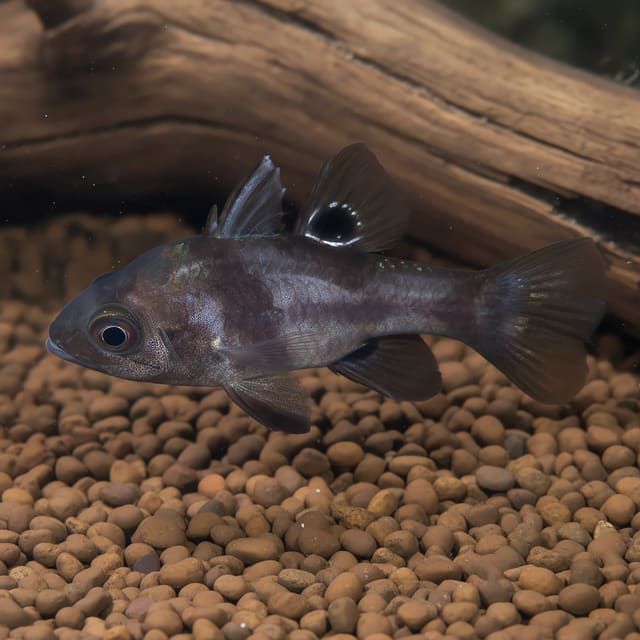
24–28°C · pH 8–8.4 · 200L
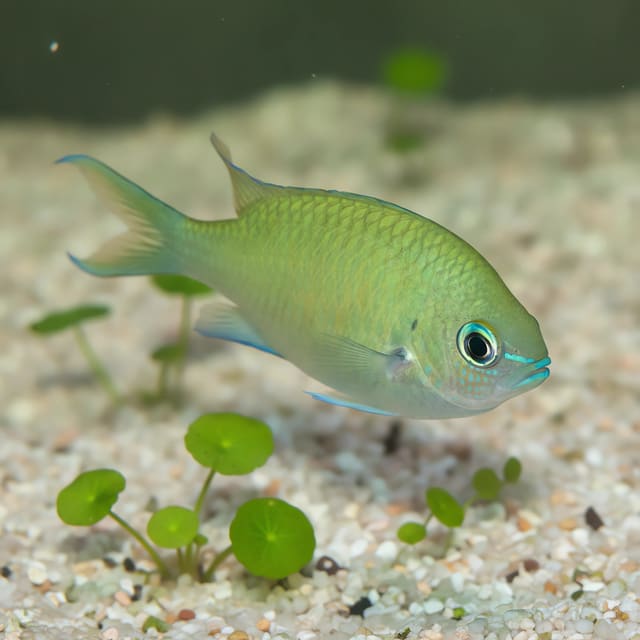
24–27°C · pH 8.1–8.4 · 150L
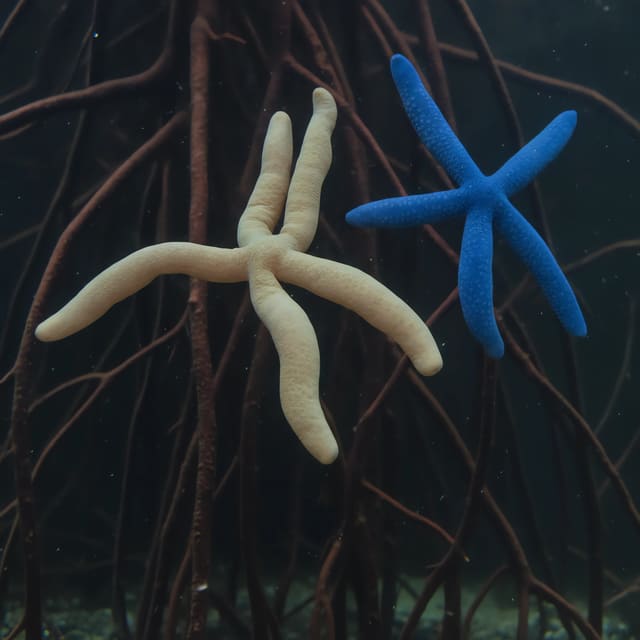
24–28°C · pH 8.1–8.4 · 300L
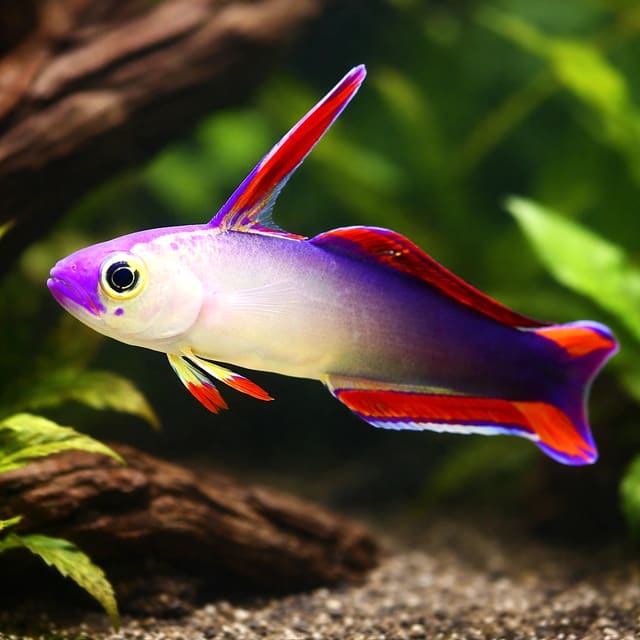
24–27°C · pH 8.1–8.4 · 100L
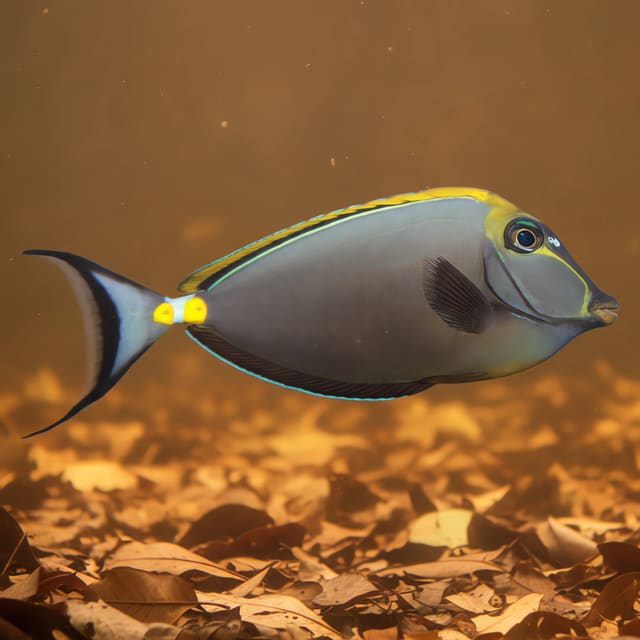
24–27°C · pH 8.1–8.4 · 900L
18–26°C · pH 6.5–8 · 30L
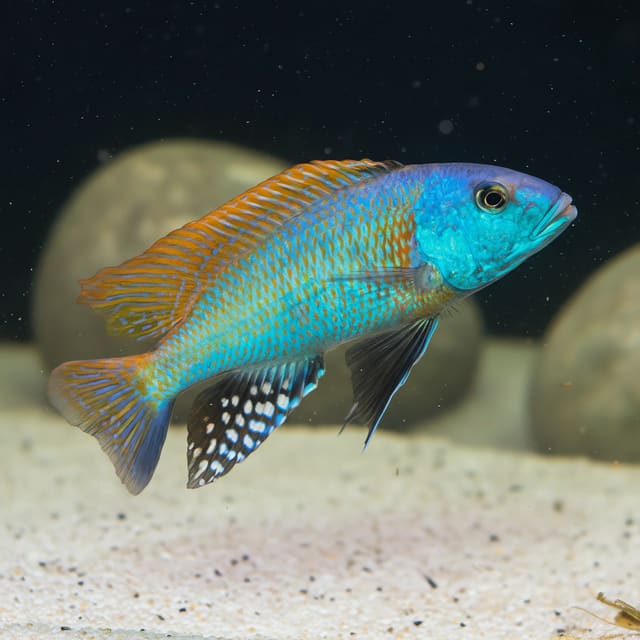
23–27°C · pH 7.4–8.4 · 1000L
20–24°C · pH 7–8 · 45L
24–28°C · pH 5.5–7 · 60L
18–25°C · pH 6–8 · 100L
24–28°C · pH 7–8 · 120L
18–28°C · pH 6.5–8 · 20L
24–27°C · pH 7.5–8.8 · 150L