Moderate
Red Top Likoma Afra Cichlid (Cynotilapia afra Red top Likoma)
25–27°C · pH 8–8.5
£14.99
A striking Lake Malawi mbuna cichlid with vivid color, lively behavior, and rewarding social dynamics for the experienced African cichlid keeper. Moderate care, semi-aggressive. 24-26C, pH 7.5-8.5.
Adult size is the maximum length this species reaches at full maturity (scientific sources). The livestock you receive will be younger and smaller — pick a size above for the actual shipping size. Product-photo provenance and any image-specific limitations are stated on the listing.
Cynotilapia edwardi
Shoaling fish: kept in a group they feel safer, stay calmer and show their best colour.
Confirm your email, then we’ll send an availability message for this exact item if it returns within 180 days.
This request is only for this product—no newsletter or other promotions. A mail-provider retry may very rarely duplicate the same availability message. Unconfirmed addresses are removed after 48 hours. See our privacy policy.
A striking Lake Malawi mbuna cichlid with vivid color, lively behavior, and rewarding social dynamics for the experienced African cichlid keeper. Moderate care, semi-aggressive. 24-26C, pH 7.5-8.5.
Adult size is the maximum length this species reaches at full maturity (scientific sources). The livestock you receive will be younger and smaller — pick a size above for the actual shipping size. Product-photo provenance and any image-specific limitations are stated on the listing.
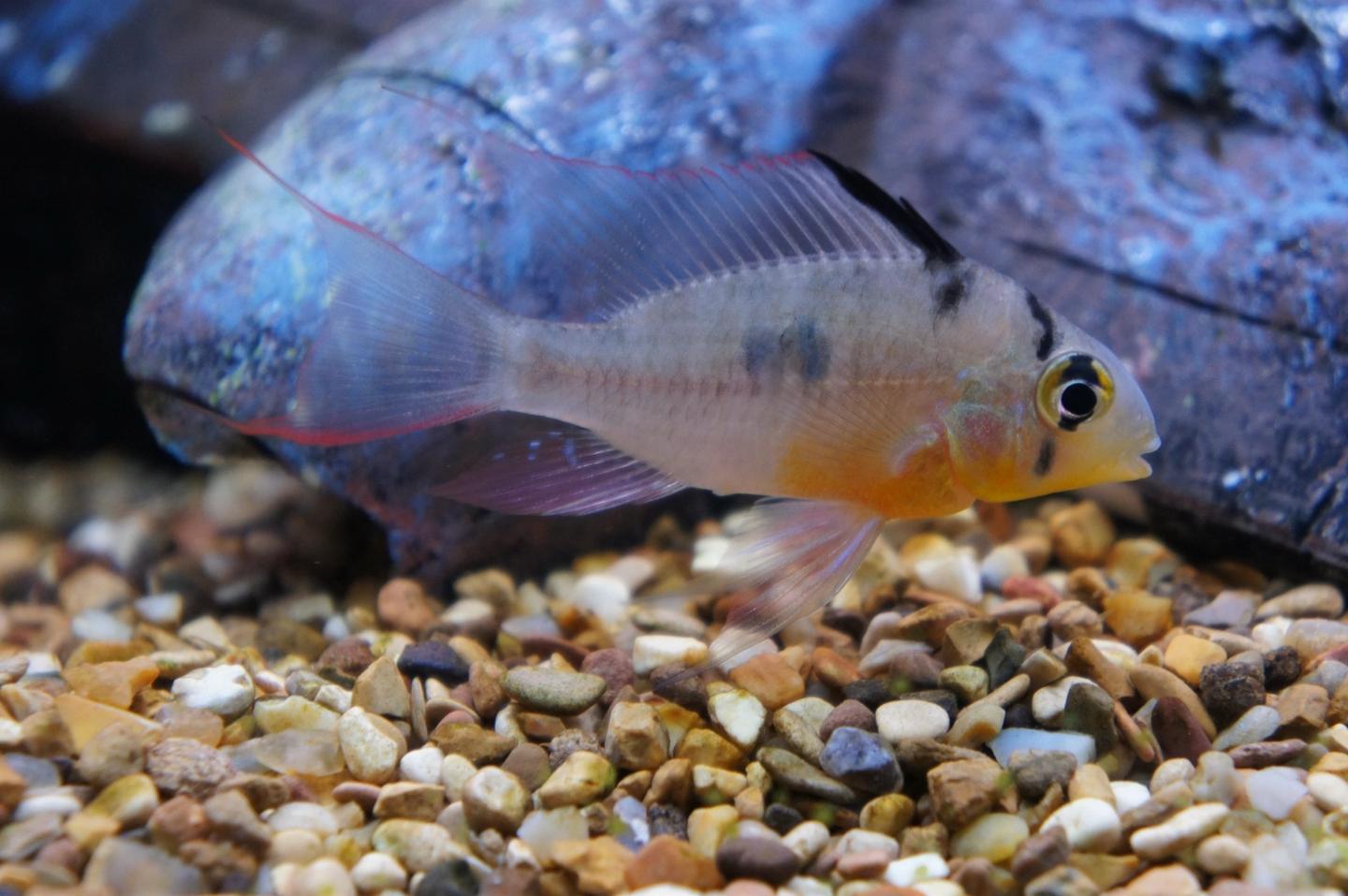
Cichlids are a family of roughly 1,800 accepted species, not one care type. Before buying, identify the exact species and source, then compare adult measurement, usable tank dimensions, social system, territory, tested water, diet and an exit plan. No family-wide minimum tank, water range or tank-mate list is safe.
Maintain these water conditions for optimal health and vibrant colors
This offer retains the supplier’s Cynotilapia Edwardi trade label. The label does not confirm a particular Afra or Zebroides species, locality or breeding line. Compare the selected grade and ask about the exact fish’s adult housing and current feeding before purchase. The setup notes below are general Malawi mbuna planning; they do not establish a verified wild-species profile or a small adult maximum.
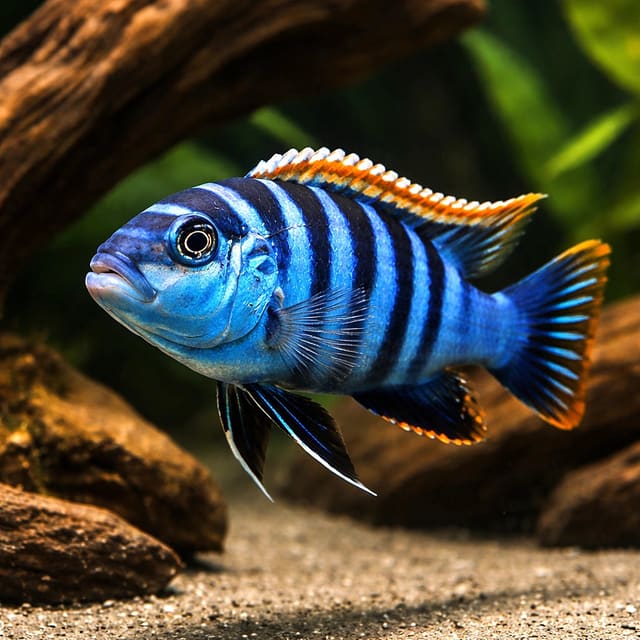
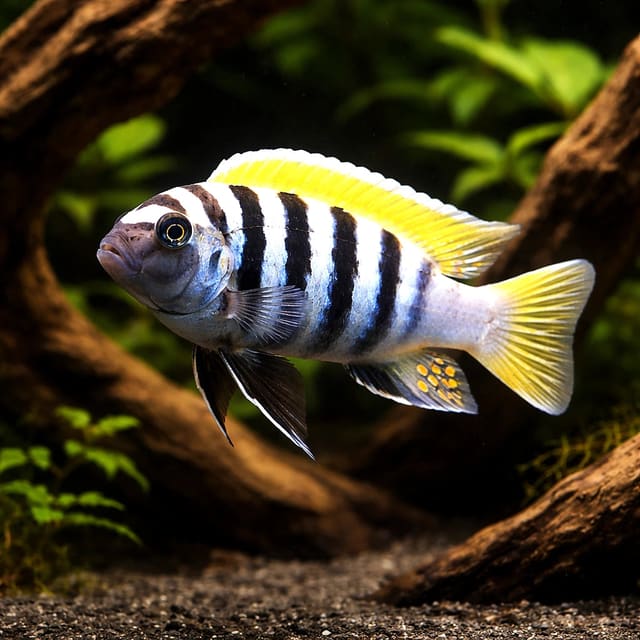
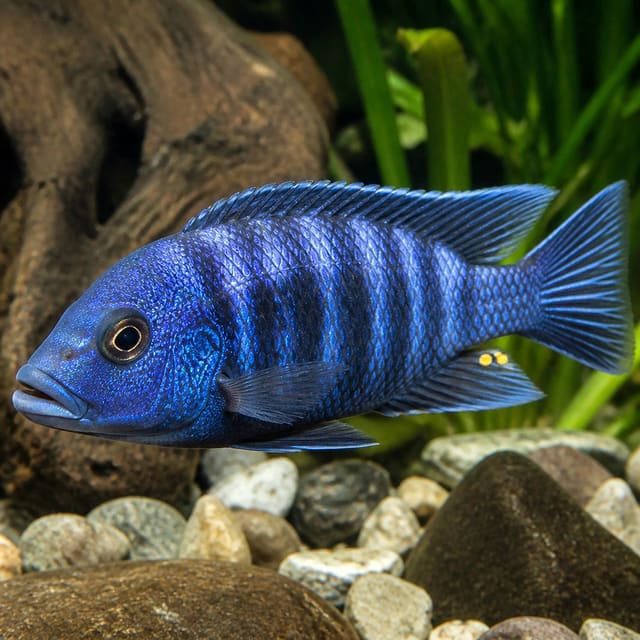
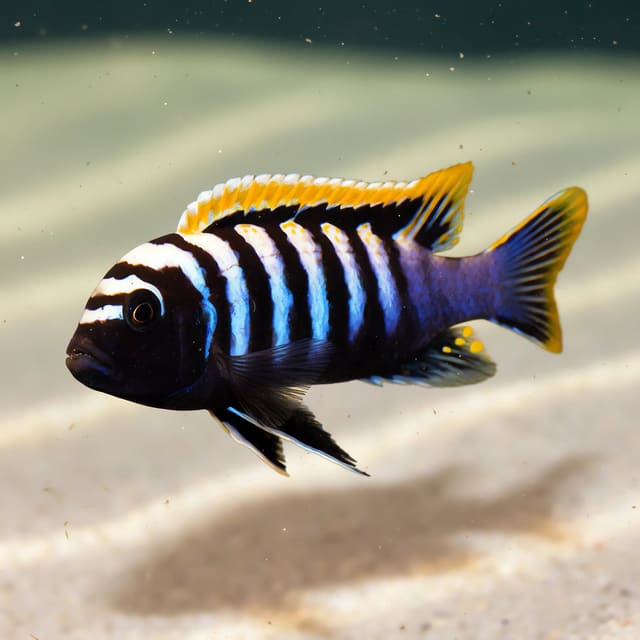
Male Cynotilapia edwardi showcase brilliant electric blue coloration across the body, overlaid with 6-8 bold vertical black bars that create dramatic contrast. The intensity of blue pigmentation varies with mood, dominance status, and breeding condition, with dominant males displaying the most saturated coloration. The dorsal fin features blue base color with black markings, whilst the anal fin displays prominent yellow-orange egg spots (ocelli) used during spawning rituals. The body shape is relatively deep and laterally compressed compared to more elongated mbuna species, with a moderately pointed snout. Females and subdominant males typically show less intense coloration—often silver-blue or grey-blue with visible barring. The eyes are large and positioned high on the head, adapted for scanning rocky environments. Juveniles resemble subdued females until sexual maturity around 3-4cm, when males begin developing adult coloration. The combination of electric blue base color with bold vertical bars makes this species instantly recognizable and visually striking in mixed mbuna communities.
The supplier groups this Edwardi offer with Malawi mbuna. Plan a mature aquarium with stable hard, alkaline water, useful swimming space, secure rockwork and retreats. Confirm the exact identity before applying a named species’ wild range, adult size or feeding specialism. Keep the complete trade label with the fish if breeding or comparing offers.
Confirm the adult fish and full stock list before choosing the aquarium footprint. Provide useful territories, escape routes and feeding access, with a practical way to separate persistent aggression; a supplied grade alone does not establish a colony or mixed-community tank size. Aquascaping must prioritize abundant rockwork using limestone, Texas holey rock, or artificial decorations that naturally buffer toward alkaline pH whilst providing structural complexity. Arrange rocks to create multiple caves, crevices, overhangs, and line-of-sight barriers throughout the water column. The layout should maximize territorial divisions—multiple small territories work better than few large ones for managing aggression. Use crushed coral, aragonite sand, or cichlid-specific substrates that help maintain stable alkaline chemistry. Plants are optional and often damaged, though robust Anubias species attached to hardscape may survive if protected from digging. Bright lighting showcases coloration and encourages beneficial algae growth for grazing. Powerful filtration is essential—aim for 8-10 times tank volume turnover hourly—with efficient biological media to process waste from active, constantly feeding fish. Water changes of 30-40% weekly using appropriately buffered water maintain stable alkaline parameters. Temperature stability and excellent oxygenation through water movement support optimal health and breeding behavior.
Ask which foods this exact Edwardi offer currently accepts and agree an appropriate feeding plan. A general mbuna label does not establish a fixed spirulina percentage, a strict herbivore diet or a particular feeding specialism. Use suitable portions, watch feeding access for subordinate fish and remove uneaten food to protect water quality.
Cynotilapia edwardi exhibit semi-aggressive temperaments typical of mbuna cichlids, with males particularly territorial during breeding. Social hierarchies are clearly defined, with dominant males establishing and defending prime territories whilst subdominant individuals occupy peripheral areas. Aggression manifests through lateral displays, fin spreading, mouth wrestling, and persistent chasing, though serious injuries are relatively uncommon in properly structured environments with adequate territory divisions. The species shows greatest aggression toward conspecific males and similarly colored blue mbuna, whilst generally tolerating different-looking species more readily. Females form loose social groups in neutral zones away from male territories. Breeding intensifies male territoriality and coloration dramatically—displaying males quiver and shake to attract females whilst aggressively repelling rivals. These highly active fish are constantly on the move, grazing rocks, patrolling territories, and engaging in social interactions primarily in lower to middle water levels near rockwork. Understanding their territorial nature and providing appropriate rockwork to establish multiple territories is essential for maintaining stable social dynamics. Despite aggression toward conspecifics, they integrate successfully into diverse mbuna communities with proper planning.
Maintain male-to-female ratios of 1:3 or 1:4 to distribute male attention and prevent excessive harassment of individual females. This ratio supports natural harem structures whilst reducing stress on females from constant male attention.
Ideal companions for Cynotilapia edwardi include other Lake Malawi mbuna of similar size and temperament but differing coloration to minimize territorial confusion. Suitable species include Labidochromis caeruleus (Yellow Lab), Pseudotropheus varieties with different patterns, Melanochromis species, and Iodotropheus species. Ensure tankmates differ in color and body pattern—avoid multiple blue vertical-barred species which triggers heightened aggression. Some aquarists successfully maintain smaller peacock cichlids alongside mbuna in larger aquariums, though compatibility varies. Absolutely avoid slow-moving fish, long-finned varieties, small peaceful community species, shrimp, and other small invertebrates which face harassment or predation. Non-cichlid tankmates are generally incompatible due to differing water parameter requirements and mbuna assertiveness. When creating mixed communities, prioritize species diversity—multiple species with few individuals each creates more stable dynamics than large conspecific groups. Adequate rockwork providing numerous territories is mandatory for any tankmate combinations. Monitor newly introduced fish carefully and maintain backup separation plans if aggression becomes problematic.
As maternal mouthbrooders, female Cynotilapia edwardi carry eggs and developing fry in their buccal cavity until the young are ready to be released. Breeding commences when dominant males establish clear territories, intensify coloration dramatically, and display vigorously using exaggerated swimming motions to attract gravid females. During spawning, the female deposits eggs on a flat rock surface within the male's territory, immediately collecting them in her mouth. The male displays his anal fin prominently, showcasing bright egg spots; as the female attempts to collect these false eggs, she ingests sperm packets, fertilizing the actual eggs held in her mouth. Brooding females typically seek shelter among rockwork, and may feed less while brooding. After complete development, she releases fully-formed free-swimming fry whose size and development should be assessed individually. Confirm suitable first foods for the young and watch that they are feeding successfully. Plan secure retreats for brooding females and separate provision for young if raising them; avoid routine moves based only on a fixed timetable. Do not plan spawning or brooding from a fixed timetable for an unconfirmed trade identity. Males can maintain harems of multiple females if adequate territories exist. Breeding this species is relatively straightforward given proper setup and water conditions.
Maintaining hard, alkaline water chemistry is absolutely essential for mbuna health—soft or acidic conditions cause severe stress, immune suppression, and increased disease susceptibility. Provide abundant rockwork creating numerous caves, territories, and visual barriers essential for managing territorial aggression and reducing stress. Can be territorial especially males during breeding, so maintain appropriate stocking strategies with proper male-to-female ratios to distribute aggression. Avoid overfeeding and investigate changes in appetite or behaviour promptly. Check water quality and seek qualified fish-health advice before selecting treatment; a symptom or trade label does not establish a diagnosis. Strong filtration with substantial biological capacity is mandatory for processing considerable waste from active, constantly feeding mbuna. Regular partial water changes of 30-40% weekly maintain stable parameters and remove accumulated nitrates which mbuna tolerate poorly above 40ppm. Monitor fish regularly and identify the cause of illness before choosing any treatment. Their robust constitution makes them hardy once established in appropriate conditions, though parameter stability remains crucial. Plan for mature territorial fish; do not infer adult housing from the supplied size.
Tropical Fish Co specializes in premium Lake Malawi cichlids, offering healthy, vibrant Cynotilapia edwardi specimens carefully selected for exceptional coloration, vitality, and robust body condition. Our fish are sourced from established breeders maintaining authentic Malawi water parameters, ensuring smooth transitions to properly prepared aquariums. Each cichlid undergoes thorough quarantine and health assessment in hard, alkaline water, with only actively feeding, vigorous specimens offered for sale. We provide comprehensive care guidance specific to mbuna requirements, including rockwork arrangement strategies for territory establishment, compatible tankmate recommendations considering coloration patterns, an appropriate feeding plan for the selected offer, and aggression management techniques for stable communities. Our expert team has extensive experience with Lake Malawi cichlids and offers ongoing support for breeding questions, water chemistry maintenance using alkaline buffers and appropriate substrates, and community dynamics troubleshooting. Secure packaging with insulated containers and tracked courier delivery ensures your cichlids arrive safely anywhere in the UK. When you purchase from Tropical Fish Co, you're investing in quality mbuna backed by genuine African cichlid expertise and our commitment to your long-term success maintaining these spectacular Lake Malawi jewels.
No reviews for this item yet. Bought one? Honest reviews only, good or bad.
What customers say about ordering from us
Easy website plenty of info on fish your buying great to pick a time slot
TRACEY DURRANT · 7 Oct 2026
Got some lovely fish thank you
Kevin Mackie · 7 Oct 2026
Reviews of our shop, collected by Judge.me, an independent third-party review collector. Newest first.