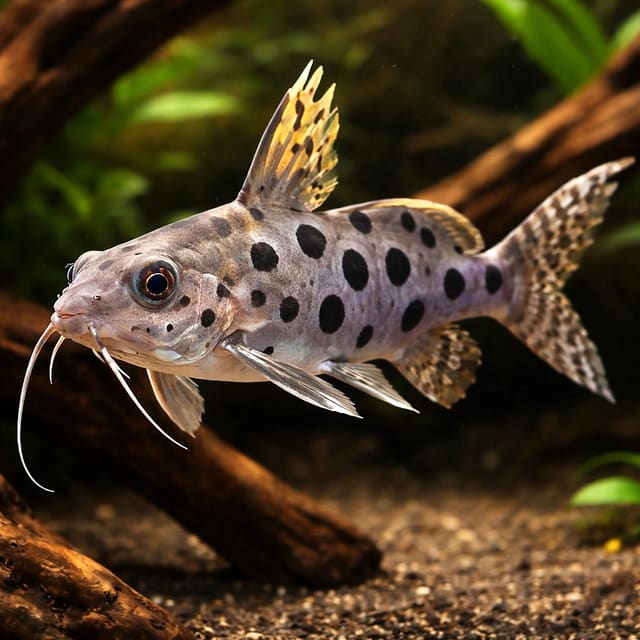
Featherfin Synodontis (Synodontis eupterus)
22–26°C · pH 6.2–7.5
£6.99

A hardy, peaceful African upside-down catfish with a distinctive look and fascinating nocturnal behavior. Moderate care, peaceful. 22-28C, pH 6.0-7.5.
Adult size is the maximum length this species reaches at full maturity (scientific sources). The livestock you receive will be younger and smaller. Product-photo provenance and any image-specific limitations are stated on the listing.
Synodontis courteti
Shoaling fish: kept in a group they feel safer, stay calmer and show their best colour.
Confirm your email, then we’ll send an availability message for this exact item if it returns within 180 days.
This request is only for this product—no newsletter or other promotions. A mail-provider retry may very rarely duplicate the same availability message. Unconfirmed addresses are removed after 48 hours. See our privacy policy.
A hardy, peaceful African upside-down catfish with a distinctive look and fascinating nocturnal behavior. Moderate care, peaceful. 22-28C, pH 6.0-7.5.
Adult size is the maximum length this species reaches at full maturity (scientific sources). The livestock you receive will be younger and smaller. Product-photo provenance and any image-specific limitations are stated on the listing.
Maintain these water conditions for optimal health and vibrant colors
The Synodontis courteti, commonly known as the Bugeye Squeaker, is a fascinating upside-down catfish native to the Niger and Chad basins across West and Central Africa. This hardy species is available for sale UK through Tropical Fish Co, bringing distinctive nocturnal behaviour and peaceful temperament to community aquariums. Named for its characteristically large eyes, this African catfish reaches a modest 5cm at maturity, making it an ideal choice for medium-sized tanks. As one of the more manageable Synodontis species, it combines the genus's famous inverted swimming with a robust constitution that suits moderately experienced aquarists.
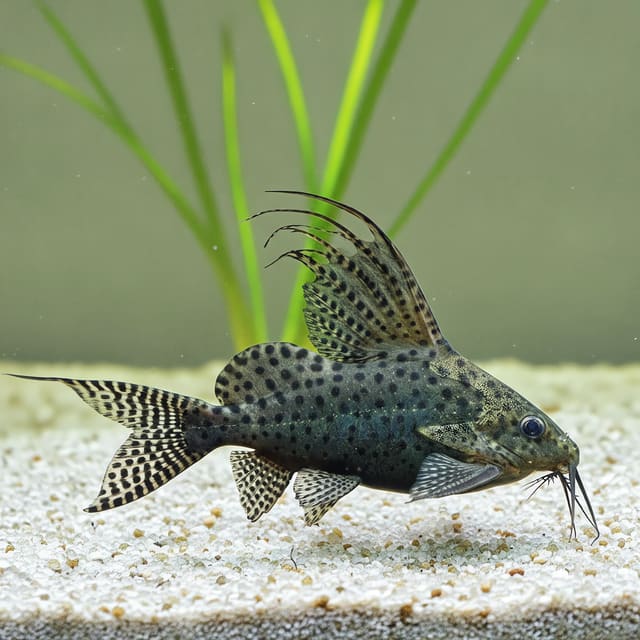
The Bugeye Squeaker displays the classic Synodontis body plan with a laterally compressed profile and prominent adipose fin. Its most striking feature is the disproportionately large eyes that give this species its common name, adapted for low-light hunting in murky African rivers. The body colouration typically shows mottled grey-brown tones with irregular darker markings that provide excellent camouflage against river substrates. Three pairs of barbels extend from the mouth, with the maxillary barbels being particularly long and used to probe crevices for food. The dorsal and pectoral fins are equipped with sharp spines that can lock into position as a defensive mechanism.
Synodontis courteti inhabits slow-moving rivers, floodplains, and seasonal pools throughout the Niger and Chad river basins, with documented populations in Cameroon, Chad, Ghana, Guinea, Mali, Niger, and Nigeria. These freshwater environments are characterized by soft, slightly acidic to neutral water with abundant submerged wood, leaf litter, and rocky crevices that provide daytime retreats. During the wet season, the species disperses into flooded areas rich with invertebrate prey, whilst the dry season concentrates populations in permanent water bodies. The riverbed typically consists of sand or fine gravel with scattered rocks and driftwood creating complex three-dimensional habitat structure.
A minimum 60-litre aquarium provides adequate space for a small group of Bugeye Squeakers. Use fine sand or smooth gravel substrate to protect the delicate barbels during foraging behaviour. Furnish the tank with multiple caves, inverted flower pots, bogwood, and slate structures to create secure retreats that this nocturnal species will occupy during daylight hours. Moderate lighting suits their crepuscular nature, though they will gradually acclimate to brighter conditions if provided sufficient hiding places. Filtration should be efficient but not create excessive current; these catfish prefer calmer water compared to rheophilic species. Live or artificial plants can be included, with robust species like Anubias and Java fern being ideal choices that tolerate the slightly warmer temperatures this species prefers.
Maintain temperatures between 22-28°C, with 24-26°C being optimal for long-term health. The pH should range from 6.0-7.5, replicating the soft to moderately hard water of their native West African habitats. While reasonably adaptable to varying hardness levels, softer water better mimics natural conditions and supports overall vitality. Ammonia and nitrite must remain at zero, with nitrates kept below 20ppm through regular partial water changes of 25-30% weekly. These catfish are sensitive to deteriorating water quality, so consistent maintenance is essential. Dissolved oxygen should be adequate—whilst not requiring rapids-level oxygenation, good surface agitation and efficient filtration prevent hypoxic stress.
The Bugeye Squeaker is an opportunistic omnivore that in nature feeds on aquatic invertebrates, insect larvae, small crustaceans, and organic detritus. In captivity, offer a varied sinking diet as the foundation of nutrition: high-quality catfish pellets or algae wafers form the staple, supplemented 3-4 times weekly with frozen or live bloodworms, brine shrimp, daphnia, and chopped earthworms. Occasional blanched vegetables such as courgette or spinach provide beneficial plant matter and aid digestion. Feed once daily in the evening or after lights-out to accommodate their nocturnal schedule. Avoid relying solely on flake food, which often doesn't reach the bottom before being consumed by surface feeders and lacks the protein density these carnivorous catfish require.
This peaceful species exhibits the characteristic upside-down swimming that gives Synodontis their common name, particularly when feeding from the underside of leaves or décor. Bugeye Squeakers are primarily nocturnal, emerging at dusk to forage across the substrate using their sensitive barbels. They are not highly territorial and can be kept singly or in small groups, though conspecific aggression is rare given adequate hiding places. The species occasionally produces audible squeaking or croaking sounds—an endearing trait common to many Synodontis. Activity levels increase significantly during evening hours and feeding time, when they patrol the tank bottom with surprising energy for a typically reclusive catfish.
Synodontis courteti thrives alongside peaceful community fish of similar size that occupy upper water levels. Excellent companions include medium-sized tetras such as Congo tetras or Buenos Aires tetras, peaceful barbs like cherry or rosy barbs, and active rainbowfish. Other non-aggressive bottom dwellers such as larger Corydoras species or peaceful loaches can coexist provided the aquarium offers sufficient floor space and retreats. Avoid housing with very small fish under 2cm that might be mistaken for prey during nocturnal hunting. Similarly, aggressive or highly territorial species—particularly cichlids that defend substrate territories—should be excluded, as should notorious fin-nippers that may harass the catfish during rest periods.
Captive breeding of Synodontis courteti remains uncommon and challenging, with few documented successes in home aquaria. Like many Synodontis species, breeding is thought to be triggered by excellent water quality combined with seasonal environmental cues such as temperature fluctuations and increased water flow mimicking rainy season conditions. A suitable cave or sheltered spawning site is essential. In nature, some Synodontis are mouthbrooders or practice brood parasitism, but courteti's specific reproductive strategy is not fully documented. If spawning does occur, eggs are vulnerable to predation by parents and tankmates, so removal to a separate rearing tank offers the best chance of survival. Fry require microscopic foods initially, graduating to newly hatched brine shrimp and microworms.
At Tropical Fish Co, we supply healthy, quarantined Bugeye Squeakers that have been carefully acclimated and are feeding confidently on prepared foods. Each specimen is hand-selected for vitality and good body condition, ensuring you receive robust African catfish ready to thrive in your aquarium. Our specialist knowledge of Synodontis species means we can provide detailed care guidance and ongoing support to help you succeed with these fascinating nocturnal catfish. With nationwide delivery across the UK using premium insulated packaging and tracked courier services, your new catfish arrive safely and in peak condition. We're committed to responsible fishkeeping and only source from sustainable suppliers who prioritize fish welfare and environmental stewardship.
No reviews for this item yet. Bought one? Honest reviews only, good or bad.
What customers say about ordering from us
I have a small group of long finned mountain minnows. So was delighted to be able to order ten of this variety to increase the genetics in my tank . The ones I recieved are healthy but it’s to early to give a verdict on wether they are of a long finned type since they are small currently.
Gordon Walker · 23 Sept 2026
100% success travel and "installation". Pleased with quality of purchase. The Siamese fighter a bit "shy" so have not yet seen him at his best yet but looking good. Happy customer. GG
George E Garratt · 21 Sept 2026
Reviews of our shop, collected by Judge.me, an independent third-party review collector. Newest first.