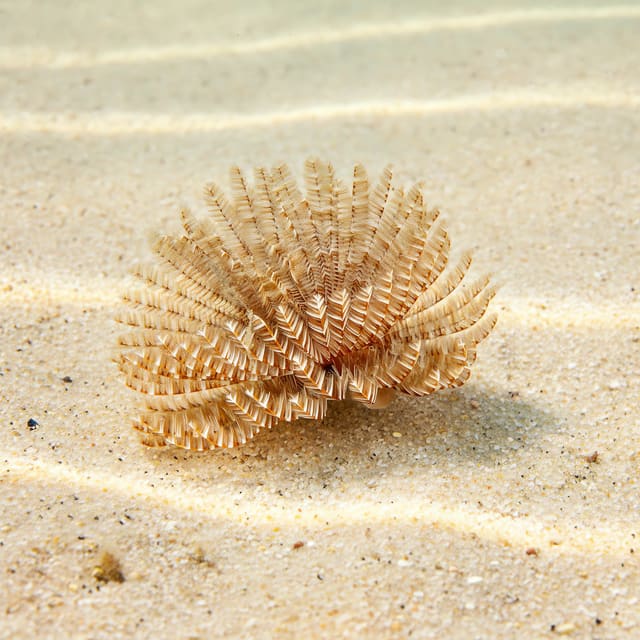
Red Tube Worm (Sabellastarte spectabilis)
24–26°C · pH 8–8.2
£40.99
Elegant red feather duster worm for reef tanks, a peaceful filter feeder that adds movement and colour to mature marine aquariums.
Adult size is the maximum length this species reaches at full maturity (scientific sources). The livestock you receive will be younger and smaller. Product-photo provenance and any image-specific limitations are stated on the listing.
Protula bispiralis
Confirm your email, then we’ll send an availability message for this exact item if it returns within 180 days.
This request is only for this product—no newsletter or other promotions. A mail-provider retry may very rarely duplicate the same availability message. Unconfirmed addresses are removed after 48 hours. See our privacy policy.
Elegant red feather duster worm for reef tanks, a peaceful filter feeder that adds movement and colour to mature marine aquariums.
Adult size is the maximum length this species reaches at full maturity (scientific sources). The livestock you receive will be younger and smaller. Product-photo provenance and any image-specific limitations are stated on the listing.
Maintain these water conditions for optimal health and vibrant colors
Protula bispiralis, often sold as the red feather duster worm, is a striking marine tube worm prized for its graceful, fan-like crown and peaceful nature. This species belongs to the family Serpulidae and is a true filter feeder, extending a delicate crown of radioles from a calcareous tube to capture fine suspended food from the water column. In the aquarium, it creates constant gentle movement and a natural reef look, making it a favourite for aquarists who enjoy distinctive invertebrates.
Unlike many ornamental animals, feather duster worms are not active swimmers or grazers. They rely on stable water quality, mature live rock, and a steady supply of microscopic food. When settled properly, they can be rewarding and long-lived additions to a marine display. Their vivid red crown adds a splash of colour, while their tube-dwelling lifestyle means they remain largely stationary and non-invasive.
At Tropical Fish Co, we carefully select and pack marine livestock to help ensure a healthy start in your aquarium. With our live arrival guarantee and fast UK delivery, you can order with confidence and receive your feather duster worm in excellent condition.
| Care Level | Moderate |
|---|---|
| Temperament | Peaceful |
| Adult Size | Typically 10-20 cm crown span, tube length variable |
| Minimum Tank Size | 80 litres |
| Temperature | 22-26°C |
| pH | 8.1-8.4 |
| Diet | Filter feeder; fine particulate marine foods, phytoplankton, zooplankton |
| Tank Region | Bottom / fixed to rockwork |
Protula bispiralis is a marine polychaete worm found in tropical and subtropical seas, where it lives attached to hard surfaces such as rocks, coral rubble, and crevices in sheltered reef environments. In nature, it inhabits areas with moderate water movement that delivers a constant stream of suspended plankton and organic particles. The worm secretes a protective tube and extends its crown into the current to feed, retracting rapidly if disturbed.
Its natural habitat is typically clean, oxygen-rich seawater with stable salinity and minimal pollution. This is why feather duster worms do best in mature aquariums with established biological filtration and low levels of dissolved waste. They are not suited to newly set-up tanks or systems with unstable chemistry.
For best results, provide a mature marine aquarium with plenty of stable live rock, gentle to moderate flow, and fine suspended food in the water column. The worm should be placed where it can extend its crown into a steady current without being blasted directly by a powerhead. A shaded crevice or sheltered area in the rockwork is often ideal, as many individuals prefer to anchor their tube in a protected position.
Feather duster worms are sensitive to sudden changes in salinity, temperature, and nutrient levels. Acclimation should be slow and careful, ideally by drip acclimation, to reduce stress. Avoid exposing the worm to air for prolonged periods during transfer. Once settled, it is normal for the crown to retract when the tank is disturbed, during lights-on changes, or if fish swim too close. This is a defensive response, not necessarily a sign of poor health.
Maintain excellent water quality with low ammonia and nitrite, and keep nitrate as low as practical in a reef environment. Stable salinity is especially important. Because these worms are filter feeders, they benefit from regular feeding of very fine foods, but overfeeding should be avoided to prevent water quality issues.
Recommended parameters:
Good water movement and mature biological filtration are more important than strong lighting. In fact, intense direct light is unnecessary; the worm feeds from the water column rather than relying on photosynthesis.
Protula bispiralis is a suspension feeder and should be offered very fine marine foods that remain in the water long enough to be captured by the crown. Suitable options include phytoplankton, rotifers, copepod preparations, and finely milled reef foods. Target feeding can be helpful, but it should be done gently and without forcing food directly onto the worm.
Feed small amounts several times per week, or more frequently in very mature systems with strong export. The key is balance: enough suspended nutrition to support the worm, but not so much that the aquarium becomes polluted. If the crown remains extended and the worm is actively feeding, that is a good sign. If it stays withdrawn for long periods, check for flow issues, aggressive tank mates, or unstable water conditions.
Because feather duster worms do not eat algae or detritus in the way some invertebrates do, they should not be considered a clean-up crew member. They are specialised filter feeders and need appropriate planktonic foods to thrive.
This is a peaceful invertebrate that is best kept with calm, reef-safe fish and other non-aggressive marine livestock. Suitable tank mates include small gobies, clownfish, blennies, cardinalfish, firefish, chromis, cleaner shrimp, peppermint shrimp, and other gentle reef invertebrates. Reef-safe snails and hermit crabs are usually fine, provided they do not disturb the worm’s tube.
Avoid fish known for picking at invertebrates, such as many angelfish, butterflyfish, triggerfish, puffers, large wrasses, and aggressive crabs. Even curious fish may nip at the crown, causing the worm to retract repeatedly and potentially leading to stress or starvation. Crustaceans that dig, bulldoze rockwork, or probe crevices can also be problematic if they destabilise the tube.
Place the worm in a secure position where it will not be dislodged by strong currents or active tank mates. Once established, it can become a long-term feature in a peaceful reef aquarium.
At Tropical Fish Co, we understand that marine invertebrates need careful handling, stable conditions, and prompt delivery. That is why we focus on quality livestock, expert packing, and reliable service from order to arrival. Our marine animals are selected with care, and we aim to give every customer the best possible start with their new addition.
When you order from us, you benefit from fast UK delivery and our live arrival guarantee, giving you extra peace of mind when buying delicate marine livestock online. We also provide clear care guidance so you can set up the right environment before your feather duster worm arrives. Whether you are building a reef display or adding a unique filter feeder to an established marine tank, Protula bispiralis is a beautiful and rewarding choice.
No reviews for this item yet. Bought one? Honest reviews only, good or bad.
What customers say about ordering from us
Easy website plenty of info on fish your buying great to pick a time slot
TRACEY DURRANT · 7 Oct 2026
Got some lovely fish thank you
Kevin Mackie · 7 Oct 2026
Reviews of our shop, collected by Judge.me, an independent third-party review collector. Newest first.