Moderate
Blue Agassiz’s Dwarf Cichlid (Apistogramma agassizii)
24–27°C · pH 5.5–7 · 75L
£15.99
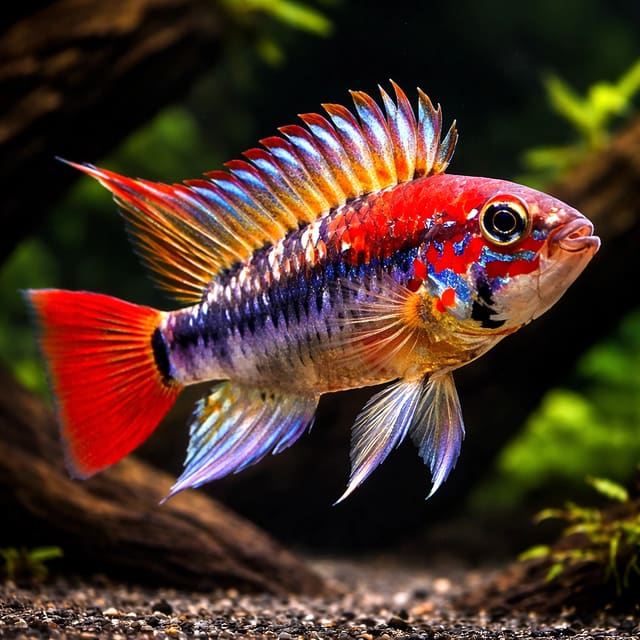
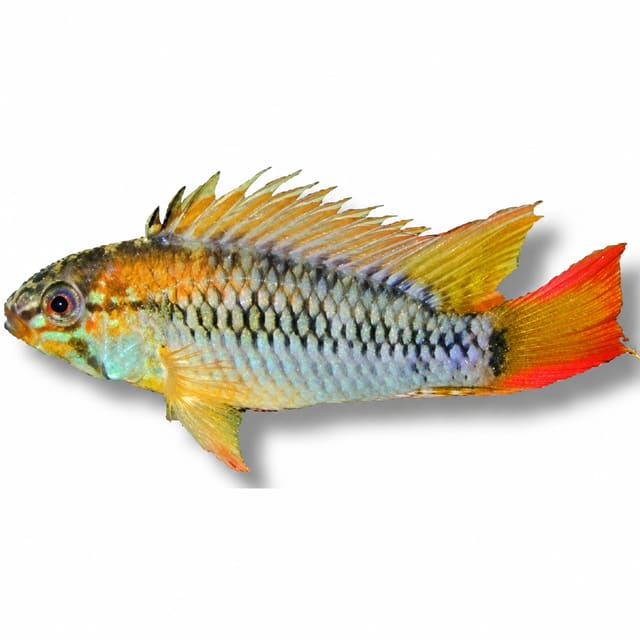
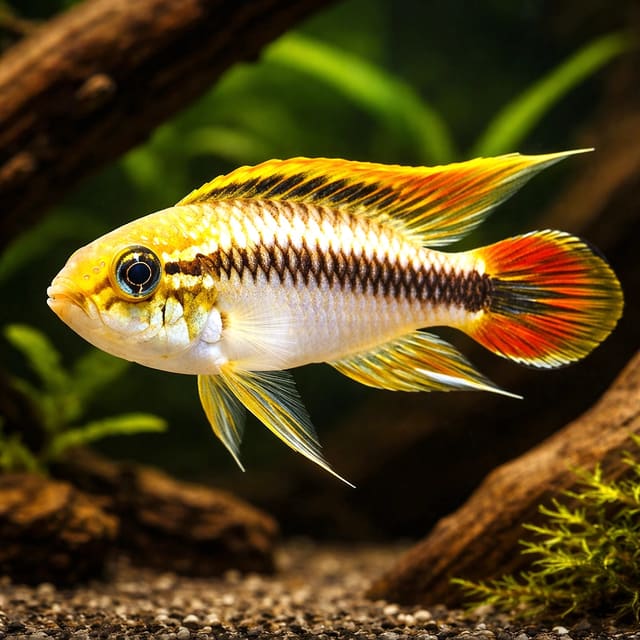
Peruvian blue form of the Banded Dwarf Cichlid, reaching about 6.5 cm. A soft-water apisto for 75 L+ tanks with gentle tankmates.
Adult size is the maximum length this species reaches at full maturity (scientific sources). The livestock you receive will be younger and smaller — pick a size above for the actual shipping size. Product-photo provenance and any image-specific limitations are stated on the listing.
Apistogramma bitaeniata
Save when buying multiple fish. Each quantity is one fish; sex and pair formation are not guaranteed unless the selected variant explicitly states them.
Confirm your email, then we’ll send an availability message for this exact item if it returns within 180 days.
This request is only for this product—no newsletter or other promotions. A mail-provider retry may very rarely duplicate the same availability message. Unconfirmed addresses are removed after 48 hours. See our privacy policy.
Peruvian blue form of the Banded Dwarf Cichlid, reaching about 6.5 cm. A soft-water apisto for 75 L+ tanks with gentle tankmates.
Adult size is the maximum length this species reaches at full maturity (scientific sources). The livestock you receive will be younger and smaller — pick a size above for the actual shipping size. Product-photo provenance and any image-specific limitations are stated on the listing.

Cichlids are a family of roughly 1,800 accepted species, not one care type. Before buying, identify the exact species and source, then compare adult measurement, usable tank dimensions, social system, territory, tested water, diet and an exit plan. No family-wide minimum tank, water range or tank-mate list is safe.
Maintain these water conditions for optimal health and vibrant colors
Peru lends this strain its provenance and blue is its calling card. Apistogramma bitaeniata peru blue is the Peruvian blue form of the Banded Dwarf Cichlid, and at roughly 6.5 cm fully grown it sits at the more substantial end of the dwarf cichlid spectrum — a confident, inquisitive fish with real presence across the floor of a soft-water aquarium.
Plan the tank around heat and acidity from day one. This apisto wants 26–30 °C with a pH between 5.0 and 6.5 in very soft water of 0–10 dGH — parameters that quietly remove hard-water species from the stocking list before you even weigh up temperament. From 75 litres upwards it settles in well alongside small peaceful tetras, small rasboras, Otocinclus and other gentle soft-water fish of similar size. What it will not forgive: large or boisterous tankmates, fin-nipping species, aggressive cichlids, busy bottom-dwellers that compete for its territory, and large predatory fish.
Day to day the temperament is best described as semi-aggressive — settled and watchable most of the time, yet capable of turning territorial, so build in caves and visual barriers at floor level. Stability matters as much as the headline figures: hold temperature and pH steady within the ranges above rather than chasing one perfect number. It feeds as a carnivore, needs moderate-level husbandry rather than beginner luck, and should give you about five years of ownership.
Because of its demanding water chemistry, the Peru blue strain suits aquarists who already run — or are ready to set up — a genuinely soft, warm, acidic aquarium. Build the stocking plan from the soft-water list above rather than retrofitting this fish into a hard-water community. If that describes your tank, few dwarf cichlids will reward you better. Stock is dispatched under our live arrival guarantee, with a licensed live-animal courier handling the journey.
No reviews for this item yet. Bought one? Honest reviews only, good or bad.
What customers say about ordering from us
Easy website plenty of info on fish your buying great to pick a time slot
TRACEY DURRANT · 7 Oct 2026
Got some lovely fish thank you
Kevin Mackie · 7 Oct 2026
Reviews of our shop, collected by Judge.me, an independent third-party review collector. Newest first.